



French Religious Carving
These french religious carving pieces span centuries of devotional craft, offering collectors tangible fragments of spiritual heritage through intricate wooden figures and delicate gold pendants.
French Religious Carving
A french religious carving encompasses devotional wooden statues, architectural fragments, and wearable gold pendants depicting saints and biblical scenes. Pieces range from life-size church figures to small charms worn close to the heart.
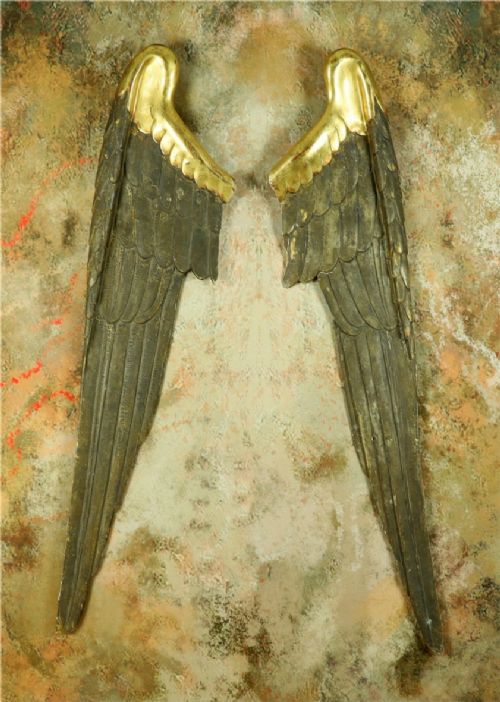
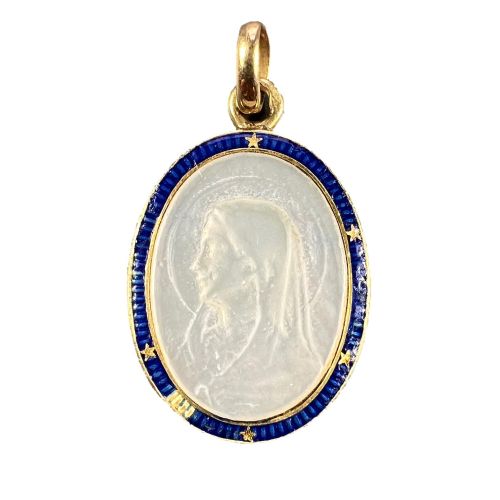
The selection includes substantial items like seventeenth-century corpus Christi crosses and eighteenth-century angel wings alongside intricate mother-of-pearl and eighteen-carat gold medals. Domestic devotional items sit alongside remnants of larger ecclesiastical spaces.
Originating primarily from French workshops, these works bridge centuries of changing liturgical styles from the Renaissance and Baroque periods through the nineteenth-century Gothic Revival.
How they were made
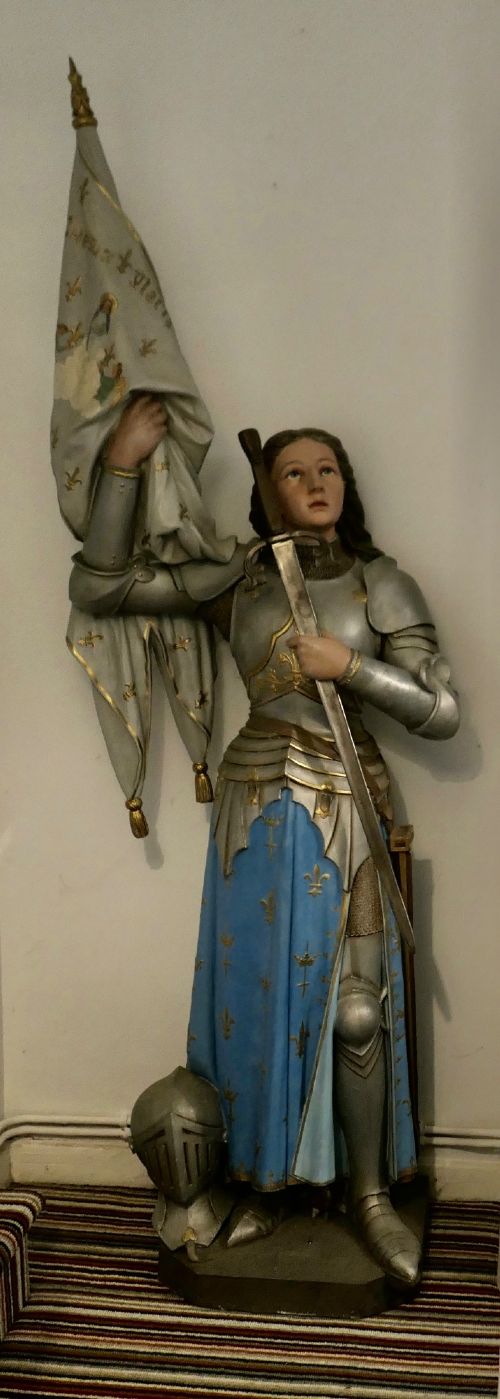
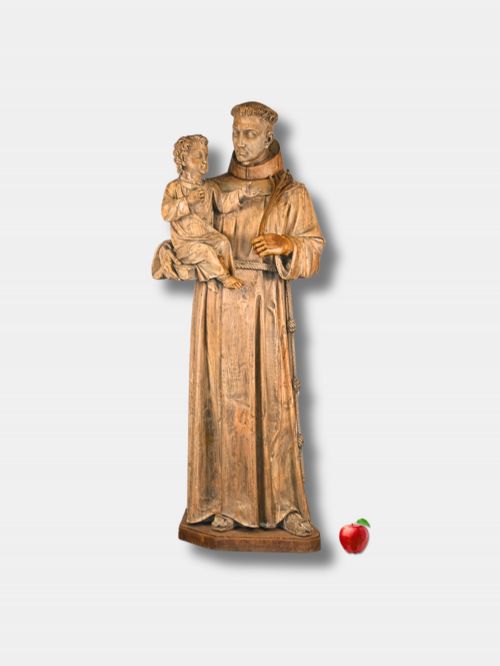
Artisans carved dense timbers such as boxwood, walnut, limewood, and fruitwood to create deep-relief panels and three-dimensional figures. Polychrome paint and gilt gesso frequently finished these wooden surfaces to add colour and divine radiance.
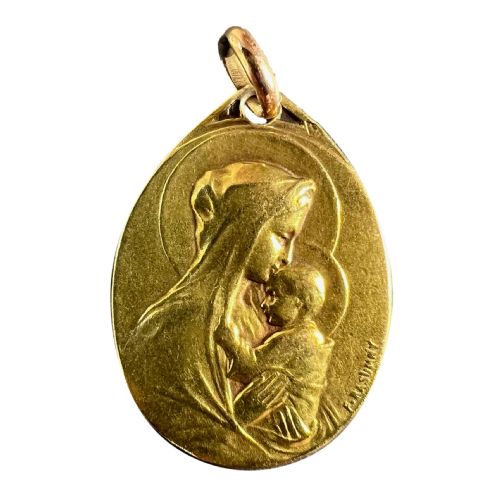
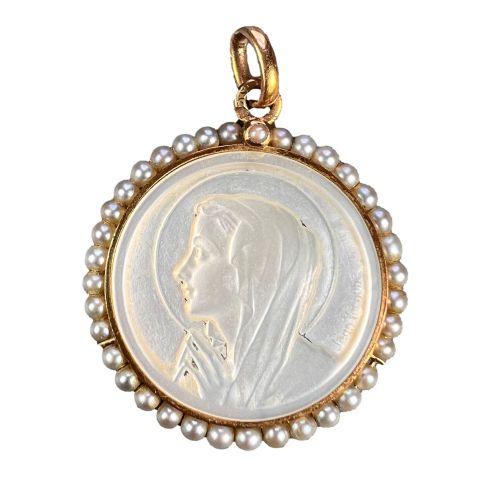
Pendants and charms combine carved mother-of-pearl with eighteen-carat yellow and white gold settings, sometimes accented with enamel or seed pearls. Miniature portraits and sacred symbols required precise engraving and mounting techniques.
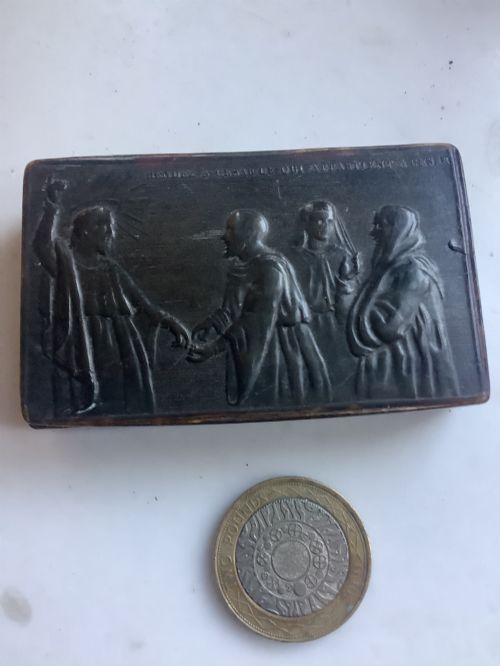
Larger architectural elements utilised heavy timber framing and plaster work, while horn snuff boxes integrated carved pictorial panels into functional everyday objects.
French Religious Carving Retail Price Guide 2026
Typical asking prices for french religious carving among the pieces listed under this phrase on Sellingantiques today, from the lower quarter to the upper quarter. They describe what is for sale here now, not the wider market.
A nineteenth-century horn snuff box depicts a biblical scene in miniature relief.
What varies in quality
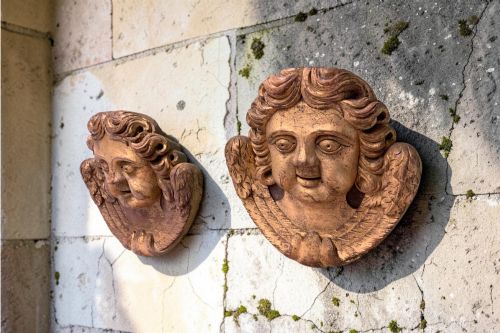
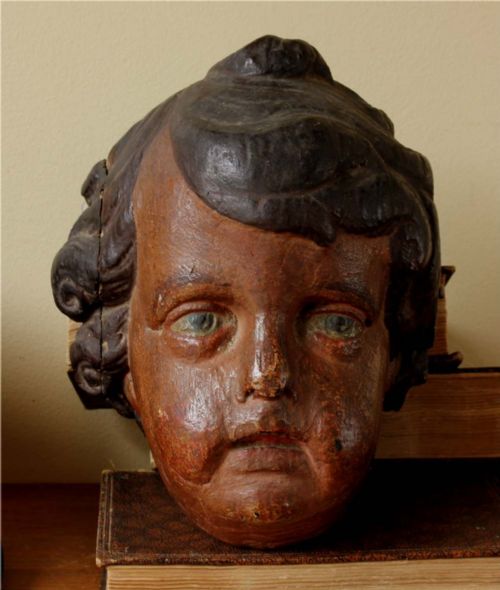
The depth of carving and anatomical realism distinguish superior sculptures, particularly in the rendering of drapery folds, hair, and facial expressions on figures like putti and saints. Master carvers achieved fluid motion and lifelike proportions in difficult hardwoods.
Material combination and metalwork finesse elevate wearable pieces, where the clarity of mother-of-pearl carving meets the weight and purity of high-carat gold settings. Maker signatures or attribution to known medallists add distinct historical weight.
Preservation of original polychrome paint, gilding, and surface patina dictates the visual impact of wooden carvings, separating untouched historic surfaces from heavily restored examples.
Rouillard Angers·Rasumny·Becker·Perriat
The French Religious Carving Glossary
- Corpus Christi
- A representation of Jesus Christ on the cross. This Latin term translates directly to the body of Christ.
- Polychrome
- Decoration consisting of several colours applied to wood or stone sculpture. It gives devotional figures a lifelike appearance.
- Gesso
- A plaster-like mixture applied to wood surfaces to prepare them for gilding or painting. It provides a smooth base for delicate detail work.
- Putto
- A figure of a small chubby male child, often winged, common in religious art. These representations symbolise angelic presence.
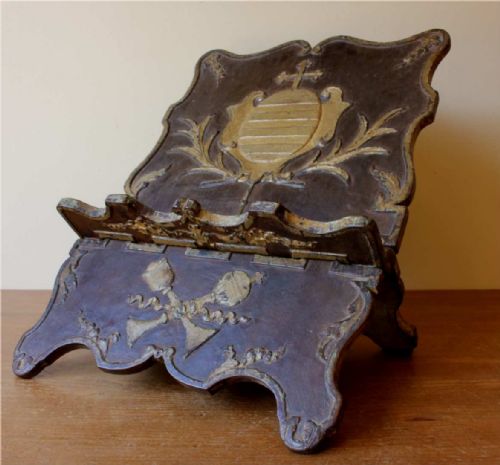
- Missal Stand
- A portable folding rest designed to hold liturgical books during services. They are frequently carved from domestic timbers.
French Religious Carving: Frequently Asked Questions
What periods do these carvings come from?
The available selection spans from the sixteenth-century Renaissance through the seventeenth-century Baroque era and eighteenth-century devotional works. Later nineteenth-century revival pieces and early twentieth-century medals also feature prominently.
Each period reflects shifting liturgical fashions and distinct regional carving techniques across France.
How were church carvings originally used?
Larger wooden sculptures and panels served as focal points for prayer within churches, chapels, and monastic foundations. Missal stands supported heavy service books on altars.
Smaller pendants and charms allowed individuals to carry personal expressions of faith in their daily lives.
How do I care for antique wood carvings?
Keep wooden sculptures away from direct heat sources and sudden humidity changes to prevent timber splitting. Dust gently with a dry, soft cloth rather than using liquid polishes.
Preserving the original surface patina requires minimal intervention and stable indoor environments.
What is the difference between a medal and a charm?
Medals generally feature flat or low-relief sacred imagery intended for devotional wear around the neck. Charms often incorporate delicate three-dimensional elements or materials like mother-of-pearl and enamel.
Both items connect wearers to specific saints and holy figures.