



French Religious Antiques
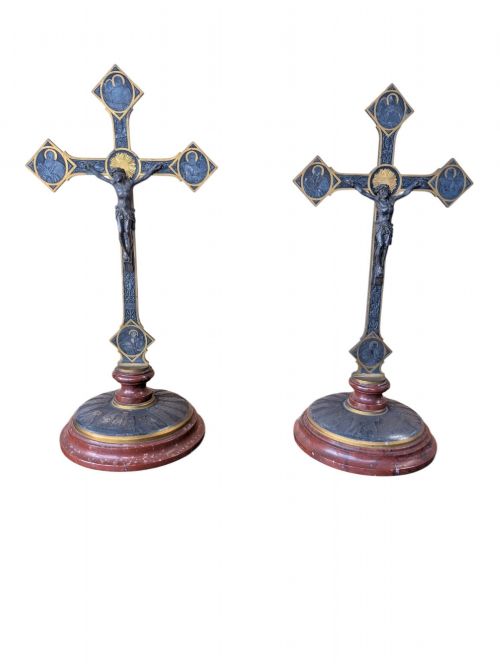
French religious antiques span centuries of devotional art, offering tangible links to personal faith through gold medals, carved wood figures, and oil paintings.
French Religious Antiques
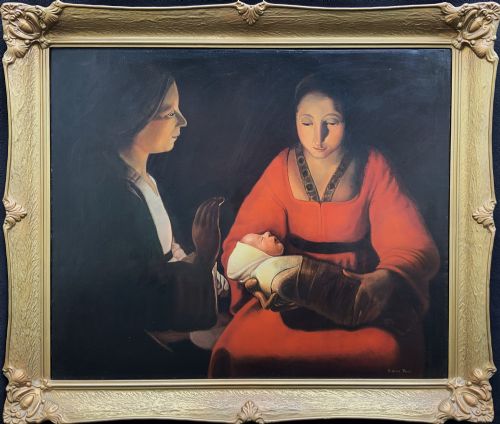
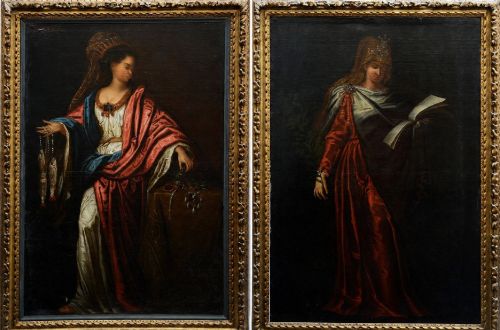
The selection includes oil paintings, wall sculptures, and free-standing wooden statues depicting saints, the Virgin Mary, and biblical scenes. These pieces originate from various eras, spanning the eighteenth century through to the early decades of the twentieth century.
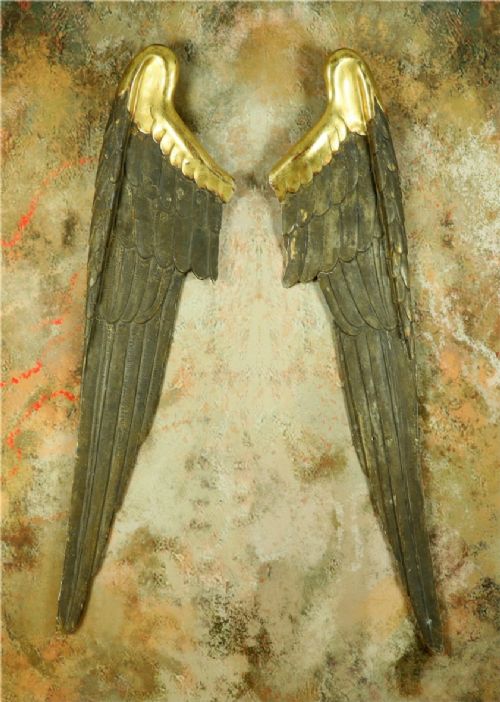
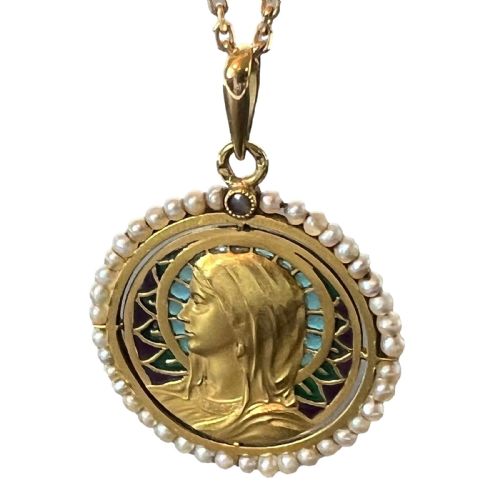
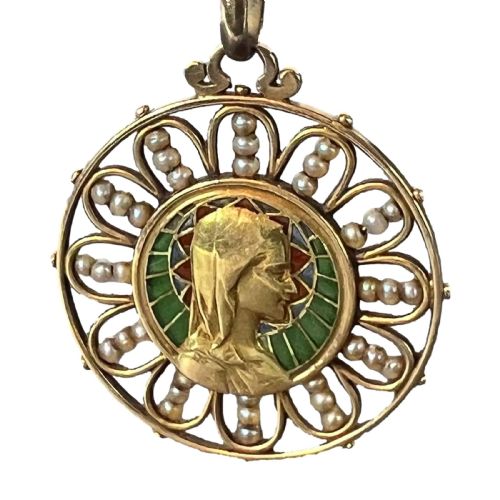
Wearable devotional items such as pendants and charms dominate the category, often featuring representations of the Virgin Mary or the Sacred Heart. Larger devotional furniture and architectural elements, including missal stands and carved angel wings, also appear among the offerings.
How they were made
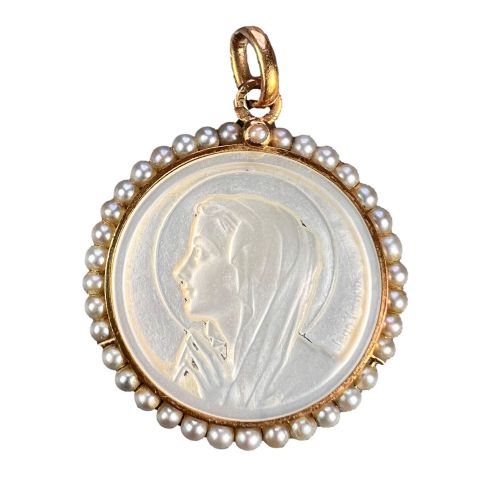
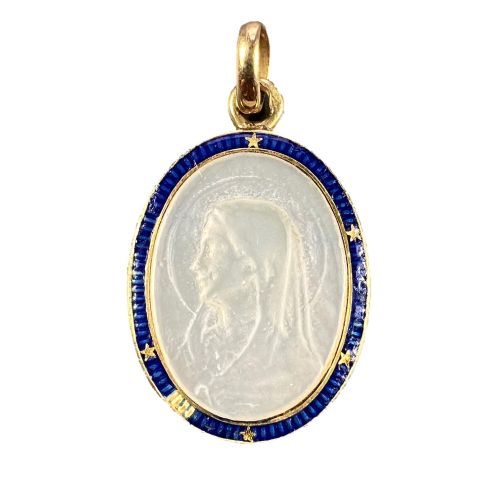
Gold jewellery and medals rely on casting and engraving techniques, frequently enhanced with enamel work such as plique-a-jour or set with seed pearls and mother of pearl. Artisans shaped eighteen-carat yellow and rose gold into detailed pendant medals bearing portraits of saints and holy figures.
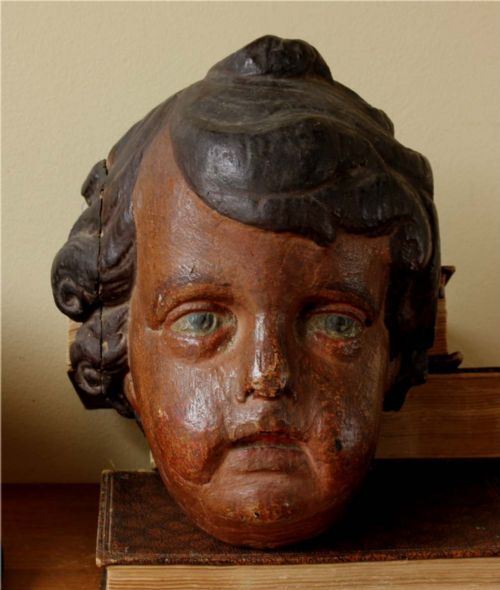
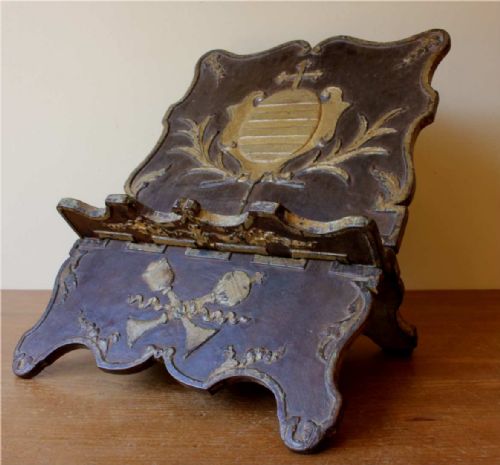
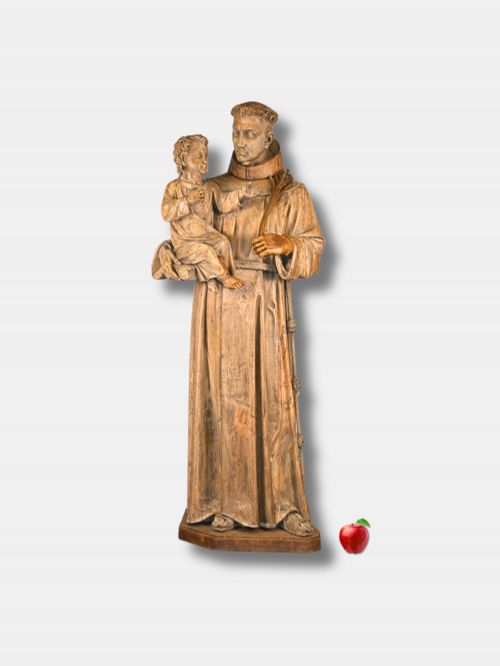
Woodcarving defines the sculptural pieces and church furnishings, utilising polychrome finishes, gilt gesso, and plain timber to create life-size figures, cherub heads, and folding bible rests. Painters employed oil on canvas to produce devotional portraits and liturgical scenes, sometimes applying traditional techniques associated with regional French schools.
Listings feature gold, wood, enamel, and mother of pearl across periods ranging from the eighteenth century to the twentieth century.
What varies in quality
The finesse of the artisan's hand dictates the distinction between standard production and superior examples in medals and small pendants. Pieces signed by known medallists or featuring intricate enamel work demonstrate a higher level of craftsmanship than unsigned or mass-produced alternatives.
Sculptural integrity and surface preservation determine the standing of wooden carvings and paintings. Original polychrome pigments, undisturbed gilt gesso, and the depth of the woodcarving separate robust devotional art from heavily restored or simpler workshop pieces.
Emile Monier·Paul Brandt·Emile Dropsy·Fellman·Rasumny·Sellier·Vernon·Guilbert·Pageli Perriat·Mazzoni·Edgard Maxence
The French Religious Antiques Glossary
- Plique-a-jour
- An enamelling technique where translucent enamel is fired in open metal cells, allowing light to pass through the design much like miniature stained glass. This method appears on fine devotional medals.
- Polychrome
- The practice of decorating sculptural works in several colours. Carved wooden figures often display this painted surface treatment.
- Gesso
- A plaster mix applied to wood as a base for gilding or painting. Gilt gesso finishes provide a reflective metallic surface on carved wooden wings and altar elements.
- Devotional
- Objects created specifically to aid private or communal prayer and worship. This includes shadow boxes, medals, and missal stands.
- Missal stand
- A portable or folding book rest used to support liturgical texts during services. These functional wooden pieces often feature carved decoration.
French Religious Antiques: Frequently Asked Questions
What are french religious medals made of?
Most wearable medals and pendants utilise eighteen-carat yellow or rose gold as their primary metal base. Artisans frequently combined this gold with enamel, seed pearls, and mother of pearl.
Enamel techniques like plique-a-jour added translucent colour to the metallic surfaces, while mother of pearl provided iridescent backgrounds for carved depictions of the Virgin Mary.
How were devotional shadow boxes used?
Devotional shadow boxes served as portable shrines for private prayer in homes. They housed small figures, such as Nevers glass figures, protected behind glass panels.
Families placed these boxes on tables or hung them on walls to create dedicated spaces for contemplation and daily religious observance.
How do I date a wooden religious carving?
Dating involves examining the tool marks, timber type, and the composition of underlying gesso or paint layers. Eighteenth-century pieces often display hand-carved details and specific regional polychrome styles.
Later nineteenth and twentieth-century figures show shifts in manufacturing methods and stylistic influences, moving toward academic realism or Art Nouveau aesthetics.
What is a missal stand?
A missal stand is a specialised book rest designed to hold altar missals and liturgical texts at a readable angle. They were utilised by clergy during services to support heavy service books.
Antique examples are typically constructed from carved wood, featuring folding mechanisms for transport or storage within the church.