


French Realist Art
French realist art captures everyday life through direct observation, offering enduring truth and historical connection.
French Realist Art
French realist art focuses on unidealised depictions of daily existence, portraying agricultural labourers, domestic workers, and ordinary scenes without sentimentality. These works emerge from nineteenth-century movements that rejected academic artifice in favour of direct visual honesty.
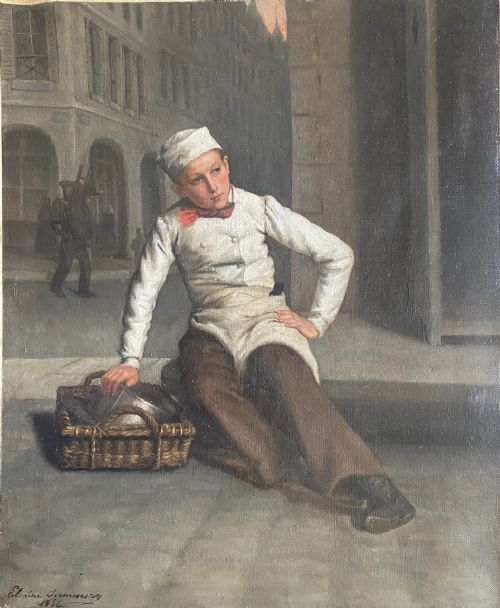
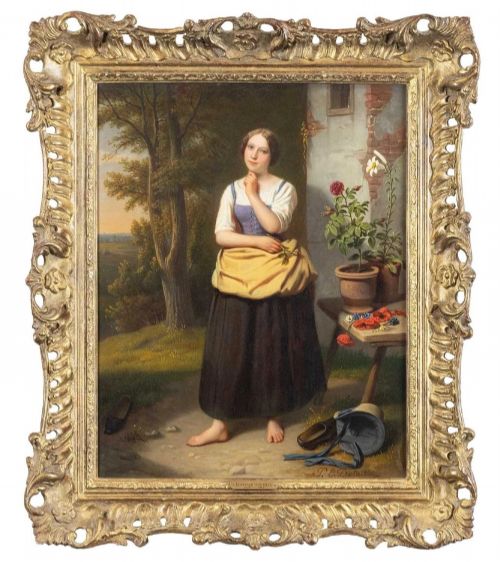
The pieces on this page span oil paintings on canvas or panel, chalk and graphite drawings, and patinated bronze sculptures. Portraits of women, genre scenes with horses, and studies of children and country life populate the selection.
Dated items and stylistic markers trace production from the mid nineteenth century through the Edwardian period. Artists working in Paris and regional settings produced these oil paintings and bronze sculptures, capturing the social textures of their era.
Materials and construction methods
Painters utilised oil pigments applied to canvas or wood panels, sometimes employing chalk and graphite for preparatory works or independent drawings. Giltwood and gesso frames frequently house these paintings, complementing the visual depth of the canvases.
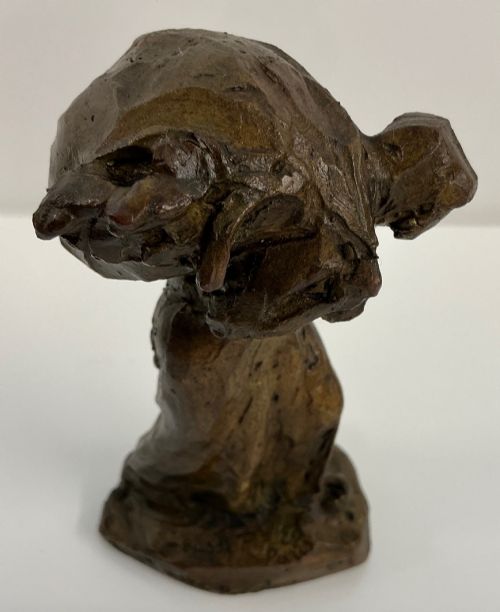
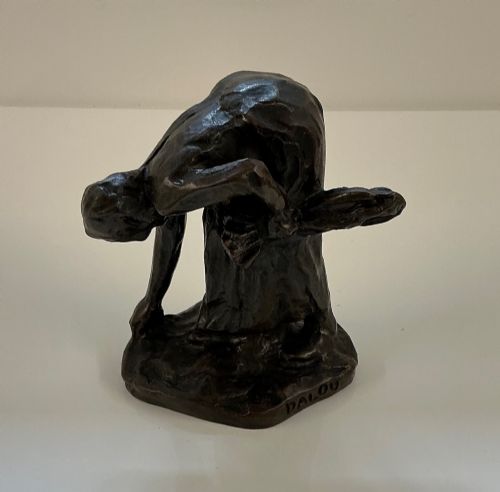
Sculptors utilised bronze, casting figures through traditional foundry methods that yielded patinated surfaces. These bronze sculptures render clothing, baskets, and physical postures with tactile precision.
Apprentice cooks resting and fishing boys take their place alongside serious academic portraits of women and quiet country girls.
Distinctions in quality
Technical proficiency in handling paint or casting bronze dictates the upper tiers of this work. Superior pieces display confident brushwork or refined patination that defines anatomical forms and fabric textures with conviction.
The strength of composition and psychological engagement elevate certain portraits and genre scenes above standard decorative items. Works exhibiting provenance, such as exhibition history at the Salon, demonstrate higher levels of artistic ambition.
Jules Dalou·Léon Joseph Voirin·Théophile Emmanuel Duverger·Pauline Delacroix Garnier·Lavergne
The French Realist Art Glossary
- Genre painting
- Depictions of everyday subjects and ordinary people engaged in secular activities. These scenes avoid heroic or mythological narratives in favour of contemporary life.
- Patinated bronze
- Metal sculpture treated with chemicals to produce a specific surface colour and finish. This process protects the bronze while enhancing sculptural depth.
- Oil on panel
- Pigment mixed with drying oil applied to a wooden support rather than fabric. Panels provide a rigid ground that preserves fine brushwork.
- Academic realism
- Art produced under the influence of European academies that combined realistic observation with traditional compositional rules. This approach governed official salon exhibitions.
French Realist Art: Frequently Asked Questions
What subjects appear in French realist art?
These works depict agricultural labourers, domestic servants, children, and everyday scenes from nineteenth-century life. Artists focused on honest portrayals of ordinary people rather than idealised historical subjects.
The selection includes portraits of women, rural genre scenes, and still life compositions featuring rustic elements like apples and bread.
How do I care for oil paintings on panel?
Keep wooden panel paintings away from direct sunlight and fluctuating humidity to prevent warping or cracking of the support. Stable indoor environments preserve the integrity of both the wood and the oil pigment.
Dust the surface gently with a soft, dry brush and avoid using liquid cleaners or abrasive cloths on the paint layer.
What distinguishes bronze sculptures from paintings?
Bronze sculptures offer three-dimensional form and tactile surface patination, capturing figures in movement or repose. Paintings utilise colour and light on a two-dimensional plane to evoke depth and atmosphere.
Both mediums share an interest in realistic observation but employ entirely different material techniques.
How do I identify a nineteenth-century work?
Examine the materials, framing methods, and stylistic conventions associated with the period. Nineteenth-century pieces often utilise traditional canvas supports, wooden panels, or cast bronze alongside academic or realist painting techniques.
Signatures, dates, and inscriptions recorded on the reverse or front provide direct chronological markers.