




French Provincial Night Tables
French provincial night tables are compact bedside pieces offering regional charm and storage, bringing enduring rustic elegance to any bedroom.
French Provincial Night Tables
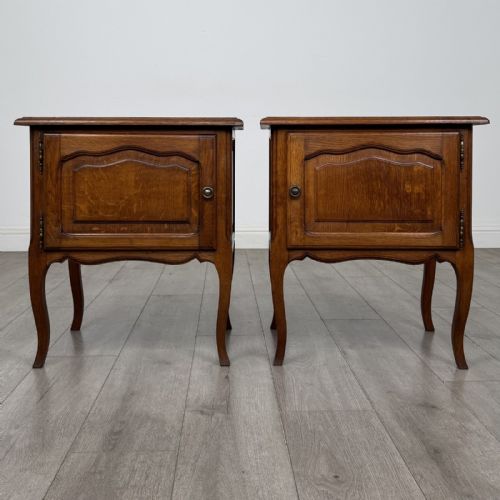
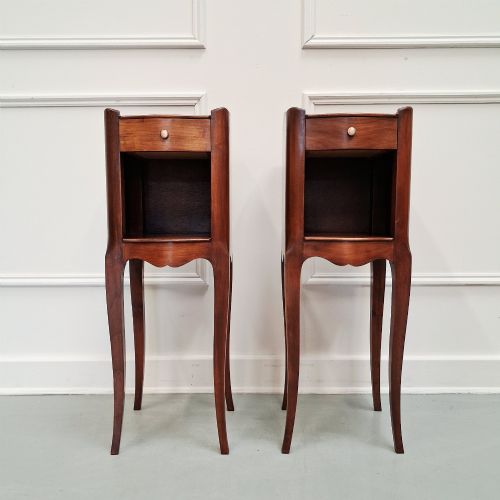
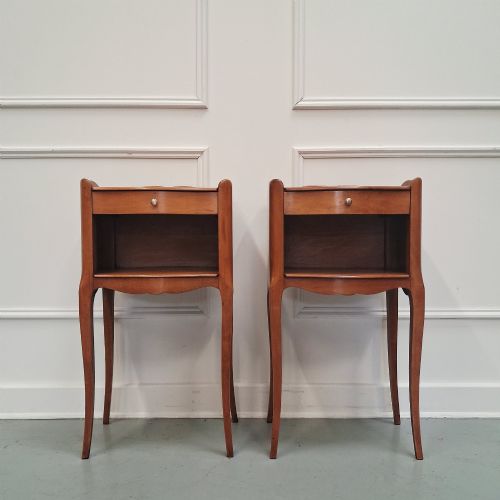
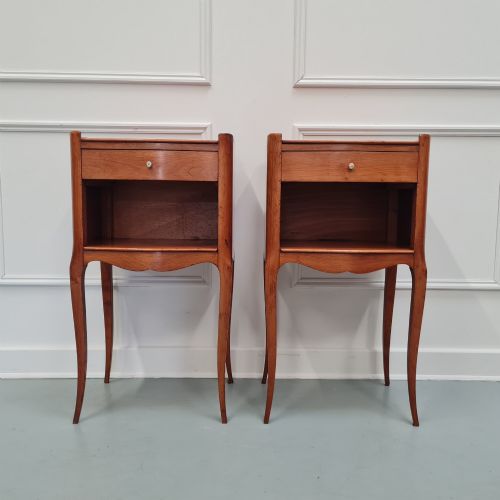
When searching for french provincial night tables, buyers encounter a selection of bedside tables, bedside cabinets, and night stands originating from various periods including the nineteenth century and the early twentieth century. These pieces serve as functional bedroom storage while displaying distinct regional characteristics.
The most common versions met on this page span the early twentieth century, specifically around nineteen thirty and nineteen twenty, alongside nineteenth-century examples. Forms range from simple single bedside cabinets to matched pairs featuring fitted cupboards and drawers.
Materials and construction
Cabinet makers utilised a variety of timbers including walnut, oak, mahogany, fruitwood, cherry wood, and satinwood, often enhanced with parquetry work or painted finishes. Some examples incorporate contrasting marble tops for a durable and decorative surface.
Construction techniques involve traditional joinery suited to bedside furniture, sometimes paired with brass hardware and leather details. Carved ornamentation and barley twist supports appear frequently across the styles.
French Provincial Night Tables Retail Price Guide 2026
Typical asking prices for french provincial night tables among the pieces listed under this phrase on Sellingantiques today, from the lower quarter to the upper quarter. They describe what is for sale here now, not the wider market.
Listings feature oak, walnut, mahogany, and fruitwood, alongside painted finishes and marble top variants.
Assessing quality
Quality in these bedside pieces rests upon the selection of timber and the precision of the cabinet work, particularly in parquetry patterns and carved details. The integration of materials like marble tops and brass fittings also distinguishes finer examples.
Proportion and the coherence of regional styles, whether Louis XV, Louis XVI, or French country, determine the visual harmony of the piece. Matching pairs demonstrate greater consistency in their decorative execution.
The French Provincial Night Tables Glossary
- Parquetry
- Geometric wood mosaic work used for decorative surface patterns on tabletops and cabinet doors. This technique demonstrates the skill of the cabinet maker.
- Barley twist
- A type of turned furniture leg or column resembling a twisted rope. It provides a distinct decorative accent on nineteenth-century and early twentieth-century pieces.
- Louis XV Style
- A design style characterised by curved lines, asymmetry, and natural ornamentation. It heavily influences French provincial furniture forms.
- Louis XVI Style
- A neoclassical design style marked by straighter lines, symmetry, and classical motifs. Pieces from this tradition offer a more restrained appearance.
French Provincial Night Tables: Frequently Asked Questions
What are french provincial night tables used for?
These pieces function primarily as bedside storage and display surfaces in a bedroom. They accommodate lamps, books, and small personal items within enclosed cupboards or drawers.
Their compact size allows them to fit neatly beside various bed heights while contributing to the overall interior scheme.
How do I style french provincial night tables?
Pairing these cabinets with complementary bedroom furnishings enhances their regional character. They work well with neutral walls and traditional lighting.
Matching pairs provide symmetry on either side of a bed, while single tables serve effectively as accent pieces in smaller spaces.
How can I tell the period of these tables?
Dating relies on stylistic indicators, construction methods, and timber choices seen across nineteenth-century and early twentieth-century examples. Nineteenth-century pieces often display heavier carving and distinct proportions.
Twentieth-century versions from periods like nineteen twenty and nineteen thirty frequently incorporate specific regional interpretations and surface treatments.
Are these tables usually found in pairs?
Many listings comprise matched pairs designed for placement on both sides of a bed. Single cabinets also appear frequently for individual use.
Pairs often share uniform timber grains, hardware, and decorative carvings executed during the same period.