

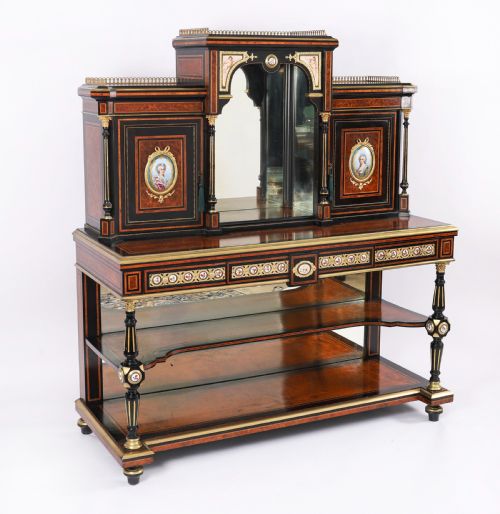


French Porcelain Writing Table
A french porcelain writing table brings together fine cabinetmaking, gilt bronze mounts and painted ceramic plaques in a singular piece of furniture.
French Porcelain Writing Table
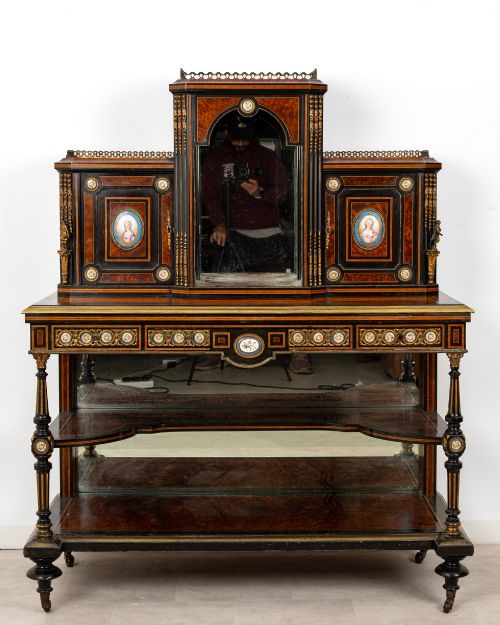
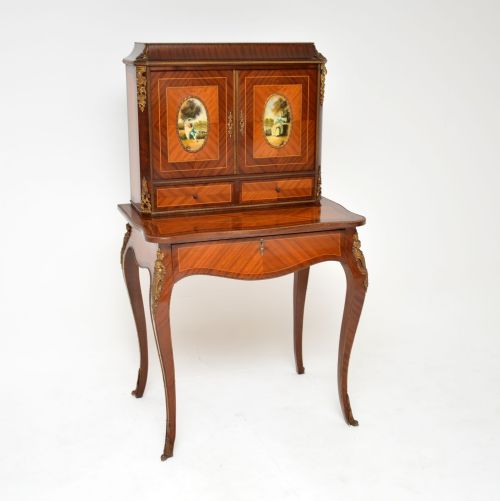
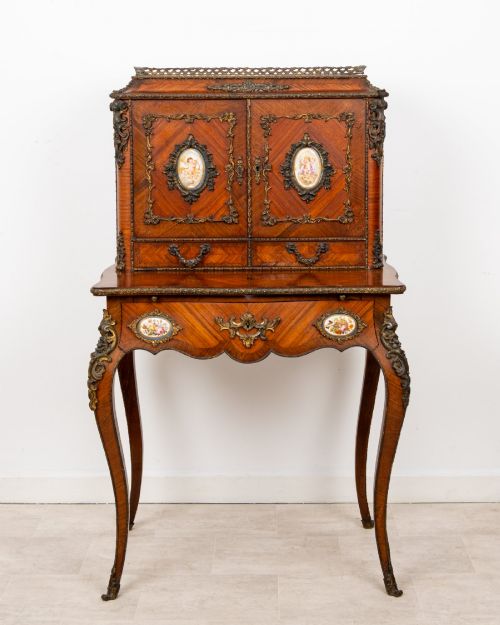
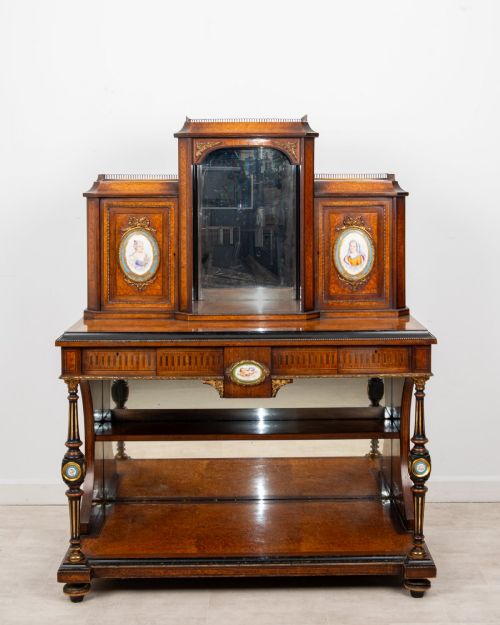
When you search for a french porcelain writing table, you encounter sophisticated writing desks and bonheur du jour cabinets originating largely from the nineteenth century. These forms reflect revivalist tastes, particularly Louis XV and Louis XVI styles, incorporating porcelain plaques into their wooden frames. The typical piece combines a writing surface with small drawers, compartments and decorative metal mounts.
The selection ranges from bureau plat writing tables to elaborate kneehole desks and multi-tiered ladies writing cabinets. Many pieces feature Sevres plaques set centrally into the fall front or gallery, framed by cast ormolu. You will also find side tables and small cabinets that adapt the same decorative vocabulary for domestic display.
How they were made
Cabinetmakers constructed these desks using dense hardwood timbers such as kingwood, rosewood, amboyna, satinwood and walnut, often laid as delicate veneer or marquetry over a carcase. Ebonised wood and brass stringing frequently provide contrast to the primary grain. The timber forms a stable chassis designed to support heavy metal mounts without warping.
Glazed and fired porcelain plaques, painted with floral or figural subjects, are fitted flush into the wood panels. Gilt bronze or ormolu mounts are cast, chased and screwed around the edges of the plaques and along the legs, aprons and desk galleries. These three elements - figured wood, ceramic plaques and cast ormolu - define the technical execution of the group.
Some desks hide secret compartments behind miniature drawers, perfect for love letters and smuggled chocolates.
What varies in quality
Quality rests heavily on the crispness of the ormolu chasing and the delicacy of the timber veneer selection. Better examples display deeply chiselled gilt bronze mounts that fit snugly against the wood contours rather than flat, mass-cast fittings. The hand-painted detail on the ceramic plaques similarly distinguishes finer workshops from more commercial production.
Structural integrity and the quality of internal drawer construction further separate the standard from the exceptional. Well-made pieces utilise finely dovetailed oak or mahogany linings within the drawers, ensuring smooth operation over time. The harmony between the porcelain design, wood grain and metal mounts determines the overall visual success of the piece.
Robert Strachan and Co
The French Porcelain Writing Table Glossary
- Ormolu
- Gilt bronze mounts used for decorative edging and corner pieces on furniture. The technique involves applying a gold amalgam to cast bronze before firing.
- Bonheur du jour
- A small light ladies writing desk featuring a raised cabinet or tier of drawers and pigeonholes above the writing surface. This form gained immense popularity during the nineteenth century revival periods.
- Bureau plat
- A freestanding double-sided writing table with a leather inset top and drawers fitted into the frieze. These tables typically feature cabriole legs and extensive metal mounts.
- Marquetry
- The art of applying thin slices of decorative wood veneer in geometric or pictorial patterns to a carcase. Craftsmen select contrasting timbers to create visual depth and shade.
- Sevres
- A famous French porcelain manufactory known for hand-painted plaques decorated with soft colours and gilt borders. Plaques from this tradition frequently adorn high-end nineteenth-century cabinets and desks.
French Porcelain Writing Table: Frequently Asked Questions
How do I date these desks?
Dating relies on identifying the revival style, timber choices and construction techniques used in the carcase. Most pieces originate from the nineteenth century, drawing inspiration from earlier eighteenth-century reigns.
Examining the secondary woods inside the drawers and the style of the ormolu mounts helps narrow the decade of manufacture.
Where were the porcelain plaques made?
The ceramic plaques set into these desks frequently originate from or follow the style of the Sevres porcelain factory in France. They feature hand-painted floral bouquets, pastoral scenes or portraits.
These plaques were specifically manufactured to be mounted into furniture or framed within gilt bronze borders.
How should I care for wood veneer?
Protect the timber surfaces by keeping the desk away from direct sunlight and extreme humidity changes. Regular dusting with a soft, dry cloth preserves the polish without building up residue.
Avoid using modern silicone polishes, as they can penetrate dry antique finishes and damage delicate veneers.