

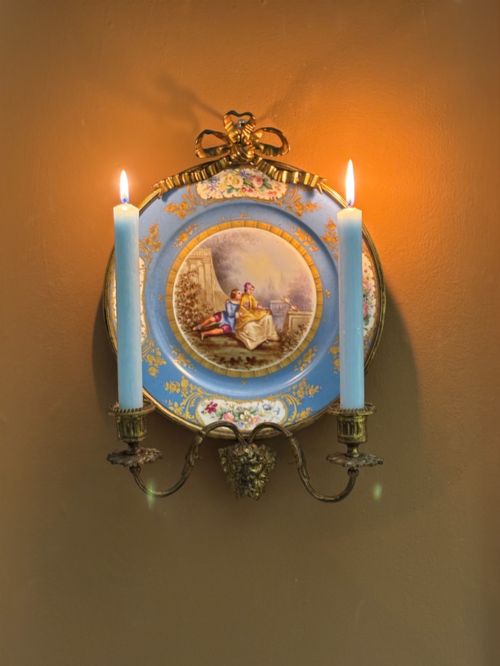


French Porcelain Candelabra
French porcelain candelabra bring together luminous painted ceramics and heavy chased metal mounts to light a room with undeniable presence.
French Porcelain Candelabra
When you search for french porcelain candelabra, you find sophisticated lighting fixtures and decorative centrepieces that combine glazed ceramics with metal work. These pieces frequently appear as matched pairs designed to sit upon mantelpieces or side tables, often accompanying clock garnitures.
The selections on this page span the eighteenth and nineteenth centuries, taking in revived Rococo, Louis XVI, and Second Empire aesthetics. You encounter both standalone branched lighting and larger sets featuring porcelain birds, musicians, or vases adapted for illumination.
Originating largely from continental workshops, these items utilise distinct regional bodies including Sevres style pastes, Meissen figures, and Imari or Bleu de Roi glazes. They serve as functional illumination and sculptural focal points for traditional interiors.
How they were made
Makers shaped kaolin clays into delicate vessels, figures, and plaques before firing and applying rich overglaze colours such as cobalt blue or sanguine red. Artisans then fitted these ceramic components into cast metal frameworks using pins, screws, and adhesives.
Mounts of gilt bronze, ormolu, and gilded metal were cast from carved moulds, chased by hand to sharpen details, and finished with mercury gilding or electroplating. This combination required skilled collaboration between ceramicists, bronze founders, and assemblers.
French Porcelain Candelabra Retail Price Guide 2026
Typical asking prices for french porcelain candelabra among the pieces listed under this phrase on Sellingantiques today, from the lower quarter to the upper quarter. They describe what is for sale here now, not the wider market.
Listings feature nineteenth-century styles including Rococo Revival, Louis XVI Revival, and Second Empire interpretations.
What varies in quality
The refinement of the casting and chasing separates standard production from exceptional examples, as sharp, deep relief in the ormolu mounts indicates superior craftsmanship. Finer pieces display crisp hand-painted details on the porcelain surface rather than simplified transfer prints or flat glazes.
Proportion and structural integration dictate the success of the composition, where metal mounts follow the contours of the ceramic body without awkward gaps. Original matching components that remain unified across pairs and clock garnitures hold greater cohesion than assembled sets.
Sevres·Meissen·Samson
The French Porcelain Candelabra Glossary
- Ormolu
- Gilded bronze produced through a mercury amalgamation process or later electroplating, providing a rich golden surface to metal mounts. This technique creates a durable finish that contrasts sharply with the smooth glaze of the porcelain.
- Sevres style
- Aesthetic derived from the famous French royal porcelain factory, known for decorative panels, rich ground colours, and gilt framing. Pieces in this manner imitate the classic forms and painterly subjects developed during the eighteenth century.
- Bleu de Roi
- A deep, saturated royal blue glaze developed in French kilns during the eighteenth century and revived in later periods. It provides a dark, uniform backdrop for applied gilt decoration and bronze mounts.
- Garniture
- A set of matching ornamental objects, typically consisting of a central clock flanked by a pair of candelabra or vases. These matched suites create a balanced display across a mantelpiece or sideboard.
- Imari
- A style of Japanese export porcelain featuring underglaze blue and iron red highlights, frequently incorporated into European metal mounts. These ceramics bring contrasting eastern motifs to continental furniture schemes.
French Porcelain Candelabra: Frequently Asked Questions
How do I clean french porcelain candelabra?
Dust the porcelain gently with a soft, dry brush and avoid using water or chemical cleaners on painted surfaces. Metal mounts require minimal intervention, using only a dry cloth to prevent damage to the historic gilding.
Keep these pieces away from direct sunlight and damp environments to protect the integrity of the glazes and adhesives. Regular, gentle maintenance preserves the original finishes without wearing away the fine details.
Were these candelabra originally wired for electricity?
These pieces were originally designed for wax candles rather than modern electrical wiring. Many examples retain their original nozzle inserts and drip pans intended for wax collection.
When conversion has occurred, it often involves running a discreet cord through the central channel without altering the exterior bronze or porcelain. Collectors often look for unconverted examples or reversible adaptations that respect the original structure.
How do I spot a later reproduction?
Examine the weight and colour of the metal mounts, as modern castings often feel lighter and display an even, chemical golden hue rather than aged ormolu. The porcelain base should show appropriate age-related wear beneath the glaze and uniform firing characteristics.
Check the fixing points where the ceramic meets the metal framework to ensure traditional assembly methods were used. Period pieces exhibit hand-finished components rather than mass-produced machine screws and synthetic resins.
Can I mix different clock sets and candelabra?
Mixing items from different origins disrupts the visual harmony intended by nineteenth-century makers, who designed matching sets with uniform gilding and ceramic tones. Even pieces sharing a Sevres style aesthetic can feature subtle variations in blue depth and ormolu chasing.
Keeping pairs and garnitures together maintains their historical context and decorative impact within a room. Individual candelabra function best on their own side tables rather than forcing an incomplete mantel arrangement.