




French Period Clock
A French period clock brings domestic timekeeping into the realm of sculpture, uniting gilt bronze and precision movement.
French Period Clock
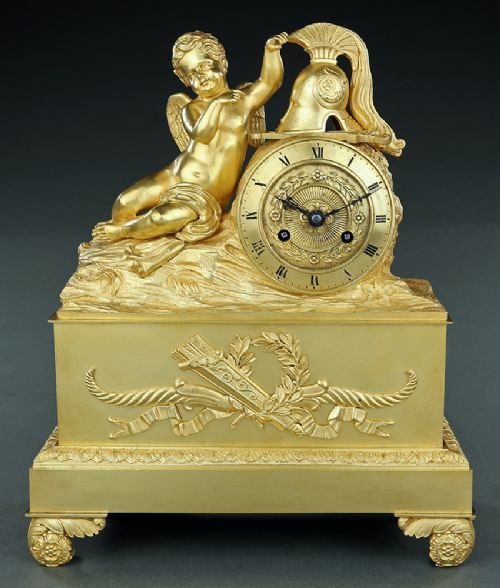
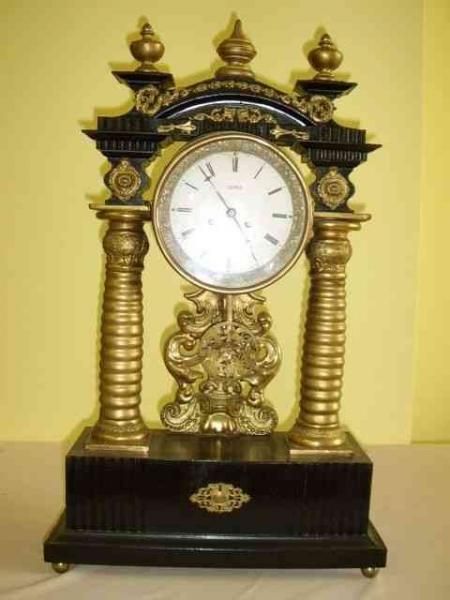
A French period clock encompasses mantel pieces, portico designs, and wall-hung cartel timepieces originating primarily from the eighteenth and nineteenth centuries. These works reflect the shifting aesthetic movements of their eras, moving from neoclassical symmetry to ornate romantic and Empire styling.
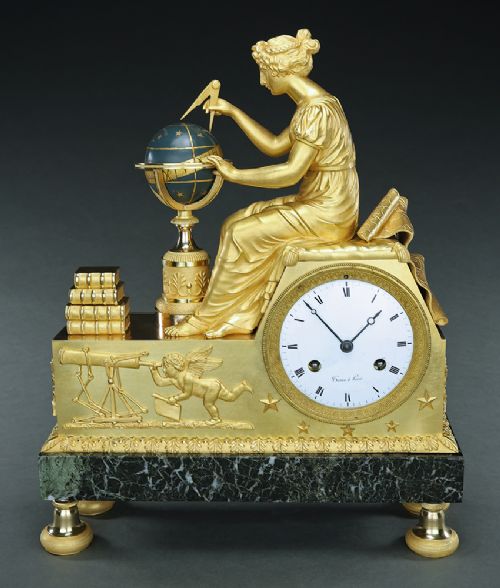
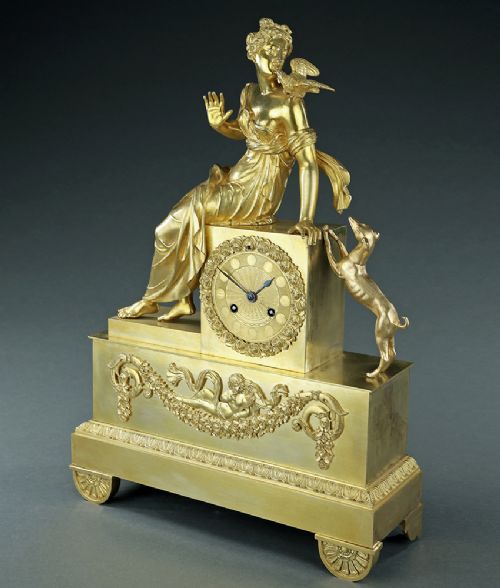
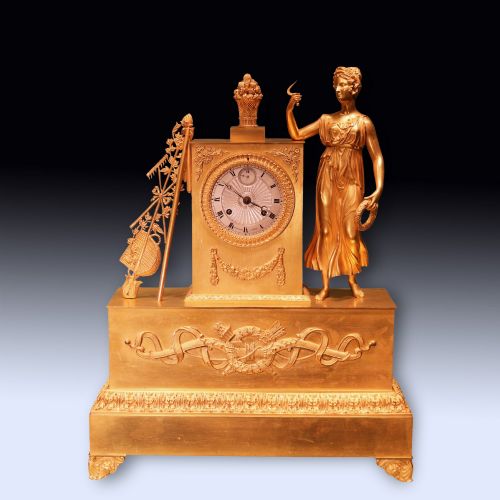
Mantel clocks dominate the selection, frequently cast in gilt bronze and patinated bronze, depicting mythological scenes, allegories, or architectural porticos. Buyers encounter diverse regional influences, including French Empire, Regency, and Louis Philippe expressions.
Makers often integrated white enamel dials alongside mechanical movements driven by silk suspension or fusee systems. The resulting objects serve simultaneously as functional timepieces and sculptural centrepieces for domestic interiors.
Materials and Construction
Casting formed the structural core of these pieces, utilising brass, patinated bronze, and mercury-gilded ormolu to create complex figurative and architectural housings. Enamel was fired for the dial faces, providing a clean white ground for delicate painted numerals.
Marble bases in white, siena, or rouge varieties frequently supported heavier metal cases, adding stability and contrasting colour. Wood entered the construction through ebonised cases, mahogany bodies, and carved giltwood cartel frames.
Movements relied on brass gear trains, often incorporating anchor escapements and bell-striking mechanisms. Artisans fitted silk suspension threads or chain fusee systems to regulate the pendulum swing with precision.
French Period Clock Retail Price Guide 2026
Typical asking prices for french period clock among the pieces listed under this phrase on Sellingantiques today, from the lower quarter to the upper quarter. They describe what is for sale here now, not the wider market.
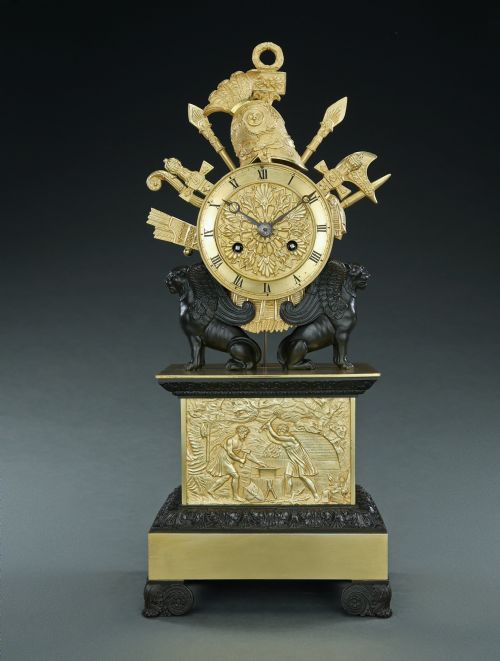
The selection includes Regency fusee movements, French Empire architectural porticos, and figurative subjects ranging from lions to astronomers.
Assessing Quality and Execution
The crispness of the bronze chasing separates standard work from superior examples, as master founders preserved sharp details in hair, drapery, and acanthus foliage after casting. Softer, blurred contours indicate worn moulds or secondary production runs.
The integration of the movement within the sculptural case indicates the maker's ambition, with bespoke fitments outperforming standardised internal components. Original mercury gilding retains a deep, warm lustre that chemical alternatives fail to replicate over time.
Dial legibility and the preservation of original enamel without extensive hairline cracking contribute significantly to the structural integrity of the piece. Matching components, from the pendulum to the rear bezel, sustain the historical coherence of the clock.
Canaillor of Paris·Paul Garnier·Pons de Paul·Ravrio·Reiche·FB Adams London
The French Period Clock Glossary
- Ormolu
- Gilded bronze produced by applying a mercury and gold amalgam to a bronze base and heating it until the mercury vaporised. This technique creates a durable, golden surface characteristic of fine Empire pieces.
- Portico clock
- A mantel clock featuring a architectural case supported by four columns, often housing a suspended pendulum within the central opening. These designs emerged during the late eighteenth century and remained popular through the Regency period.
- Silk suspension
- A method of hanging the pendulum by a short loop of silk thread rather than a metal spring. It offers delicate regulation but requires careful handling during transport.
- Cartel clock
- A wall-mounted clock with an ornate frame carved from wood or cast in metal. They were designed to hang directly against wood panelling or plastered walls.
- Fusee
- A conical pulley used in clock movements to maintain an even tension on the gear train as the mainspring unwinds. This mechanism improves the timekeeping accuracy of the movement.
French Period Clock: Frequently Asked Questions
Where should I place a portico clock?
Position these tall, architectural clocks on a sturdy mantelpiece, console table, or sideboard where they can stand level without vibration.
Keep them away from direct sunlight, draughts, and exterior walls that experience significant temperature fluctuations.
How do I identify an Empire period clock?
Look for neoclassical motifs such as trophies of war, classical deities, sphinxes, and palm trees cast in ormolu and patinated bronze.
Cases from this era emphasise strict symmetry, military triumphs, and architectural dignity inspired by ancient Rome and Greece.
What maintenance do these movements require?
Mechanical clocks benefit from professional cleaning and lubrication every few years to prevent wear on the brass bushings and gear trains.
Dust the exterior surfaces gently with a soft brush, avoiding chemical polishes that can strip the original mercury gilding.