

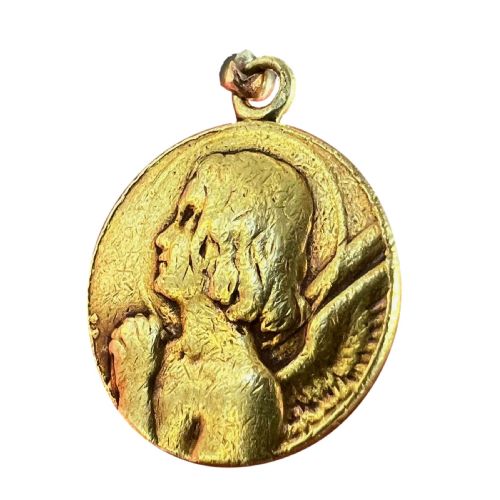
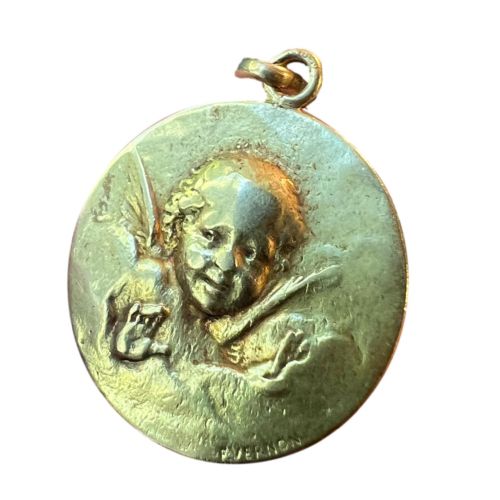
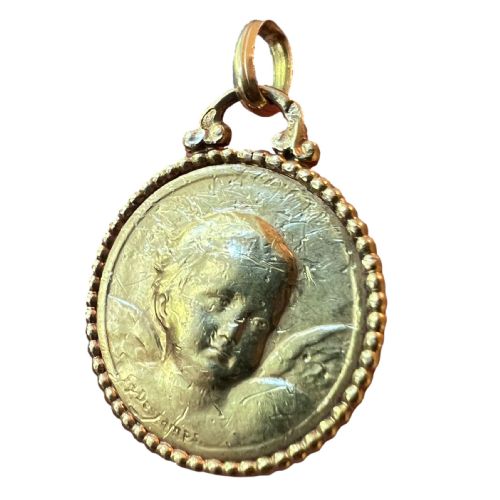
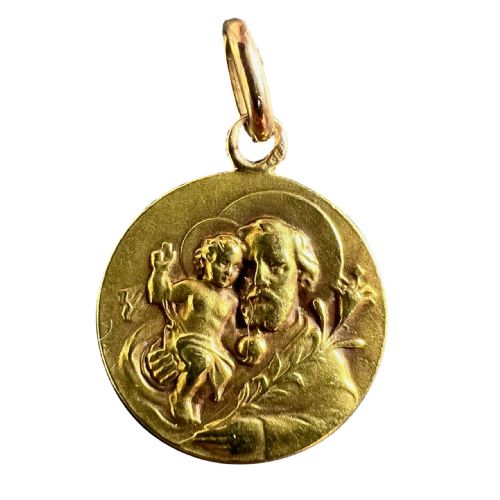
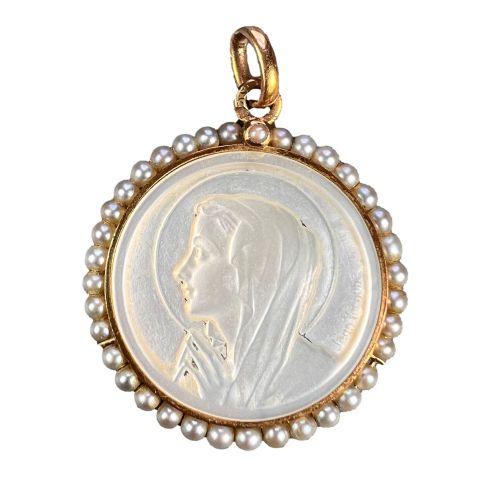


French Pendant Medal
A french pendant medal brings together intricate metalwork and devotional iconography, mostly originating from the late nineteenth century and the early decades of the twentieth.
French Pendant Medal
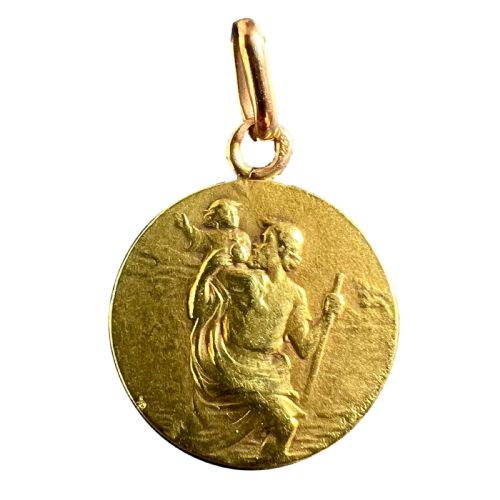
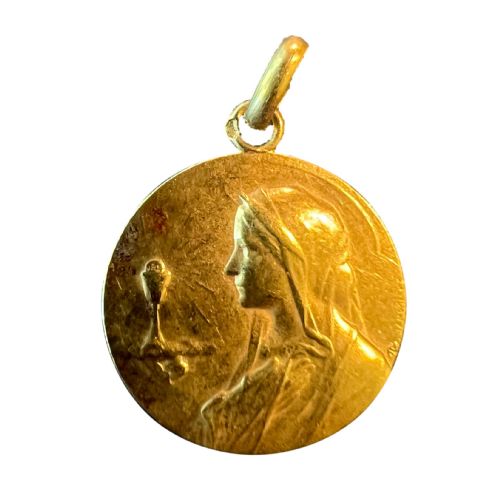
A french pendant medal sits at the intersection of devotional jewellery and fine wearable art, featuring subjects such as the Virgin Mary, Saint Christopher, and various saints. Most examples encountered here date from the period between eighteen ninety and the nineteen thirties, encompassing Art Nouveau, Belle Epoque, and Art Deco movements.
The standard form is a small metallic disc, shield, or cross designed to be worn on a chain, often carrying significant sculptural depth on the face and crisp engravings on the reverse. These pieces frequently incorporate religious motifs, floral wreaths, or secular symbols like hunting horns and monograms.
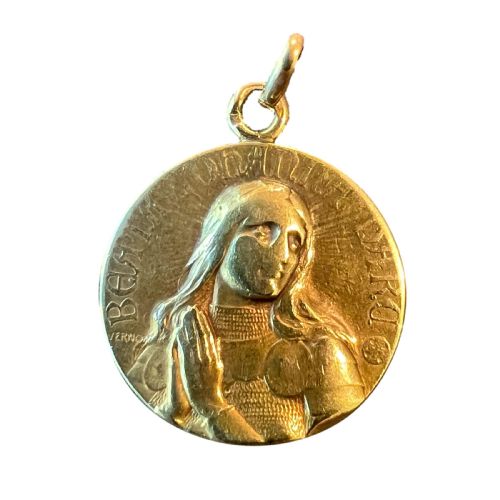
Religious pieces dominate the selection, heavily featuring representations of Madonna and Child, Saint Joseph, and Joan of Arc alongside miraculous medals. Secular designs appear too, including floral shields and geometric crosses, maintaining the same high standard of miniature medallic art.
Materials and construction
Makers fashioned these pieces primarily from eighteen karat yellow and rose gold, occasionally employing white gold or platinum accents. The metal provides a warm, dense ground for detailed miniature sculpture and delicate borders.
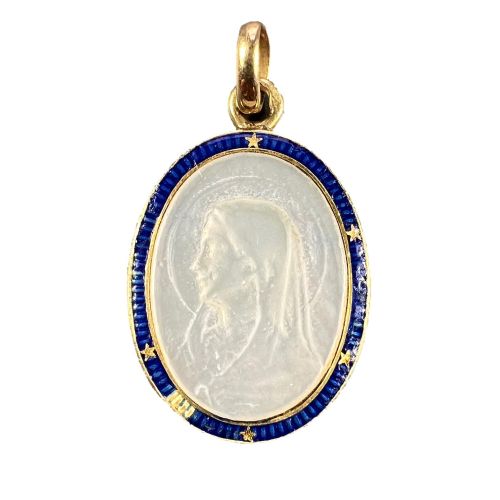
Enamel work, particularly translucent plique-a-jour, brings vibrant colour to robes, halos, and floral backgrounds by allowing light to pass through the suspended vitreous material. Mother of pearl also serves as a luminous backing for carved figures and relief work.
Goldsmiths combined die-stamping for the structural medal base with meticulous hand-chasing, engraving, and enamel firing. Seed pearls and fine bezels frequently accent the outer edges of the pieces.
French Pendant Medal Retail Price Guide 2026
Typical asking prices for french pendant medal among the pieces listed under this phrase on Sellingantiques today, from the lower quarter to the upper quarter. They describe what is for sale here now, not the wider market.
Saint Christopher watches over travellers, while hunting horns call the hounds - proof that miniature gold could handle both divine intervention and a weekend in the woods.
Assessing craftsmanship and execution
The distinction between standard output and the finest examples rests on the crispness of the relief casting and the precision of the hand-finishing. Master medallists achieved remarkable facial expressions and drapery folds within a space no larger than a coin.
Quality shows in the management of translucent enamels and the neatness of seed pearl settings. Superior pieces display flawless glass fusion in plique-a-jour cells and perfectly aligned maker marks alongside standard assay stamps.
Rasumny·Vernon·Jampolsky·Emile Monier·Paul Brandt·Mazzoni·Pageli Perriat·Dropsy·Guilbert·Sellier·Ovide Yencesse·Tairac
The French Pendant Medal Glossary
- Plique-a-jour
- An enamelling technique where the enamel is applied without a backing metal, creating a stained-glass effect that lets light pass directly through the design.
- Medallion
- A large medal-like pendant, usually featuring sculptural relief work on one or both sides and suspended from a jump ring.
- Belle Epoque
- A period of ornate, elegant design spanning the late nineteenth century up to the First World War, characterised by delicate goldwork and floral motifs.
- Art Deco
- A twentieth-century style defined by geometric symmetry, clean lines, and stylised representations of figures and patterns.
- Hallmark
- A small stamp impressed into the gold indicating the metal purity and the origin workshop or assay office.
French Pendant Medal: Frequently Asked Questions
How do I date a medal?
Dating relies primarily on the stylistic markers of the design, such as flowing organic lines for Art Nouveau pieces or sharp geometric patterns for Art Deco examples. Maker signatures and French assay marks stamped onto the gold also help narrow down the period of production.
Most items found here belong to the era spanning from the late nineteenth century through the nineteen thirties. Examining the specific type of enamel and the mounting style provides further clues to the exact decade.
How should I wear one?
A french pendant medal looks best suspended from a fine gold chain that matches the tone of the metal, whether yellow, rose, or white gold. Their moderate scale makes them suitable for daily wear, either alone as a focal point or layered with other delicate chains.
Because many pieces feature detailed enamel or mother of pearl, handling them with care prevents unnecessary friction against other jewellery. Storing them in a soft pouch when not being worn protects the delicate surface details.
What subjects are common?
Religious iconography forms the majority of the subjects, particularly the Virgin Mary in various forms such as Notre Dame of Lourdes or the Miraculous Medal. Other frequent figures include Saint Christopher, Saint Joseph, Joan of Arc, and the Madonna and Child.
Secular designs also appear among the devotional pieces, featuring motifs like floral wreaths, roses, monograms, and hunting horns. Each subject is rendered with the high sculptural standard typical of French medallic art of the era.