





French Pearl Necklace
A French pearl necklace brings together centuries of meticulous craftsmanship, ranging from delicate Edwardian seed pearl crosses to bold mid-century clasps.
French Pearl Necklace
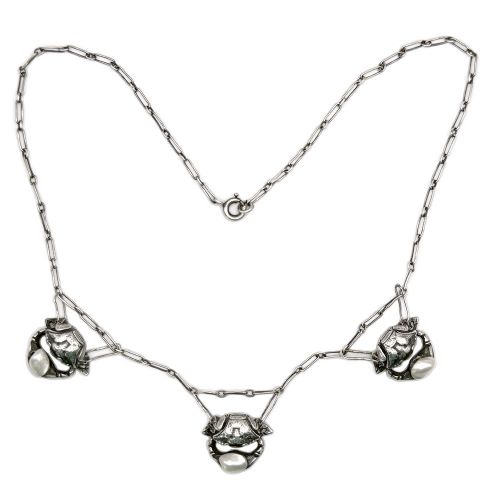
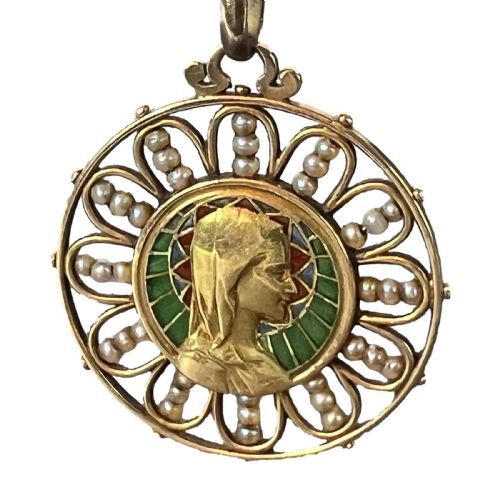
A french pearl necklace encompasses delicate pendants, single strands, and chokers spanning periods from the Georgian era through to the mid-twentieth century. Buyers searching this phrase encounter diverse forms, including religious medals with plique-a-jour enamel, gemstone-accented pendants, and classic cultured pearl strands.
How they were made
Maker workshops utilised traditional goldsmithing techniques, shaping 18ct yellow and white gold alongside platinum to mount pearls and gemstones securely. Intricate details such as plique-a-jour enamel and hand-knotted threading require high levels of technical precision.
Gemstones including rose cut diamonds, emeralds, and sapphires are set alongside carved elements like tourmaline and onyx horse heads. Natural and cultured pearls are paired with precious metals in both strict geometric Art Deco layouts and flowing Art Nouveau designs.
French Pearl Necklace Retail Price Guide 2026
Typical asking prices for french pearl necklace among the pieces listed under this phrase on Sellingantiques today, from the lower quarter to the upper quarter. They describe what is for sale here now, not the wider market.
Materials span natural and cultured pearls, seed pearls, diamonds, emeralds, rubies, sapphires, tourmalines, platinum, and 18ct gold.
What varies in quality
The standard of a french pearl necklace depends upon the uniformity of the pearls and the sophistication of the accompanying metalwork. Finer examples display meticulous stone setting in the clasp or pendant, utilising materials like platinum and high-grade diamonds.
Artistic execution dictates the upper tier of these pieces, seen in complex enamel work like plique-a-jour or finely carved hardstones. The integration of the clasp with the main strand shows the level of thought given to the overall design.
Chaumet·Sellier
The French Pearl Necklace Glossary
- Seed pearl
- Very small natural pearls, often drilled and strung together in quantity. They appear frequently in Georgian and Victorian devotional or floral jewellery.
- Plique-a-jour
- A enamelling technique where the enamel is applied without a backing, resembling miniature stained glass. This method lets light pass directly through the transparent or translucent coloured cells.
- Cultured pearl
- Pearls formed with human intervention by inserting a nucleus into the mollusc. These became common in mid-century pieces alongside traditional natural varieties.
- Rose cut
- An antique diamond cut featuring a flat base and a domed crown with triangular facets. This cut predates modern brilliant facets and offers a soft, pooling reflection.
- Clasp
- The fastening mechanism of a necklace, which in better pieces incorporates diamonds, sapphires, or carved stones to form a decorative focal point.
French Pearl Necklace: Frequently Asked Questions
How do I date a pearl necklace?
Dating relies on examining the clasp style, the mounting metal, and how the pearls are strung. Art Deco and Edwardian pieces show distinct geometric or floral motifs specific to those decades.
Evidence from past and current listings points to periods ranging from Georgian work through to the 1960s. Examining hallmarks on the gold or platinum elements also helps confirm the origin.
What is the difference between natural and cultured pearls?
Natural pearls form organically within molluscs without human prompting, making them typical of older antique pieces. Cultured pearls involve human intervention to start the growth process.
Both types appear across various twentieth-century French designs listed here, often paired with diamond-set clasps or platinum settings.
How should I store my pearl necklace?
Store pearls flat in a lined box to prevent the silk thread from stretching and to protect the softer organic surface from scratching against harder gemstones. Keeping them away from direct cosmetics preserves the lustre.
Regular checking of the hand-knotted silk thread ensures the pearls remain secure during wear.
Can I wear a pearl necklace every day?
Pearls require gentle treatment because they are softer than gemstones and precious metals. Frequent daily wear benefits from occasional professional restrung maintenance to keep the silk strong.
Shorter chokers and robust clasps in white or yellow gold suit regular rotation when handled with reasonable care.