





French Pastoral Scene Painting
These French pastoral scene painting works capture idealised rural life on canvas, wood, and porcelain, offering a romantic escape into historic countryside settings.
French Pastoral Scene Painting
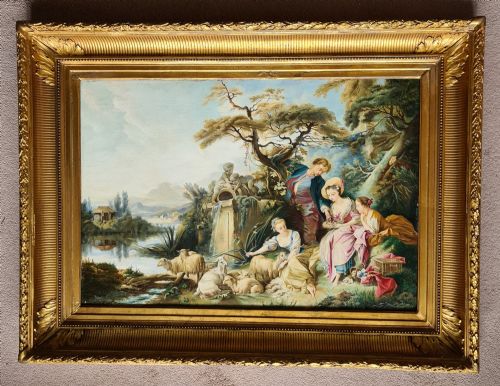
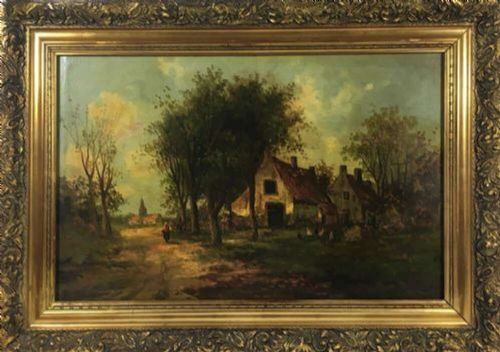
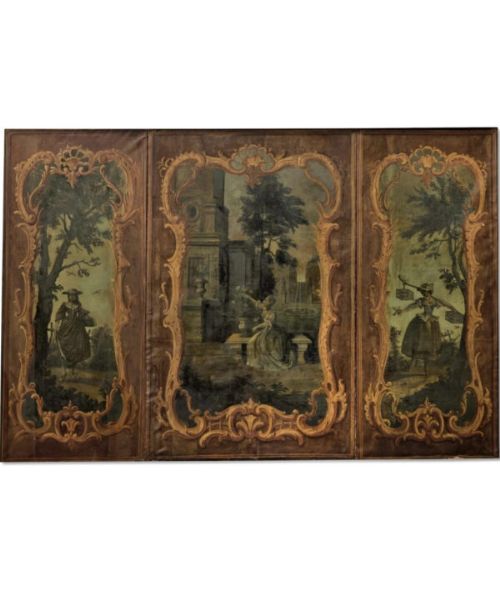
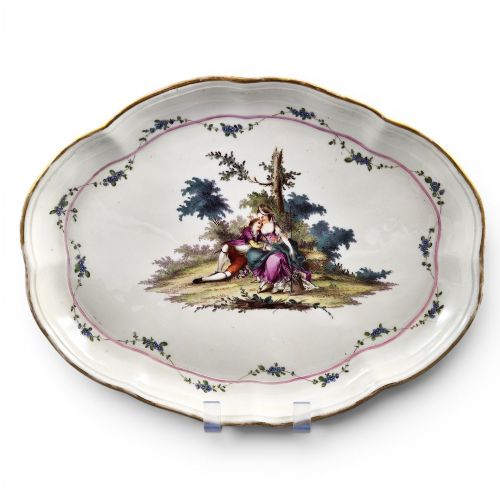
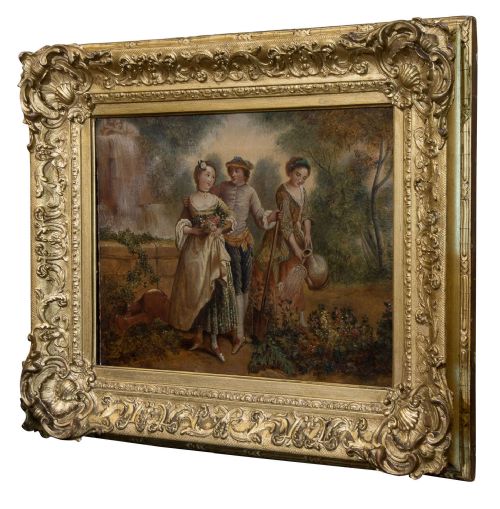
A french pastoral scene painting portrays idealised rural life, featuring figures in landscapes, farmyards, and woodland settings. Buyers exploring this category encounter canvases executed in oil, alongside painted porcelain trays, folding screens, and decorative mirrors.
The works span multiple centuries, ranging from eighteenth-century compositions influenced by Rococo traditions to nineteenth-century interpretations associated with the Barbizon School and romantic rural artists. Production extends into the early twentieth century, showing enduring interest in country house aesthetics.
Subjects commonly involve cattle grazing, figures by streams, farm gates, and musical interludes in leafy retreats. Such pieces frequently reference master painters such as François Boucher and Jean-Baptiste Joseph Pater through direct after-works or stylistic emulation.
Materials and Technique
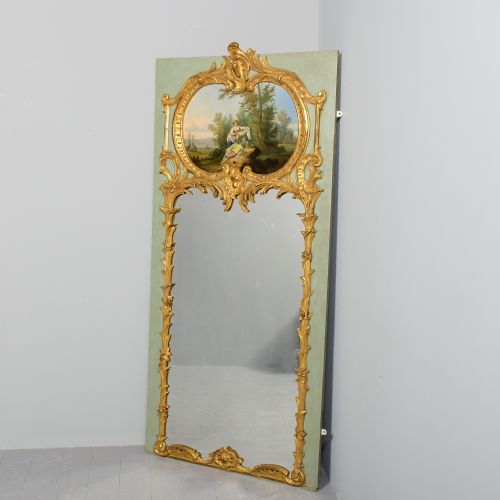
Painters typically applied oil paint onto stretched canvas panels, utilising brushwork to build atmospheric depictions of rolling hills and riverbanks. Frames frequently incorporate gilt wood, gesso, and gold leaf, enhancing the decorative presence of wall hangings and trumeau mirrors.
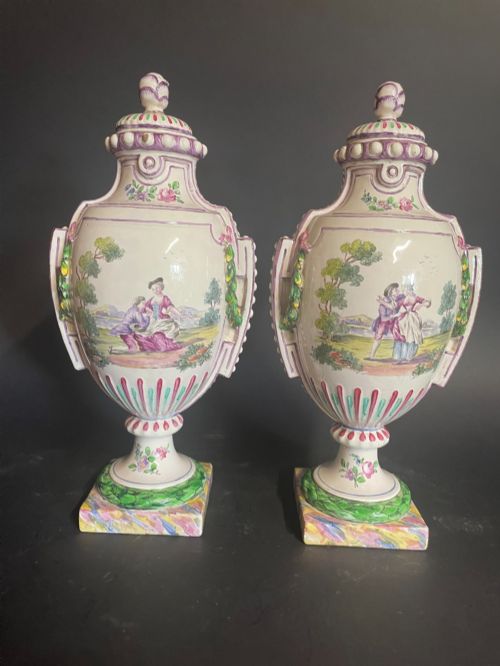
Beyond standard canvases, pastoral imagery appears on faience and porcelain pieces, executed in polychrome or camaieu palettes. Structural items such as wooden folding screens and cabinets incorporate painted panels featuring rural motifs.
Materials across these listings include oil paint on canvas, gilt wood, gesso, gold leaf, faience, porcelain, walnut, and glass.
Assessing Quality and Execution
Quality rests upon the confidence of the brushwork and the depth of the composition, distinguishing spirited original interpretations from formulaic copies. Finer oil paintings exhibit subtle control of light within foliage and livestock, whilst superior porcelain and faience items display crisp, hand-painted details.
The integrity of the surrounding materials contributes significantly to the overall merit. Original gilt wood frames with intact gesso enrich the presentation, whereas compromised supports or crude later overpainting diminish the historical character.
Francois Boucher·Joseph Gaspard Robert·Charles Zacharie Landelle·Jean Baptiste Joseph Pater·Eugene Battaille·Henri Joseph Harpignies
The French Pastoral Scene Painting Glossary
- Barbizon School
- A nineteenth-century French art movement focused on realistic landscape painting inspired by the countryside. Artists sought direct connection with nature rather than classical studio conventions.
- Trumeau Mirror
- An antique wall mirror featuring an upper panel decorated with a painting or carving. These architectural fittings often incorporate pastoral artwork above the glass.
- Faience
- Tin-glazed earthenware produced in France and other European regions. Painted pastoral scenes frequently appear on the glazed surfaces of dishes and vases.
- Camaieu
- A monochrome or low-colour painting technique using shades of a single hue, such as puce. This method highlights tonal modelling in antique ceramic decoration.
- Rococo
- An ornate eighteenth-century style characterised by asymmetry, scrollwork, and playful pastoral themes. It heavily influenced French decorative arts and painting.
French Pastoral Scene Painting: Frequently Asked Questions
What periods do these paintings cover?
The works span from the mid-eighteenth century through the nineteenth century and into the early twentieth century. This timeline covers Rococo revivals, Barbizon landscapes, and later decorative interpretations.
Earlier pieces often reflect courtly pastoral traditions, whilst later nineteenth-century examples lean towards naturalistic rural scenery and Barbizon school sensibilities.
How were pastoral scenes used historically?
Paintings served as grand wall hangings, framed fine art, or integrated components within decorative trumeau mirrors and folding screens. They brought light and countryside charm into formal salons and country houses.
Ceramic items such as trays and vases functioned as both ornamental display pieces and functional tableware within affluent French households.
How do I care for an oil painting?
Keep the canvas away from direct sunlight and steady humidity levels to prevent paint cracking or warping. Dust the surface and frame gently with a soft, dry brush.
Avoid using liquid cleaners or chemical solvents on the paint surface or gilt wood frame. Professional conservation should be sought for any structural repairs.
How are copies distinguished from originals?
Many listings feature works painted after established masters like Boucher, executed either in the period or later. Close inspection of pigment age, canvas weave, and brushstroke spontaneity clarifies the date of creation.
Period framing and historical exhibition labels provide helpful context for authenticating nineteenth-century school paintings.