
French Parquetry Top Table
When you search for a french parquetry top table, you are looking at geometric wood veneer surfaces built for formal display and daily writing.
French Parquetry Top Table
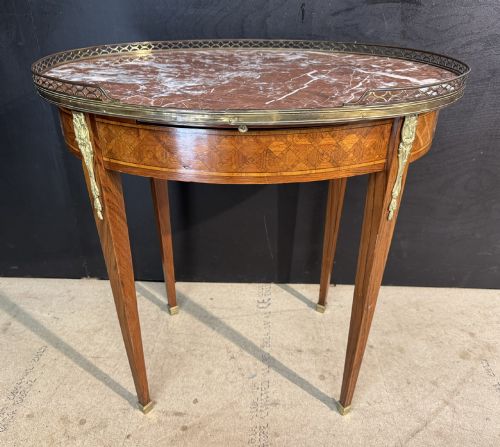
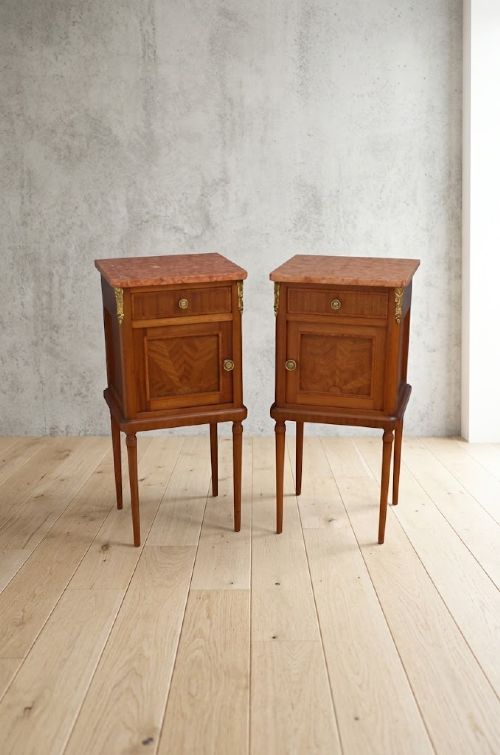
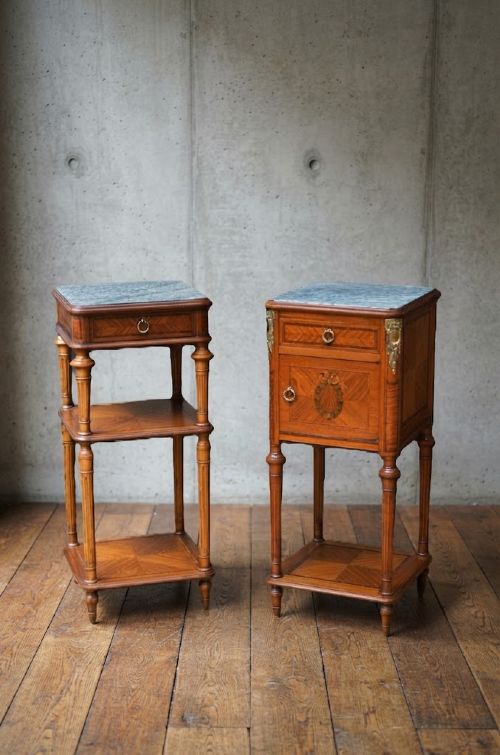
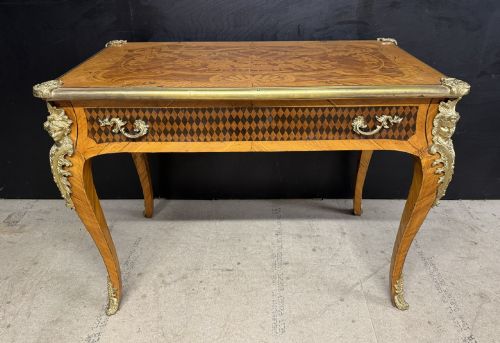
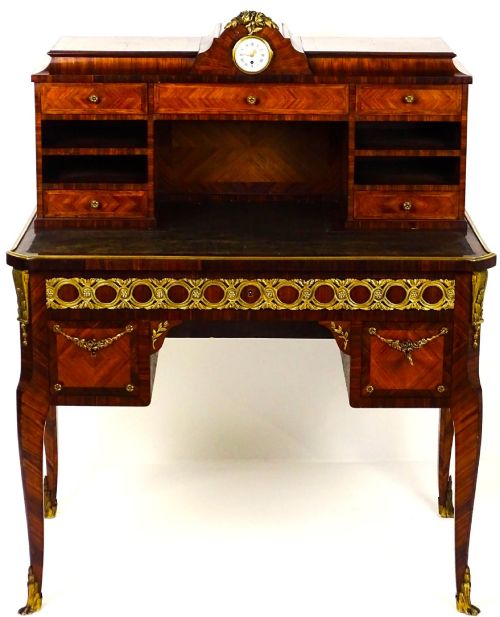
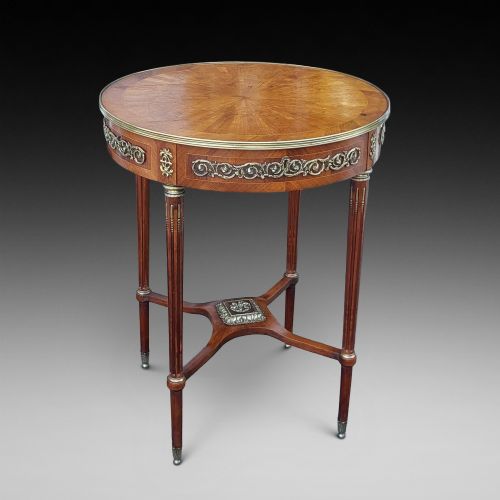
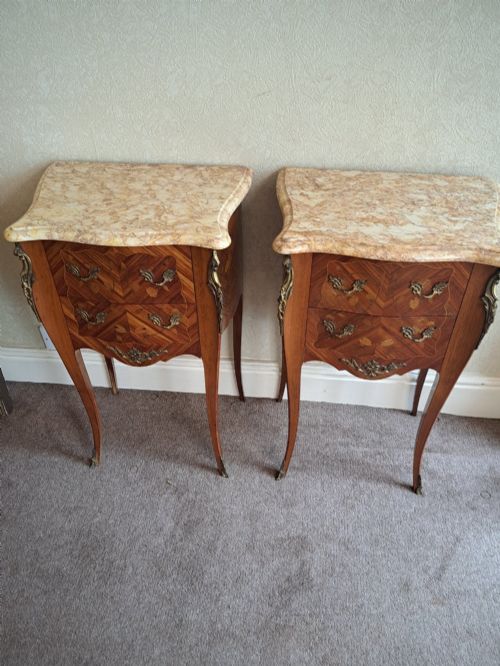
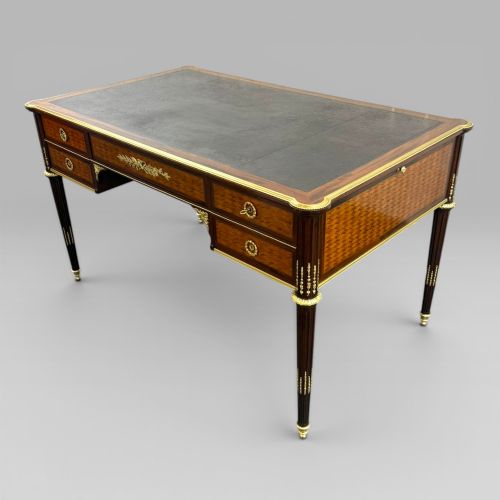
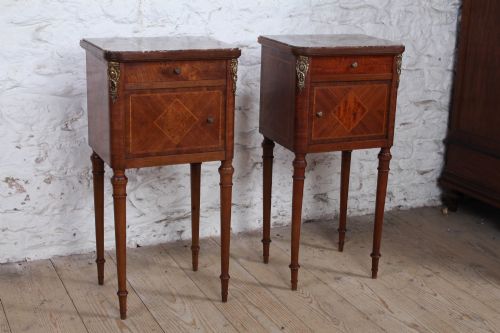
A french parquetry top table unites geometric wood veneers with structural timber frames, originating primarily from nineteenth-century workshops and revival periods. You will encounter forms ranging from large oak dining tables and extending draw-leaf boards to compact occasional tables, games tables, and bedside cabinets.
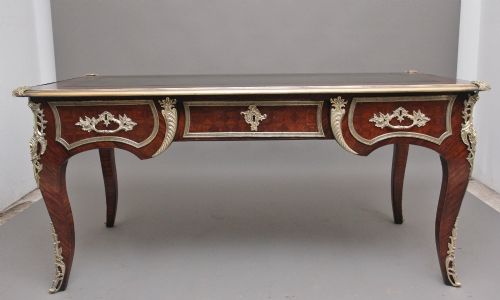
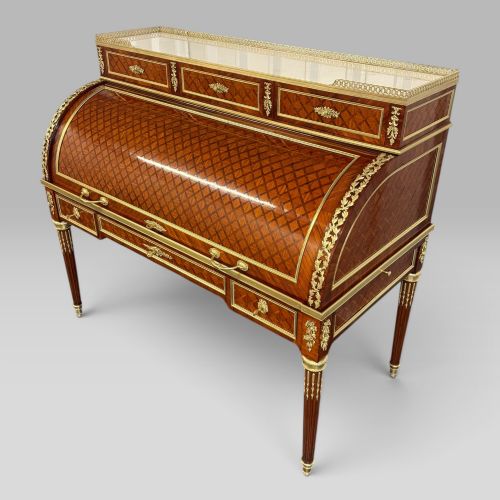
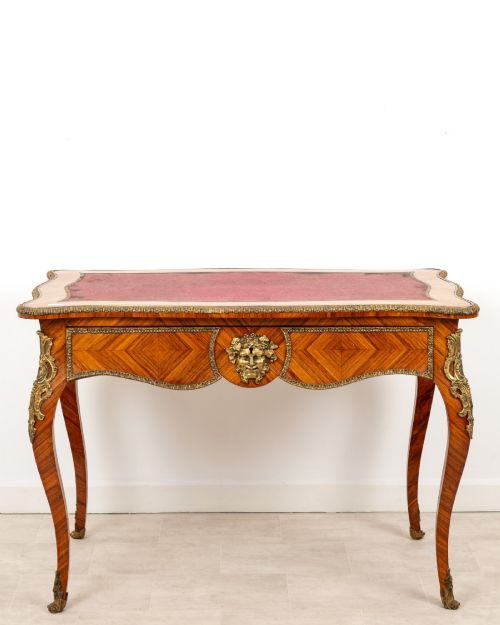
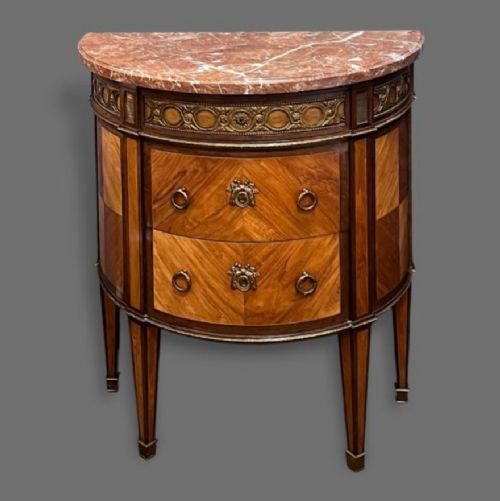
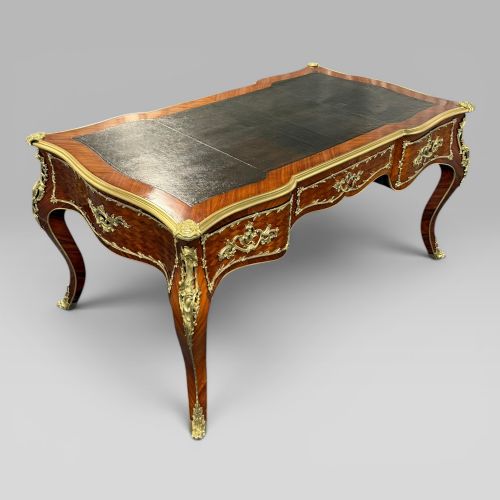
The aesthetic draws heavily from Louis XV and Louis XVI revivals, where serpentine lines, cabriole legs, or restrained neoclassical geometry dictate the silhouette. Many examples integrate marble tops or gilt bronze mounts alongside the patterned wooden surfaces.
Makers working within Paris and provincial centres produced these pieces for domestic reception rooms and boudoirs, adapting historical cabinet-making techniques for contemporary bourgeois interiors.
How They Were Made
Cabinet-makers laid fine veneers of kingwood, walnut, satinwood, and tulipwood onto sturdy secondary timbers like oak or mahogany, sawing thin slices of wood by hand to form precise geometric patterns. These geometric tiles, or parquetry, required exact cutting so the grain patterns created optical depth across the surface.
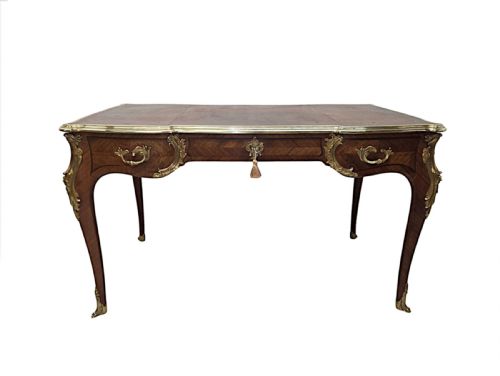
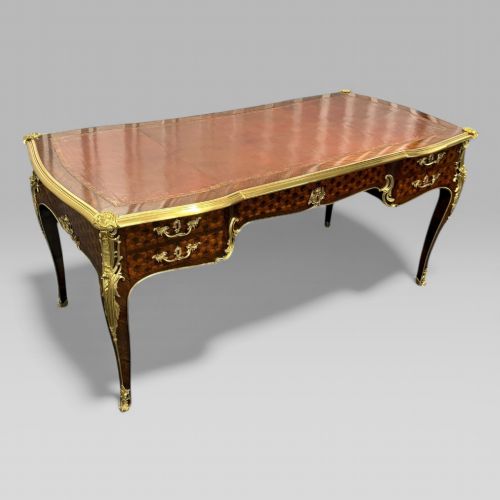
Ormolu mounts, cast in bronze and subsequently gilt, were chased by hand and screwed into place to protect vulnerable corners and accentuate the curves of the apron and legs. Brass stringing and leather writing inserts completed desks and bureau plats, combining multiple specialist trades within a single workshop.
Some draw-leaf dining tables hide their extending leaves so cleverly that guests spend the first ten minutes searching for the secret mechanism.
What Varies in Quality
Quality rests upon the precision of the veneer work and the crispness of the bronze casting, where superior examples display seamless geometrical alignment and deeply chased ormolu details. Lesser pieces rely on stamped brass rather than heavy hand-finished bronze, and simpler timber selections without contrasting borders.
The architectural integrity of the frame dictates longevity, separating standard commercial production from master workshops whose tables retain rigid joints and balanced proportions after generations of use.
Paul Sormani·François Linke·Donald Ross·L.Martin of Paris·Maison Mottheau·Maurice Dufrêne
The French Parquetry Top Table Glossary
- Parquetry
- A geometric mosaic of wood veneers arranged in patterns such as cubes, chequered squares, or triangles. This technique allowed cabinet-makers to utilise smaller pieces of exotic timber economically while creating striking optical effects.
- Bureau plat
- A freestanding double-sided writing desk featuring a wide rectangular top, often lined with leather, set above one or more frieze drawers. These desks sit comfortably in the middle of a room rather than against a wall.
- Ormolu
- Gilt bronze mounts applied to furniture edges, legs, and handles for decoration and protection. The term derives from the French for milled or ground gold, referring to the mercury-gilding process historically used.
- Kingwood
- A dense, richly figured Brazilian timber with dark violet-brown and golden stripes, frequently employed in high-end French cabinet-making. It took a brilliant polish and formed the ground for intricate parquetry designs.
- Guéridon
- A small, round occasional table supported by a central column or three slender legs. Originating in the seventeenth century, these tables served as stands for lights, decorative objects, or tea service.
French Parquetry Top Table: Frequently Asked Questions
What is a french parquetry top table?
A french parquetry top table is a piece of furniture featuring a decorative surface made from geometric arrangements of wood veneer, typically supported by oak, walnut, or mahogany frames.
These tables span various forms including writing desks, dining boards, and small occasional stands influenced by eighteenth-century royal styles.
How do I care for marble and wood?
Keep wooden surfaces away from direct sunlight and extreme heat sources to prevent the veneers from lifting or drying out over time. Use coasters and dry cloths for cleaning, avoiding harsh chemical sprays that strip the French polish.
Marble tops require prompt wiping of acidic liquids like wine or citrus juice to avoid permanent etching on the polished stone surface.
Where were these tables used originally?
These tables functioned primarily in Parisian salons, drawing rooms, and private libraries as writing surfaces, games tables, or decorative display centres. Smaller bedside cabinets and occasional tables furnished private chambers.
Larger extendable dining tables served family meals in formal dining rooms across provincial and urban French homes.
How can I tell the period?
Examine the construction methods, secondary timbers, and mounting styles, as nineteenth-century revival pieces often employ machine-cut veneers alongside hand-chased ormolu. Earlier eighteenth-century originals display hand-sawn timber variations and traditional joinery marks.
Maker stamps, when present, provide a direct link to recorded Parisian workshops and exhibition dates.