


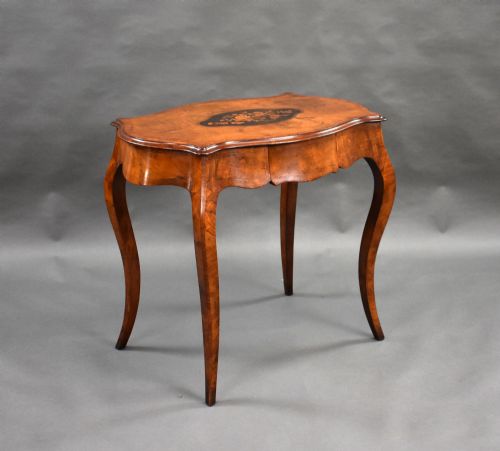


French Parlor Table
A French parlor table brings continental elegance to a room, offering a surface for display or gathering that reflects centuries of skilled European cabinet-making.
French Parlor Table
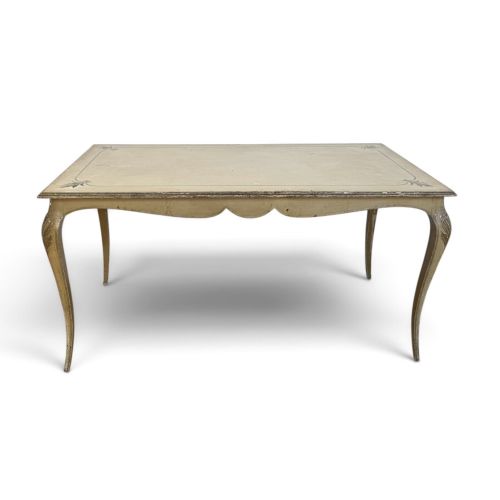
A French parlor table typically takes the form of a centre table, occasional table, or side table, designed to anchor a room with distinct continental character. You will frequently encounter nineteenth-century examples spanning Victorian periods up through the early twentieth century.
The silhouettes draw heavily on historical revivals, most notably Louis XV, Louis XVI, and Empire styles. These pieces range from round coffee tables topped with marble to grand marquetry centerpieces intended for prominent display.
Materials and Construction
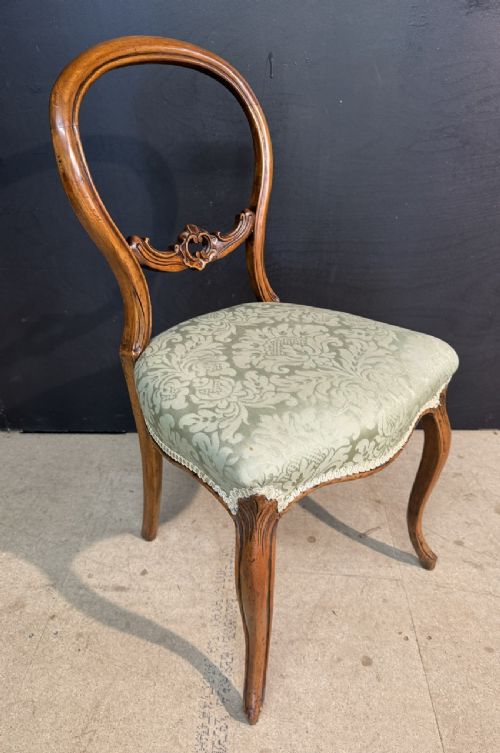
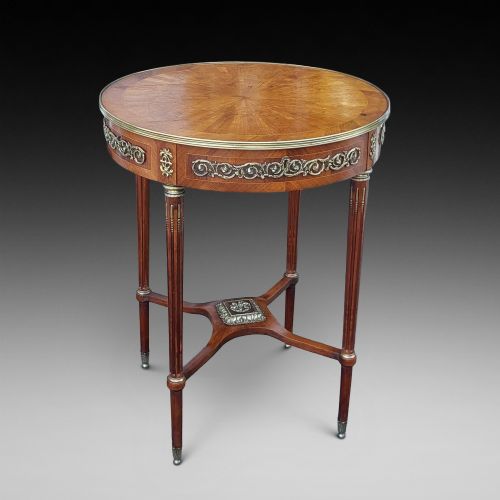
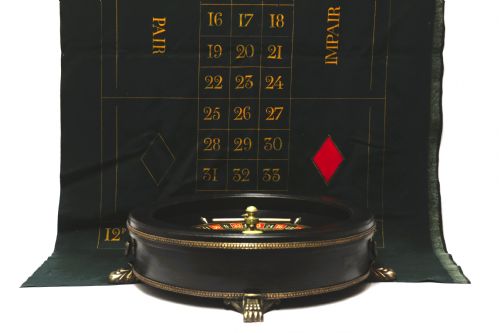
Cabinet-makers relied on rich timbers like walnut, mahogany, and kingwood, frequently applying intricate marquetry patterns to the surfaces. Ebonised wood and black lacquer also appear, providing a striking contrast to gilt bronze and ormolu mounts.
Many tables incorporate inset marble tops or intricate silver inlay, demanding specialist skill to set stone and metal flush with the wooden frame. Cast ormolu and gilt bronze ornaments are secured to corners and legs, accentuating the structural lines.
Listings feature walnut, mahogany, and kingwood timbers, frequently paired with marble tops and ormolu mounts across Victorian and 20th-century periods.
Assessing Craftsmanship
The distinction between standard production and exceptional work lies in the execution of the decorative elements, such as the precision of the marquetry and the sharpness of the ormolu mounts. Finer examples display hand-chased bronze details and carefully selected veneer grains that align harmoniously across the top.
Structural integrity also separates the grades, with superior pieces maintaining tight joinery in the legs and aprons despite age and environmental shifts. The quality of secondary woods used beneath the veneers further indicates the original maker's commitment to durability.
Maple and Co Paris
The French Parlor Table Glossary
- Ormolu
- Gilded bronze used for decorative mounts on furniture. This technique involves applying a finely ground gold-mercury amalgam to bronze.
- Marquetry
- Decorative veneer patterns applied to furniture surfaces to create pictures or geometric designs. Craftsmen cut thin slices of various coloured woods and assemble them meticulously.
- Cabriole leg
- A furniture leg that curves outward and then tapers inward, ending in a graceful foot. This form mimics the shape of an animal's leg.
French Parlor Table: Frequently Asked Questions
How do I identify a Louis XV style table?
Look for asymmetrical curves, cabriole legs, and floral or organic motifs carved into the wood or cast in bronze.
These pieces emphasise flowing lines rather than strict symmetry, often featuring rounded or serpentine table tops.
Are marble top tables practical for daily use?
Marble provides a durable, heat-resistant surface that easily accommodates drinks, books, or decorative lamps.
Take care to wipe up acidic spills promptly to protect the polished stone finish from etching over time.
Where should I place an occasional table?
An occasional table suits smaller spaces, serving beside a sofa, beneath a window, or as a freestanding accent in a hallway.
Its compact footprint allows it to move easily around a room to support lamps or display objects.
How do I care for antique wood finishes?
Dust the surfaces regularly with a soft, dry cloth and avoid placing the furniture in direct sunlight or near heat sources.
Apply a quality wax sparingly when the wood appears dry, buffing it gently to maintain the natural sheen.