




French Painted Wall Table
A french painted wall table brings a distinct architectural presence to an interior, anchored by a console form designed to anchor against a wall.
French Painted Wall Table
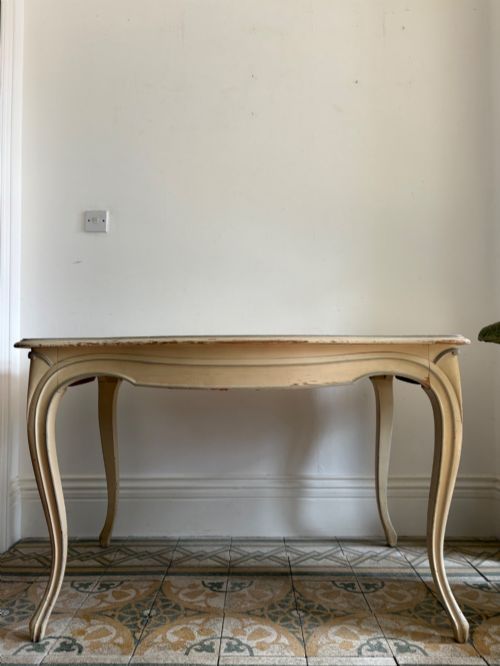
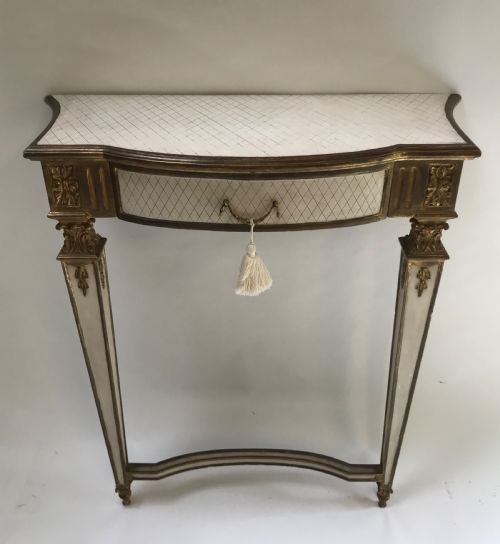
A french painted wall table is primarily represented by console tables designed to fit flush against vertical surfaces, often paired with matching pier mirrors or trumeau glasses. These pieces span centuries from the eighteenth period through the nineteenth century and into the nineteen twenties and thirties, reflecting styles like Louis XVI, Rococo, and French Provincial.
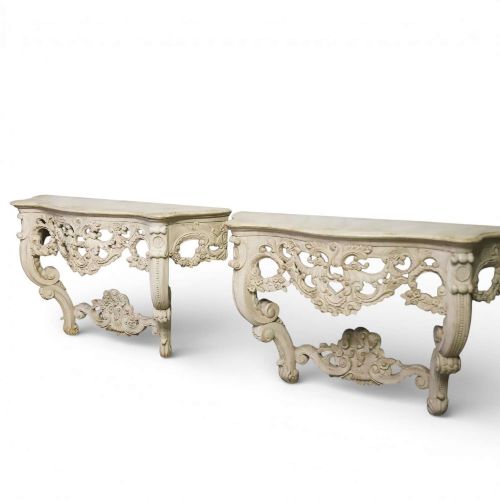
The forms vary from simple serpentine outlines to elaborate hand-carved console tables featuring inset suede tops or contrasting marble surfaces. Buyers frequently encounter pieces finished in antique white, cream paint, or parcel gilt accents over carved wood frameworks.
Originating predominantly from French workshops and chateaux, these tables serve practical display functions in hallways and reception rooms while carrying the ornamental weight of traditional European craftsmanship.
Construction and Materials
Construction relies heavily on carved wood frameworks, utilising paint, gesso, and gold leaf to build up decorative surfaces before applying final cream, antique white, or parcel gilt finishes. Artisans shaped these structures into cabriole legs and serpentine aprons characteristic of traditional joinery.
Many examples incorporate heavy stone elements, mounting thick marble tops - including sienna varieties - directly onto the wooden bases to balance the decorative painted framework with a durable functional surface.
Some console tables come with matching mirrors that have spent a couple of centuries staring lovingly down at the exact same piece of wood.
Quality and Craftsmanship
The distinction between tiers rests upon the depth and crispness of the hand-carved wood details beneath the paint, alongside the quality of the marble top fitted to the console. Tables featuring integrated giltwood highlights and genuine hand-carved ornamentation demonstrate superior workshop origin compared to simpler decorative alternatives.
Surface treatment also dictates distinction, where layered paint, gesso, and gold leaf application display authentic age and patination rather than flat, uniform modern coatings.
The French Painted Wall Table Glossary
- Console table
- A table designed to be fixed against a wall, frequently supported by two front legs with the rear secured directly to the architectural structure.
- Giltwood
- Wood that has been coated with gold leaf or a gold-coloured metallic finish, often seen highlighting carved details on French furniture.
- Cabriole leg
- A furniture leg that curves outward in a convex arc and tapers inward in a concave arc, resembling the leg of an animal.
- Marble top
- A polished stone slab fitted to the upper surface of a table, providing a cool and durable working or display area.
- Trumeau mirror
- A decorative wall mirror featuring an upper painted or carved panel, frequently encountered paired directly with a matching console table.
French Painted Wall Table: Frequently Asked Questions
Where should a wall table go?
These tables are traditionally placed in entrance halls, living rooms, or dining spaces where floor space is limited. Because they are designed to stand against a wall, they provide a surface for lamps and decorative objects without blocking room flow.
They also pair effectively beneath large wall mirrors or paintings to create a balanced focal point in a room.
How do I care for painted wood?
Maintenance requires gentle dusting with a soft, dry cloth to prevent dirt accumulation on the painted and gilt surfaces. Avoid harsh chemical cleaners or excessive moisture, which can damage the underlying gesso and paint layers.
Marble tops benefit from occasional wiping with a damp cloth and neutral soap, followed by immediate drying to protect the stone finish.
Are these tables fixed to walls?
Historical console tables often rely partially on wall fixings for stability, particularly larger examples with heavy marble tops. Many versions are designed as wall tables that require attachment to ensure safe standing.
Checking the structural base reveals whether a piece stands independently or relies on wall support.
What styles are common here?
The selection includes Louis XVI, Rococo, French Provincial, and Neoclassical designs spanning the eighteenth, nineteenth, and early twentieth centuries. These styles range from ornate carved giltwood frames to simpler painted wooden surfaces.
Matching mirrors and marble inserts frequently accompany these specific regional French aesthetic traditions.