



French Padded Headboard Beds
French padded headboard beds bring texture and classic European proportion to a bedroom, combining soft upholstered panels with carved timber frames.
French Padded Headboard Beds
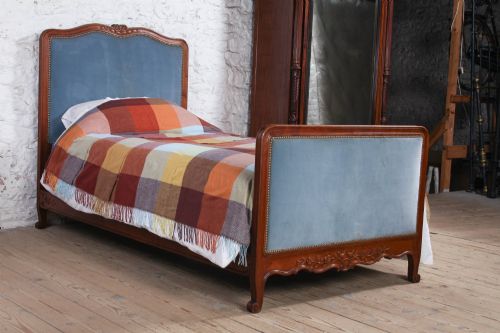
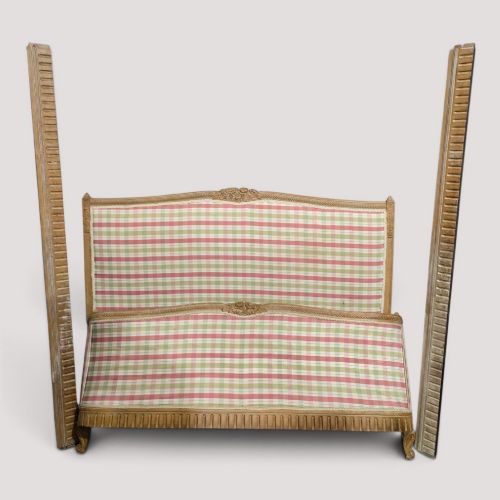
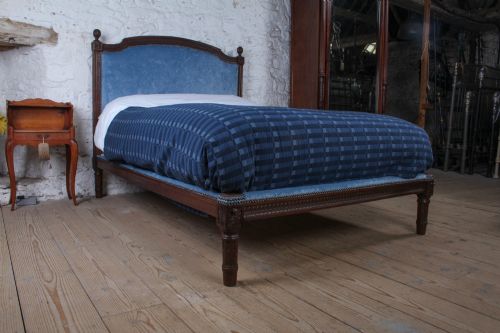
French padded headboard beds encompass double, king, super king, and single sizes spanning from the Victorian era through the early decades of the twentieth century. These pieces emerge in styles including French Chateau, Louis XVI, Louis XV, Neoclassical, Empire, and Venetian Rococo. Buyers frequently encounter frames defined by upholstered panels paired with timber structures.
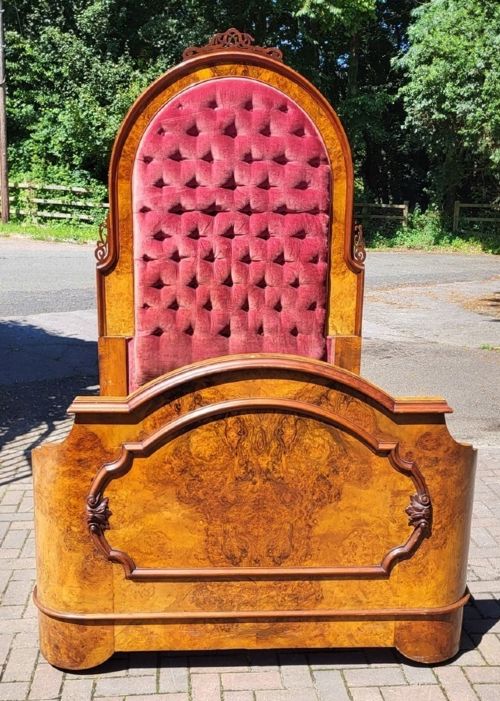
The objects listed range from complete bedsteads with low-end or high-end configurations to standalone headboards. Materials encompass walnut, oak, painted wood, limed wood, and burr walnut, alongside varied fabric upholstery, velvet, and tapestry. Dating spans from the Victorian period through 1900, 1910, 1920, and 1930.
How they were made
Construction relies on solid timbers such as walnut, oak, and burr walnut, shaped into curved, carved, or painted frames. Wood is often limed, gilded, or finished to highlight natural grain before integration with the bedstead.
Upholstery involves textiles, velvet, fabric, and tapestry secured to internal padding. Button backing and newly upholstered finishes demonstrate the traditional layering of padding and fabric within the wooden framework.
French Padded Headboard Beds Retail Price Guide 2026
Typical asking prices for french padded headboard beds among the pieces listed under this phrase on Sellingantiques today, from the lower quarter to the upper quarter. They describe what is for sale here now, not the wider market.
Listings span the Victorian era alongside the 1900, 1910, 1920, and 1930 periods, incorporating walnut, oak, painted wood, and limed wood.
What varies in quality
The calibre of the timber framing distinguishes different examples, from simple painted wood to figured burr walnut and intricate gilt carvings. Hand-carved details in styles like Louis XVI or Venetian Rococo exhibit varying depths of craftsmanship and joinery precision.
The execution of the upholstery impacts the piece, distinguishing standard fabric coverings from button-backed velvet or tapestry panels. The integration between the textile padding and the wooden structure defines the overall finish.
The French Padded Headboard Beds Glossary
- Bedstead
- A framework of a bed supporting the mattress and base. These examples include wooden side rails and footboards.
- Burr walnut
- Timber cut from walnut tree growths showing intricate grain patterns. It provides a decorative surface on bed frames.
- Limed wood
- Timber treated with a special finish to create a pale appearance. This finish highlights the natural grain of the wood.
- Louis XVI style
- A neoclassical design style characterised by straight lines and symmetrical classical motifs. It appears frequently in these frames.
French Padded Headboard Beds: Frequently Asked Questions
What sizes do these beds come in?
These beds are available in single, double, king, and super king sizes. Dimensions vary according to the specific period and style.
Larger formats like king and super king often feature wider headboards with extensive fabric upholstery or button backs.
Are these beds newly upholstered?
Many listings feature newly upholstered fabric or velvet panels. This updates the textile while retaining the original antique frame.
Original fabrics appear less frequently than refreshed upholstery suited for modern interior use.
What wood types are used?
Frames are constructed from timbers including walnut, oak, and burr walnut. Some pieces utilise painted or limed wood finishes.
Woods are often shaped into curved profiles or detailed with gilt elements depending on the stylistic influence.
How do I identify the style?
Styles range from French Provincial and Chateau to specific periods like Louis XVI, Empire, and Venetian Rococo. Carved motifs and frame geometry indicate the design influence.
Victorian examples show distinct proportions compared to continental pieces from the 1900s to 1930s.