
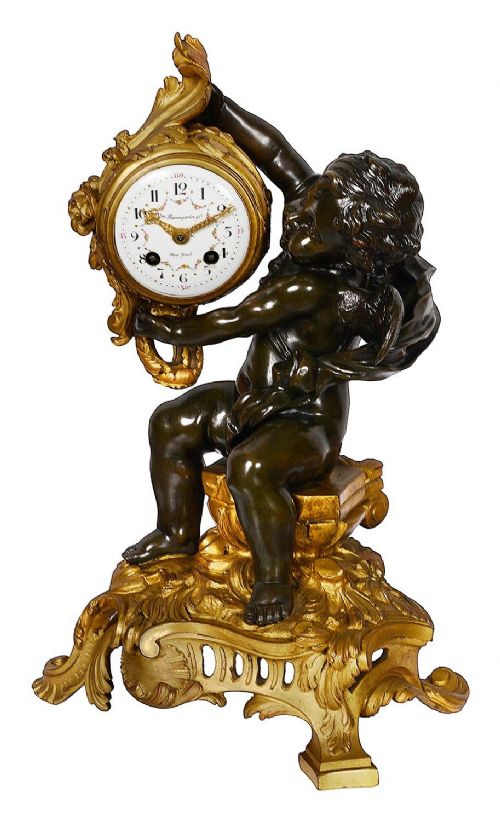


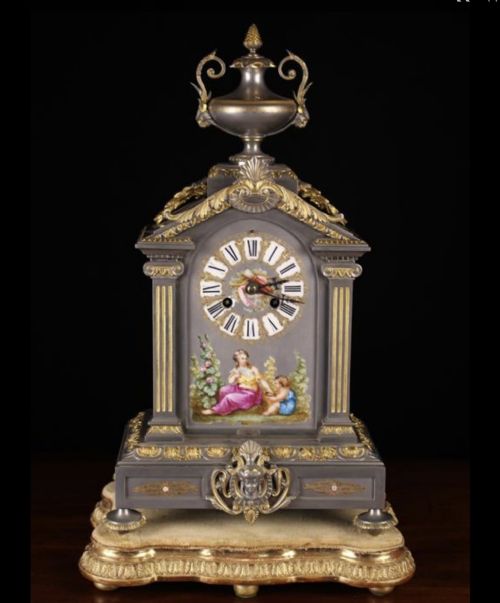


French Ornamental Table Clock
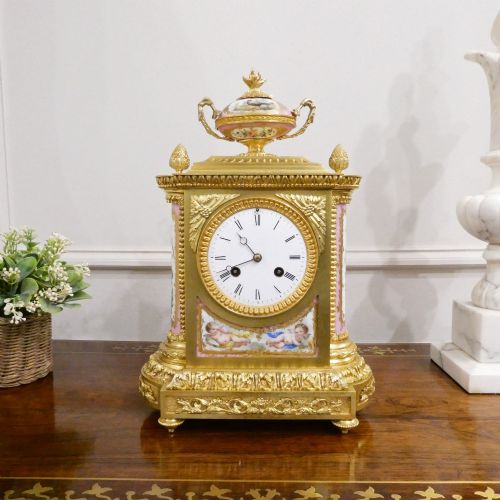
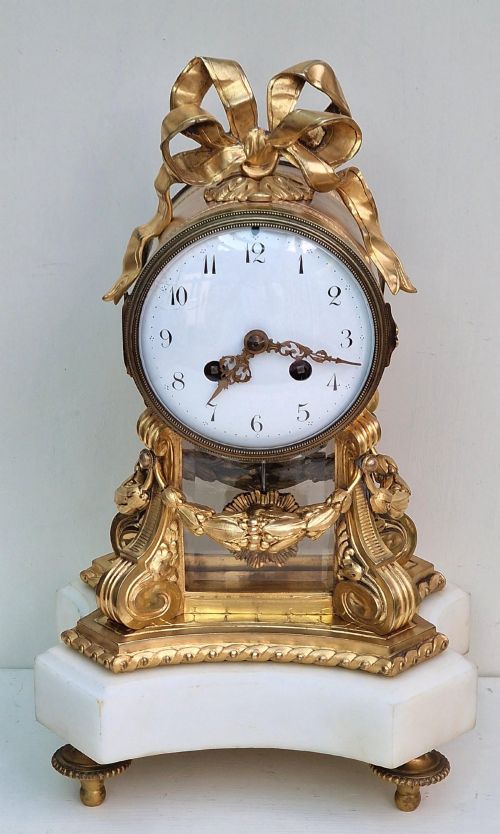
These french ornamental table clock pieces bring together gilt bronze, marble, and intricate enamel dials from the nineteenth century.
French Ornamental Table Clock
A french ornamental table clock functions as both a timekeeper and a sculptural centrepiece for a mantelpiece or side table. These items span the eighteenth, nineteenth, and early twentieth centuries, reflecting changing aesthetic movements across periods.
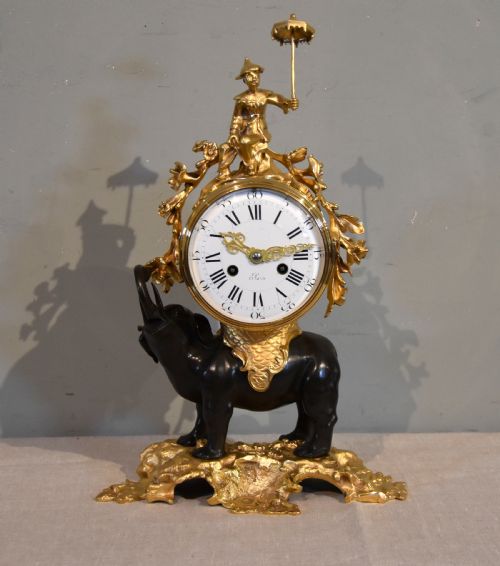
Forms range from classical marble structures and portico clocks to animal-themed cases shaped like elephants or lions, alongside delicate porcelain-mounted bodies. Each object captures the ornate decorative ambitions of its specific period of production.
How they were made
Makers utilised cast bronze, ormolu, and gilt metal as the primary structural and decorative foundations for these cases. Artisans chased and gilded these metal surfaces to achieve high levels of surface detail.
Porcelain panels, enamel dials, and glass panels frequently accompany the metalwork, sometimes combined with white marble, alabaster, or rosewood. Movements typically rely on eight-day striking mechanisms or double fusee systems to keep time.
Styles recorded on this page range across French Empire, Louis XVI Revival, French Rococo Revival, and French Second Empire.
What varies in quality
The refinement of the casting and the depth of the ormolu or gilt bronze chasing set superior examples apart from standard production. Finer pieces display crisp botanical or figural motifs with sharp definition in the metal.
The integration of hand-painted porcelain panels, intricate enamel work on dials, and the quality of secondary materials like marble or exotic woods dictate the tier of the piece. Maker attribution also plays a role in establishing the standing of an individual clock.
Jean-Baptiste Delettrez·Henry Dasson·Ravrio·Lemerle Charpentier·James Murray London
The French Ornamental Table Clock Glossary
- Ormolu
- Gilded bronze produced by applying a mercury-gilding technique to a bronze base. This process creates a rich, lasting metallic finish seen on many nineteenth-century French cases.
- Portico clock
- A architectural clock design supported by four or more columns resembling a classical portico. These often incorporate fine wood veneers and ormolu mounts.
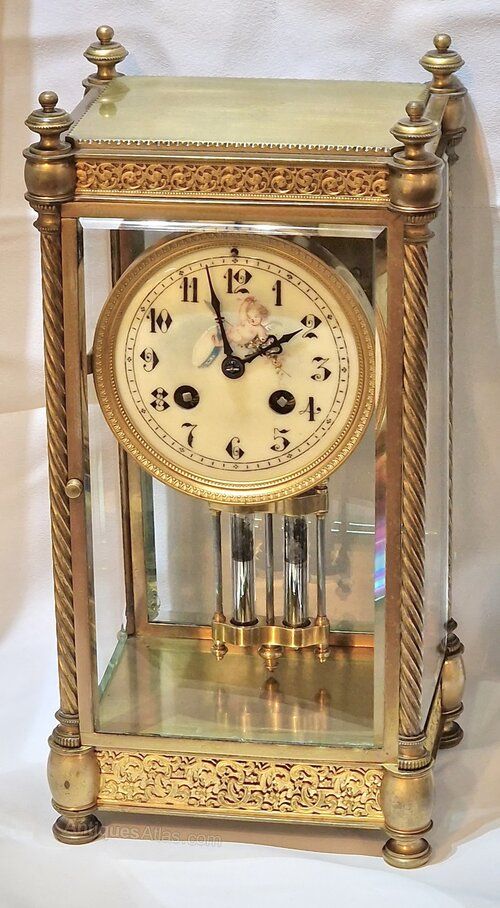
- Four glass clock
- A clock encased in glass on all four sides, allowing a clear view of the movement from multiple angles. Enamel dials and mercury pendulums frequently accompany this form.
- Double fusee
- A mechanical movement using conical pulleys and chains to equalise the pull of the mainspring as it runs down. This system improves timekeeping accuracy over the duration of the wind.
- Lyre mystery clock
- A clock shaped like a lyre instrument where the motion of the hands appears mysterious or unpowered. These pieces often feature marble and ormolu construction.
French Ornamental Table Clock: Frequently Asked Questions
How do I wind an eight day French clock?
Most of these movements require a key to wind both the time and strike trains through the dial holes.
Care must be taken not to overwind the springs to prevent damage to the internal mechanics.
What periods do these clocks cover?
The selection spans primarily the nineteenth century, including Victorian productions and specific revivals like Louis XVI and French Rococo.
Earlier eighteenth-century examples and early twentieth-century pieces also appear within the listings.
Where were these clocks typically placed?
Owners historically placed them on drawing room mantelpieces, side tables, or console surfaces where their ornamental gilt bronze and porcelain could catch the light.
Their striking function also served to announce the hours across formal rooms.
What materials are common in the cases?
Gilt bronze, ormolu, brass, and porcelain dominate the structural choices alongside white marble, alabaster, and glass.
Wood elements such as rosewood and lemon wood also feature in specific architectural designs like portico clocks.