

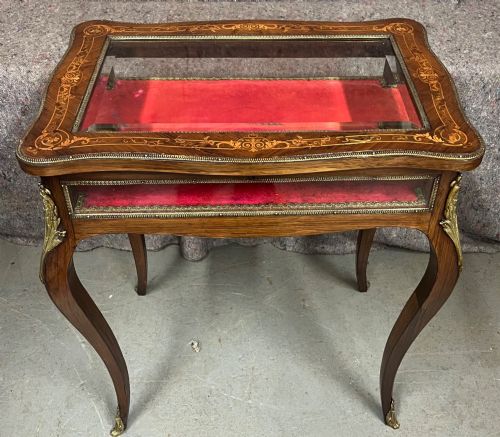
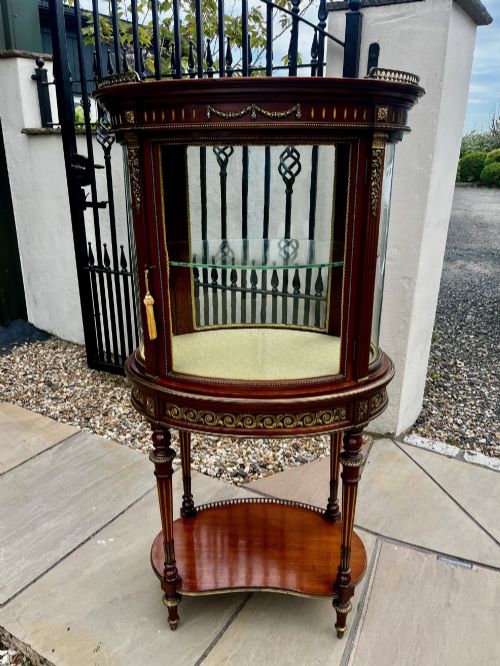
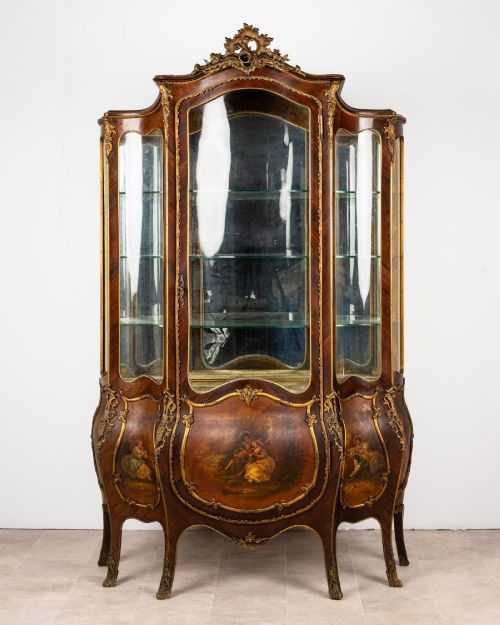
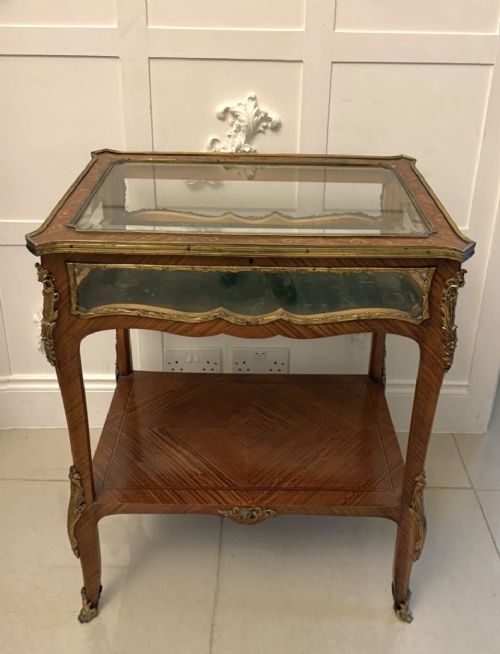

French Ormolu Vitrine
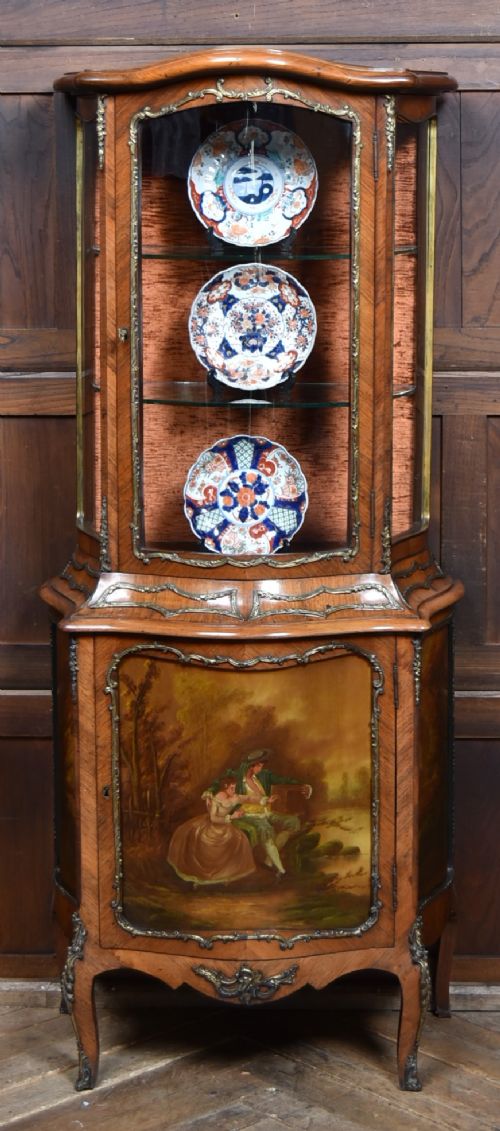
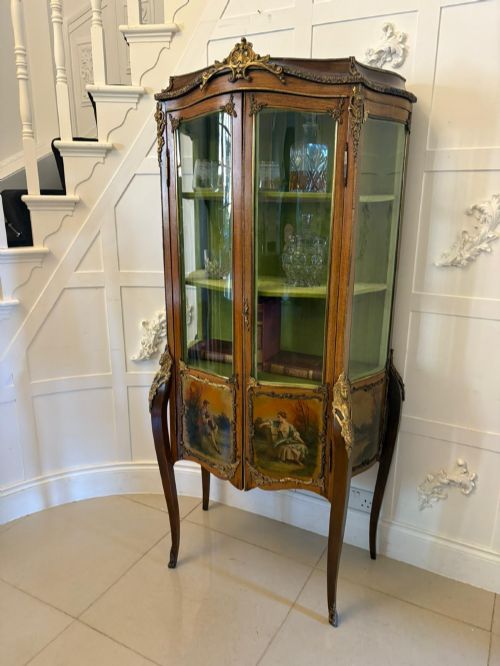
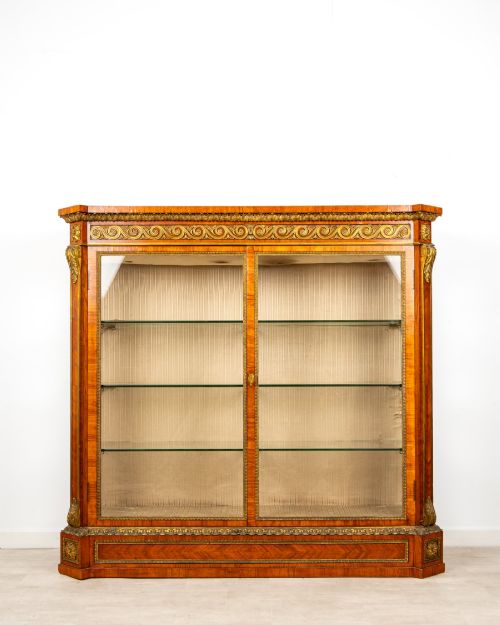
A French ormolu vitrine brings together glass display space and gilt-bronze mounts, designed to showcase porcelain and small treasures inside a formal room.
French Ormolu Vitrine
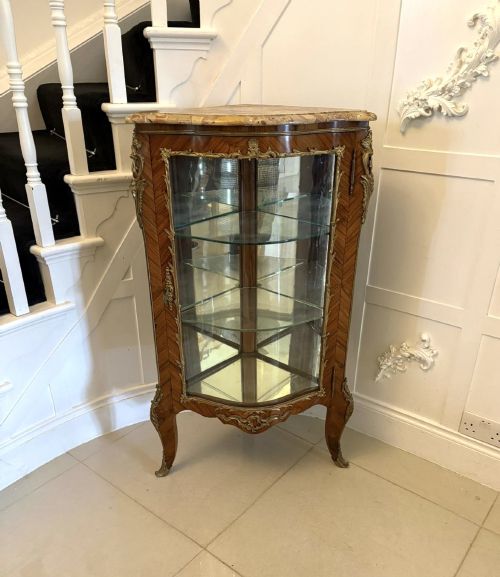
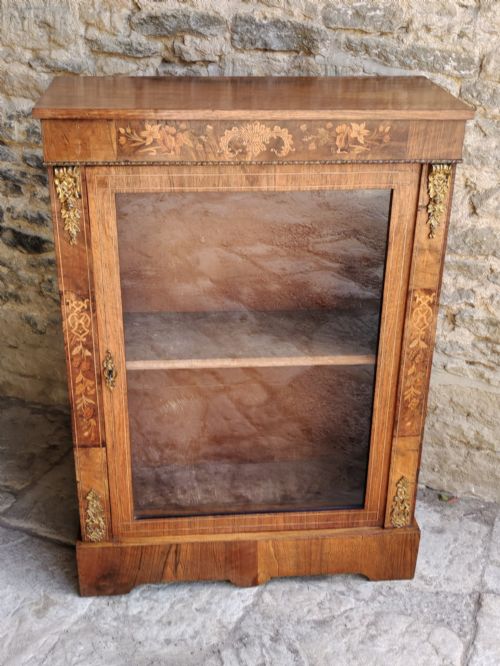
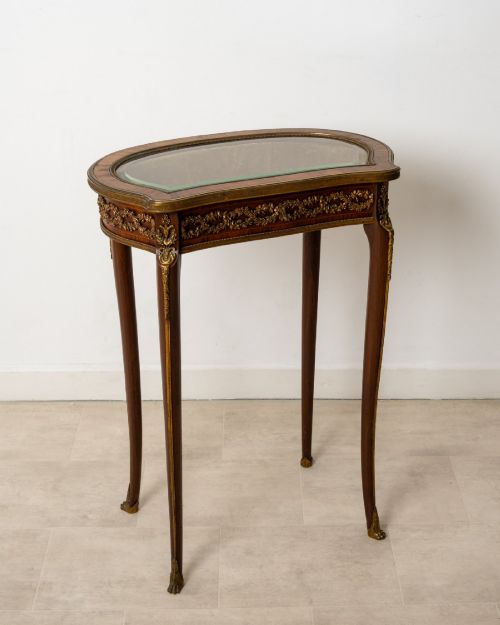
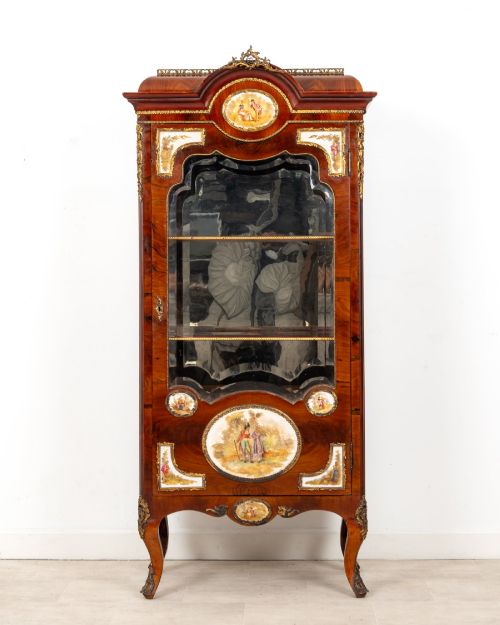
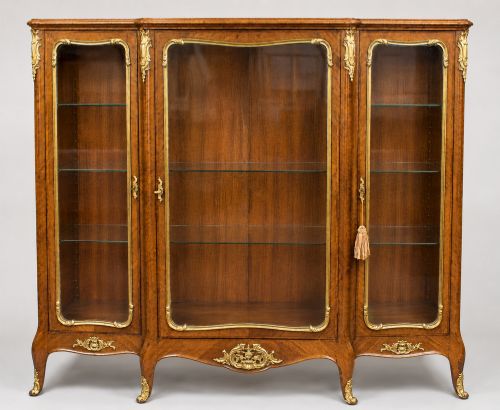
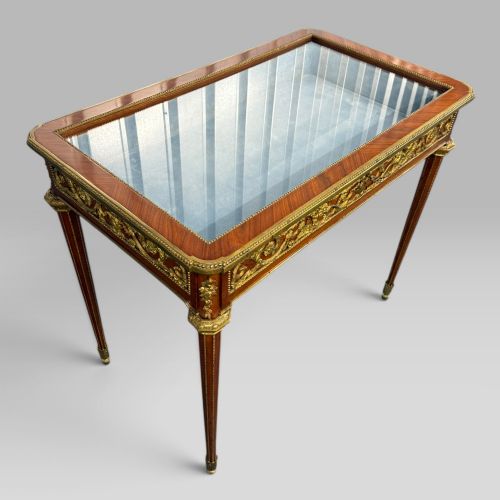
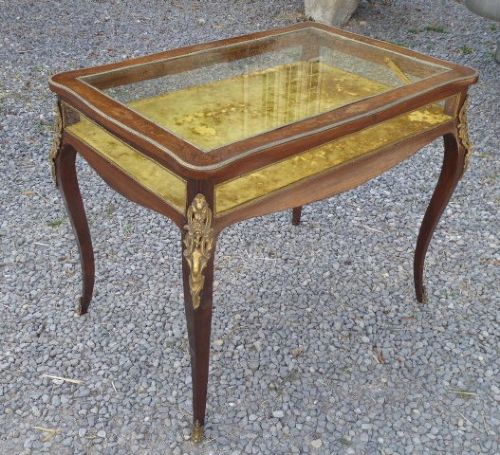
A french ormolu vitrine stands primarily as a display cabinet, though collectors also encounter bijouterie tables, pier cabinets, bookcases, and credenzas.
The pieces appearing here span the nineteenth century, including Victorian and Edwardian examples, alongside revival periods such as Louis XV, Louis XVI, and Napoleon III.
Makers and workshops working in these styles built cabinets designed to command attention through proportion and decorative surface integration.
Materials and construction
Carinthian and French cabinetmakers built carcasses from foundational timbers like mahogany, walnut, and satinwood, frequently applying kingwood and rosewood veneers in parquetry and marquetry patterns.
Gilt bronze, known as ormolu, provides the mounts, corners, and escutcheons that accent the structure, while inset glass panels enclose the display space.
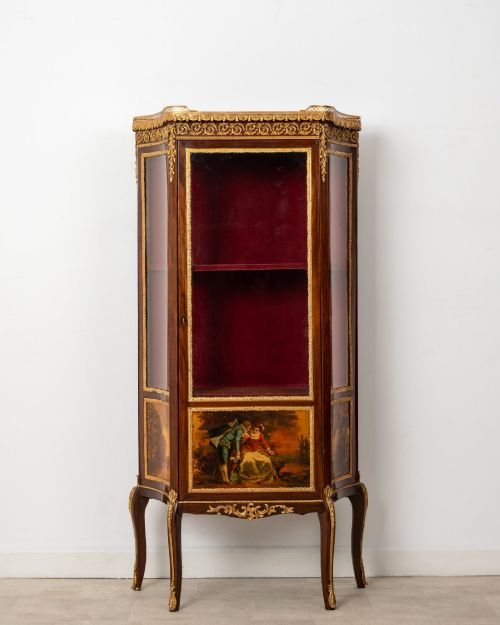
Many cabinets incorporate marble tops and hand-painted Vernis Martin lower panels depicting pastoral scenes.
French Ormolu Vitrine Retail Price Guide 2026
Typical asking prices for french ormolu vitrine among the pieces listed under this phrase on Sellingantiques today, from the lower quarter to the upper quarter. They describe what is for sale here now, not the wider market.
Current listings feature nineteenth-century pieces utilising kingwood, mahogany, walnut, and marble, spanning Louis XV and Louis XVI revival styles.
Judging execution and finish
Quality rests on the crispness of the ormolu chasing and the precision with which the gilt-bronze mounts follow the contours of the timber carcase.
The selection of veneers, particularly intricate kingwood grain matching and marquetry work, separates standard production from exceptional cabinetmaking.
Integrated decorative elements, such as porcelain plaques and hand-painted Vernis Martin panels, dictate the overall tier of the piece.
François Linke·H. J. Hatfield And Sons·Paul Sormani
The French Ormolu Vitrine Glossary
- Ormolu
- Gilt bronze mounts cast and chased by hand. This surface treatment provides the bright metallic highlights seen on nineteenth-century furniture edges and corners.
- Vernis Martin
- A simulated Japanese lacquer technique developed in France. Artisans applied multiple layers of varnish to create translucent painted panels on cabinets.
- Bijouterie table
- A glass-topped display table with hinged or lifting lids. These pieces served to exhibit small personal items, medals, and jewellery.
- Marquetry
- The art of applying pieces of veneer to a structure to form decorative patterns. Cabinetmakers utilised contrasting timbers like kingwood and walnut for visual depth.
- Parquetry
- Geometric wood veneer patterning arranged in repeating shapes. This technique creates a tiled surface effect across the body of a cabinet.
French Ormolu Vitrine: Frequently Asked Questions
What fits inside a french ormolu vitrine?
These cabinets house fine porcelain, glassware, miniatures, and small decorative objects behind glass panels.
The enclosed shelving protects delicate items from dust while allowing full visibility from multiple angles in a drawing room or salon.
How do I identify a reproduction?
Examine the construction joints, timber ageing beneath the veneers, and the hand-chasing on the bronze mounts.
Nineteenth-century examples show distinct tool marks and hand-fitting that differentiate them from later machinery-produced furniture.
Where should I place a vitrine?
Position the cabinet against a principal wall away from direct sunlight to protect interior fabrics and painted panels.
Adequate ambient lighting helps illuminate the gilt bronze mounts and showcases the timber grain across the facade.
How do I care for ormolu mounts?
Dust the gilt bronze gently with a dry, soft microfiber cloth to prevent accumulation in the recessed chased areas.
Avoid chemical polishes and abrasive cleaners that can strip the original fire-gilt surface finish from the bronze.