





French Ormolu Pier Table
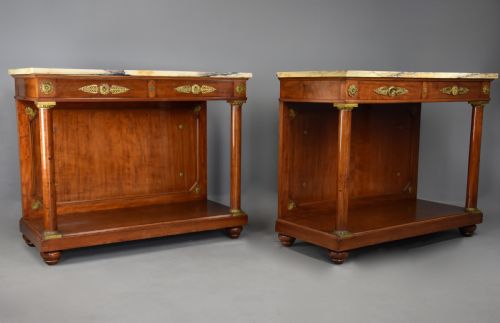
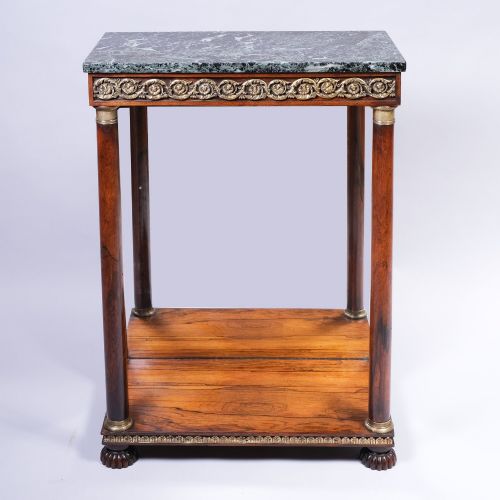
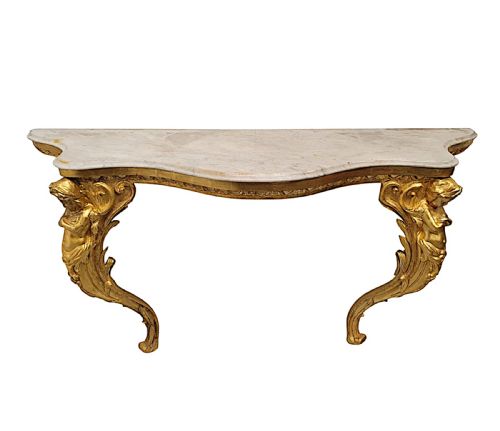
These french ormolu pier table examples combine polished marble and rich gilt mounts to anchor a room with classical presence.
French Ormolu Pier Table
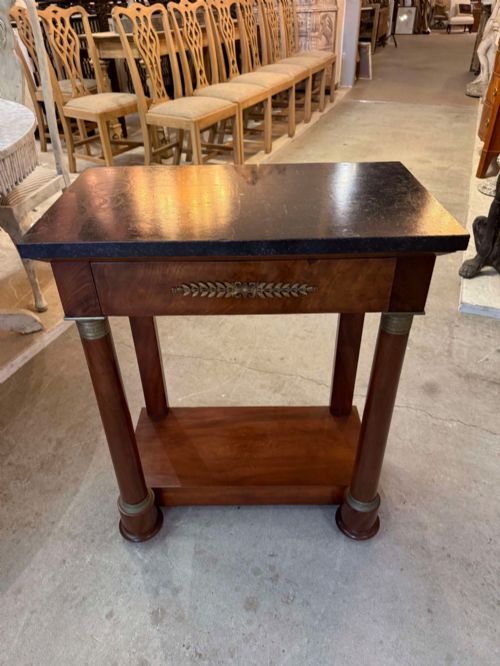
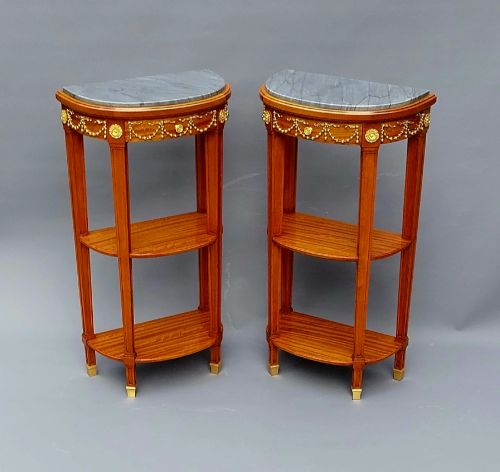
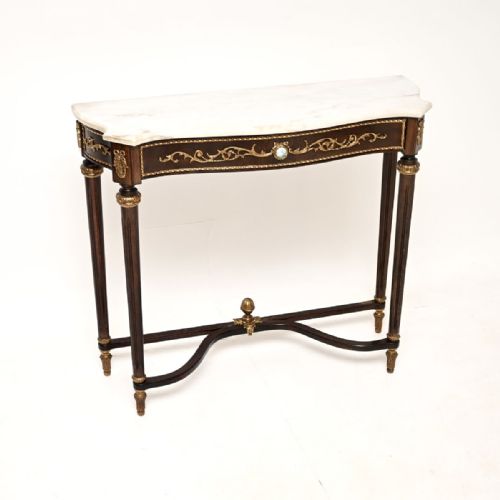
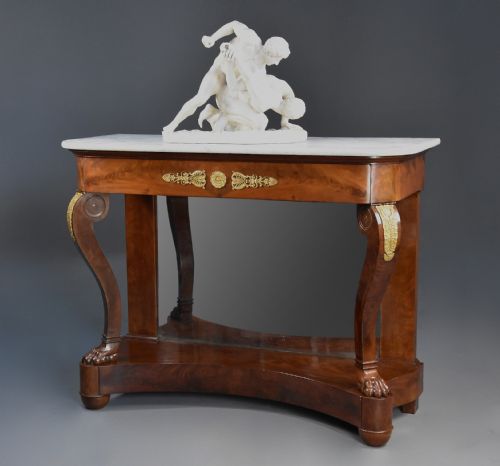
A french ormolu pier table sits flush against a wall, frequently positioned beneath a mirror or between windows in a grand interior. The selections available encompass demilune shapes, rectangular console forms, and smaller side formats dating from the nineteenth and early twentieth centuries.
Makers designed these furniture pieces using woods such as mahogany, walnut, rosewood, and satinwood, paired consistently with heavy stone surfaces. The inventory shows console tables, side tables, side cabinets, and centre tables spanning revival movements like French Empire and Louis XVI.
Buyers encounter structural variations ranging from flat-fronted rectangular frames to curved demilune silhouettes designed to fit tight architectural spaces. Pier tables from this tradition utilise contrasting timber veneers and marquetry inlay to frame the central stone slab.
Distinguishing quality across examples
The precision of the ormolu chasing and the depth of the bronze gilding separate exceptional pieces from standard production. Sharper cast details and heavier metal mounts indicate superior craftsmanship.
Timber selection and veneer matching dictate the visual strength of the base, with figured mahogany and detailed marquetry showing greater artisan investment. The thickness, polish, and natural figuring of the marble top further establish the grade of the piece.
French Ormolu Pier Table Retail Price Guide 2026
Typical asking prices for french ormolu pier table among the pieces listed under this phrase on Sellingantiques today, from the lower quarter to the upper quarter. They describe what is for sale here now, not the wider market.
The inventory records French Empire, Louis XVI, and Regency Revival styles spanning the nineteenth and early twentieth centuries.
Krieger Paris
The French Ormolu Pier Table Glossary
- Ormolu
- Gilded bronze applied as decorative mounts to furniture. The technique involves coating copper alloy with a mercury-gold amalgam and firing it to leave a rich golden finish.
- Pier table
- A table designed to stand against a wall pier between windows. These pieces often feature mirror backs or tall console frames.
- Demilune
- Half-moon shape used for tabletops and commodes. This curved design allowed tables to project minimally into narrow hallways and reception rooms.
- Marquetry
- Decorative veneer patterns formed from pieces of contrasting wood, shell, or ivory. Craftsmen arranged these elements to create pictorial scenes or geometric borders on furniture surfaces.
- Console table
- A table supported by wall brackets or console legs rather than four independent vertical posts. They rely on the structural wall for complete stability.
French Ormolu Pier Table: Frequently Asked Questions
Where should I place a pier table?
These tables belong against a flat wall, ideally beneath a matching wall mirror or positioned between tall windows in a principal room. Their shallow depth allows them to occupy narrow circulation spaces without blocking movement.
Because the rear edge often lacks finished ornamentation, proper placement against a vertical surface ensures the structure looks intentional and secure.
How do I clean the marble top?
Use a soft, damp cloth with warm water to remove dust and surface debris from the stone. Avoid acidic or abrasive household cleaners that etch the polished surface.
Dry the marble thoroughly with a soft lint-free cloth to maintain the natural sheen without damaging the underlying mineral structure.
What is the difference between ormolu and brass?
Ormolu consists of cast bronze treated with gold leaf or mercury gilding to produce a deep, warm metallic lustre. Brass is an alloy of copper and zinc that maintains a yellower, simpler tone without gold finishing.
Twentieth-century revivals frequently substituted plain brass for the earlier gilded bronze mounts found on nineteenth-century pieces.
Are these tables sturdy enough for daily use?
Console and pier tables rely on wall attachment or secure leg placement to bear weight, as their primary function is decorative display. Heavy items like lamps and ceramics sit safely on the marble slabs, provided the frame remains level.
Avoid leaning heavily against the edge of the table to protect both the wooden joints and the brittle stone top.