



French Occasional Cabinet
These french occasional cabinet pieces bring compact utility and rich continental styling to a room.
French Occasional Cabinet
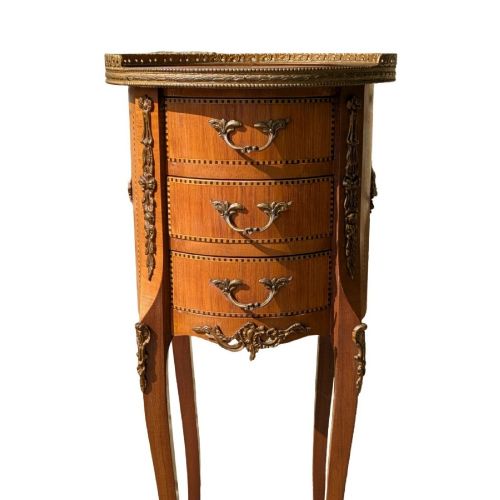
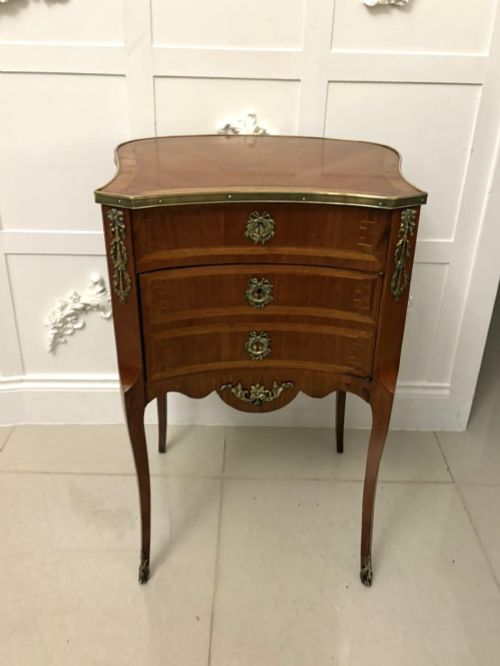
A french occasional cabinet takes many compact forms, appearing as a bijouterie table, side cabinet, bedside table, or small etagere across the nineteenth and early twentieth centuries. These pieces serve secondary roles in a room, offering display surfaces or small compartments rather than heavy storage.
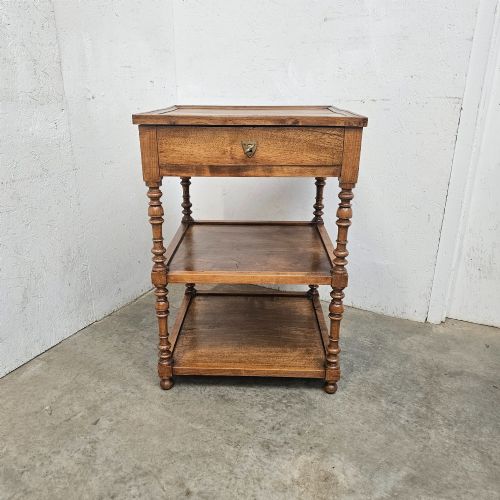
Most examples found here date from the nineteenth century through to the nineteen-thirties, reflecting revival tastes such as Louis XV, Louis XVI, and Rococo. Alongside these formal revival pieces, one meets provincial walnut designs and occasional items showing Japonisme or book-table forms.
Materials and construction
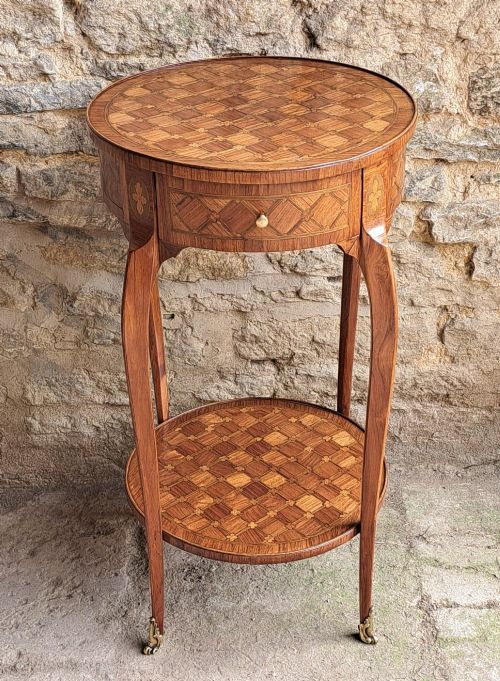
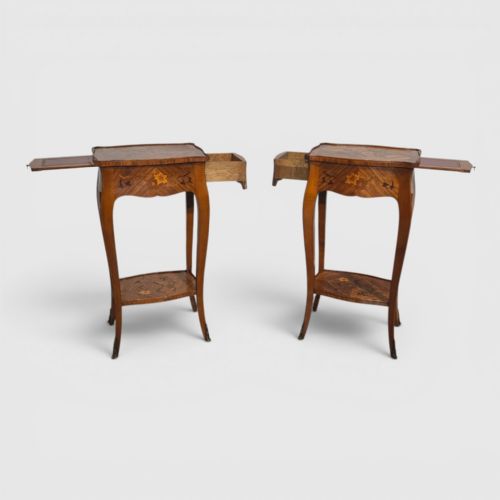
Cabinetmakers built these pieces using dense hardwoods like kingwood, walnut, mahogany, and rosewood, frequently applying elaborate marquetry or parquetry patterns. Surface decoration often incorporates contrasting veneers such as satinwood, alongside leather bindings and silk-work panels.
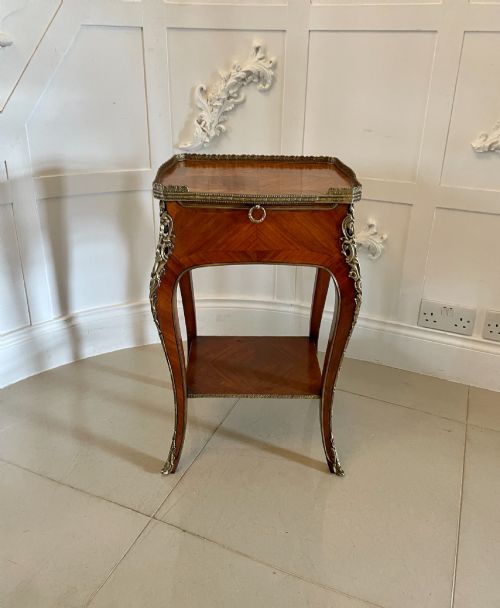
Metal mounts in ormolu, brass, and silvered bronze accent the wooden frames, particularly on revival bijouterie and lamp tables. Glass panels feature on display cabinets and vitrines, while turnings and shaped serpentine edges define the supporting structures.
French Occasional Cabinet Retail Price Guide 2026
Typical asking prices for french occasional cabinet among the pieces listed under this phrase on Sellingantiques today, from the lower quarter to the upper quarter. They describe what is for sale here now, not the wider market.
The listings here span from the nineteenth century to nineteen-thirty, with walnut, mahogany, and kingwood appearing most frequently.
Quality differences
Excellence in these pieces rests upon the precision of the marquetry and the crispness of the cast ormolu mounts. Finer examples display meticulous grain selection in kingwood or rosewood veneers, whereas simpler pieces rely on basic walnut or mahogany veneers.
The integration of secondary materials, such as inset malachite, tooled leather, or specialised glass, separates standard production from exceptional work. Structural details like tambour fronts, candle shelves, and finely turned legs also mark the upper tier of execution.
Gabriel Viardot·Charles Topino
The French Occasional Cabinet Glossary
- Bijouterie table
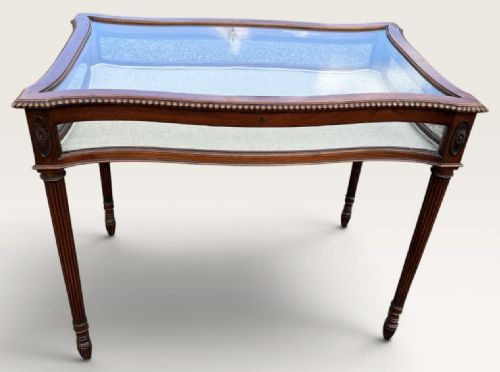
- A glass-topped display table designed to showcase small valuables and curiosities. These tables often feature hinged lids and velvet-lined interiors.
- Marquetry
- The art of applying pieces of veneer to a structure to form decorative patterns and pictures. Makers utilise various coloured woods to create floral or geometric designs.
- Ormolu
- Gilt bronze ornamentation mounted onto furniture frames. This technique provides metallic highlights against dark cabinet woods.
- Table en chiffonnière
- A small French chest or utility table with multiple drawers. These pieces typically stand on slender legs for bedside or writing use.
- Parquetry
- Geometric mosaic woodwork formed by small veneer tiles. This technique creates repeating patterns across table tops and cabinet doors.
French Occasional Cabinet: Frequently Asked Questions
What is a bijouterie table used for?
A bijouterie table provides a glazed display surface for holding small personal treasures, medals, or trinkets. The hinged glass top allows objects to be viewed from above while protected from dust.
These tables frequently stand in salons or drawing rooms where guests can inspect the displayed items easily.
How do I identify Louis XV style?
Louis XV style furniture relies heavily on asymmetrical curves, serpentine lines, and floral marquetry. Ormolu mounts often echo natural forms like scrolls and foliage.
Revival pieces from the nineteenth century reproduce these fluent shapes using walnut, kingwood, and applied bronze details.
Where should I place a side cabinet?
A small side cabinet fits well in hallways, alcoves, or beside seating where surface space is required without a heavy footprint. Their compact dimensions allow them to occupy tight corners.
Pieces with glass panels or open shelving also function effectively to display books and small decorative objects.
What distinguishes marquetry from parquetry?
Marquetry employs varied wood veneers to create pictorial scenes, scrolls, or floral arrangements. Artisans cut different timbers to form complex decorative motifs.
Parquetry restricts itself to geometric arrangements like cubes, diagonals, or squares, forming repeating patterns across the surface.