

French Oak Trestle Table
A french oak trestle table brings robust utility and honest provincial character to a dining room, offering substantial timber surfaces designed for everyday gathering.
French Oak Trestle Table
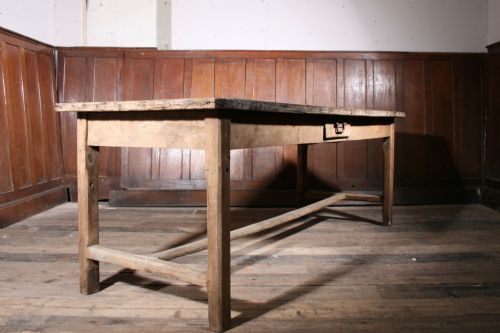
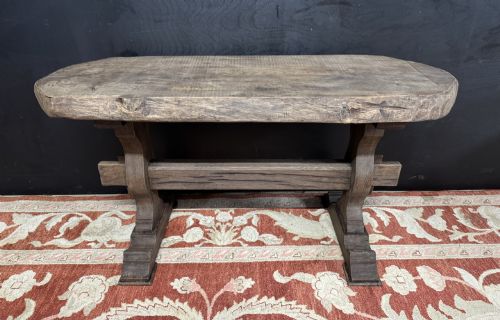
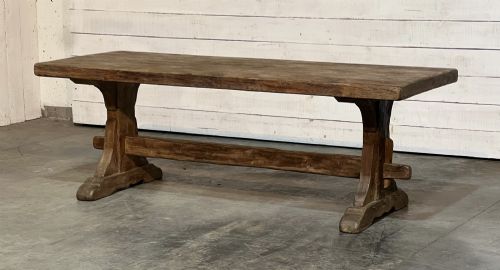
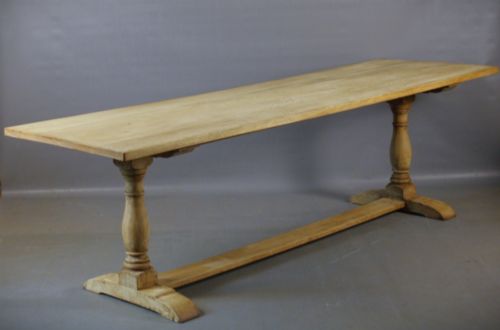
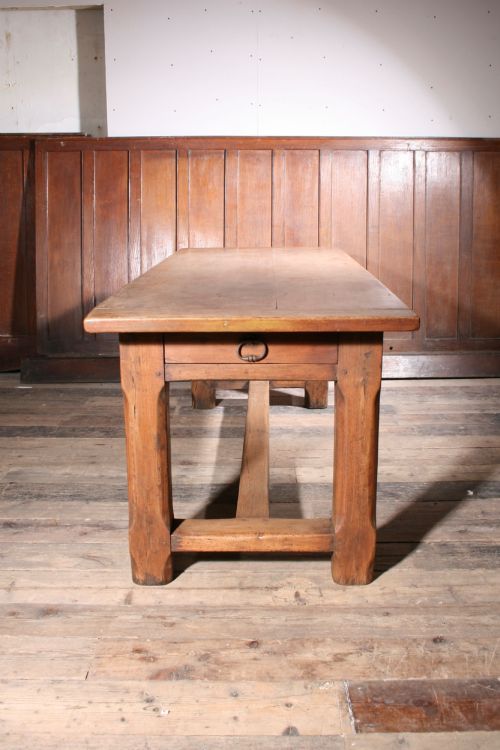
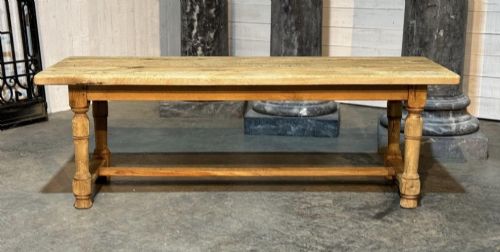
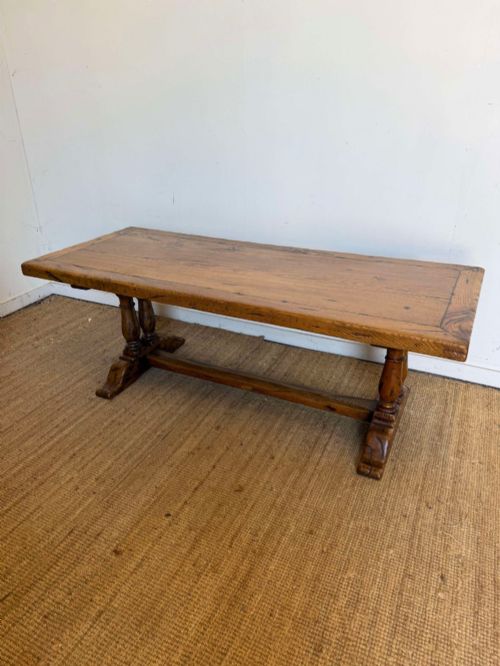
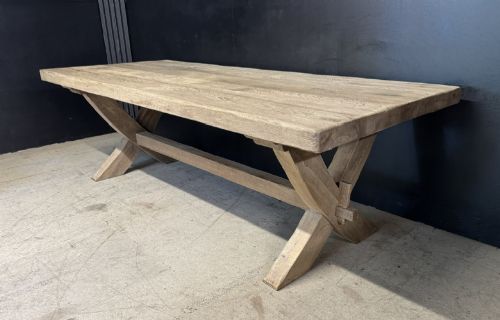
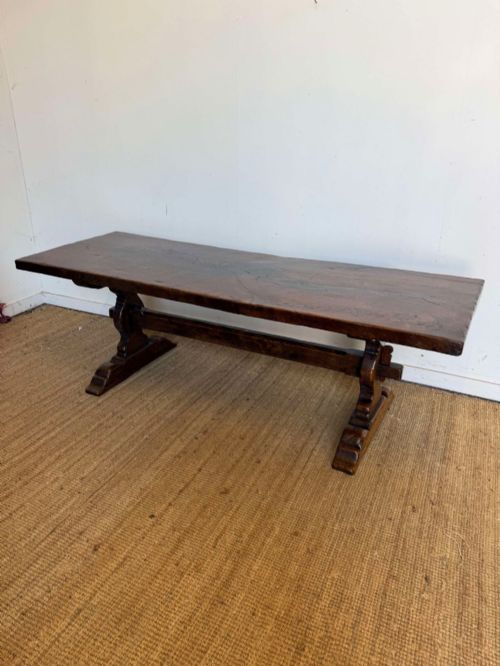
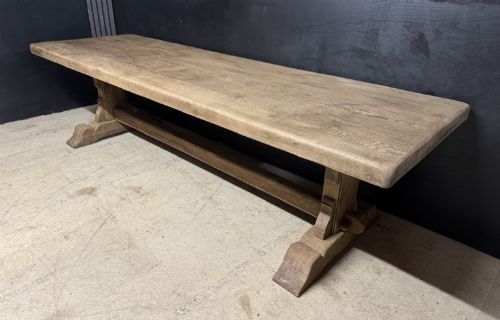
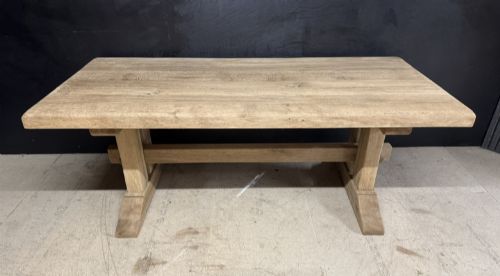
A french oak trestle table represents a utilitarian dining form rooted in provincial traditions, designed with independent supports rather than four corner legs. These pieces emerge primarily from the nineteenth century and early decades of the twentieth century, carrying the robust proportions suited to rural kitchens and communal halls.
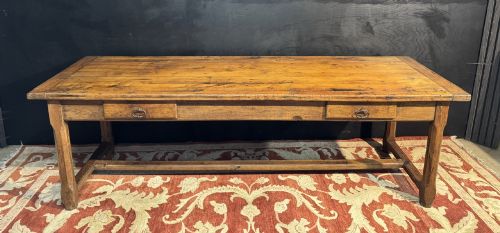
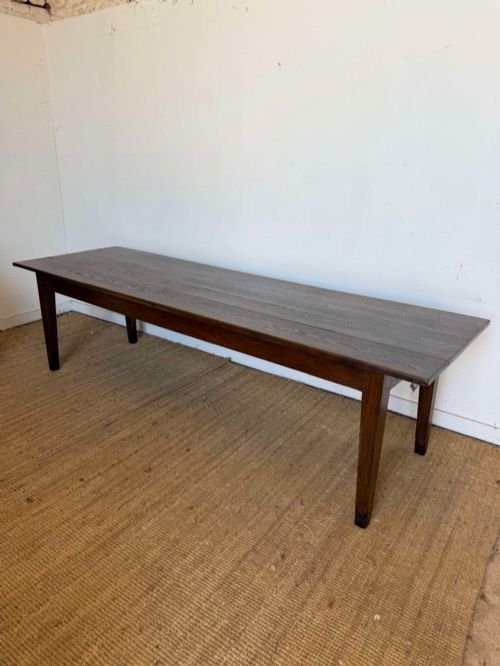
The most common examples on this page are large farmhouse and refectory formats constructed from solid timber. Makers shaped these boards for heavy domestic labour and long family meals, resulting in impressive lengths that frequently accommodate twelve or more diners comfortably.
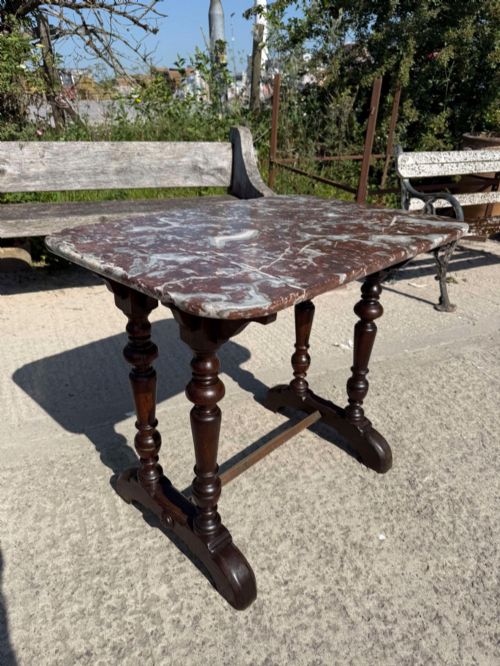
Beyond standard dining formats, the selection includes specialised variants such as monastery tables, laundry tables, and wine harvest tables like vendange or vigneron designs. These forms reflect specific rural utility while retaining the foundational timber construction and straightforward architectural lines characteristic of the tradition.
What varies in quality
Quality rests in the integrity of the timber selection and the retention of honest structural joinery. Pieces featuring thick twin plank surfaces and substantial weight demonstrate superior craftsmanship compared to lighter assemblies.
The handling of the wood surface dictates visual distinction, where an integrated, natural patina earned through decades of service surpasses heavy chemical stripping. Original structural bracing and unaltered proportions elevate the architectural merit of a piece.
French Oak Trestle Table Retail Price Guide 2026
Typical asking prices for french oak trestle table among the pieces listed under this phrase on Sellingantiques today, from the lower quarter to the upper quarter. They describe what is for sale here now, not the wider market.
Current listings feature solid oak and chestnut construction spanning the eighteenth century through to the 1920s.
The French Oak Trestle Table Glossary
- Trestle table
- A board resting on two or more supports, utilised historically for dining because the base design allowed maximum legroom along the length.
- Refectory table
- A long dining table traditionally used in monastic or communal dining halls, distinguished by considerable length and sturdy central stretchers.
- Vendange table
- A specialised French agricultural table associated with the grape harvest, often built with folding or narrow proportions for outdoor use.
- Bleached oak
- Timber treated to remove dark historical finishes, resulting in a lighter, more neutral tone favoured in contemporary rustic interiors.
- Plank top
- A surface constructed from several wide boards laid lengthwise, joining edge to edge to form the primary dining area.
French Oak Trestle Table: Frequently Asked Questions
How do I seat guests comfortably around a trestle base?
The defining feature of a trestle support is the recessed placement of the legs, which removes corner posts entirely. This layout allows benches or chairs to tuck neatly along the full flanks of the timber top.
Larger formats easily accommodate seated groups along both sides and the ends without obstruction from traditional table legs.
How should I clean a historic oak surface?
Historic oak requires minimal intervention, typically needing only a dry cloth for dust and a damp cloth for accidental spills. Avoid harsh modern chemical cleaners that strip the natural oils and dry out the grain.
Applying a traditional beeswax periodically helps nourish the timber and maintains a soft, protective sheen over the antique surface.
How do I date an antique wooden table?
Dating relies on observing tool marks, timber shrinkage, and structural construction methods visible beneath the top and around the joints. Hand-sawn boards, pegged joinery, and natural wear patterns indicate nineteenth-century or earlier origins.
Design proportions and regional French stylistic cues further help narrow the decade of production.