



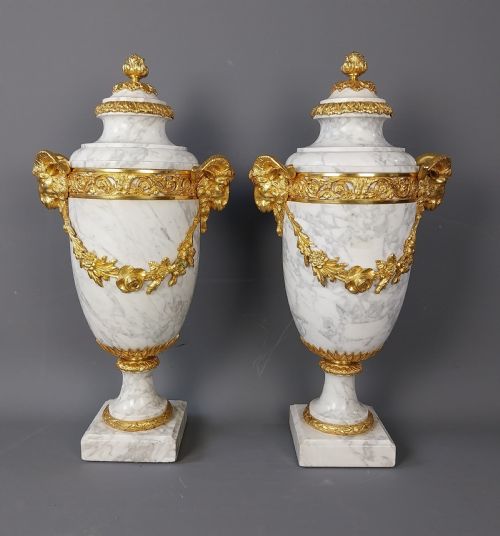


French Neoclassical Mantel Ornament
A french neoclassical mantel ornament brings classical symmetry and cast metal weight to a chimneypiece.
French Neoclassical Mantel Ornament
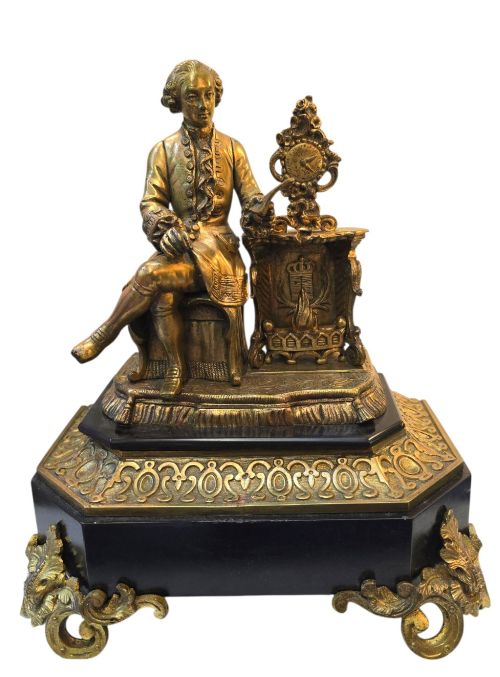
A french neoclassical mantel ornament embodies the formal dignity of classical antiquity through cast bronze, marble, and porcelain. These objects range from figural bronzes and campana urns to cassolettes designed for display on a chimneypiece.
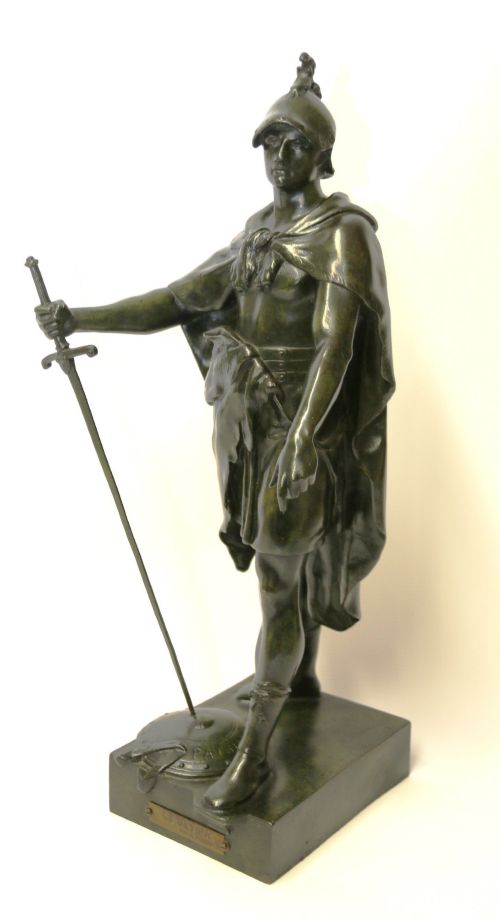
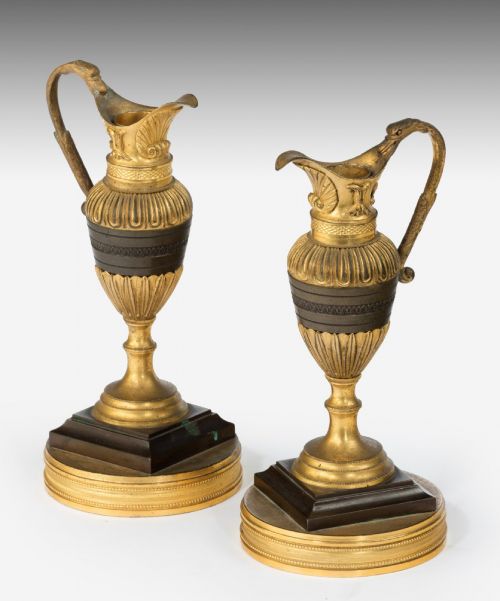
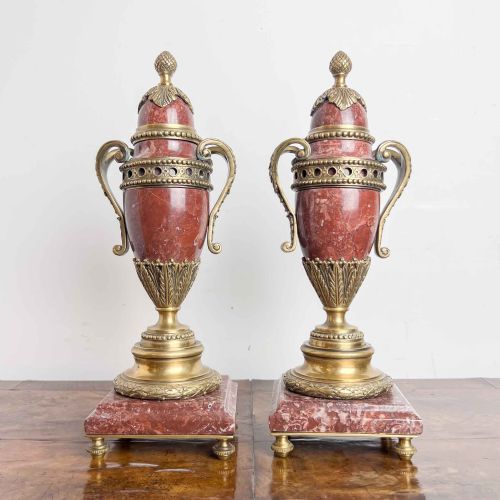
The pieces on this page lean heavily toward nineteenth-century interpretations of Louis XVI taste. Buyers regularly encounter pairs of bronze and ormolu ewers, rouge or white marble vessels, and patinated bronze figures standing on plinth bases.
How they were made
Foundry workers cast these ornaments in bronze, spelter, or ormolu, often combining patinated surfaces with gilt highlights. Metal components were chased and finished by hand to sharpen the neoclassical foliate and figural details.
Turned marble bodies in white or rouge varieties provide heavy, contrasting plinths and urn containers. Bisque porcelain serves for sculptural busts, offering a matte, unglazed surface that mimics classical marble.
French Neoclassical Mantel Ornament Retail Price Guide 2026
Typical asking prices for french neoclassical mantel ornament among the pieces listed under this phrase on Sellingantiques today, from the lower quarter to the upper quarter. They describe what is for sale here now, not the wider market.
Roman soldiers stand ready on the mantelpiece, presumably keeping watch over the family clock.
What varies in quality
The crispness of the chasing on bronze and ormolu separates fine foundry work from softer commercial casting. Sharp articulation in drapery, hair, and acanthus leaves indicates skilled hand-finishing after the metal left the mould.
The selection and turning of the marble components determine the overall presence of a cassolette or urn. Dense, richly veined stone paired with heavy, well-cast mounts elevates a piece far above simpler spelter alternatives.
Pierre-Augustin Caron de Beaumarchais·Émile Louis Picault
The French Neoclassical Mantel Ornament Glossary
- Cassolette
- A decorative vessel featuring a reversible lid that functions either as an urn or a candle holder. These objects often combine turned marble bodies with gilt bronze mounts.
- Ormolu
- Gilded bronze produced by applying a mercury and gold amalgam to a bronze base and heating the metal. This technique creates a rich, durable golden surface characteristic of classical French decorative arts.
- Spelter
- A zinc alloy used as a less expensive alternative to bronze in nineteenth-century metalwork. It accepts patination and metallic paint readily to imitate heavier bronze castings.
- Campana urn
- A bell-shaped vessel modelled on ancient Roman garden and decorative vases. They frequently appear as pairs on stepped plinth bases in neoclassical interiors.
- Bisque porcelain
- Unglazed porcelain fired at a high temperature to achieve a matte, tactile finish resembling carved marble. It was frequently utilised for classical portrait busts and figures.
French Neoclassical Mantel Ornament: Frequently Asked Questions
What is a cassolette?
A cassolette is a dual-purpose decorative vessel featuring a lid that can be reversed to hold a candle or inverted to present a solid urn top. They are typically turned from marble and mounted with gilt bronze.
In nineteenth-century interiors, they served as symmetrical mantel ornaments that could alter their silhouette depending on the arrangement of the room.
How do I clean bronze and marble?
Dust bronze and ormolu gently with a dry, soft brush to protect the patination and gilt surfaces from abrasion. Avoid commercial metal polishes that strip historical finishes.
Clean marble sections with a damp cloth and mild soap, drying the stone immediately to prevent water marks. Harsh chemical cleaners will etch the polished surface.
Are spelter and bronze different?
Spelter is a zinc-based alloy that is lighter, softer, and more brittle than copper-alloy bronze. Nineteenth-century manufacturers utilised it as an economical alternative for decorative figures and urns.
Bronze offers greater tensile strength, allowing for sharper foundry details and a deeper, more durable patination over time.
How are pairs matched?
Mantel ornaments were frequently cast and finished as symmetrical pairs to flank a central clock or mirror. Matching pairs share identical dimensions, casting moulds, and stone turning.
Slight variations in patination or marble veining often indicate hand-finishing processes rather than later mismatched assembly.