


French Neoclassical Accent Table
A french neoclassical accent table brings restrained symmetry and classical detail into a room, offering a small surface shaped by historical French design.
French Neoclassical Accent Table
A french neoclassical accent table encompasses various forms designed to fit alongside seating or within smaller spaces, including gueridon tables, occasional tables, side tables, and bedside tables.
Most examples found here date from the nineteenth century into the early twentieth century, spanning periods of revival such as Louis XVI style, Empire, and Etruscan revival.
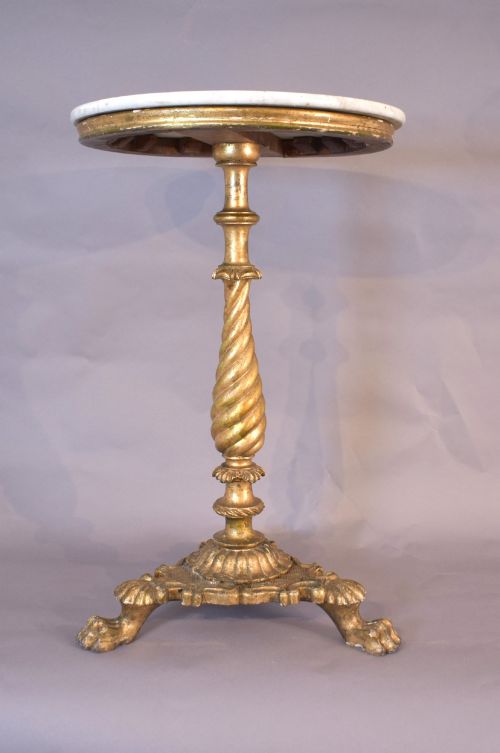
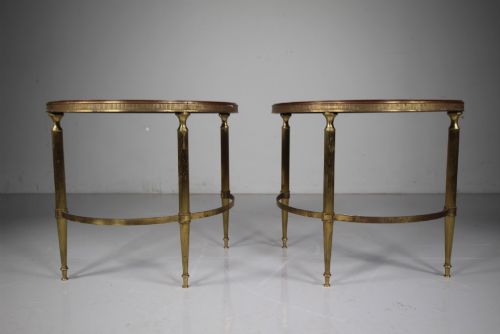
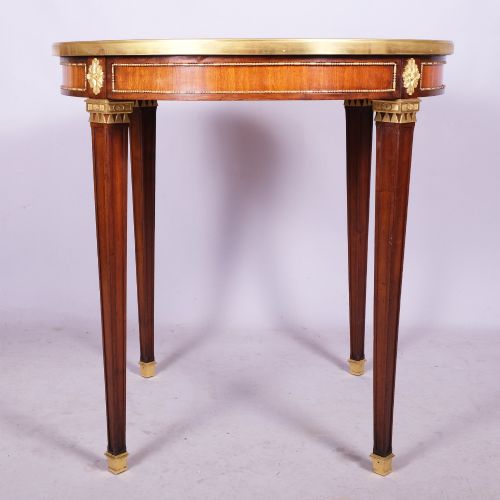
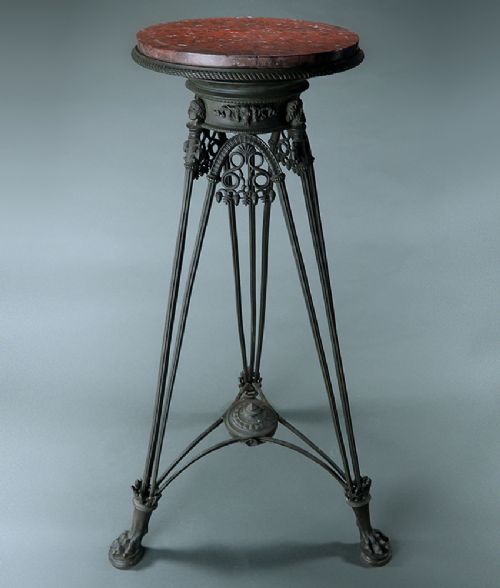
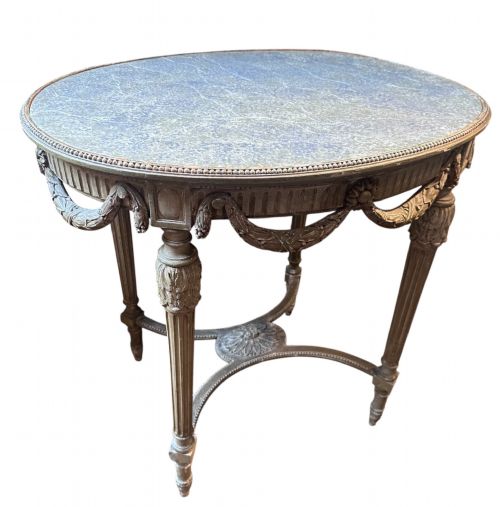
These tables typically feature circular or oval tops supported by columnar legs, tripod bases, or demi-lune formats that echo classical architectural motifs.
Materials and Construction
Makers utilised dense hardwoods like mahogany alongside structural metals, mounting slabs of white or black marble onto circular tops.
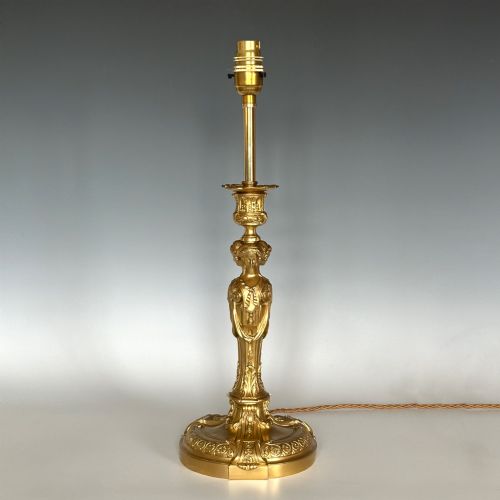
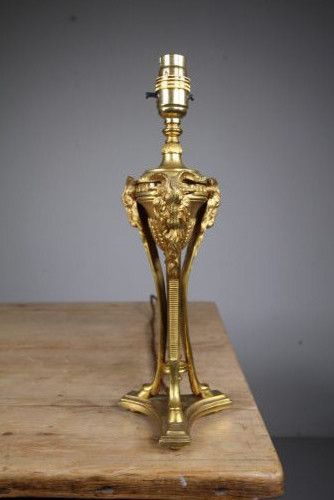
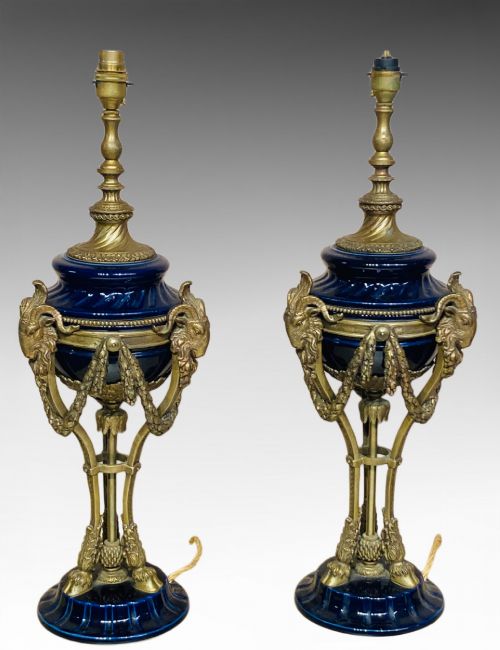
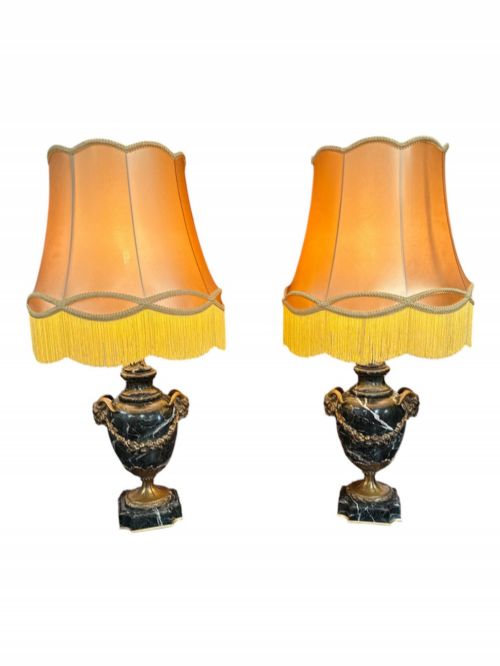
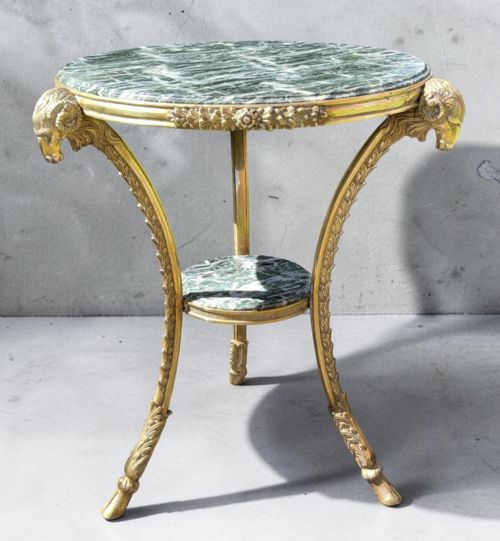
Decorative embellishments rely heavily on cast brass, ormolu, and gilt bronze, often taking the form of rams heads, floral mouldings, and classical mounts.
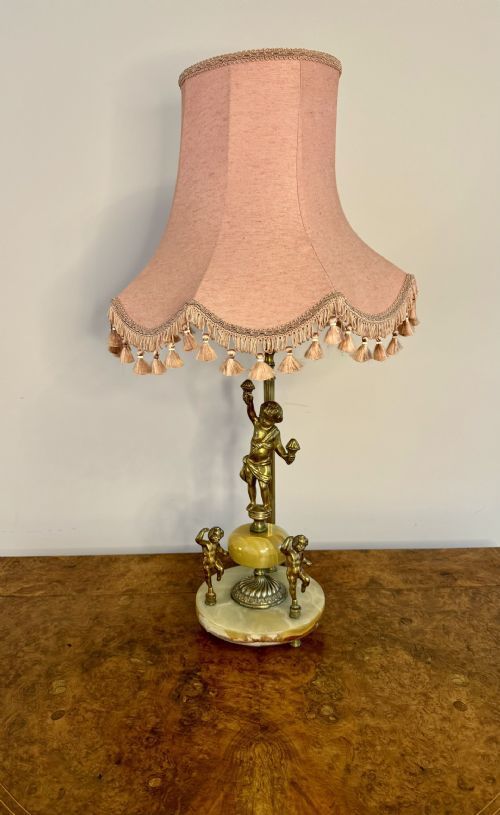
Giltwood and painted finishes appear frequently, while specific variations incorporate onyx tops, canework tiers, or frosted glass elements.
Several tables wear cast brass rams heads, silently watching the room from beneath their marble tops since the eighteen-nineties.
Craftsmanship and Proportion
Quality rests in the crispness of the cast metal mounts and the precision of the carving on the wooden frames and columns.
Superior pieces maintain strict classical proportions and balance, integrating marble tops that fit flush within their metal galleries or wooden surrounds.
Dugourc·Weisweiler
The French Neoclassical Accent Table Glossary
- Gueridon
- A small circular table supported by a central pillar or three legs. Originating in seventeenth-century France, these pieces frequently feature marble tops and gilt bronze mounts.
- Ormolu
- Gilded bronze applied as a decorative mount onto furniture and lighting. This technique involves coating cast bronze with a mercury and gold amalgam.
- Demi-lune
- A half-moon or semicircular shape used for side tables designed to sit flush against a wall. These forms conserve floor space while providing a functional surface.
- Bouillotte table
- A small neoclassical occasional table with a raised gallery rim around the marble top. They were originally designed to hold cards for the game of bouillotte.
- Empire style
- A neoclassical design movement spanning the early nineteenth century characterised by military motifs, classical antiquity influences, and dark mahogany veneers.
French Neoclassical Accent Table: Frequently Asked Questions
What is a French gueridon table?
A gueridon is a small circular French table typically supported by a central column or tripod legs. They were used historically for holding lamps, plants, or decorative items.
Most examples feature marble tops and metal mounts, making them versatile accent pieces for modern rooms.
How do I date these tables?
Dating relies on identifying the specific revival period, such as Louis XVI or Empire, alongside construction methods and material wear. Nineteenth-century pieces often show hand-cut joinery and heavy patination.
Later twentieth-century revivals tend to employ standardised fixings while retaining the classical silhouettes of earlier French furniture.
Where should I place an accent table?
These tables function well beside armchairs, sofas, or as standalone display surfaces in hallways and bedrooms. Their compact footprints allow them to fit into narrow spaces without crowding a room.
Marble-topped variants offer durable surfaces that handle everyday use as lamp or side tables.
What materials are typical for these tables?
Construction commonly involves mahogany, giltwood, or painted timber paired with inset marble slabs. Ormolu and cast brass mounts provide classical decorative detailing.
Some variations incorporate onyx surfaces or cane lower tiers for added textural contrast.