



French Needlepoint Armchair
A french needlepoint armchair brings together carved wooden frames and hand-stitched historical scenes for both comfort and visual weight in a room.
French Needlepoint Armchair
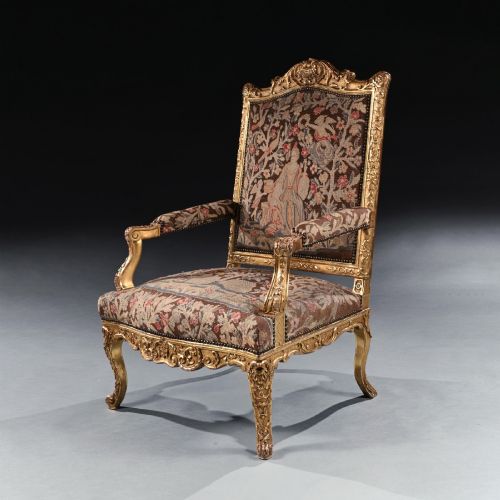
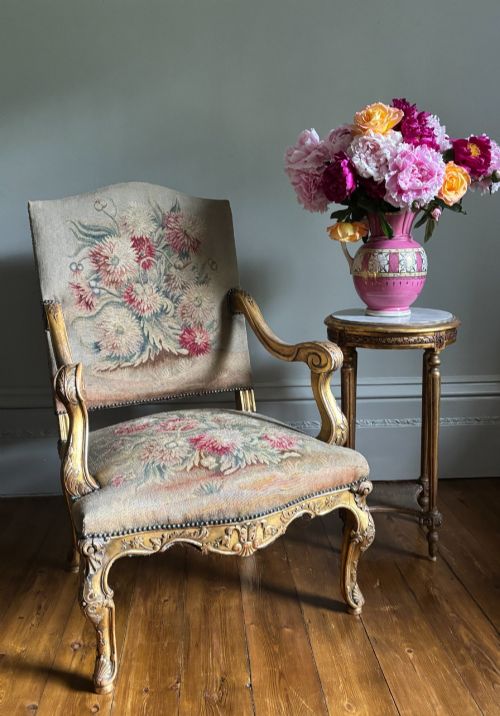
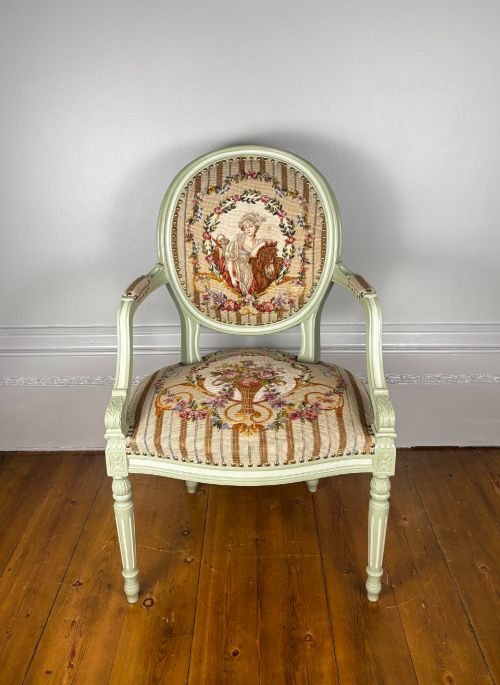
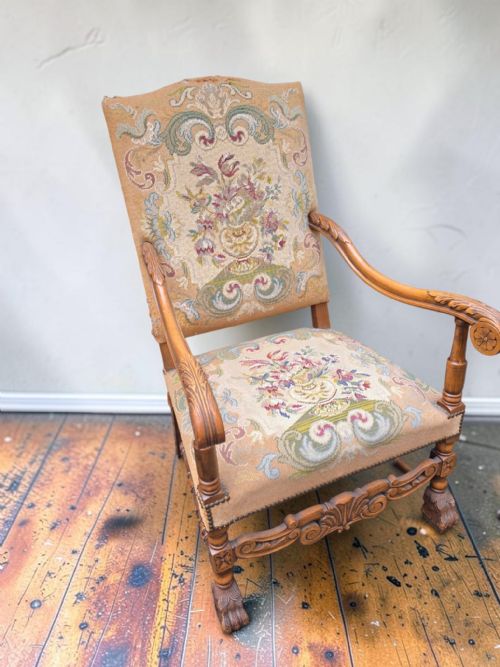
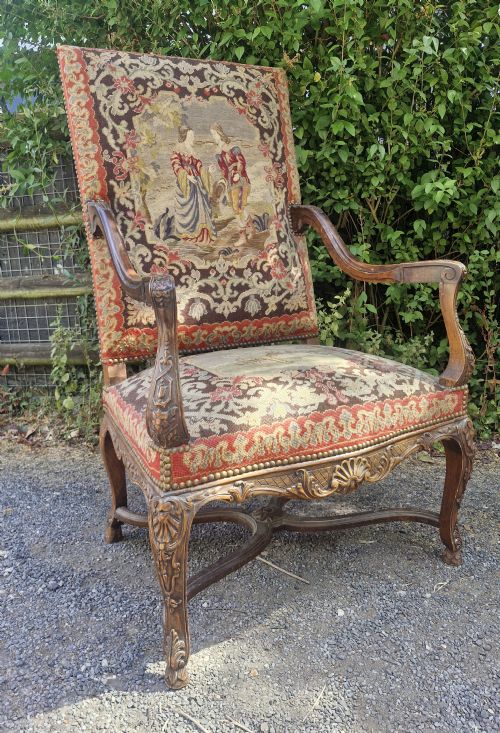
A french needlepoint armchair is a seated piece of furniture combining a wooden framework with hand-worked textile upholstery, most frequently appearing from the nineteenth and eighteenth centuries. These items serve as functional seating while displaying decorative needlework panels depicting figures, florals, or geometric patterns.
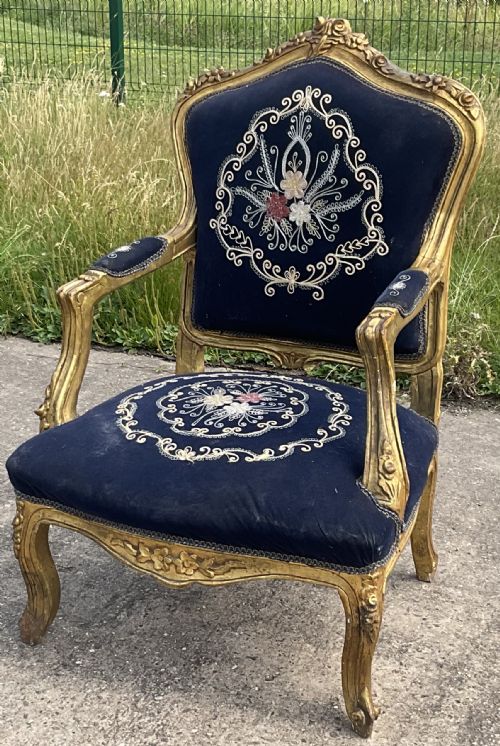
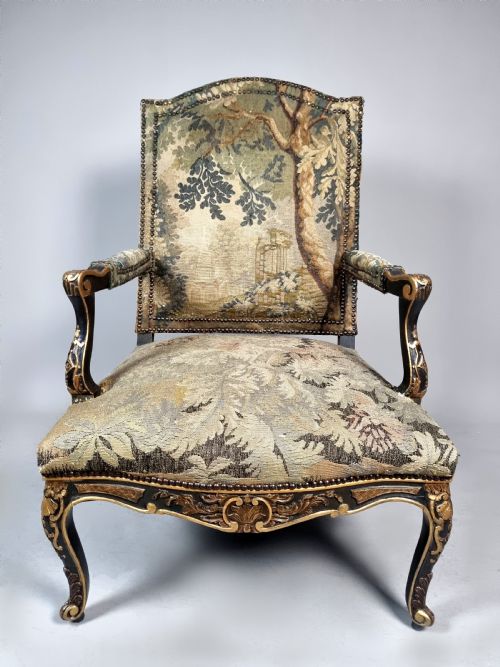
The pieces on this page span styles from Louis XV Revival and Louis XVI to French Provincial and Victorian interpretations. Walnut, giltwood, and painted timbers form the structural support for the needlework panels that cover the backrests and seats.
How they were made
Makers constructed the supportive frames using solid timbers such as walnut, beech, and rosewood, alongside gilded or painted finishes on giltwood and softwood structures. Carvers shaped the wood into curved cabriole legs, open arms, and decorative crest rails reflecting specific historical periods.
Upholsterers applied wool and silk threads onto canvas backings using needlepoint and petit point stitching techniques to create the pictorial panels. Brass tacks or gimp braid secure these heavy textile coverings directly to the wooden seat rails and back frames.
French Needlepoint Armchair Retail Price Guide 2026
Typical asking prices for french needlepoint armchair among the pieces listed under this phrase on Sellingantiques today, from the lower quarter to the upper quarter. They describe what is for sale here now, not the wider market.
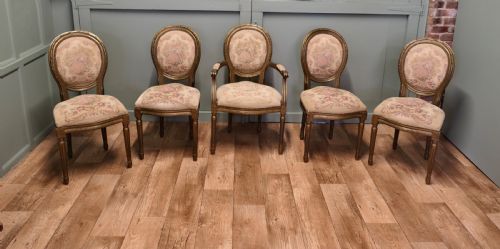
Some nineteenth-century makers evidently decided that an armchair simply must have five companions to form a complete salon suite.
What varies in quality
The precision of the wood carving separates standard productions from finer workshop examples, visible in the depth of relief work and the crispness of floral or scroll motifs. Frames with tight joinery and substantial timber scantlings maintain their structural integrity better over centuries of use.
Needlework density determines visual distinction, with finer petit point stitches allowing for intricate facial expressions and shading compared to coarser wool tapestries. The survival of original upholstery panels intact provides greater authenticity than later re-stitched replacements.
Holland and Sons
The French Needlepoint Armchair Glossary
- Fauteuil
- An open-framed armchair with upholstered back and armrests, typically featuring exposed wooden sides and a padded seat. This form originates from French seating design of the seventeenth and eighteenth centuries.
- Petit point
- A fine count needlepoint stitch worked on single-thread canvas using wool or silk yarn. This technique permits high detail in pictorial and floral upholstery panels.
- Giltwood
- Timber coated with a thin layer of gold leaf over a prepared gesso ground. This luxurious finish appears on formal eighteenth-century and revival salon armchairs.
- Louis XVI
- A neoclassical furniture style characterised by straight tapered legs, geometric symmetry, and classical carved motifs. Pieces from this aesthetic often utilise painted or giltwood frames.
- Bergere
- A closed armchair with upholstered sides and a loose seat cushion enclosed by a wooden frame. This comfortable seat style developed in France during the eighteenth century.
French Needlepoint Armchair: Frequently Asked Questions
What is a french needlepoint armchair?
A french needlepoint armchair is a wooden-framed seat upholstered with hand-stitched wool or silk textile panels. These chairs combine structural cabinetmaking with detailed tapestry work.
Most examples date from the eighteenth and nineteenth centuries, spanning various revival styles. They function as both comfortable seating and decorative focal points.
How do I identify eighteenth century pieces?
Eighteenth century frames display authentic joinery methods, hand-cut timber marks, and period-appropriate carving styles such as Regence or Louis XV. The timber patination shows natural wear accumulated over centuries.
Needlepoint panels on these early examples use period dye colours and hand-spun wool threads. Stylistic proportions adhere strictly to the design standards of their original era.
Where should I place these chairs?
These armchairs suit drawing rooms, studies, and an English country house interior aesthetic alongside wooden furniture. Their upholstered panels add texture and colour to neutral living spaces.
They also function effectively as occasional reading chairs in halls or bedrooms. Placement away from direct sunlight protects the antique wool and silk needlework from fading.
How do I care for needlepoint upholstery?
Gentle surface cleaning with a soft brush removes dust from the wool and silk fibres without damaging the stitches. Professional textile conservators should handle deep cleaning or structural repairs to the canvas.
Maintaining stable room humidity prevents the timber frames from drying out and keeps the canvas backing from becoming brittle.