





French Modern Art Canvas
French modern art canvas works bring twentieth-century avant-garde vision and vibrant Paris scenes straight into your interior.
French Modern Art Canvas
When you search for a French modern art canvas, you encounter oil paintings spanning the early to mid-twentieth century, capturing landscapes, cityscapes, and abstract compositions. The most frequent pieces on this page originate from the nineteen-fifties and nineteen-sixties, alongside works from the nineteen-twenties, nineteen-thirties, and nineteen-forties.
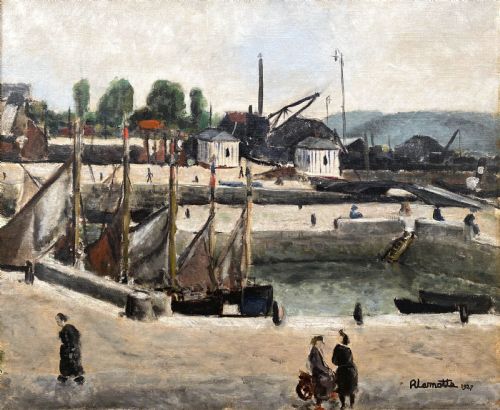
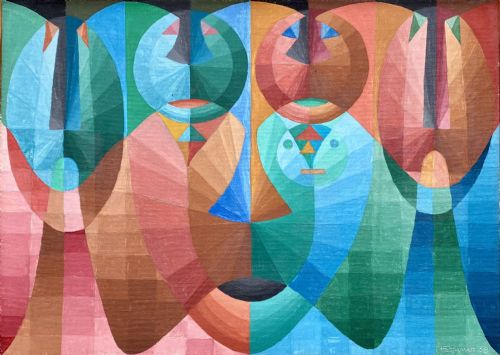
The subjects range from Parisian river views and bustling cityscapes to abstracted landscapes of Provence and still life arrangements. Painters employ styles such as cubism, modernism, and op art to render these subjects with distinctive visual energy.
Works on this page include framed pieces utilising wood, gilt wood, and gilt plaster. These objects reflect the creative movements centred in France during a dynamic period of artistic exploration.
Quality and execution
The distinction in quality rests upon the confidence of the brushwork and the strength of the compositional structure. Superior examples demonstrate a deliberate command of colour and form, successfully translating complex subjects like cubist cityscapes or abstracted figures into cohesive visual statements.
The integration of the canvas with its framing also influences the overall integrity of the piece. Well-preserved surfaces retain their original pigment depth and structural stability without compromising the artist's intended touch.
A lucky charm still life of lily of the valley flowers sits alongside industrial cityscapes and nuns with doves.
Ron Folland·Jean Hippolyte Marchand·Yo Mayer·Jeffrey Pratt·Hermoine Hammond
The French Modern Art Canvas Glossary
- Cubism
- An early twentieth-century avant-garde art movement that revolutionised European painting by breaking down subjects into multi-angled geometric shapes. This approach appears frequently in cityscape and figure compositions.
- Op art
- A style of visual art that uses optical illusions, employing abstract patterns with sharp contrast. Such works create a dynamic sense of movement on the canvas.
- Modernism
- A philosophical movement and art style that rejected traditional academic forms in favour of experimentation and expression. It underpins the majority of the paintings found in this collection.
- Gilt wood
- Wood that has been treated with a thin layer of gold leaf or metallic gilding. It is commonly found on the frames enclosing these twentieth-century canvases.
- French School
- A term denoting artists of various nationalities who worked in France and contributed to the development of modern painting. Many pieces reflect this cosmopolitan artistic environment.
French Modern Art Canvas: Frequently Asked Questions
What periods do these paintings cover?
The works span the early to mid-twentieth century, encompassing decades from the nineteen-twenties through to the nineteen-sixties. This era covers significant shifts in avant-garde painting.
You will find pieces reflecting the artistic developments of the interwar years as well as the post-war revival in French modernism.
What subjects appear in these works?
The subjects include Parisian river scenes, industrial cityscapes, rural landscapes in Provence, and domestic still life arrangements. Artists also explored abstracted human figures and geometric op art patterns.
Many compositions draw directly from urban environments like the Seine and the Jardin des Tuileries, or rural scenes featuring lavender fields.
How should I hang an oil canvas?
Ensure the wall space receives indirect natural light to protect the oil paint from excessive heat and ultraviolet exposure. Secure the hanging wire to sturdy wall anchors suited to the weight of the framed canvas.
Keep the painting away from direct heat sources such as radiators to prevent the wood stretcher and canvas from warping over time.
How do I identify a modernist style?
Look for a departure from strict academic realism in favour of simplified forms, expressive brushwork, and non-naturalistic colour palettes. Artists working in this mode prioritised subjective interpretation over photographic accuracy.
Elements like fragmented perspectives and bold geometric structures often signal modernist and cubist influences within the composition.