

French Marquetry Storage Cabinet
A french marquetry storage cabinet brings together intricate wood veneers, marble tops and gilt mounts to anchor a room with continental elegance.
French Marquetry Storage Cabinet
A french marquetry storage cabinet combines decorative wood veneers arranged in floral or geometric patterns with functional shelving and drawers. These pieces emerge primarily across the nineteenth century and early twentieth century, drawing heavily on Louis XV and Louis XVI revival aesthetics.
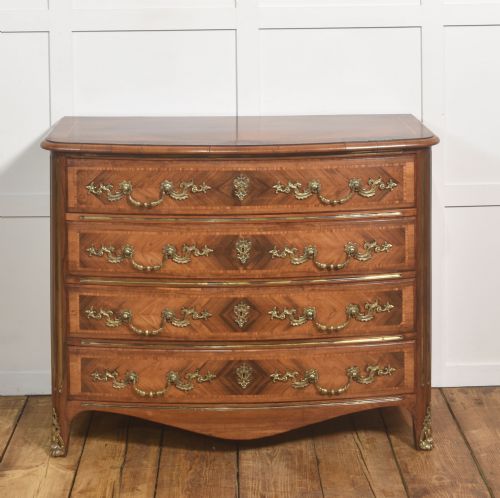
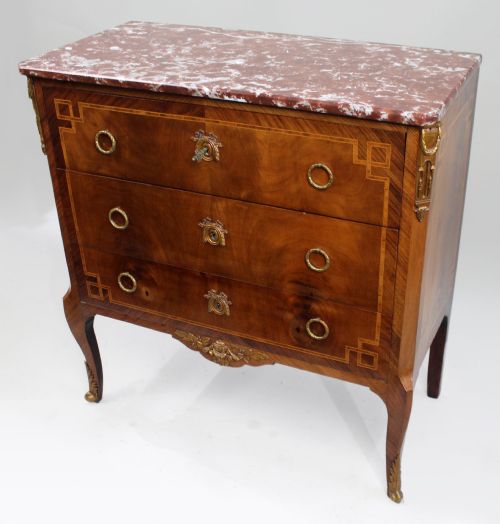
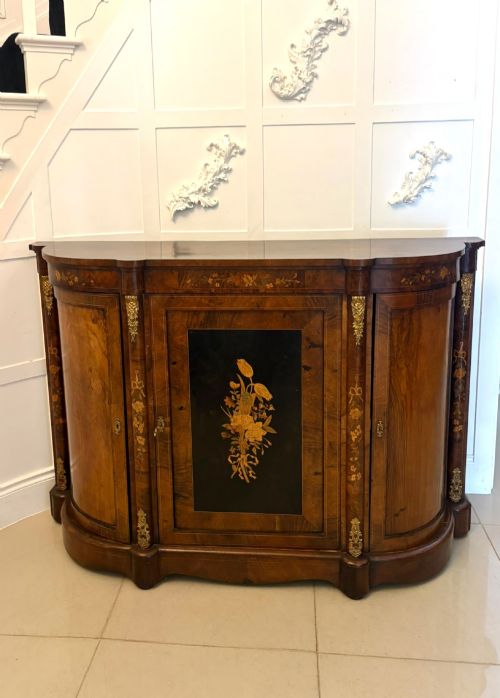
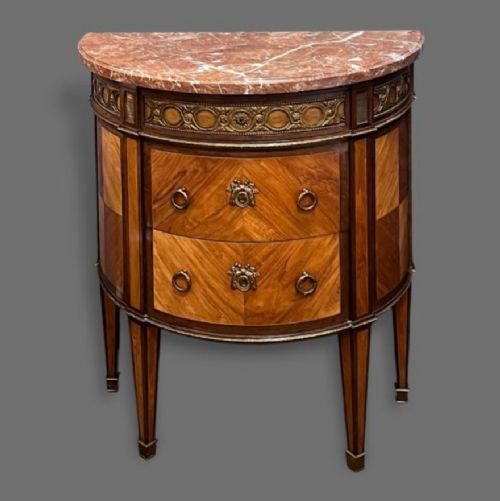
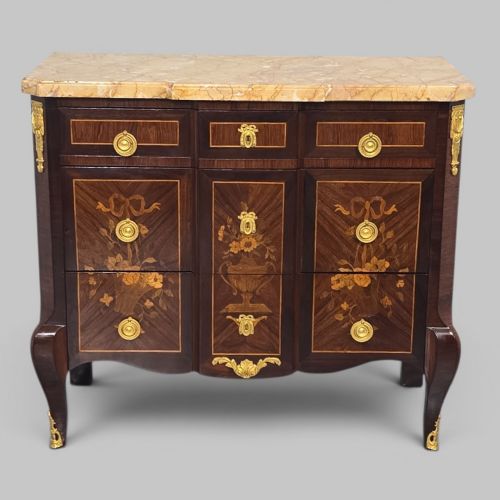
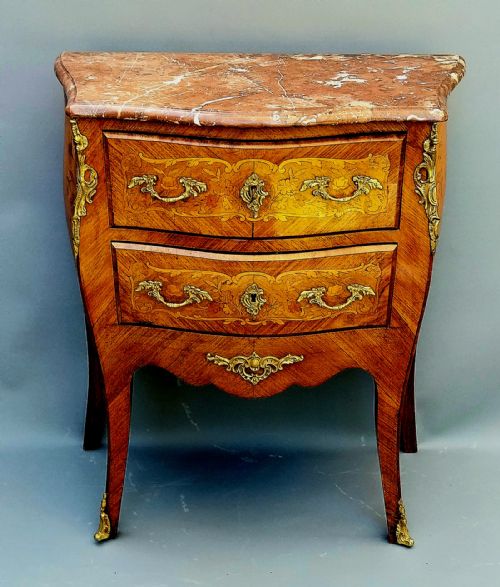
Buyers commonly encounter serpentine commodes, side cabinets and demi-lune consoles fitted with smooth marble slabs. Walnut, kingwood and burr walnut provide the foundational carcase structures, whilst intricate contrasting veneers form the characteristic pictorial surface decoration.
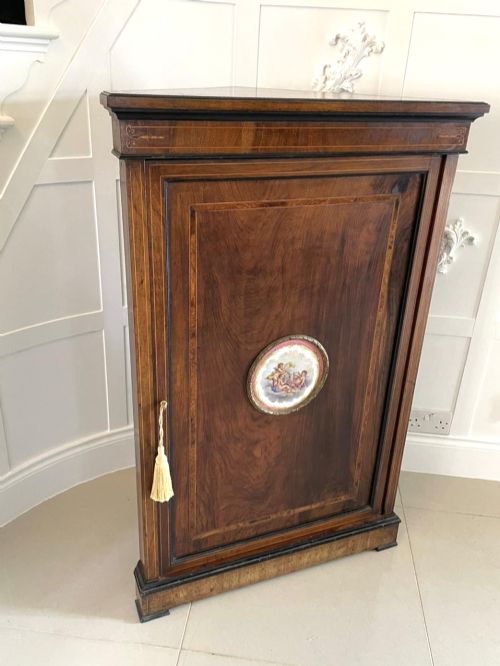
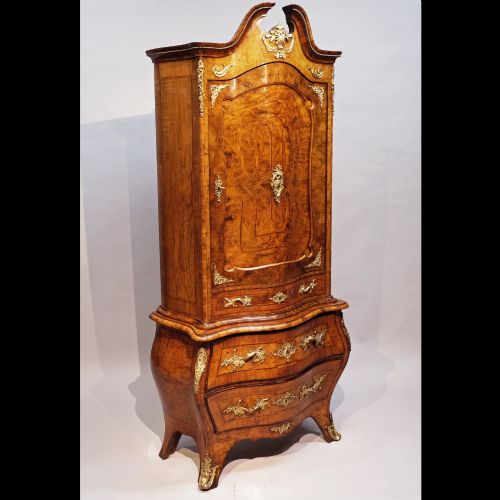
Originating largely from continental workshops and Victorian adaptations, these items function as principal display and storage furniture in principal rooms. Their silhouettes range from bombe contours to straight-lined cabinets raised on slender supports.
How they were made
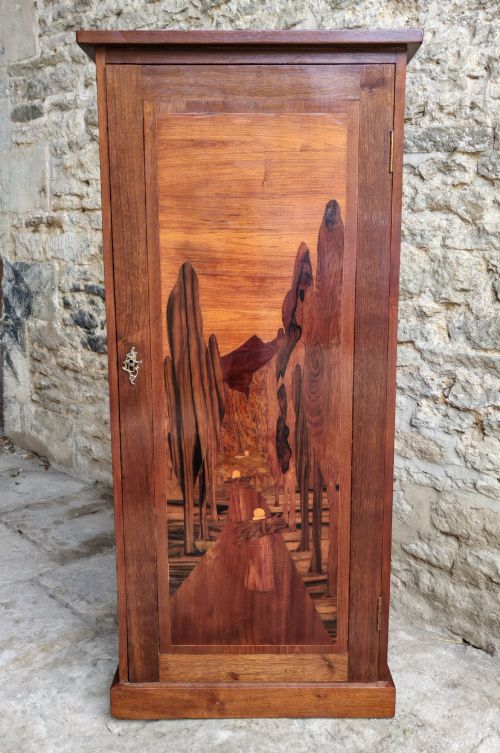
Craftsmen construct the main carcase from solid timbers such as walnut or mahogany before applying thin layers of decorative wood veneers by hand. Marquetry cutters slice contrasting timbers like kingwood and maple to create floral and symmetrical patterns embedded directly into the surface.
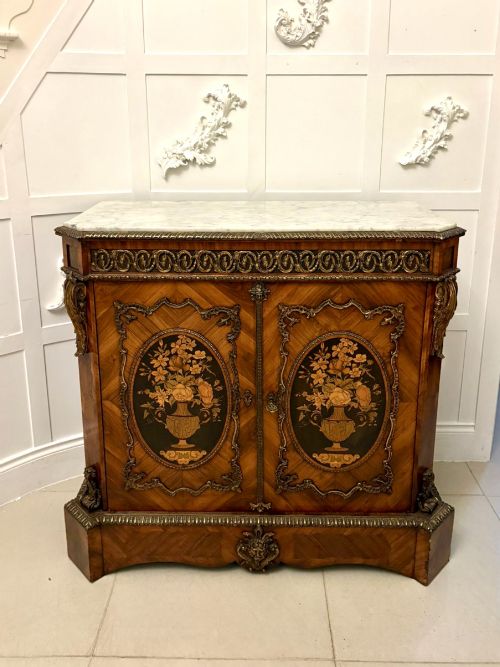
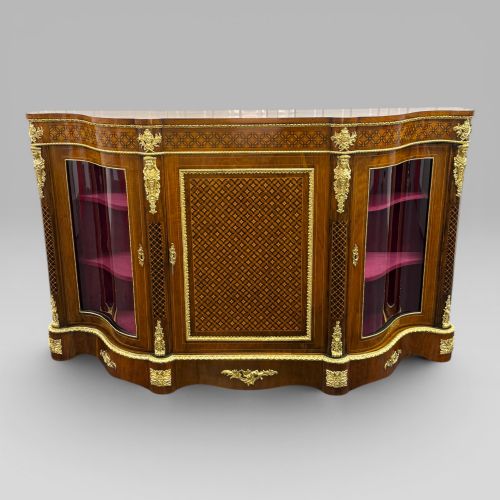
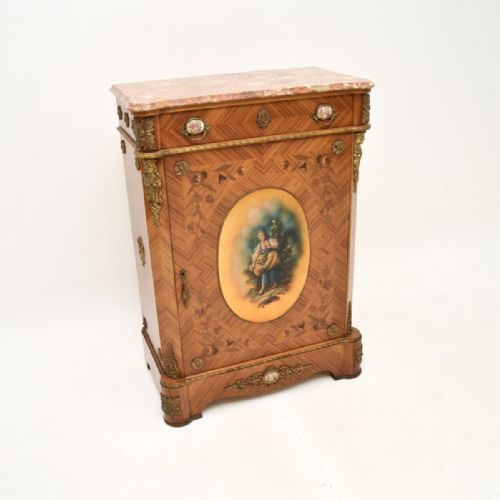
Ormolu and gilt bronze mounts frame the corners, aprons and feet, providing structural protection and visual contrast to the polished timber. Heavy marble tops, frequently in rouge or white varieties, rest upon the upper surface of commodes and side cabinets.
Many a Victorian parlour cabinet has quietly harboured decades of old love letters tucked behind its removable back panels.
What varies in quality
The refinement of the marquetry cutting distinguishes standard production from exceptional examples, where intricate shading and varied timber grains create genuine depth. Crisply cast ormolu mounts that fit flush against the wood indicate superior workshop standards.
The choice and thickness of the marble top, along with the precision of the serpentine or bombe drawer joints, determine the overarching calibre of the piece. Secondary timbers inside drawers and backboards reveal the diligence applied to hidden structural elements.
Maison Gagneau·Jean-Henri Riesener·Paul Sormani
The French Marquetry Storage Cabinet Glossary
- Marquetry
- Decorative patterns formed by fitting together thin slices of wood veneer onto a structural carcase. It differs from inlay by covering the entire surface rather than resting inside carved recesses.
- Ormolu
- Gilt bronze mounts applied to furniture for decorative accent and edge protection. The technique involves treating bronze with a gold amalgam before firing.
- Commode
- A low chest of drawers or cabinet originating in France. These pieces typically feature multiple drawer tiers and prominent marble tops.
- Serpentine
- A furniture silhouette featuring a gentle, undulating front line that curves inward at the centre and outward at the sides. This contour demands precise woodworking skill.
- Credenza
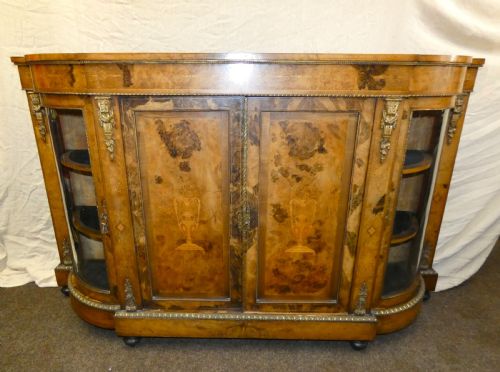
- A sideboard or display cabinet designed for formal interiors. Victorian examples often incorporate glass doors and elaborate marquetry panels.
French Marquetry Storage Cabinet: Frequently Asked Questions
How do I identify Louis XV and Louis XVI styles?
Louis XV style pieces display asymmetrical curves, bombé shapes and naturalistic floral marquetry without rigid symmetry. Louis XVI style pieces introduce neoclassical restraint, straight tapered legs and geometric veneers.
Ormolu mounts on Louis XV furniture emphasise flowing movement, whereas Louis XVI mounts favour architectural urns, swags and classical repetition.
Were marble tops original to these cabinets?
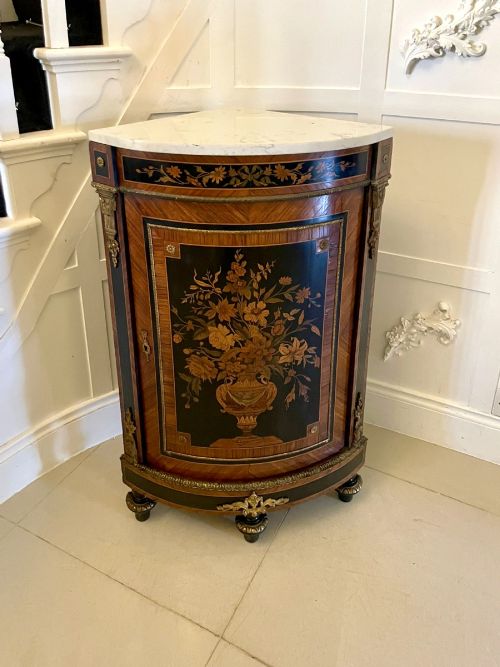
Heavy marble slabs function as the standard upper surface for many commodes, side cabinets and corner cupboards from the nineteenth century onward. They provide a durable, cooling finish intended for display and everyday utility.
Variations in marble colour, from white to rouge, reflect the specific design preferences of the workshop and period.
How should I care for marquetry surfaces?
Maintain a stable indoor environment away from direct sunlight and extreme radiator heat to prevent the delicate wood veneers from lifting. Apply occasional microcrystalline wax to nourish the timber and protect the polished finish.
Avoid excessive moisture on both the wood veneers and the gilt bronze mounts during routine cleaning.
What is the difference between a commode and a side cabinet?
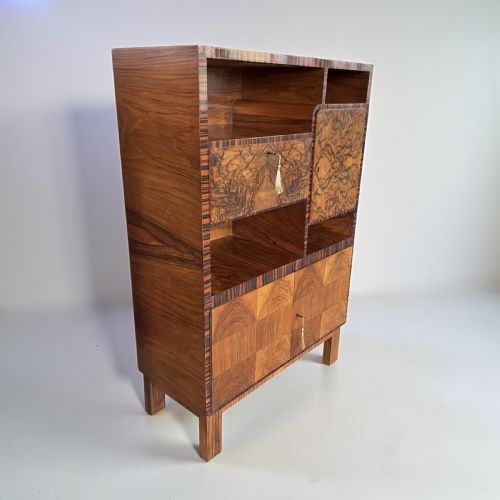
A commode primarily functions as a chest of drawers enclosed within a decorative, often serpentine or bombé carcase. Side cabinets incorporate doors, cupboards or open shelving behind hinged panels.
Both forms frequently share identical surface treatments, including marquetry panels, ormolu mounts and marble tops.