


French Marquetry Console
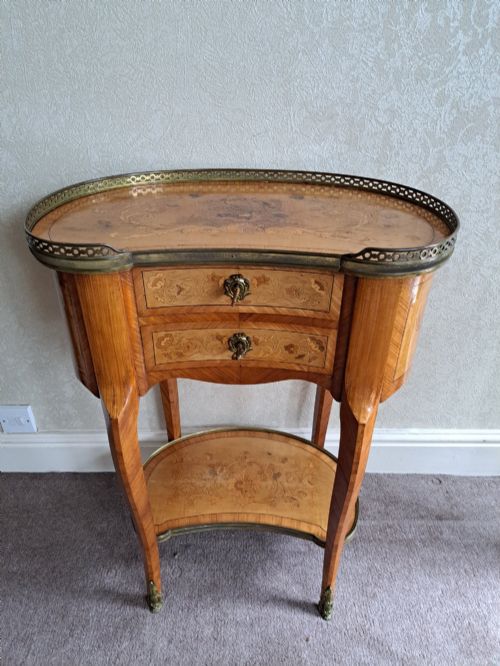
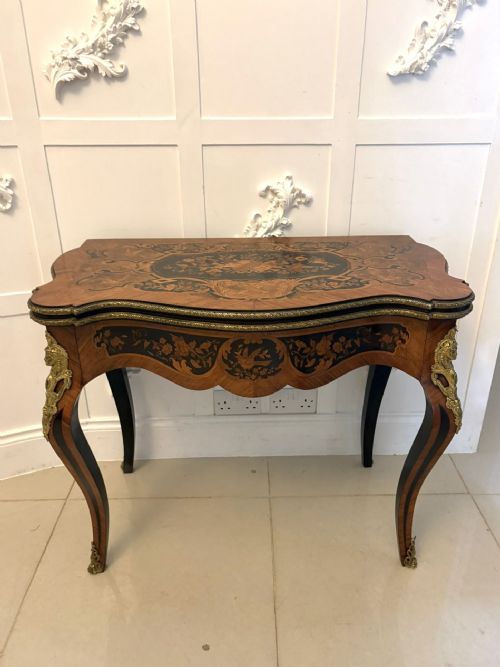
These pieces known as a french marquetry console bring together intricate floral woodlays and gilt mounts to anchor a room.
French Marquetry Console
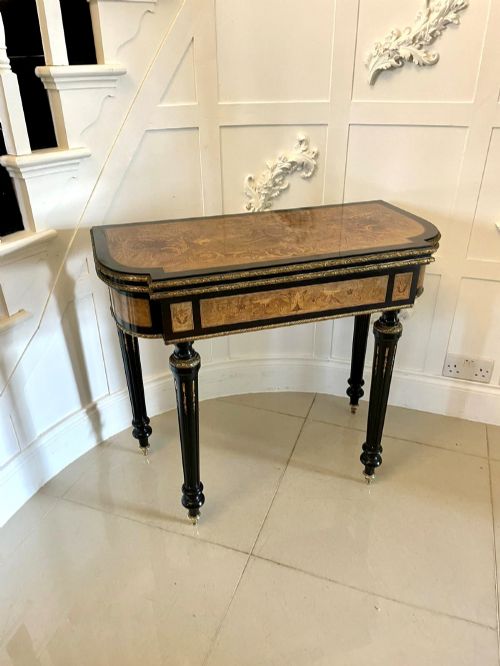
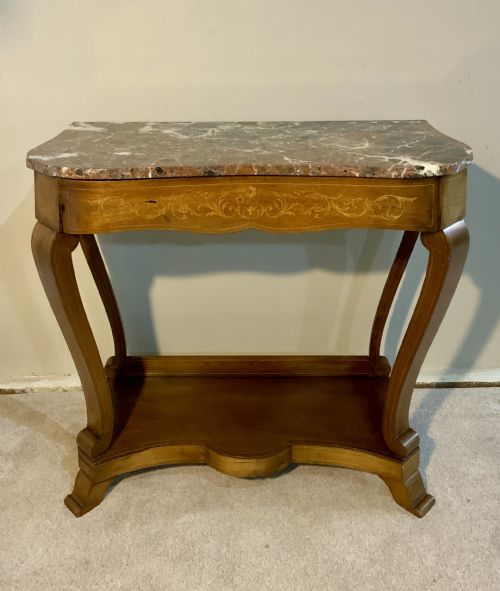
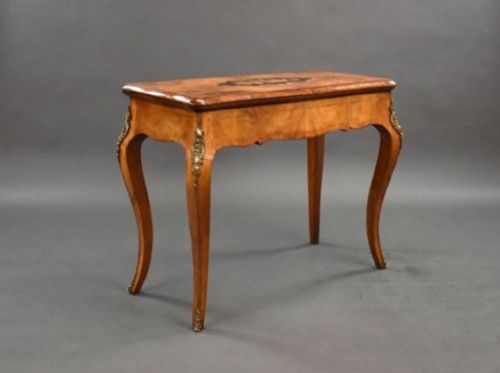
A french marquetry console is a statement piece of furniture designed to stand against a wall, frequently doubling as a card table, games table, or side table. These tables emerge primarily from the nineteenth century, spanning Victorian interpretations and revival styles such as Louis XV and Louis XVI.
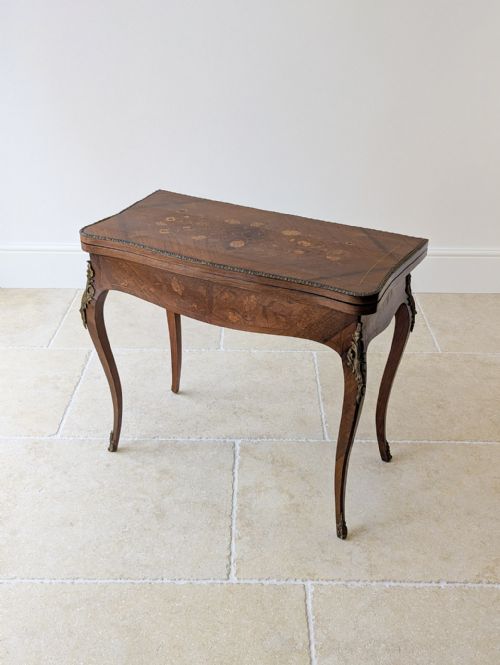
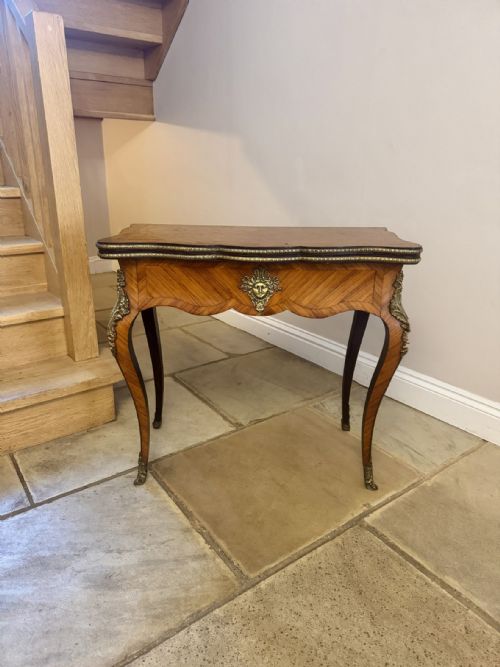
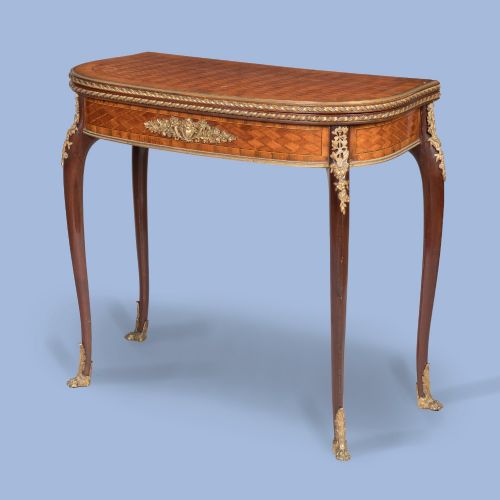
The most common forms on this page take the shape of demilune or fold-over tables, which transition from compact console surfaces into full card or gaming tables when opened. Alongside these, buyers encounter centre tables and writing desks sharing the same decorative vocabulary.
Originating largely from French workshops and their British equivalents, these items combine architectural timber forms with decorative surface veneers. They serve equally as functional furniture and as decorative surfaces displaying intricate floral and geometric wood inlays.
How They Were Made
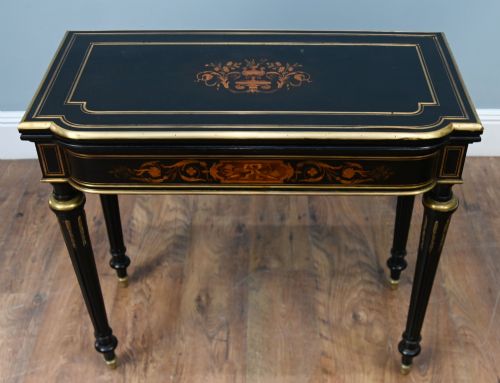
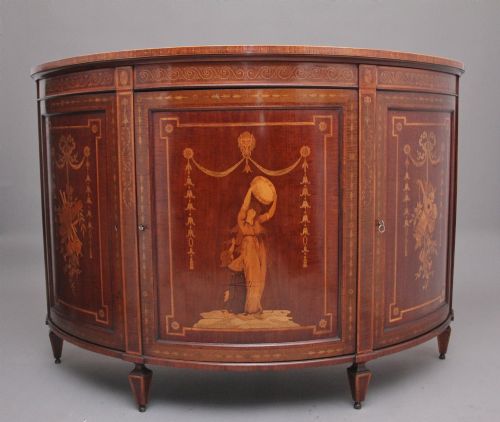
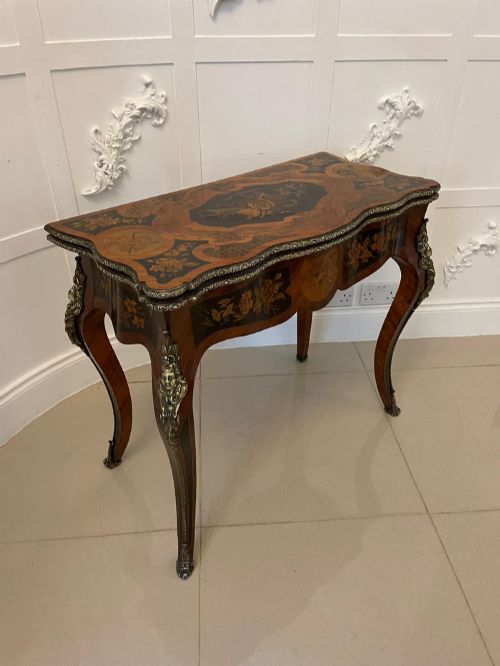
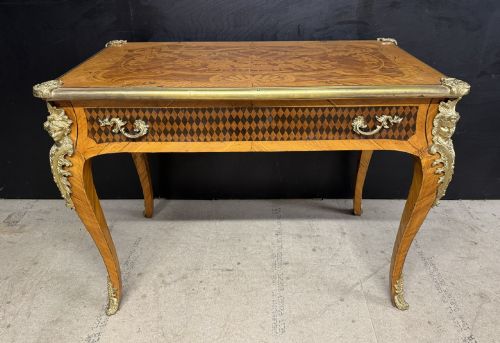
Cabinet makers constructed these tables using a carcase of mahogany, walnut, or satinwood, onto which they applied finely sliced veneers of kingwood, tulipwood, and rosewood. The decorative patterns rely on marquetry and parquetry techniques, cutting contrasting timber species together to form floral motifs and geometric bands.
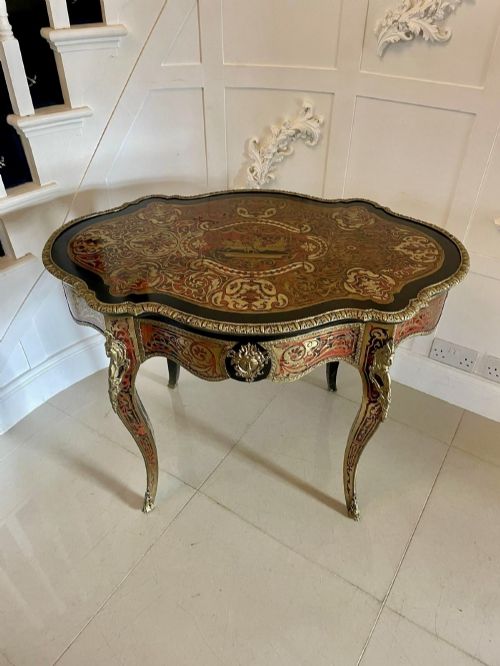
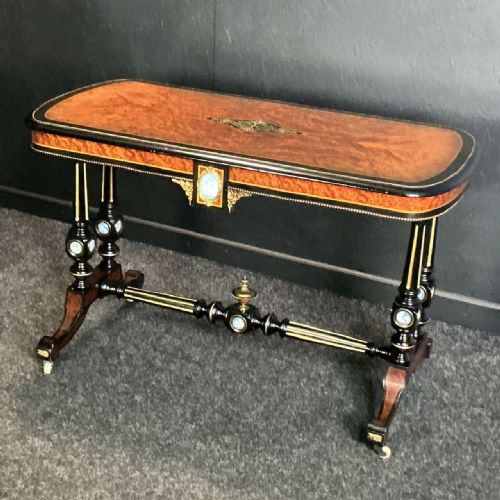
Ormolu mounts, cast from brass and gilded, accent the corners, legs, and aprons of the tables, protecting vulnerable edges while adding visual weight. Many designs incorporate ebonised wood details or Boulle work utilising tortoiseshell and brass inlay alongside the timber veneers.
Listings feature woods including kingwood, walnut, mahogany, and rosewood, paired with ormolu mounts and brass inlay.
What Varies in Quality
The distinction between standard production and top-tier execution rests on the precision of the veneer cutting and the weight of the cast ormolu mounts. Finer pieces employ exotic woods with greater natural variation, and the marquetry flows seamlessly across hinges and seams without awkward interruptions in the pattern.
Structural integrity also separates the grades, visible in the smoothness of the folding mechanisms on card tables and the stability of the legs under weight. Superior examples show meticulous hand-chasing on the bronze mounts rather than the softer edges typical of mass production.
François Linke·Millet·Edwards & Roberts·Joseph-Emmanuel Zwiener
The French Marquetry Console Glossary
- Marquetry
- The art of applying decorative pieces of veneer to a structure to form intricate pictures or patterns. It differs from parquetry through its use of pictorial floral designs rather than repeating geometric tiles.
- Ormolu
- Gilded bronze used for decorative mounts and furniture trim. This technique became widespread in French furniture production during the eighteenth and nineteenth centuries.
- Kingwood
- A dense, richly grained timber native to Brazil, prized for its dark violet-brown colour and contrasting golden stripes. Makers used it extensively for high-end French veneer work.
- Demilune
- A half-moon shape used to describe tables with a flat back designed to sit flush against a wall. This profile proves particularly common in nineteenth century console and card table designs.
- Boulle
- A method of marquetry incorporating tortoiseshell and brass, named after the cabinet maker André-Charles Boulle. This technique creates a dramatic contrast between golden metal and dark organic shells.
French Marquetry Console: Frequently Asked Questions
How do I use a console table?
A french marquetry console works well in a hallway or living room against a flat wall beneath a mirror or artwork. The surface holds lamps, decorative objects, or correspondence.
Many variants incorporate folding tops that open to create a baize-lined surface for card games or writing. This dual functionality allows the furniture to adapt between display and use.
How do I clean marquetry furniture?
Dust the veneered surfaces regularly with a soft, dry cloth to prevent particles from settling in the grain. Avoid abrasive cleaners or excess water which can damage the delicate wood veneers.
Apply a microcrystalline wax periodically to nourish the timber and protect the polish. Keep the furniture away from direct sunlight and heat sources to prevent the wood from warping or the glue from drying.
How do I date a french marquetry console?
Examine the secondary woods inside the frame, the construction joints, and the style of the ormolu mounts. Nineteenth century revival pieces often mimic earlier Louis XV or Louis XVI aesthetics but reveal contemporary construction methods.
Look for maker stamps or signatures cast into the bronze mounts or stamped onto the wooden chassis. Comparing the specific floral marquetry patterns to known nineteenth century cabinet maker portfolios also helps narrow the decade of production.
What is the difference between marquetry and parquetry?
Marquetry involves arranging coloured wood veneers into pictorial scenes, floral sprays, or elaborate scrollwork. It requires intricate hand-cutting of diverse timber species to achieve naturalistic shading and detail.
Parquetry uses geometric shapes such as cubes, diamonds, or triangles to form repeating mosaic patterns across the table top. Both techniques often appear together on nineteenth century French furniture.