


French Marquetry Bureau De Dame
These refined French marquetry bureau de dame writing desks bring graceful proportions and intricate floral or pictorial inlays to a study or boudoir.
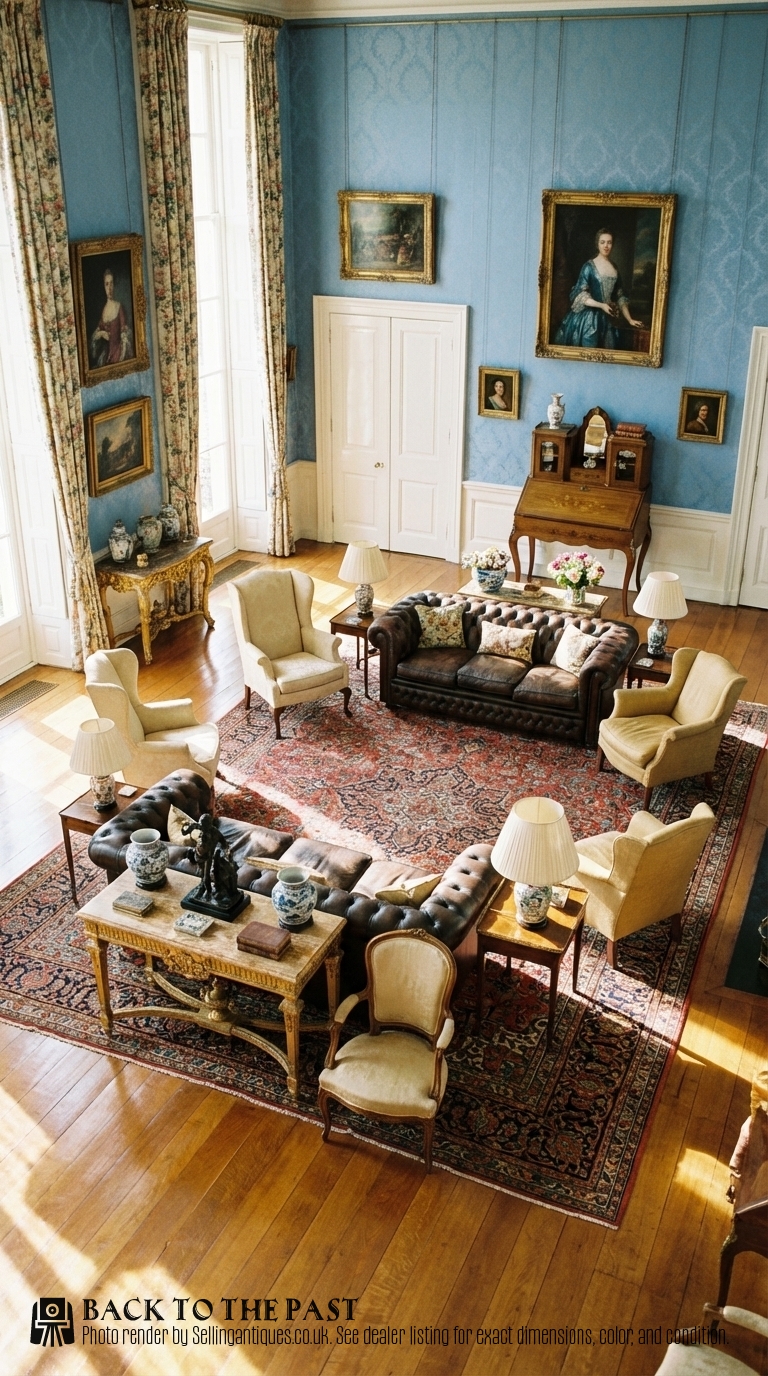
French Marquetry Bureau De Dame
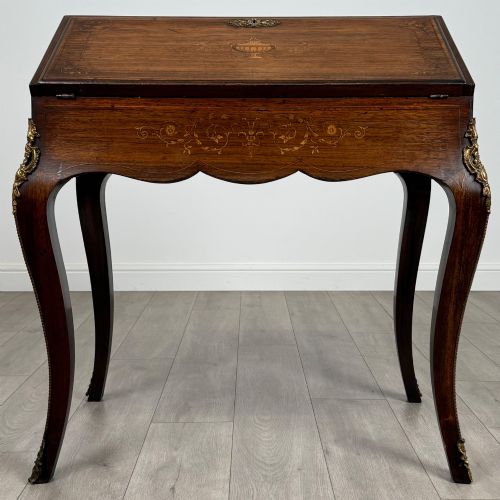
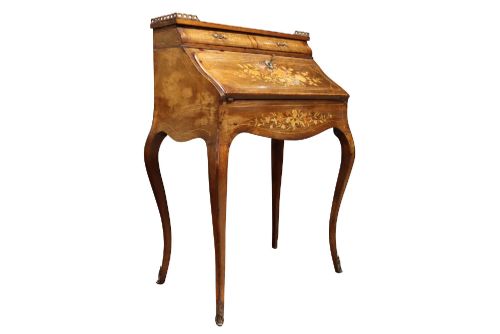
A French marquetry bureau de dame is a compact ladies writing desk, often designed with a sloping fall-front lid enclosing small drawers and pigeonholes.
The versions met most frequently on this page date from the nineteenth century, including the Victorian era and the eighteen-seventies, adhering to Louis the Fifteenth revival and Rococo revival styles.
These pieces function both as decorative freestanding furniture and as functional writing tables, maintaining a neat scale suited to domestic interiors.
Construction and Materials
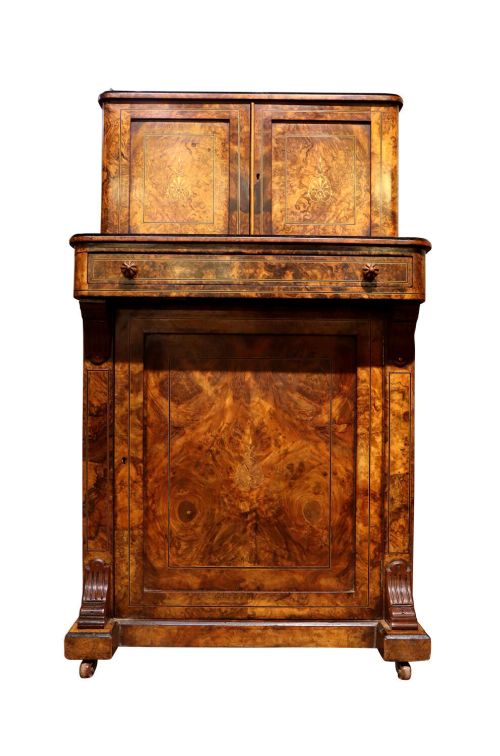
Cabinetmakers constructed the carcase using timber foundations such as walnut, burr walnut, mahogany, or amboyna, overlaid with choice decorative veneers.
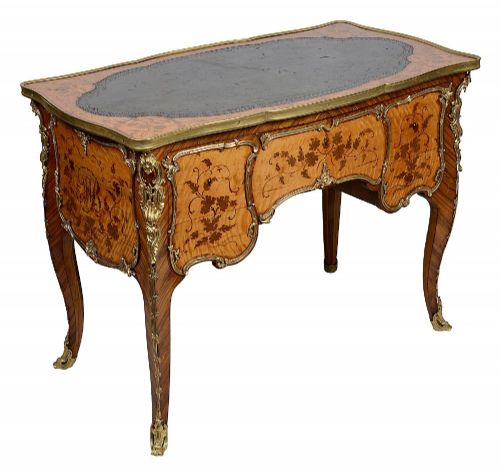
The exterior surfaces display complex marquetry inlay utilising exotic woods like rosewood and kingwood to form floral sprays, geometric patterns, or pictorial scenes.
Casting and chasing ormolu, gilt metal, and brass mounts, alongside fine brass line inlay, edge the curves, corners, and cabriole legs of the desk.
Listings feature nineteen-century pieces spanning the eighteen-fifties through the nineteen-twenties, predominantly executed in the Louis the Fifteenth revival style.
Assessing Quality
Quality rests upon the precision of the marquetry cutting and the variety of contrasting timbers employed within the pictorial or floral compositions.
The refinement of the cast ormolu mounts and gilt metal accents, alongside the crispness of their finishing, separates standard production from exhibition-quality pieces.
Structural integrity is evident in the selection of timbers used for secondary woods inside the drawers and the smooth operation of the writing flap.
Paul Sormani
The French Marquetry Bureau De Dame Glossary
- Bureau de dame
- A ladies writing desk, typically featuring a sloping lid that opens to reveal a fitted interior of small drawers and compartments.
- Marquetry
- The art of applying pieces of veneer to a structure to form decorative patterns and pictures, utilising different coloured woods.
- Bonheur-du-jour
- A light-standing ladies writing desk featuring a small cabinet or set of shelves upon the upper surface.
- Ormolu
- Gilded bronze mounts and decorative trimmings applied to the angles and feet of nineteenth-century furniture.
- Kingwood
- A dense, richly figured timber with dark violet-brown and golden streaks, frequently utilised in French revival cabinetwork.
French Marquetry Bureau De Dame: Frequently Asked Questions
How do I date a French bureau de dame?
Dating relies on examining the timber veneers, mounting techniques, and prevailing revival styles seen in the construction. Pieces on this page predominantly date from the nineteenth century and the Victorian era, spanning specific decades like eighteen seventy.
Cabinetmakers of the nineteenth century frequently revived earlier Rococo and Louis the Fifteenth aesthetics. Comparing the secondary woods inside the drawers and the style of the gilt metal mounts helps narrow the period of manufacture.
What woods are used in these desks?
The primary carcases utilise walnut, burr walnut, mahogany, and amboyna as foundational woods. These are then veneered with decorative timbers chosen for their grain and colour.
Marquetry panels incorporate rosewood, kingwood, and various tinted veneers to create floral or pictorial motifs. Brass and ormolu are frequently added to frame these decorative wood panels.
How do I care for antique marquetry?
Protect antique marquetry furniture by keeping it away from direct sunlight and maintaining a stable indoor humidity level. Extreme changes in temperature can cause the delicate wood veneers to lift or crack.
Dust the surfaces gently with a soft, dry cloth and avoid harsh chemical polishes. Applying occasional specialist wax maintains the natural lustre of the rosewood and walnut timbers.