


French Marine Landscape Art
French marine landscape art captures coastal harbours, sunlit seas and rugged shores through oil and watercolour.
French Marine Landscape Art
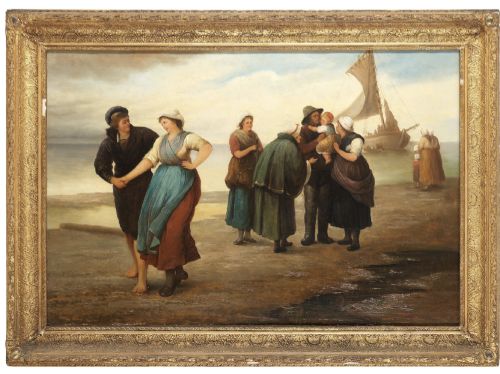
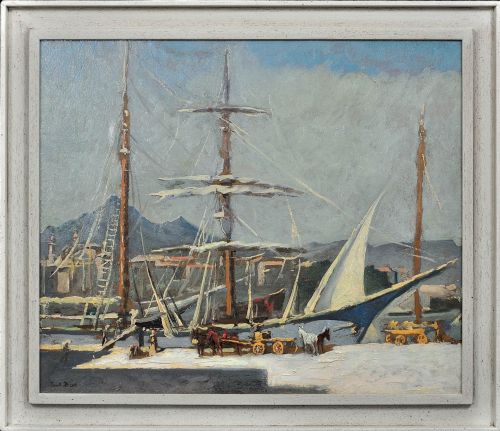
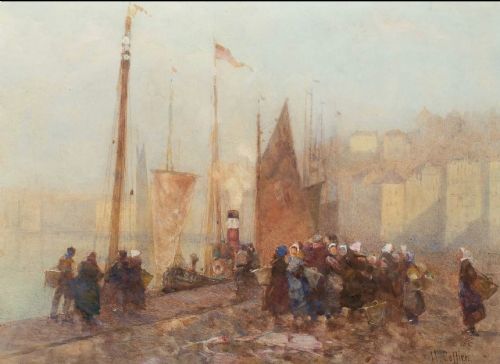
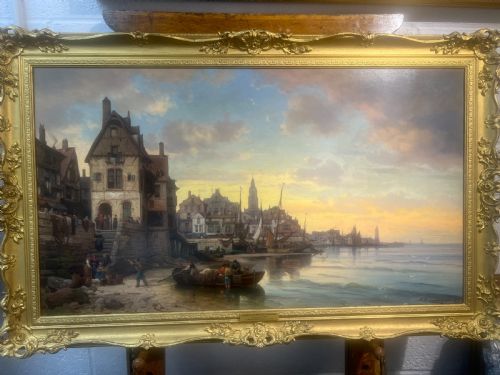
French marine landscape art encompasses oil paintings and watercolour paintings that record coastal scenes, harbours and maritime life from the nineteenth and twentieth centuries. These works span nineteenth century academic styles through to post-impressionism, mid-century modern interpretations and twentieth century realism. Buyers encounter coastal townscapes of Cannes, busy ports in Brittany and sunlit Mediterranean scenes along the Côte d'Azur.
The versions most frequently found on this page date from the early decades of the twentieth century, particularly the nineteen-twenties and nineteen-thirties. Artists of this era painted the rocky cliffs of Normandy, the Gulf of Morbihan and fishing ports like Concarneau on canvas, panel or board. These pieces frequently show local figures, boats on the shore and lighthouses against evening clouds.
Materials and methods
Painters worked primarily in oil paint applied to stretched canvas, wooden board or wood panels, alongside watercolours on paper. The application ranges from smooth nineteenth-century academic brushwork to the visible, dynamic strokes of post-impressionism and abstract impressionism. Works are typically housed within their original wood frames or period frames suited to the coastal subject matter.
Supports varied according to the artist's preference for studio or plein-air execution, with board and panel offering a rigid surface for outdoor painting along the coast. Oil mediums provided durability against coastal dampness while allowing rich layering of colour for sea and sky. Pigments capture the particular light of Normandy cliffs or the bright glare of southern harbours.
Several canvases preserve actual grains of sea sand embedded firmly within the oil paint from windy days spent painting on Breton shores.
Factors of quality
Quality rests upon the handling of light, atmospheric perspective and the vigour of the brushwork in rendering water and sky. Superior works demonstrate a confident command of colour and composition, capturing the movement of tides or the harsh glare of the southern sun without mechanical precision. The relationship between the painted scene and its period frame also influences the integrity of the piece.
The reputation of the artist, documented exhibition history and clear provenance separate accomplished works from anonymous school pieces. Skilled handling of texture in depicting seaweed, stone quays or weathered timber hulls distinguishes the finest examples from repetitive commercial coastal views.
Paul Bret·Hector Caffier·Charles Euphraisie Kuasseg·Louis Suire·Gustave Vidal·Raymond Picque·William Lee Hankey·Fred Pailhes·Charles Malfroy·Roger de la Corbiere·Marc Aldine·Antoine Bouvard Senior·Edward Henry Holder·Henri Ottman·Henri Cadiou
The French Marine Landscape Art Glossary
- Post-Impressionism
- An art movement extending roughly from the late nineteenth century that rejected naturalistic depiction in favour of expressive colours and forms. Artists applied these principles to marine subjects with heightened palettes.
- Plein-air
- The practice of painting outdoors directly from nature to capture transient effects of light and weather. This method was widely utilised by coastal painters working along the French shoreline.
- Canvas
- A heavy woven fabric stretched across a wooden frame to serve as a foundation for oil painting. It remains the most common support for nineteenth and twentieth century marine works.
- Watercolour
- A painting method where water-soluble pigments are applied to paper. These delicate works frequently capture translucent effects in harbour scenes and coastal sketches.
French Marine Landscape Art: Frequently Asked Questions
What subjects appear in French marine art?
Paintings feature rocky cliffs, bustling fishing ports, quiet sandy beaches and coastal architecture along the French shoreline. Scenes range from the alabaster coast of Normandy to the sunlit quays of the Mediterranean.
Artists recorded daily coastal labour, including seaweed gatherers, fishermen hauling their catch and ships unloading in harbour. These works document the maritime trades and coastal topography of past eras.
How do I date these paintings?
Dating relies on stylistic evidence, artist signature records, framing styles and occasional inscriptions on the reverse of the canvas or board. Nineteenth-century works display tighter academic control, whereas twentieth-century examples embrace looser impressionist or modernist brushwork.
Costume details on figures present in the harbour scenes also provide reliable chronological clues. Clothing styles of Breton fishermen or holidaymakers help narrow the decade of execution.
Were these painted outdoors?
Many marine landscapes were initiated or completed outdoors to capture immediate weather conditions and changing coastal light. Portable oil sketching boxes allowed artists to work directly on the cliffs and beaches.
Larger canvases were frequently finished inside a studio using these initial plein-air studies as a primary reference. This combination ensured both freshness of observation and structural coherence.
How should I frame these works?
Displaying these paintings in period-appropriate wood frames enhances their historical context and visual impact. Original frames, when preserved, often show minor signs of age that complement the canvas.
Avoid overly modern or synthetic mouldings that clash with the texture of twentieth-century oil paint. Simple gilt or toned wood profiles suit both impressionist and realist maritime subjects.