


French Marble Top Furniture
French marble top furniture brings together cool stone surfaces and rich timbers from the eighteenth century onwards.
French Marble Top Furniture
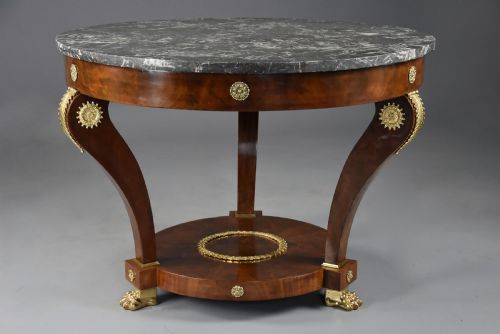
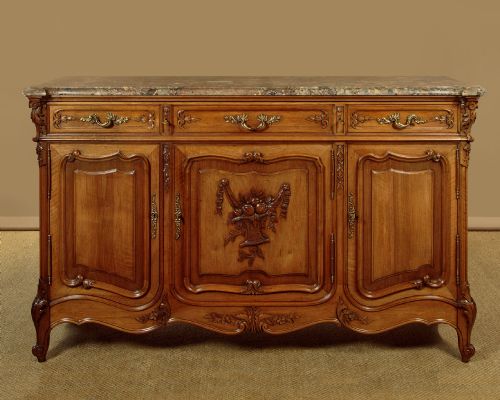
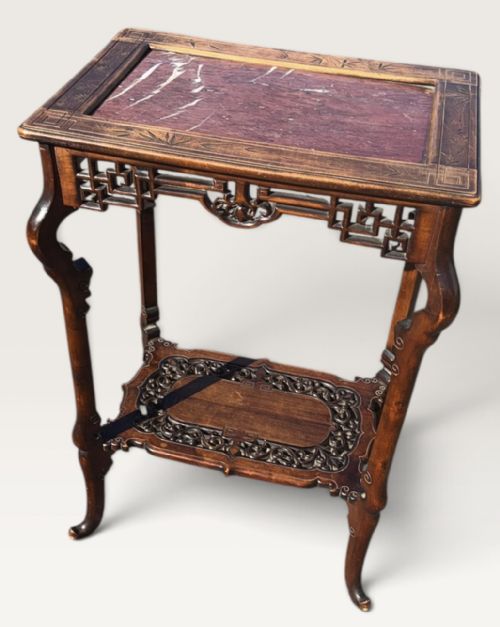
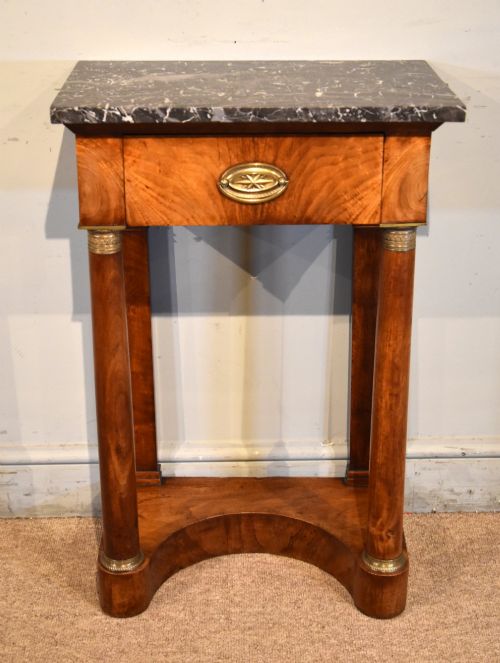
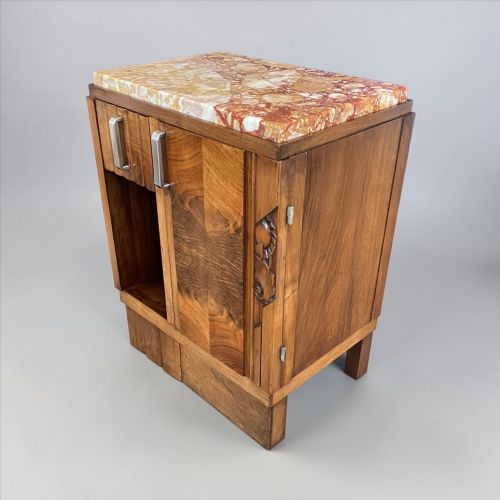
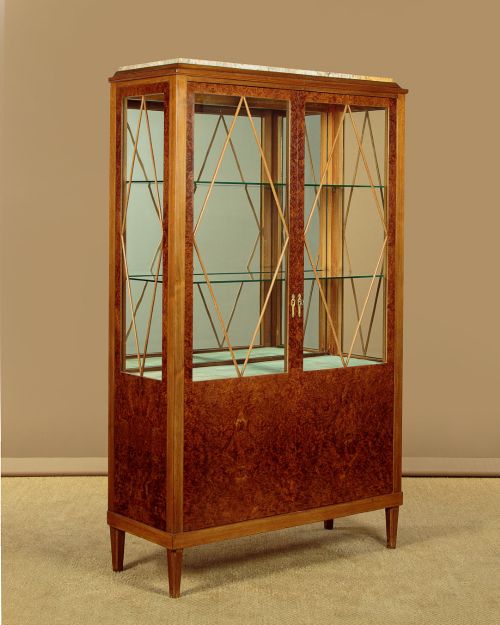
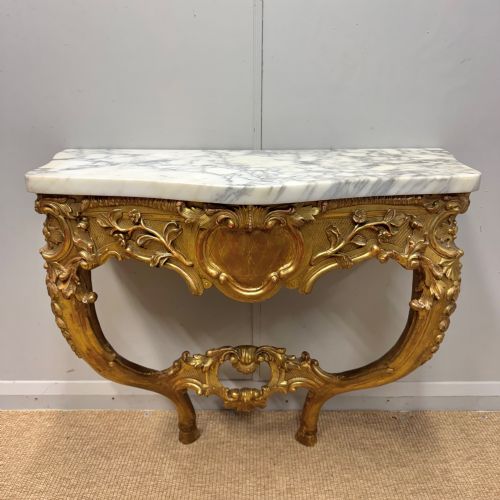
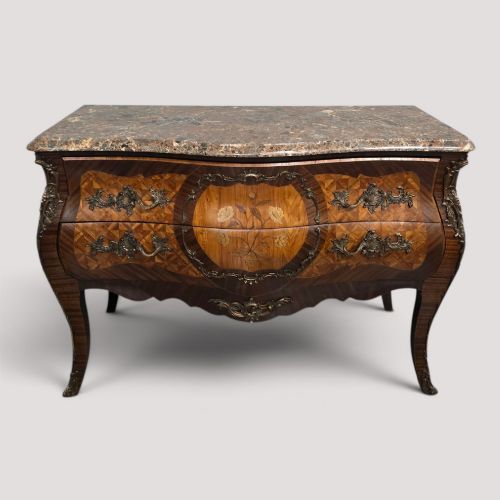
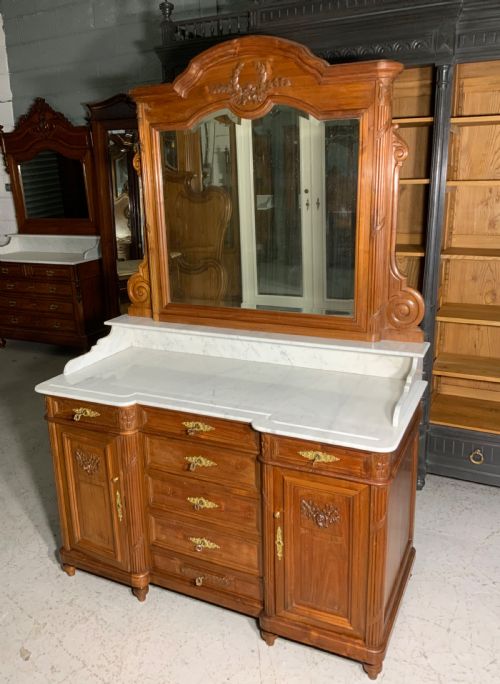
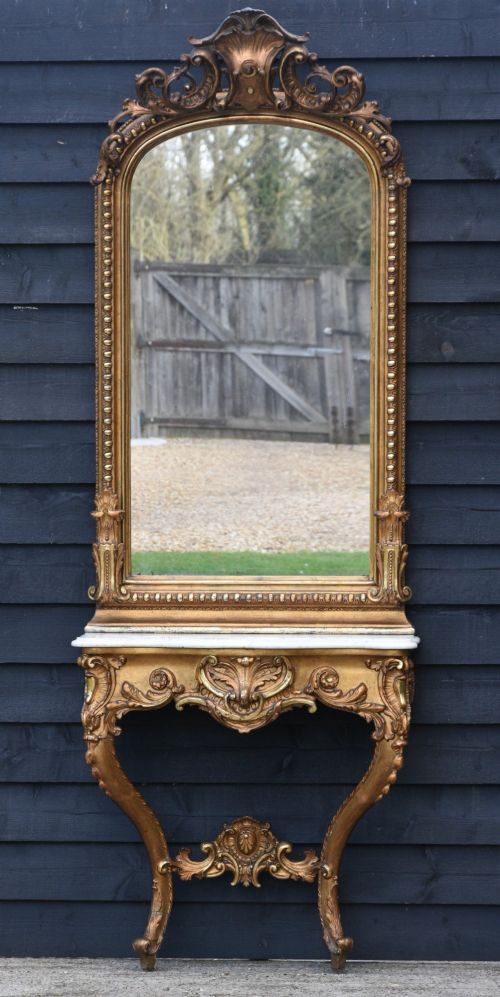
French marble top furniture spans functional domestic pieces and decorative salon items, with commodes and console tables appearing most frequently on this page. These pieces derive from periods ranging from the eighteenth century through to the art deco era, uniting stone tops with timber frames.
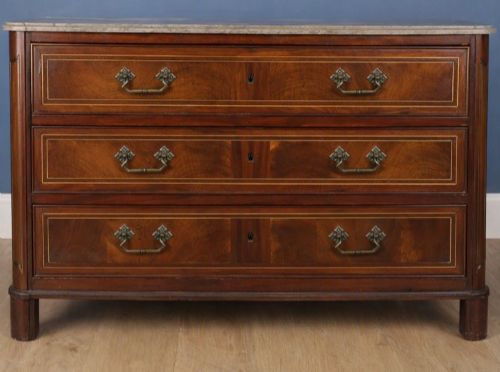
Commodes and chests of drawers provide substantial storage while displaying figured marble slabs, whereas smaller bedside tables and washstands offer compact surfaces. Console tables and side tables utilise the same heavy stone tops on carved or giltwood bases designed to stand against walls.
Materials and construction
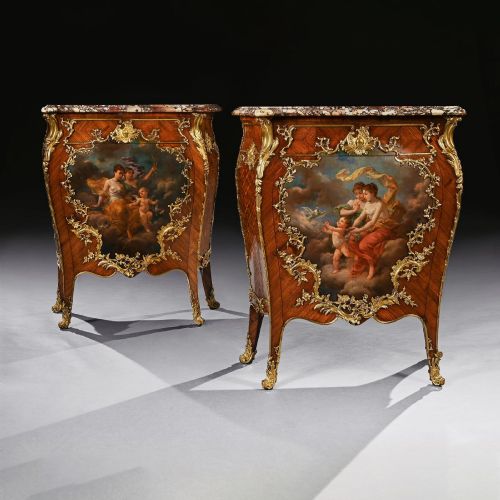
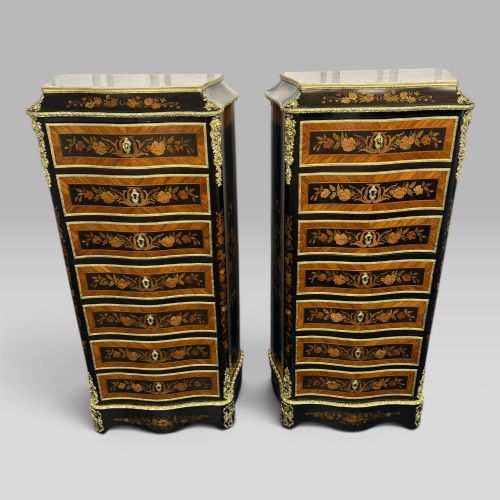
Cabinetmakers constructed the foundational carcases using timbers such as mahogany, kingwood, walnut, and fruitwood, frequently applying marquetry or parquetry veneers in geometric and floral patterns. Ormolu and gilt-bronze mounts reinforce corners and drawers, providing structural framing alongside decorative contrast.
French Marble Top Furniture Retail Price Guide 2026
Typical asking prices for french marble top furniture among the pieces listed under this phrase on Sellingantiques today, from the lower quarter to the upper quarter. They describe what is for sale here now, not the wider market.
Listings incorporate walnut, mahogany, kingwood, and cast-iron alongside marble and ormolu across multiple centuries.
Qualities of execution and design
The standard of cabinetmaking distinguishes the top tier of pieces, evident in the precision of the veneer work and the integration of the marble slab to the wooden frame. Finely chased ormolu mounts that fit flush against the timber indicate superior workshop production compared to mass-cast alternatives.
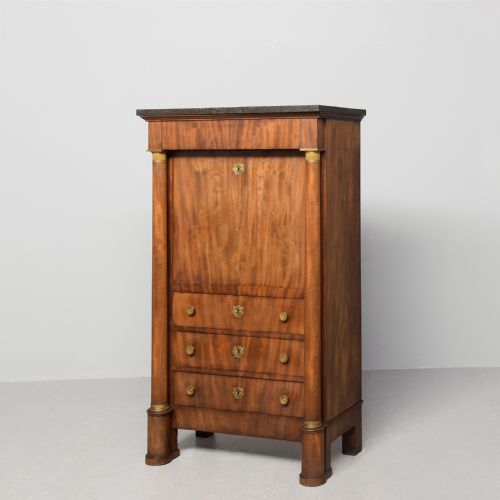
Design ambition also separates examples, as pieces attributed to known makers or executed in complex louis xv revival and french empire styles demonstrate greater sculptural detail in the carved giltwood and mahogany surfaces.
Gabriel Viardot·François Linke·Maison Millet·Henry Dasson
The French Marble Top Furniture Glossary
- Commode
- A low chest of drawers, often fitted with a marble top and decorative mounts. These pieces served primarily in bedrooms and formal reception rooms.
- Ormolu
- Gilt bronze applied as decorative mounts to furniture edges and feet. This technique involved coating bronze in a mercury and gold amalgam before heating.
- Vernis Martin
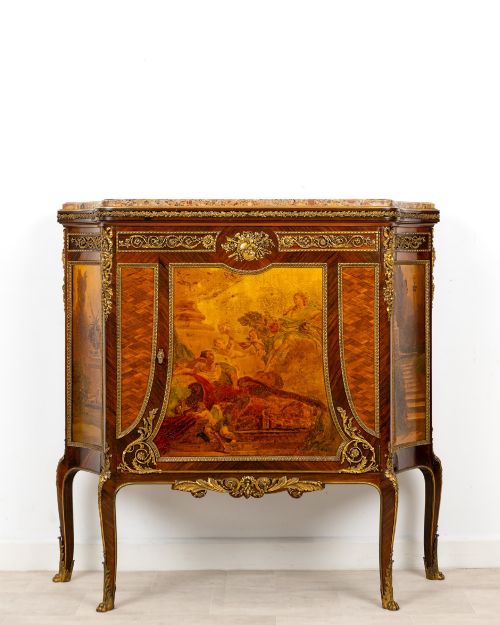
- A form of polished lacquer finish developed in eighteenth-century France to imitate Asian lacquerware. It frequently decorates the panels of vitrines and cabinets.
- Marquetry
- The art of applying pieces of veneer to a structure to form decorative patterns and pictures. Makers utilised varied timbers to achieve tonal contrast without paint.
French Marble Top Furniture: Frequently Asked Questions
How do I clean a marble top?
Wash the stone gently with warm water and a soft cloth, avoiding acidic cleaners that etch the polished finish. Dry the surface thoroughly after wiping.
Heavier marks require specialist poultices rather than abrasive scouring pads, which scratch the soft calcium carbonate composition of the marble.
Are the marble tops fixed in place?
Most marble slabs rest loose upon the timber carcase by their own substantial weight. This allows for easier transport of heavy furniture.
Some console tables and smaller washstands secure the stone with subtle brackets, but checking the underside reveals whether the slab lifts off freely.
What periods do these pieces cover?
The selection spans from the eighteenth century through the nineteenth century and into the nineteen-thirties. Earlier works reflect neoclassical reigns, while later items embrace art deco forms.
Revival styles from the Victorian era draw heavily on earlier louis xv and louis xvi aesthetics.
How do I identify a revival piece?
Nineteenth-century revival pieces combine earlier decorative motifs with machine-sawn internal timbers and standardised hardware fixings. Cabinetmakers during the napoleon iii period frequently reinterpreted eighteenth-century lines.
Examining the drawer linings and secondary woods clarifies whether a piece dates to an original reign or a later revival workshop.