



French Marble Top Bookcase
These french marble top bookcase examples bring architectural stone and polished timber together for serious display.
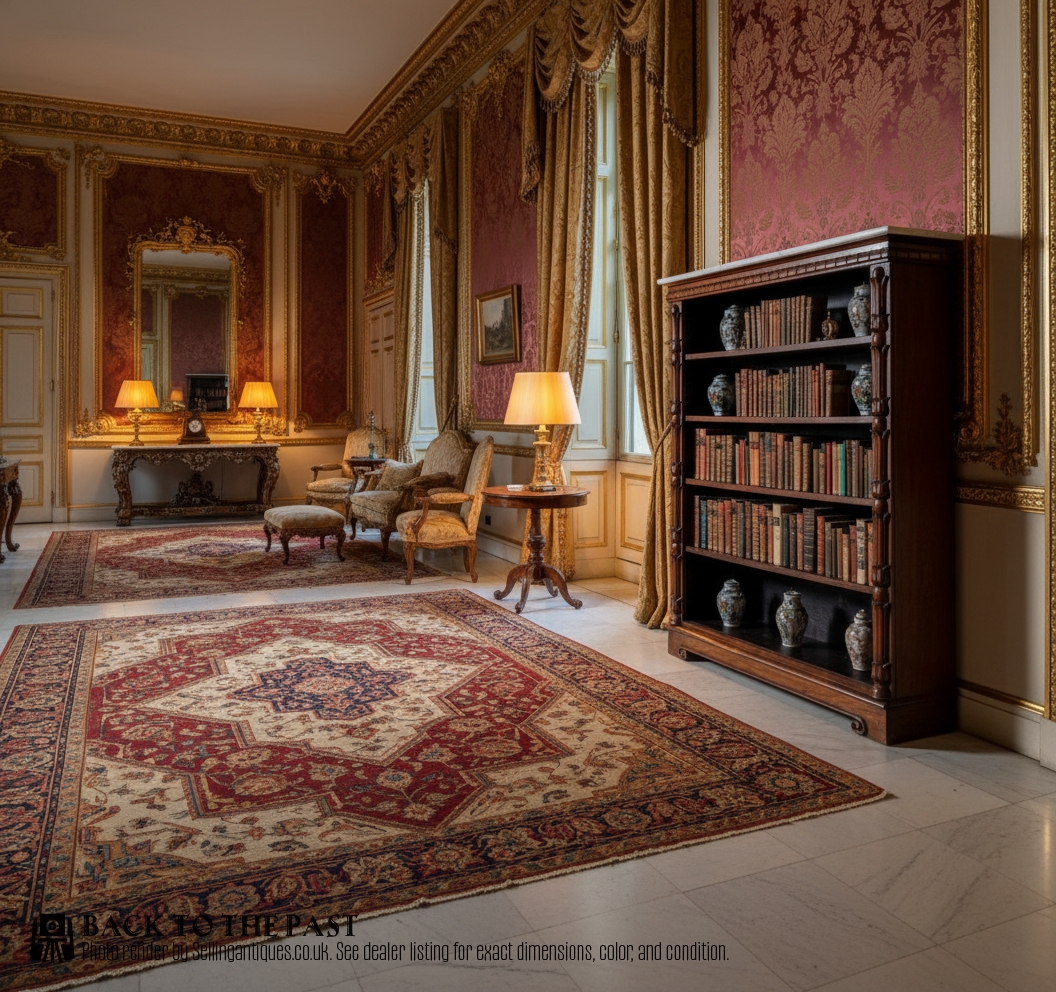
French Marble Top Bookcase
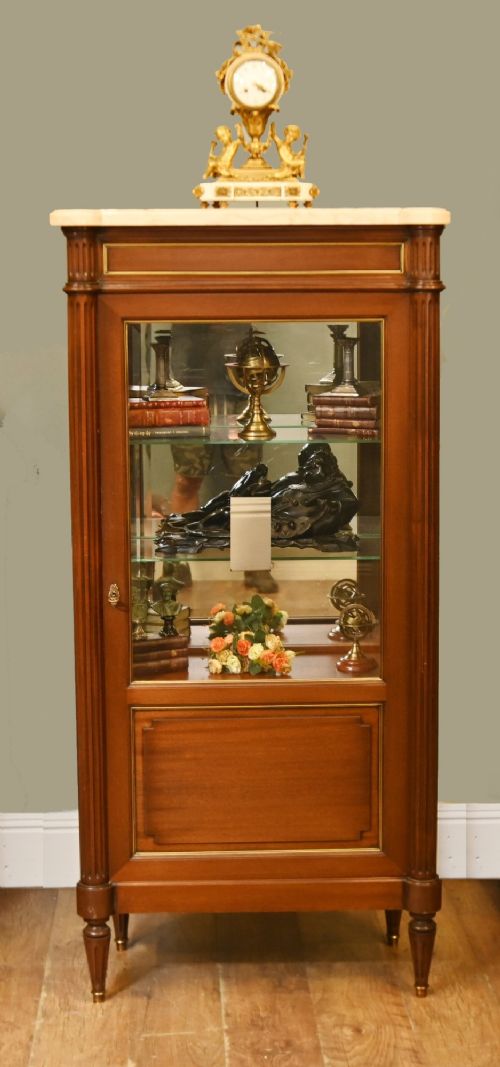
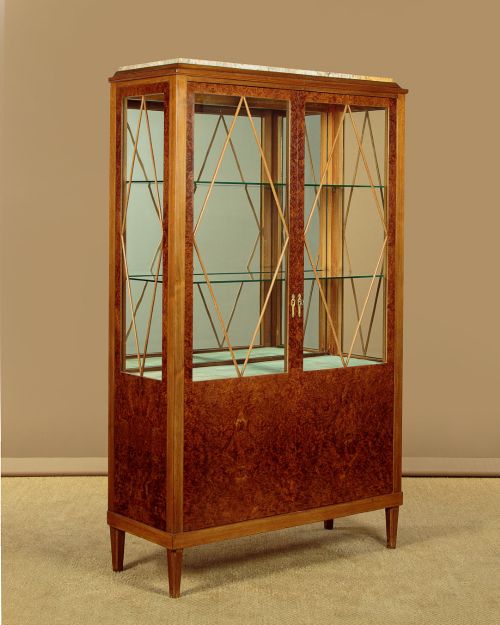
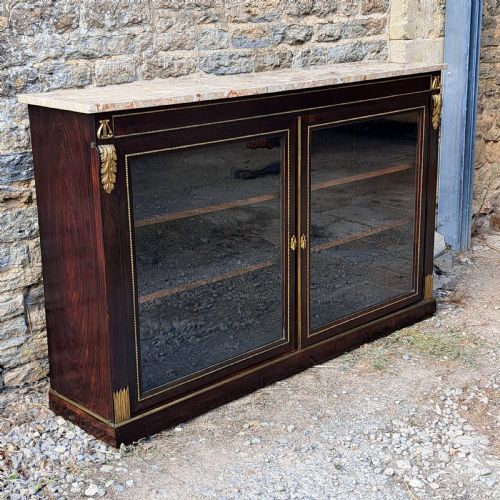
A french marble top bookcase combines timber shelving with a heavy stone counter, functioning equally as a library storage unit and a display surface. The pieces appearing here span the nineteenth and early twentieth centuries, drawing on Regency, Victorian, and various revival aesthetics.
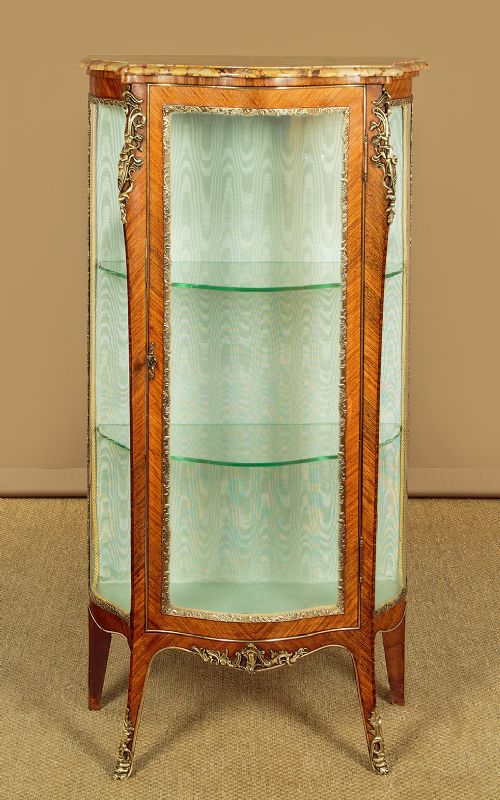
Most examples lean towards glazed vitrines, open display cabinets, and serpentine-fronted bibliotheques rather than purely utilitarian shelving units. Woods such as mahogany, walnut, kingwood, and rosewood dominate the construction, often enhanced by parquetry or delicate veneer work.
Materials and Construction
Cabinetmakers constructed carcasses from foundational softwoods or hardwoods before applying figured veneers like kingwood, mahogany, and walnut. Ormolu mounts, cast in brass and gilt bronze, punctuate the corners and friezes of finer examples.
Slabs of polished marble - ranging from white Carrara to deep red varieties - form the heavy top surface, fitted directly to the timber frame. Glazed doors utilise individual glass panes set within wooden framing, frequently accompanied by brass trim.
French Marble Top Bookcase Retail Price Guide 2026
Typical asking prices for french marble top bookcase among the pieces listed under this phrase on Sellingantiques today, from the lower quarter to the upper quarter. They describe what is for sale here now, not the wider market.
The listings on this site combine nineteen-century periods with twentieth-century revival pieces, utilising kingwood, walnut, and mahogany alongside polished marble.
Markers of Quality
The refinement of the ormolu mounts and the precision of the parquetry inlay distinguish standard furniture from exceptional cabinet work. Heavier, crisper bronze castings and thick, well-figured marble slabs indicate superior workshops.
Construction details such as adjustable internal shelving, fine dovetailing on drawers, and original glass panes elevate the standing of a piece. The depth of the timber's grain and the seamless integration of the stone top reveal the maker's skill.
Paul Sormani·Maison Krieger·Durand
The French Marble Top Bookcase Glossary
- Ormolu
- Gilt bronze mounts applied to furniture. This decorative technique adds metallic contrast to dark wooden surfaces.
- Vitrines
- Glass-fronted display cabinets designed for porcelain and books. They protect contents while offering maximum visibility.
- Parquetry
- Geometric wood inlay patterns. Craftsmen arrange small veneer tiles to create intricate mosaic designs across the surface.
- Bibliotheque
- A large bookcase or library cabinet. These pieces often feature adjustable shelving and glazed doors.
- Serpentine-front
- A gently undulating cabinet front shaped in a convex-concave curve. This profile requires advanced woodworking skill.
French Marble Top Bookcase: Frequently Asked Questions
How do I style a marble top bookcase?
Pair the heavy stone surface with neutral walls to let the timber grain and gilt mounts stand out. Keep heavy volumes on lower shelves and lighter decorative objects behind the glass.
Ensure the room receives balanced light so the polished marble reflects without creating harsh glare against the glass doors.
Are the shelves adjustable on these cabinets?
Many nineteenth-century examples incorporate adjustable wooden shelving systems using wooden ratchets or metal side strips. This allows you to reconfigure the interior height for varying book sizes.
Simpler or older variations may feature fixed shelving dictated by the original structural layout of the carcass.
How should I clean the marble top?
Wipe the stone surface regularly with a damp cloth using plain water or a neutral, pH-balanced soap. Avoid acidic cleaners, vinegar, or citrus solutions which etch the polished surface.
Dry the marble thoroughly afterwards to prevent water spotting and maintain the original sheen of the stone.
How do I date a french marble top bookcase?
Examine the secondary woods inside the carcass, the style of the ormolu mounts, and the cut of the veneer. Pieces referencing Louis XV revival styles often date from the mid-nineteenth to the early twentieth century.
Hand-cut dovetails and older fastening methods generally point towards earlier nineteenth-century Georgian or Empire origins.