

French Louis XV Revival Table
A french louis xv revival table brings sweeping curves, gilt mounts and figured veneers straight from nineteenth-century salons into a modern room.
French Louis XV Revival Table
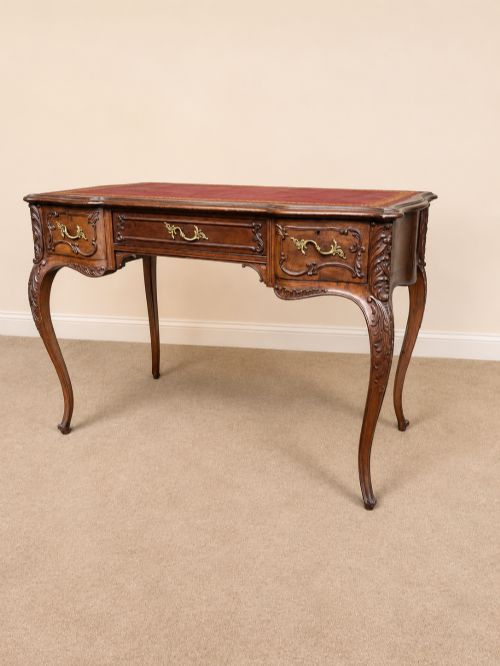
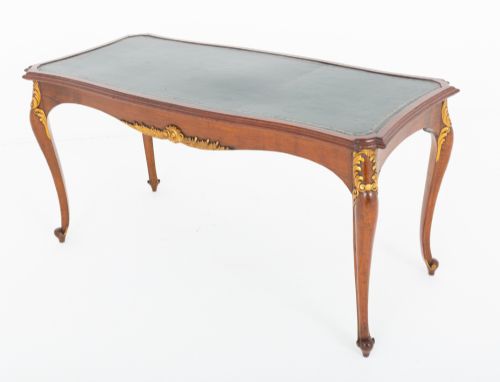
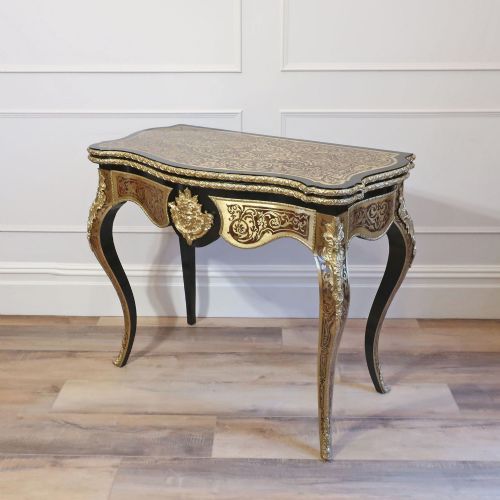
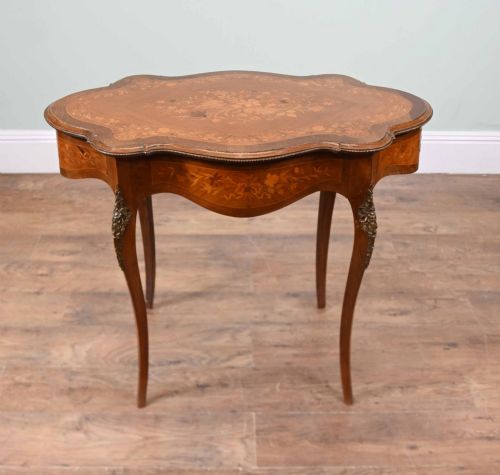
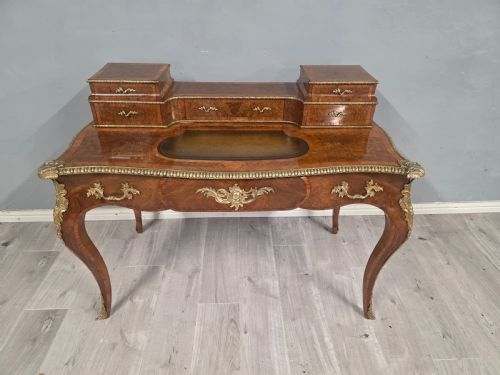
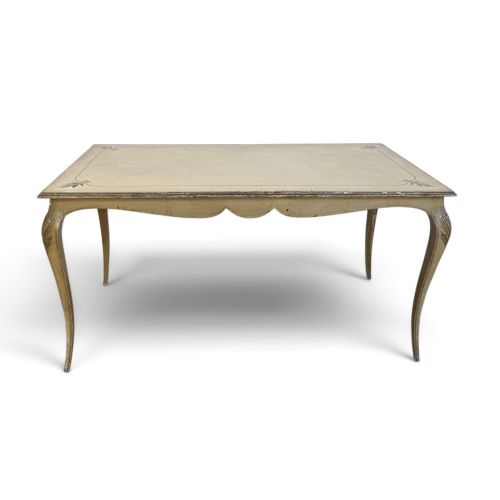
When you search for a french louis xv revival table, you encounter nineteenth-century side tables, writing desks, console tables, and card tables produced across the Victorian and Edwardian eras. These pieces echo the exuberant organic forms of the eighteenth-century French court through serpentine outlines and cabriole legs.
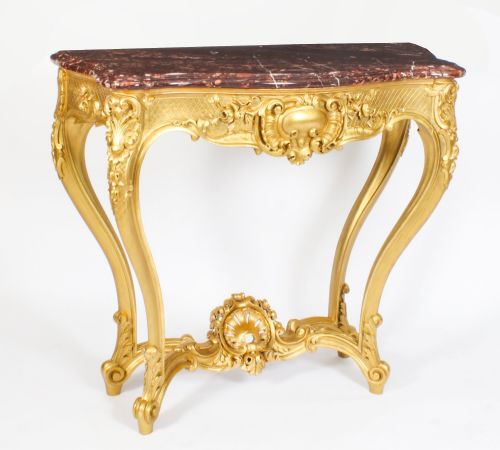
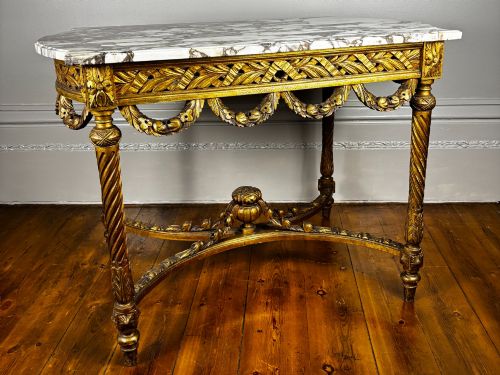
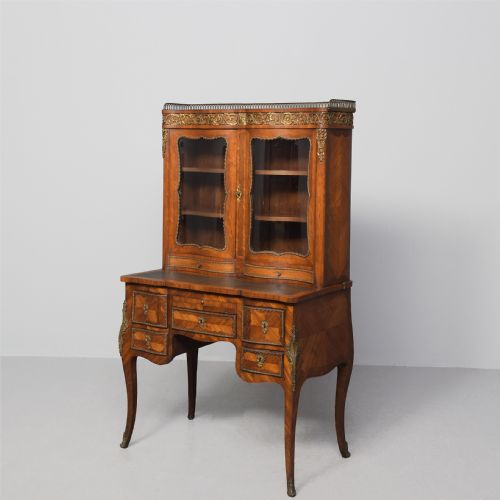
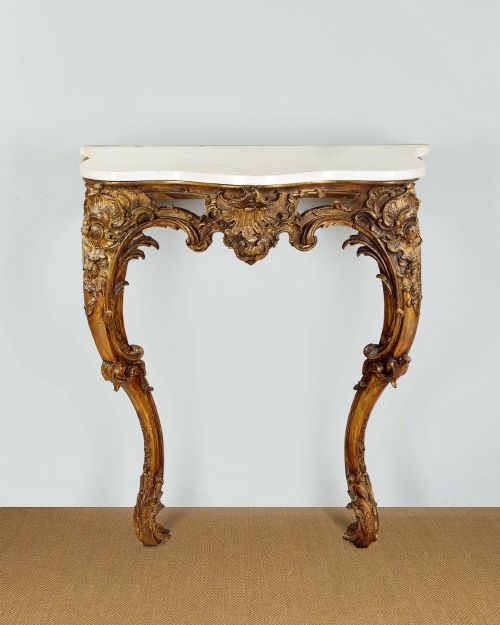
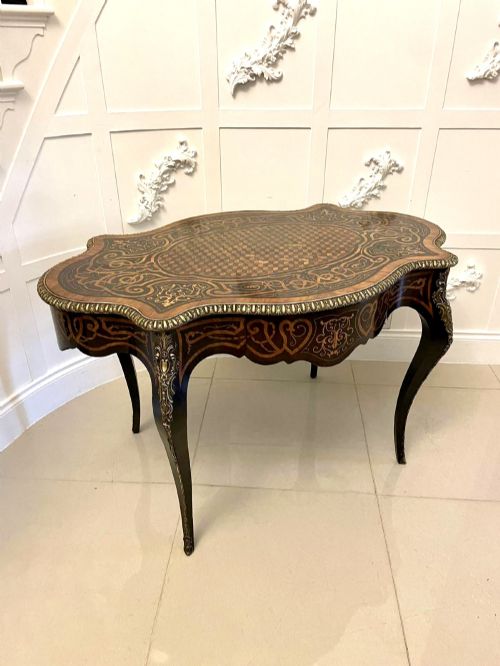
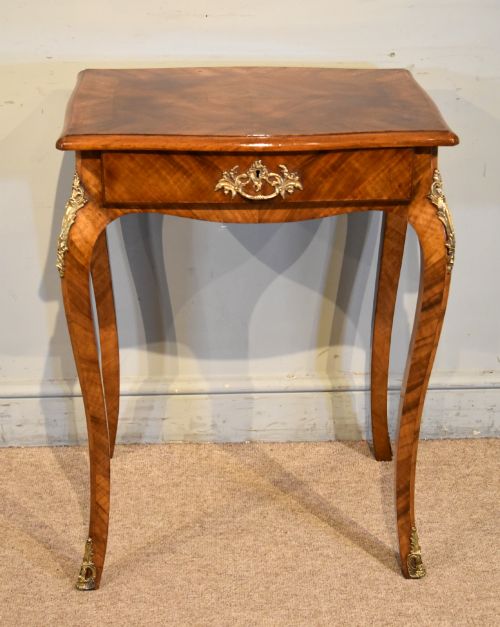
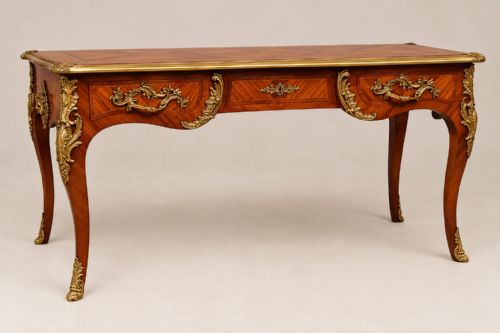
The selection on this page ranges from modest walnut occasional tables and giltwood console pieces with marble tops to substantial kingwood bureau plat desks and marquetry centre tables. Makers often drew inspiration from Louis XV and Rococo aesthetics, combining display surfaces with functional compartments.
Dating primarily from the mid-nineteenth century through to the early twentieth century, these tables demonstrate how European cabinetmakers reinterpreted antique French furniture for nineteenth-century interiors. The forms bridge the gap between ornamental console arrangements and practical writing surfaces.
Materials and technique
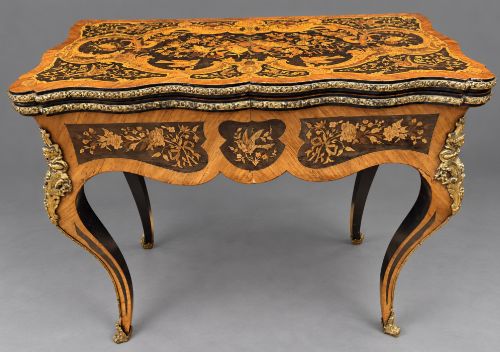
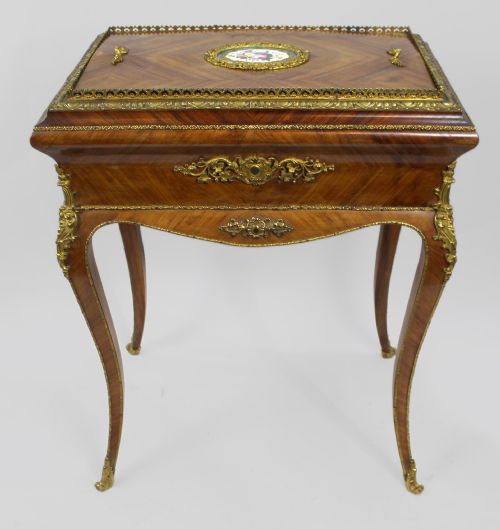
Cabinetmakers constructed these tables using solid walnut, mahogany, or beech frames as a stable foundation for decorative veneers such as kingwood, rosewood, and satinwood. Artisans arranged these timbers in intricate parquetry and marquetry patterns, creating geometric designs or floral motifs across the table tops.
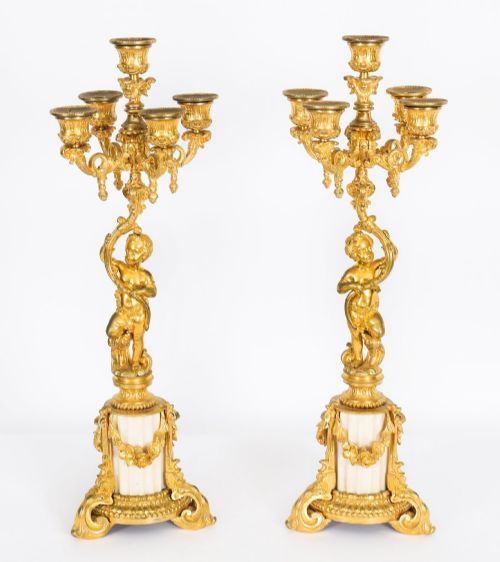
Gilt bronze and ormolu mounts were cast and chased to accentuate the sweeping contours, framing corners, aprons, and legs with classical scrollwork. Marble tops, often shaped to follow the serpentine edges, provided durable and cool surfaces for console and occasional tables.
Brass inlay, including Boulle work combining tortoiseshell and metal, added surface brilliance, while hand-carved giltwood frames brought high relief and reflective texture to console tables and mirrors.
French Louis XV Revival Table Retail Price Guide 2026
Typical asking prices for french louis xv revival table among the pieces listed under this phrase on Sellingantiques today, from the lower quarter to the upper quarter. They describe what is for sale here now, not the wider market.
Listings feature eighteenth-century revival forms from the nineteenth and early twentieth centuries, constructed in walnut, kingwood, rosewood, and giltwood with ormolu mounts.
Judging execution
Quality rests in the crispness of the bronze or ormolu mounts and the precision of the underlying wood veneers. Superior pieces display hand-chased metalwork with sharp detail and depth, whereas lesser examples rely on cast surfaces that lack definition.
The complexity of the parquetry and the fluidity of the cabinetmaker's hand-carved wooden curves separate standard production from exceptional craftsmanship. Well-executed tables show seamless joins in the marquetry and balanced proportions along every cabriole leg.
Maison Millet·JAS Shoolbred·G T Morant·François Linke·Achille Brocot·Leroy Paris·CH Jeanselme Co
The French Louis XV Revival Table Glossary
- Ormolu
- Gilded bronze used for decorative mounts and fittings. It provides metallic contrast against dark kingwood and walnut veneers.
- Bureau plat
- A freestanding writing desk with a flat top, often fitted with drawers and mounted in ormolu. This form serves as a centrepiece for studies and libraries.
- Marquetry
- The art of applying pieces of veneer to a structure to form decorative patterns and pictures. Artisans use contrasting natural timbers to achieve tonal depth.
- Parquetry
- Geometric mosaic woodwork used for flooring and table tops. It relies on repeating angular wood tiles to create optical depth.
- Cabriole leg
- A furniture leg that bends outward and then tapers inward to a foot. It mimics animal limbs and defines the silhouette of Louis XV revival pieces.
French Louis XV Revival Table: Frequently Asked Questions
What is a french louis xv revival table?
A french louis xv revival table is a nineteenth-century piece of furniture inspired by the eighteenth-century French Rococo style. These tables feature curved lines, cabriole legs, and decorative veneers.
Cabinetmakers across Europe revived these ornate designs for Victorian and Edwardian homes, adapting antique forms into practical desks, console tables, and occasional furniture.
How were these tables used originally?
These tables served various domestic functions depending on their form, ranging from writing desks for correspondence to console tables placed against salon walls.
Card tables provided fold-out surfaces for evening games, while centre tables and occasional pieces held decorative objects, lamps, or porcelain.
Where should I place a console table?
Console tables sit flush against a wall, frequently in hallways, entryways, or living rooms beneath mirrors or artwork. Their shallow depth makes them suitable for narrow circulation spaces.
Pairing a marble-top console table with a matching wall mirror replicates traditional nineteenth-century salon arrangements.