


French Leather Desk Chair
A french leather desk chair brings working centuries of continental craftsmanship directly to a home study.
French Leather Desk Chair
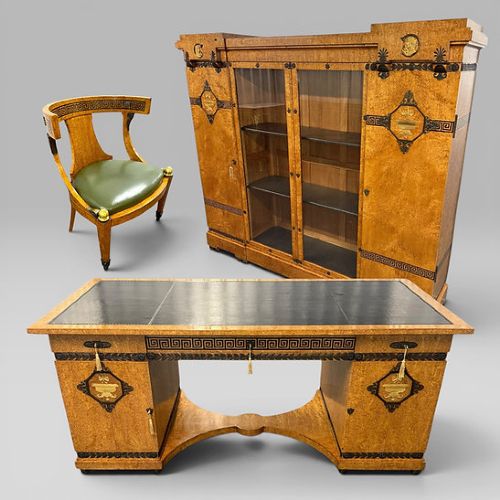
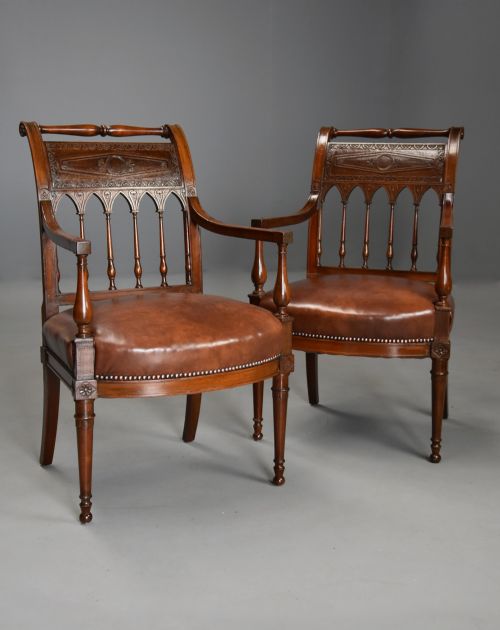
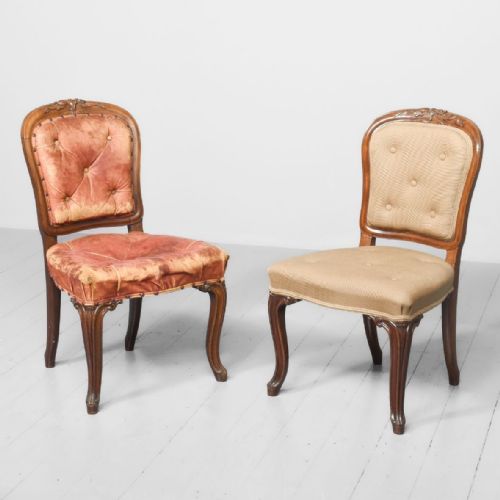
A french leather desk chair combines practical seating with formal continental design, often emerging from periods like the nineteenth century or the nineteen-thirties. Buyers examining this category will frequently encounter forms described as office sets, library armchairs, and bridge chairs.
The materials span sturdy oak, walnut, mahogany, and rosewood, paired with supple leather upholstery and supportive cane or carved framing. These pieces bridge utilitarian office requirements and decorative antique furnishings, drawing on styles from Empire revival to Art Deco.
Materials and construction
Cabinetmakers utilised hardwoods such as walnut, oak, and mahogany to build durable frames, often incorporating carved details and exposed grain. Brass, gilt bronze, and ormolu mounts provide decorative accents to the timber structures.
Upholstery departments applied leather over padding to create comfortable seating surfaces, occasionally supplementing the design with cane panels. Joinery techniques relied on traditional framing methods to ensure longevity across decades of daily use.
The listings demonstrate a strong presence of nineteenth-century pieces alongside nineteen-thirties Art Deco designs, utilising walnut, mahogany, and leather.
Assessing quality and craftsmanship
The distinction between standard examples and finer pieces lies in the precision of the timber carving and the integration of metal mounts. Superior items display crisp detailing in ormolu or gilt bronze alongside well-seasoned mahogany, walnut, or satinwood.
Structural integrity of the wooden frame and the quality of the leather hide further define the grade of an item. Examples bearing identifiable workshop attribution or specific period stylistic markers tend to represent higher tiers of manufacture.
Mercier Frères
The French Leather Desk Chair Glossary
- Ormolu
- Gilded bronze applied as a decorative mount onto furniture frames. This technique was frequently utilised during the nineteenth century.
- Bergere
- An enclosed upholstered armchair with wooden framing exposed around the sides and back. These chairs often feature cane work or padded leather.
- Fauteuil du bureau
- An antique French desk chair designed for study or office use. These seats typically offer supportive armrests and a comfortable backrest.
- Directoire style
- A transitional design movement bridging Louis XVI and Empire aesthetics. It favours clean architectural lines over ornate rococo curves.
French Leather Desk Chair: Frequently Asked Questions
What periods do these chairs span?
The pieces in this category generally span the nineteenth century up to the nineteen-thirties. Specific examples date from the eighteen-hundreds through the Victorian era and into the Art Deco period.
Craftsmanship evolves across these decades, shifting from formal Empire designs toward more streamlined twentieth-century bridge chairs and club styles.
How do I identify an Empire style chair?
Empire pieces often feature mahogany timber, symmetrical forms, and classical ormolu or brass mounts. Structural motifs reference classical antiquity, reflecting the influence of the Napoleonic era.
Matching armchairs and desk chairs from this movement frequently incorporate dark wood tones alongside polished metal detailing.
Are these chairs suitable for daily desk work?
Many of these chairs were originally constructed for libraries, studies, and offices, making them practical for modern workspaces. Their design prioritises seated comfort alongside traditional aesthetic appeal.
Buyers should check individual seat dimensions and desk clearance to ensure the piece fits their specific working environment.
What woods were commonly used?
Cabinetmakers relied on hardwoods such as walnut, mahogany, oak, and rosewood for structural stability. Satinwood also appears on select decorative surfaces within the listings.
These timbers were chosen for both their load-bearing strength and their ability to take a polished finish.