

French Ladies Writing Table
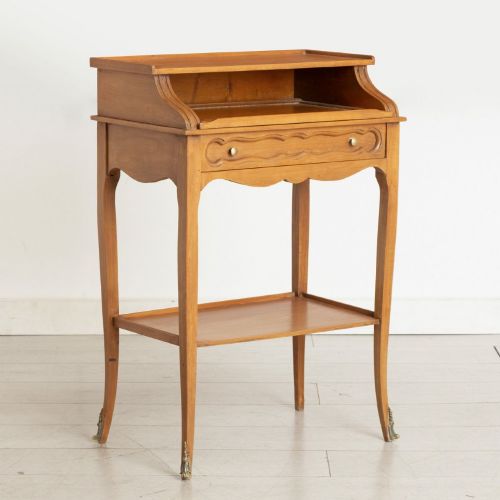
When you search for a french ladies writing table, you are looking at delicate, smaller-scale desks designed primarily for private correspondence and light paperwork.
French Ladies Writing Table
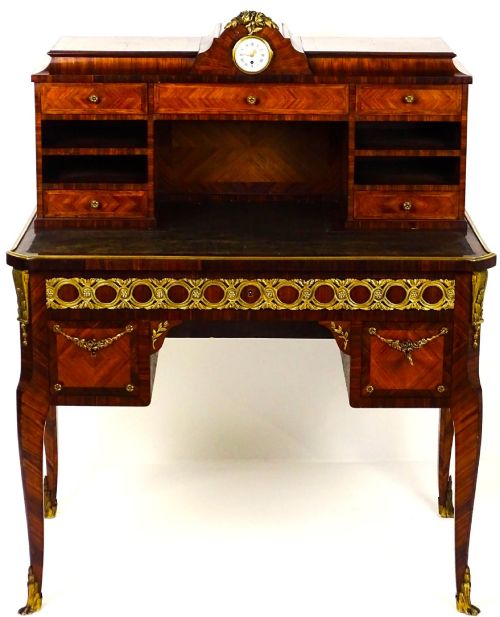
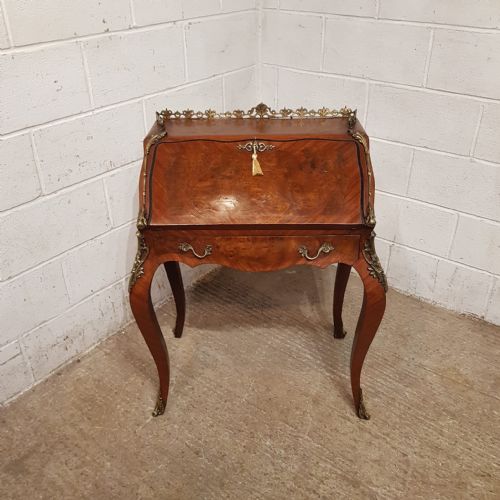
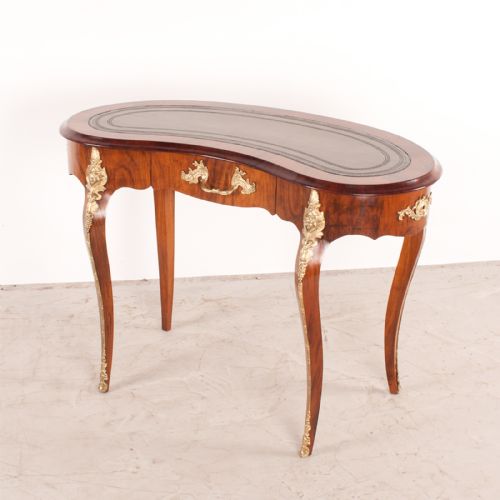
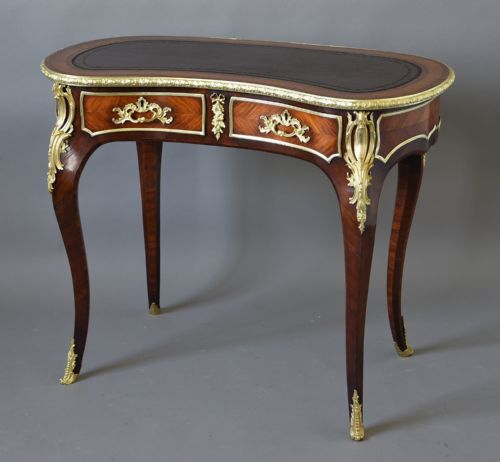
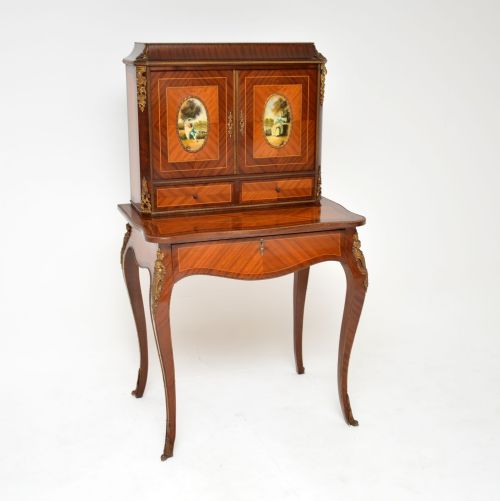
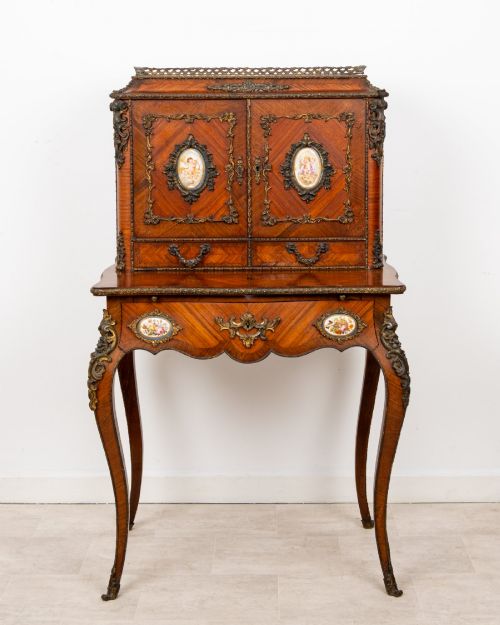
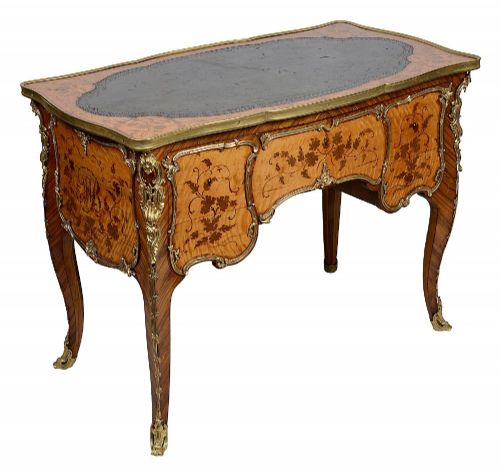
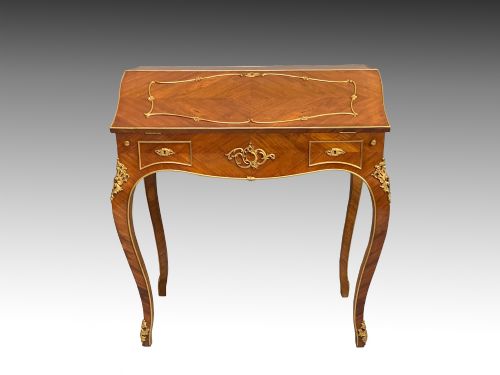
The dominant forms span kidney-shaped tables, bureau de dame designs with sloping fall fronts, and traditional rectangular writing desks equipped with fitted interiors. Walnut, kingwood, and rosewood form the structural foundation of these compact desks, frequently enhanced by decorative veneers and marquetry patterns.
How They Were Made
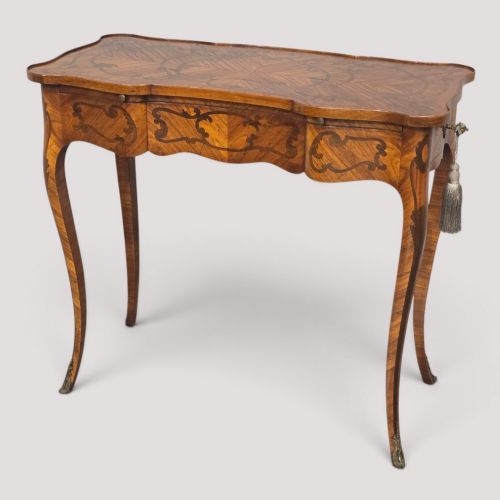
Cabinetmakers utilised exotic timbers including kingwood, tulipwood, amboyna, and satinwood, often laid as intricate parquetry or floral marquetry across curved surfaces. Carcases were constructed from robust secondary woods before receiving these decorative veneers.
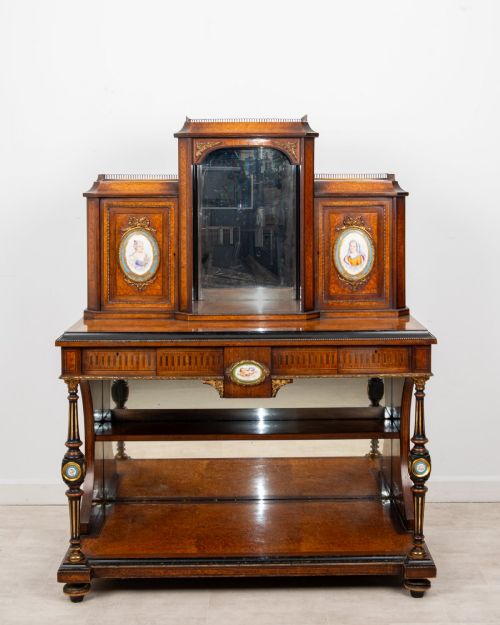
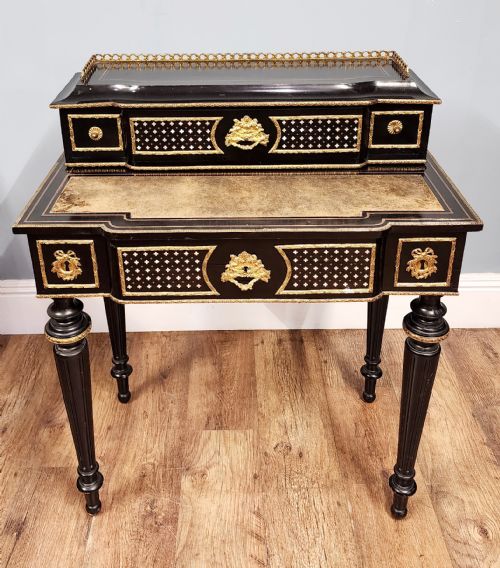
Cast ormolu mounts, gilt bronze details, and brass galleries edge the writing surfaces and frame the drawers, while inset panels of leather provide a durable writing plane. Selected examples incorporate hand-painted porcelain plaques or Vernis Martin panels into the upper cabinets.
Materials recorded across the inventory include ormolu, porcelain plaques, glass, and leather alongside kingwood, walnut, and rosewood.
What Varies in Quality
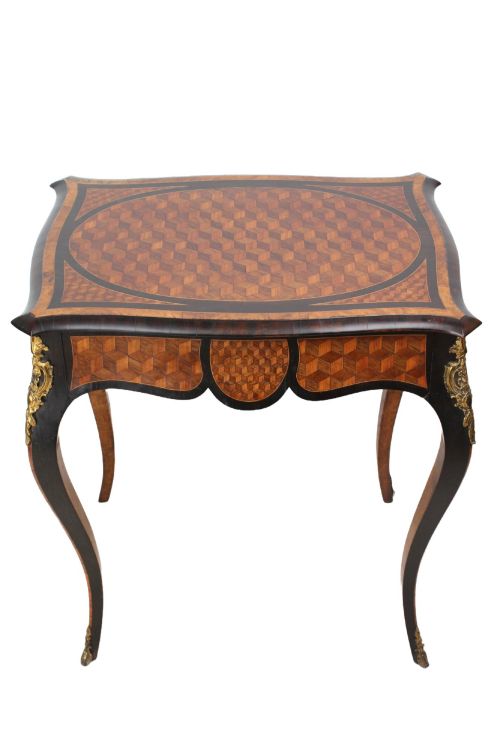
The distinction between ordinary and exceptional tables rests in the crispness of the cast ormolu mounts and the precision of the marquetry inlay. Superior examples display finely chiselled gilt bronze work that integrates seamlessly with the timber contours rather than appearing crude or applied as an afterthought.
Consider the sophistication of the internal fittings, such as secret drawers within a bureau de dame or the quality of the veneers chosen for secondary surfaces. Pieces bearing the signatures of established makers demonstrate superior joinery and more refined proportions than unlabelled workshop equivalents.
JAS Shoolbred·Paul Sormani·Edwards & Roberts
The French Ladies Writing Table Glossary
- Bonheur Du Jour
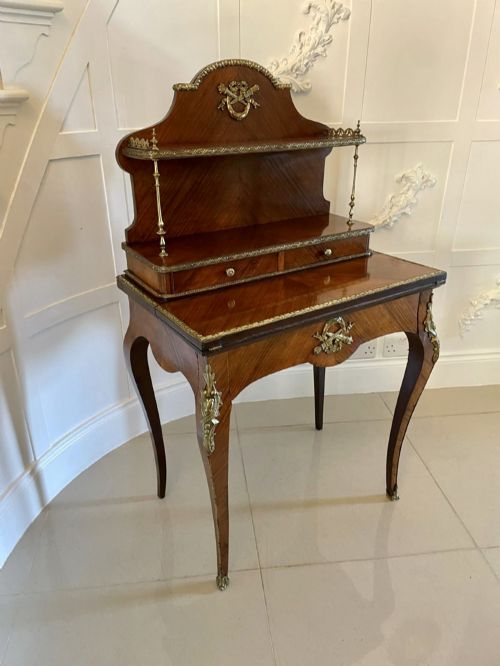
- A small lady's writing desk featuring a tiered superstructure with compartments and drawers above a flat writing surface. This form gained immense popularity throughout the nineteenth century.
- Ormolu
- Gilded bronze mounts applied to furniture edges, corners, and feet for decorative effect. The metal is cast and chased to achieve sharp detail.
- Marquetry
- Decorative veneer work forming pictorial or geometric patterns using various coloured woods. Craftsmen assemble these thin wood sections meticulously by hand.
- Parquetry
- Geometric wood inlay patterns such as cubes or chequers. It differs from marquetry by relying on regular, repeating angles.
- Bureau De Dame
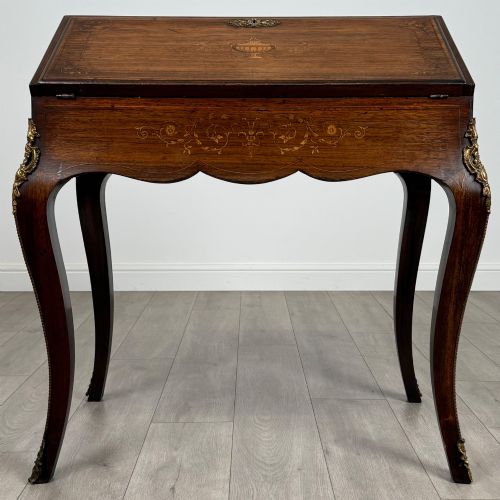
- A lady's writing desk typically fitted with a sloping fall front that conceals pigeonholes and small drawers. These desks often stand on slender cabriole legs.
French Ladies Writing Table: Frequently Asked Questions
What is a bonheur du jour?
A bonheur du jour is a small, elegant writing desk featuring a raised cabinet or shelf section above the main writing surface.
These pieces were designed for personal correspondence and light administrative tasks, typically placed in a boudoir or drawing room rather than a formal library.
How do I identify the period?
Dating relies on timber choices, revival styles, and hardware construction methods. Nineteenth-century pieces frequently combine exotic veneers like kingwood with revival aesthetics such as Louis XV curves or Napoleon III ebonised finishes.
Earlier Victorian examples often employ burr walnut and amboyna, while later twentieth-century interpretations show simplified construction and lighter wood selections.
Where were these desks used?
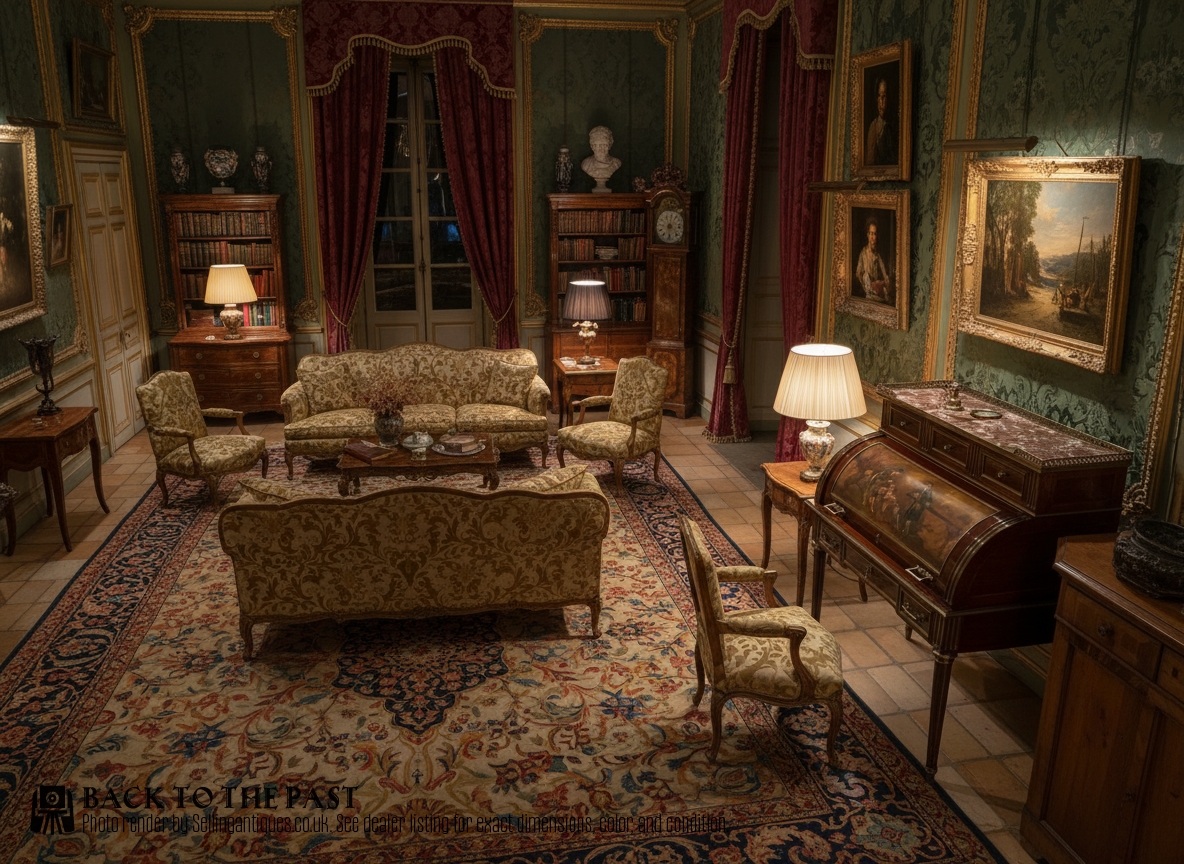
These compact writing tables suited private residential spaces rather than large administrative offices. Ladies utilised them in withdrawing rooms or bedrooms for writing letters and managing household accounts.
Because they were intended for domestic display, they were finished on all sides so they could stand freely in the centre of a room.
What woods were used?
Cabinetmakers employed a rich variety of decorative hardwoods, including kingwood, rosewood, walnut, amboyna, and tulipwood. These were often contrasted with satinwood or mahogany veneers.
Structural carcases underneath the decorative veneers were commonly built from sturdier secondary timbers like oak or mahogany.