


French Iron Garden Bench
A french iron garden bench brings architectural line and enduring outdoor seating to a terrace or lawn, shaped by decades of weathering.
French Iron Garden Bench
When you search for a french iron garden bench, you encounter robust seating designed for endurance in European courtyards and lawns. The pieces on this page span the nineteenth century through the mid-twentieth century, encompassing both restrained industrial forms and ornate gothic Revival designs.
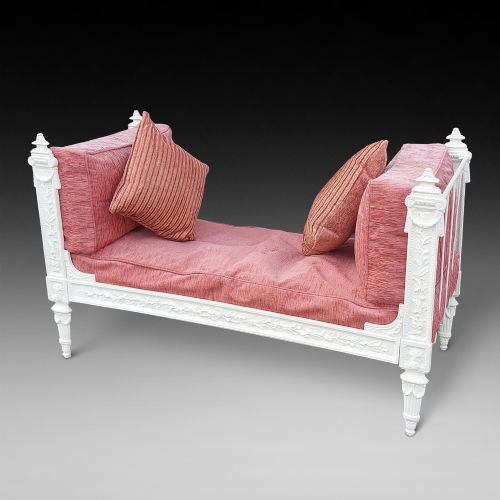
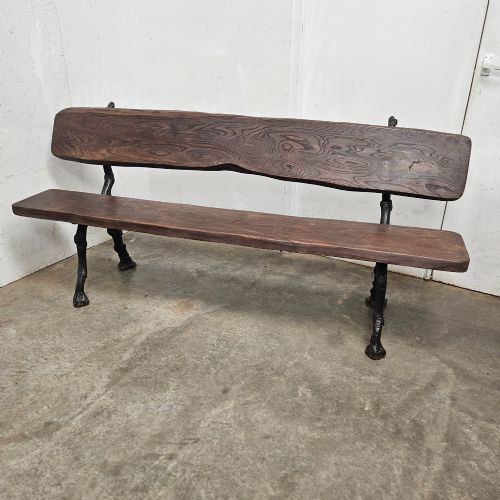
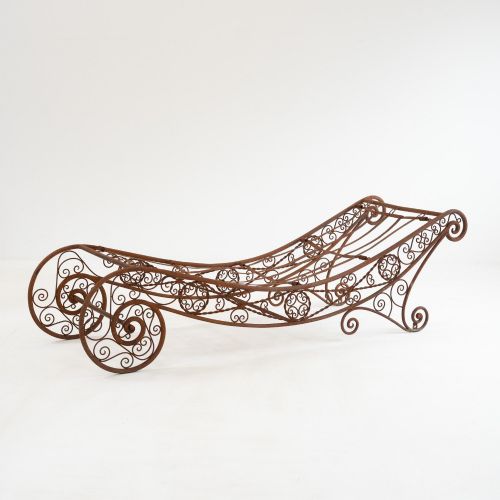
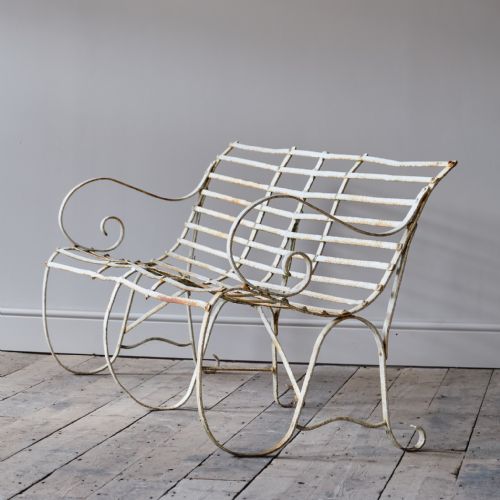
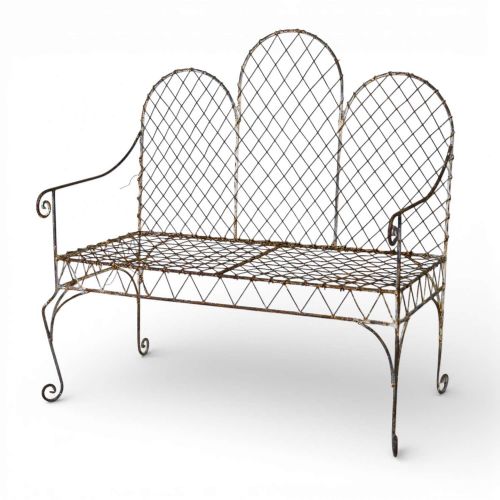
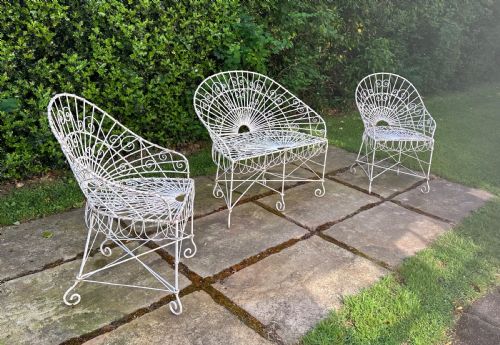
You meet variations ranging from simple strap work constructions to elaborate daybeds and Arras patterns bearing traces of original paint. The selection includes paired conservatory seats alongside single benches incorporating elm timber or wirework details.
These forms reflect utilitarian garden requirements and decorative landscape tastes from distinct historical eras. Most examples rely on heavy metal frames built to withstand permanent outdoor exposure while acquiring a patinated surface over time.
How they were made
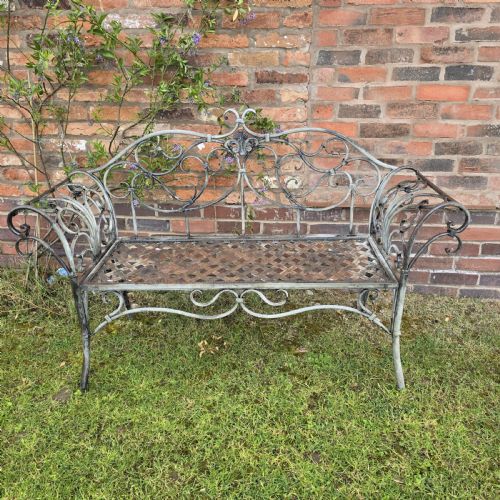
Construction relies heavily on cast iron and wrought iron components shaped into structural supports, scrolling arms, and perforated slats. Workshops utilised metal shaping techniques alongside wooden elements such as elm inserts to balance weight and comfort.
Surfaces received protective coats of paint that accumulated in successive layers through decades of maintenance and exposure. Metalwork joints were typically riveted or forged to handle the stress of garden use.
Some benches feature matching pairs of chairs designed for polite rural debates in the shade.
What varies in quality
Quality rests in the crispness of the casting and the structural integrity of the ironwork frame. Finer examples display meticulous strap work alignment and balanced proportions without clumsy repairs.
The survival of original surface paint significantly elevates a piece, showing authentic weathering rather than modern intervention. Heavier gauge metal and designated foundry work distinguish standard utilitarian seating from superior decorative outputs.
Val D'osne
The French Iron Garden Bench Glossary
- Cast iron
- Molten iron poured into a mould to create rigid decorative components and structural frames. This method allowed makers to produce intricate gothic motifs and uniform bench ends in volume.
- Wrought iron
- Iron heated and hammered by hand into bars, scrolls, and structural braces. It offers greater tensile strength than cast iron and bends rather than snaps under heavy pressure.
- Arras
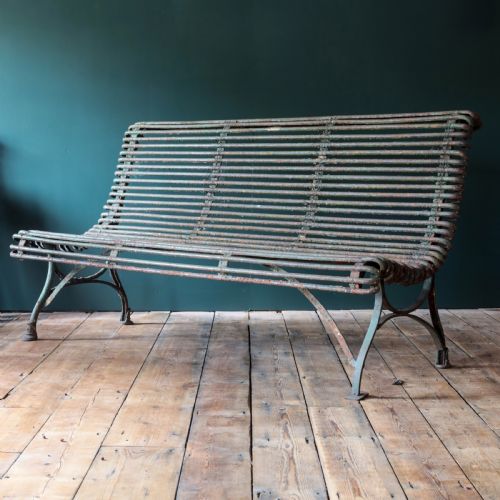
- A distinct style of French garden furniture featuring curved wooden laths bolted to iron frames, originally produced in northern France. Surviving pieces often retain remnants of green paint and maker plaques.
- Strap work
- Flat strips of metal riveted or welded into geometric patterns to form seats and backs. This technique provided ventilation and drainage for outdoor use.
- Faux bois
- Imitation wood grain rendered in metal or concrete to mimic natural timber. Makers applied this decorative finish to create durable garden pieces with rustic appearance.
French Iron Garden Bench: Frequently Asked Questions
Can french iron garden benches stay outside?
These pieces were built for exterior use and tolerate outdoor placement well. Regular exposure develops their patinated surface.
Severe winter conditions or standing water can accelerate corrosion on vulnerable joints. Many owners store them under cover during the coldest months to preserve the metal and paint layers.
How do I identify an Arras bench?
Arras benches feature characteristic curved wooden laths bolted to robust iron underframes, often with distinct hoof feet. They were made by foundries in the French town of Arras.
Original examples frequently bear metal manufacturer plates stamped into the iron framework. The integration of wood and metal distinguishes them from purely cast iron designs.
What is faux bois garden furniture?
Faux bois translates to false wood, describing metal or concrete shaped to resemble natural timber branches. Garden pieces in this style became popular for blending industrial materials into rustic landscapes.
The iron interpretation requires skilled forging to replicate the knots and bark of living trees. This technique adds an organic texture to rigid metal frames.
How do I care for original paint?
Original paint requires minimal intervention to preserve the historical surface and accumulated weathering. Brushing away debris with a soft cloth prevents moisture retention.
Avoid chemical strippers or aggressive scraping that removes the layered history of the piece. Stabilising flaking sections with appropriate conservation products protects the remaining finish.