


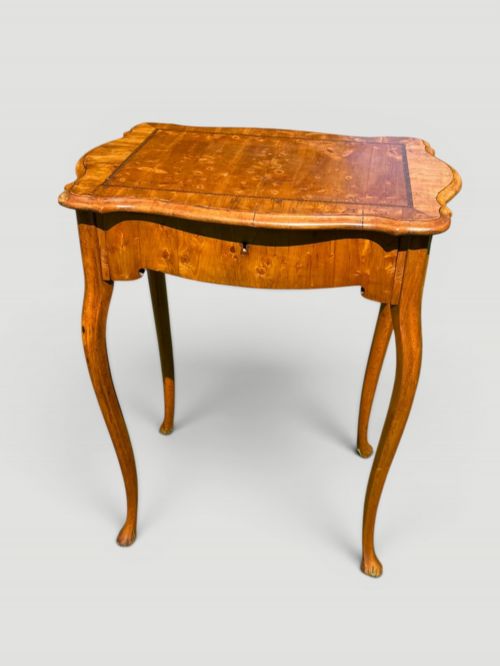


French Inlaid Lamp Table
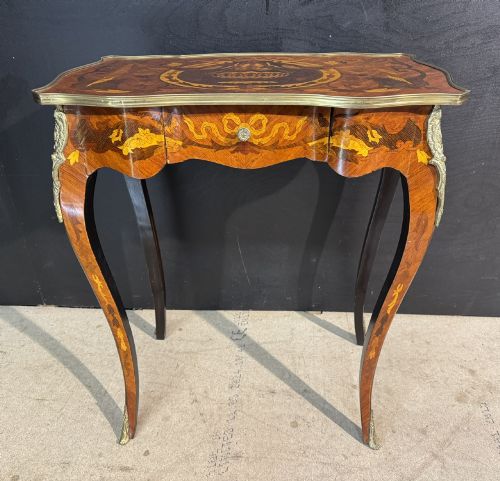
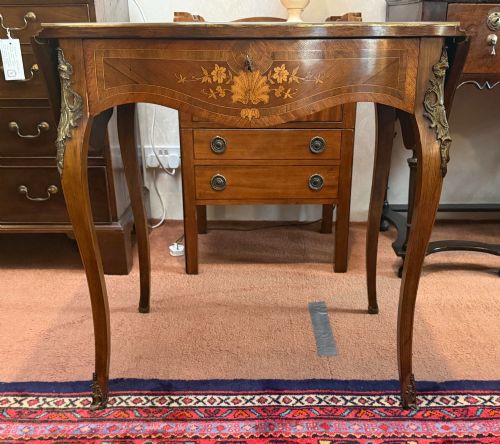
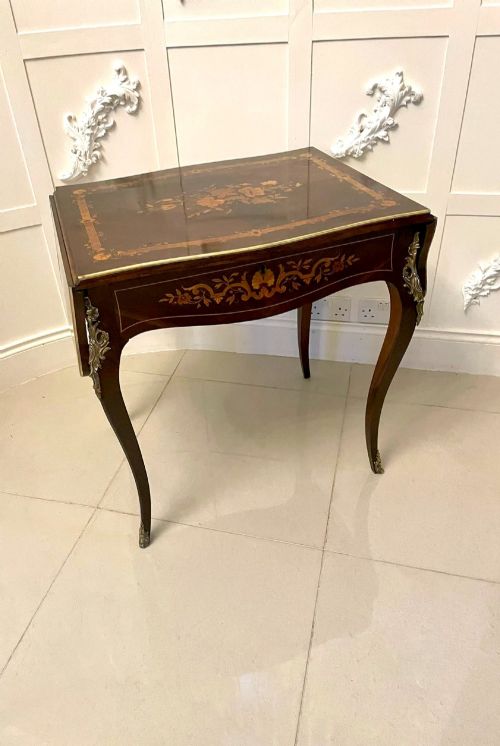
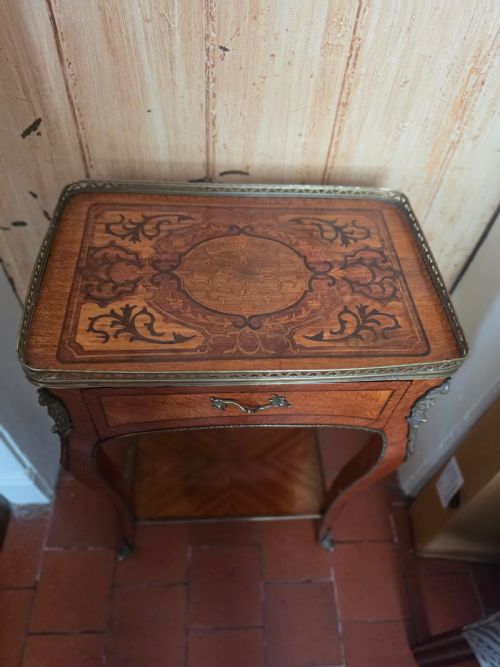
A french inlaid lamp table brings together rich timbers and intricate floral patterns to sit beside a chair or bed.
French Inlaid Lamp Table
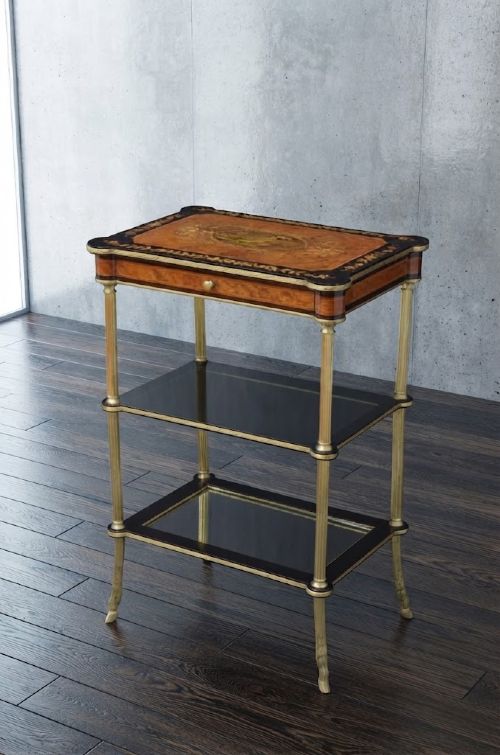
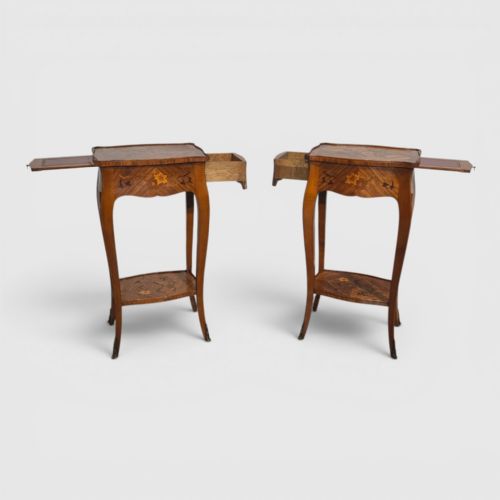
A french inlaid lamp table is a compact decorative surface designed for a specific domestic spot, appearing on this page as side tables, occasional pieces, and bedside chests. These items span the nineteenth century into the 1930s, taking forms such as freestanding centre tables, kidney-shaped stands, and multi-tiered etageres.
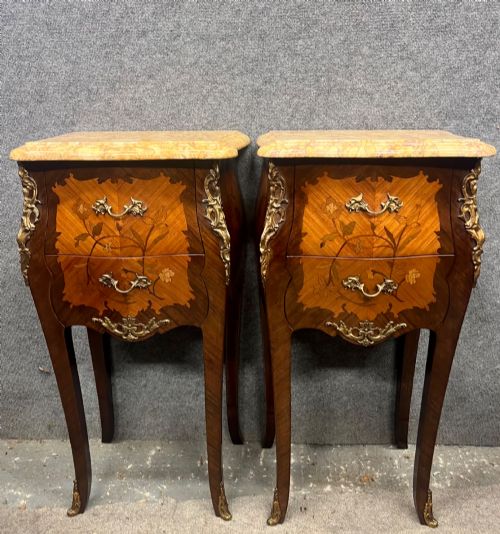
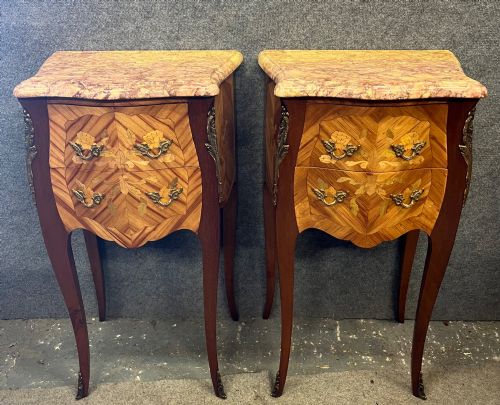
The pieces emerge from distinct aesthetic revivals and periods, notably Louis XV style, Rococo revival, and Napoleon III eras. Makers and workshops constructed them in matching pairs as well as individual examples, often incorporating drawers, cupboards, or marble tops.
The selection ranges from tall nineteenth-century occasional pieces to early twentieth-century bedside cabinets. Buyers encounter varying configurations including drop-leaf designs, galleried tops, and circular guerdon tables.
How they were made
Cabinetmakers utilised structural carcases of walnut, mahogany, or oak, applying decorative surface veneers of rosewood, kingwood, satinwood, and burr wood. Artisans cut contrasting timbers by hand to form complex marquetry floral scenes or geometric parquetry patterns across the top and sides.
Metal components such as brass galleries, gilt bronze, and ormolu mounts were cast and chased to edge tabletops, frame drawers, and protect feet. Marble slabs were precisely fitted to the tops of certain bedside chests, while other models received ebonised finishes or painted decoration.
Some nineteenth-century ladies' work tables doubled as cunning hiding spots for stray knitting needles and secret correspondence.
What varies in quality
Quality rests in the crispness of the marquetry cutting and the choice of contrasting veneers, where finely figured timbers display richer depth. The precision of the bronze ormolu mounts and the weight of the cast brass details indicate the workshop's original standing.
Construction integrity separates standard production from superior pieces, seen in the smooth operation of drawers and the stability of freestanding frames. The integration of auxiliary materials like inset marble tops and mirrored tiers dictates the relative refinement of each table.
Haentgos Freres Paris·Majorelle·Gillows
The French Inlaid Lamp Table Glossary
- Marquetry
- A decorative technique where small pieces of veneer are assembled to form pictorial designs. Cabinetmakers used various tinted woods to create floral or architectural scenes across tabletops.
- Parquetry
- Geometric wood inlay arranged in repeating patterns such as cubes or chequers. This method often decorates the tops of occasional and side tables.
- Ormolu
- Gilt bronze mounts applied to furniture edges, corners, and feet for decorative and protective purposes. The metal is cast and then finished with gold gilding.
- Gueridon
- A small French table, often round, supported by a central column or several legs. These pieces functioned historically as stand-lights or small serving surfaces.
- Etagere
- A small piece of furniture with multiple open shelves or tiers for displaying small objects. They appear frequently in nineteenth-century French side table designs.
French Inlaid Lamp Table: Frequently Asked Questions
Where did these tables go in a home?
These tables served as versatile stands positioned beside seating in reception rooms or next to beds for holding lamps and personal items. Their compact footprints allowed them to fill empty corners or act as central display surfaces in hallways.
Pairs were frequently placed beside a master bed to hold lighting and night-time accessories. Smaller occasional versions moved easily around the room to support tea services or books.
How do I spot a Napoleon III table?
Napoleon III pieces generally display rich rosewood or ebonised surfaces combined with detailed ormolu mounts and intricate marquetry. This mid-nineteenth-century style drew heavy inspiration from earlier royal French aesthetics while incorporating contemporary cabinetmaking methods.
Look for robust walnut carcases paired with gilt bronze mounts and shaped aprons. The execution often leans towards opulent Rococo revival motifs adapted for grand Victorian and Second Empire interiors.
What is the difference between marquetry and parquetry?
Marquetry involves cutting diverse veneers into pictorial compositions like flowers, urns, or landscapes. Craftsmen fitted these organic shapes together like a puzzle before gluing them to the table surface.
Parquetry relies on geometric shapes such as cubes, diamonds, and triangles to create repeating patterns. Both techniques appeared widely on French tables, sometimes combined on the same piece.
Are marble tops original to these tables?
Marble tops on bedside chests and lamp tables were typically fitted during the original production to provide a durable, heat-resistant surface for lamps and water jugs. Makers selected specific marble colours to complement the surrounding wood veneers.
Inset stone slabs sat flush within wooden borders or edge-mounted ormolu galleries. Their presence on bedside cabinets indicates utilitarian strength alongside decorative elegance.