





French Impressionist Countryside Art
French impressionist countryside art captures the light and atmosphere of rural France through brushwork developed in the nineteenth and twentieth centuries.
French Impressionist Countryside Art
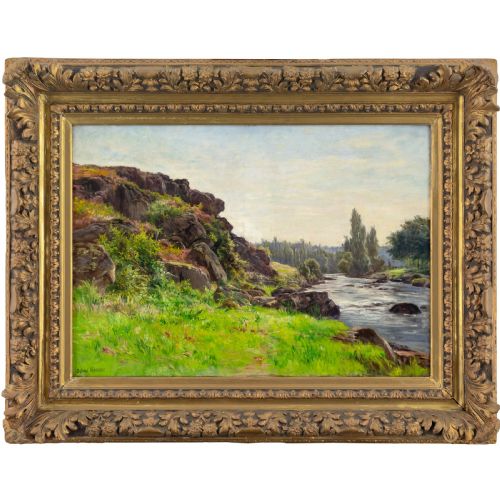
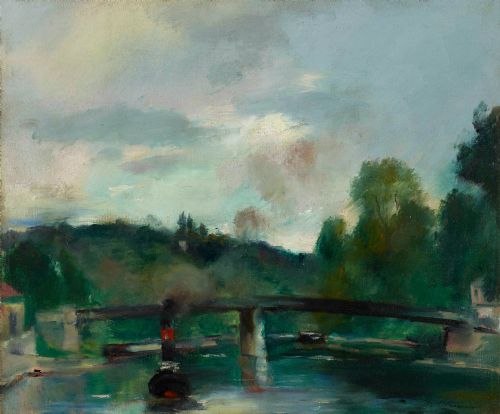
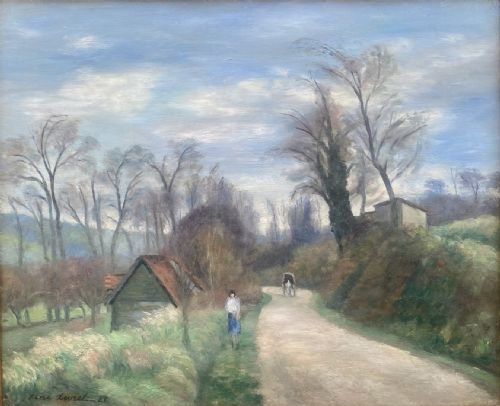
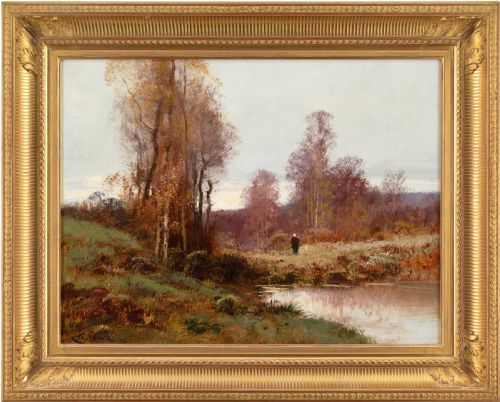
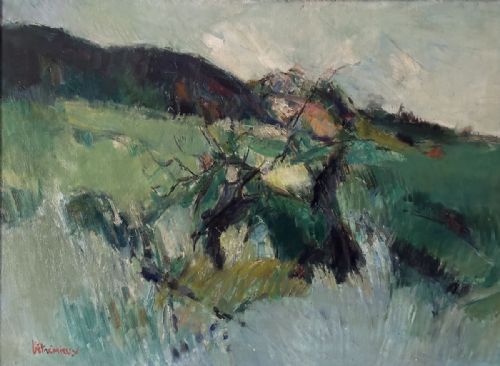
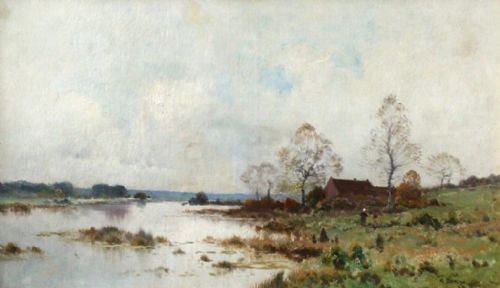
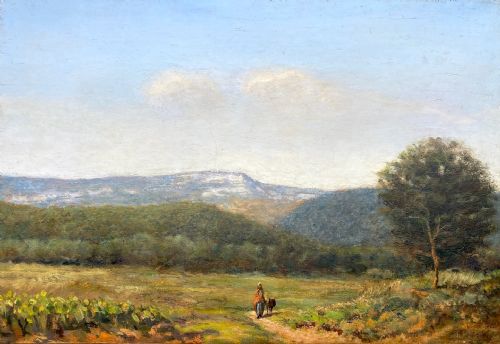
French impressionist countryside art encompasses oil paintings, drawings, and watercolours depicting rivers, orchards, and rural paths across regions such as Normandy, Provence, and the South of France.
The selections on this page span periods from the nineteenth century through the decades of the 1900s, including 1890, 1910, 1920, 1930, 1940, 1950, and 1960.
Buyers encounter depictions of specific locations like Monet country, the River Orne, Corsica, and the Alpilles, created in styles ranging from impressionism and post-impressionism to fauvism and the French School.
Materials and construction
Works in this category rely primarily on oil paint applied to canvas, wood panels, or board, occasionally utilising pastel or charcoal on paper.
Many stretched canvases sit within gesso and gilt frames that complement the painted surface, while others utilise simple wooden supports.
Listings feature oil on canvas, wood, gesso, and gilt materials across periods spanning the nineteenth century to the 1960s.
Quality distinctions
The strength of a piece rests in the handling of light, brushwork, and atmospheric depth, distinguishing accomplished plein-air observation from more routine studio work.
Canvas tension, surface preservation, and the integrity of the original gesso and gilt frames influence the overall standard of each surviving artwork.
Gabriel Mathieu·Henri Ottmann·Rene Levrel·André Prévot-Valéri·Mario Pinetti·Pierre Emmanuel Eugene Damoye·Jeffrey Pratt·Henri Therme·Martin Lamotte·Delâtre·Charles Edmund Rene His
The French Impressionist Countryside Art Glossary
- Post-Impressionism
- An artistic movement following impressionism that extended its use of vivid colours while emphasising geometric forms and expressive qualities. This approach appears frequently in works from the early twentieth century.
- Fauvism
- A style characterised by strong colours and painterly qualities over realistic or natural values. These canvases often depict Mediterranean scenes with intense warmth.
- Gesso
- A plaster-like mixture applied to wood or canvas as a base for painting or used in ornate frame mouldings. It provides a smooth surface for subsequent layers.
- Gilt
- A thin layer of gold applied to wood or gesso frames. This finish adds reflective brilliance to the perimeter of the artwork.
- Oil Paint
- Pigment mixed with a drying oil, commonly linseed, used across canvas and panel supports. It allows for rich blending and textured impasto application.
French Impressionist Countryside Art: Frequently Asked Questions
What subjects do these paintings show?
These works depict rural French scenes, including river banks, winding country paths, olive trees, and farmhouses.
They capture specific topographies ranging from Normandy to Provence and Corsica.
Which materials were used for these artworks?
Artists utilised oil paint on canvas, wood panels, and board.
Some pieces also employ pastel, charcoal, and gesso frames.
How do I date a French landscape painting?
Dating relies on recorded signatures, artist lifespans, stylistic markers like fauvism or post-impressionism, and framing materials.
Many pieces carry specific decade attributions spanning the late nineteenth through the mid twentieth centuries.
How should I display these paintings at home?
These works suit traditional or contemporary wall spaces where natural light can illuminate the brushwork.
Care should be taken to protect antique canvases and gilt frames from direct sunlight and damp conditions.