

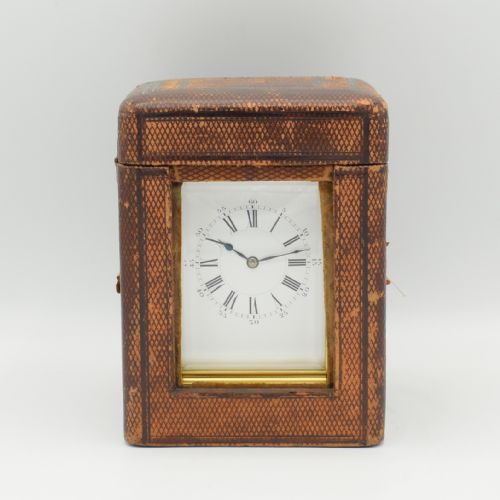


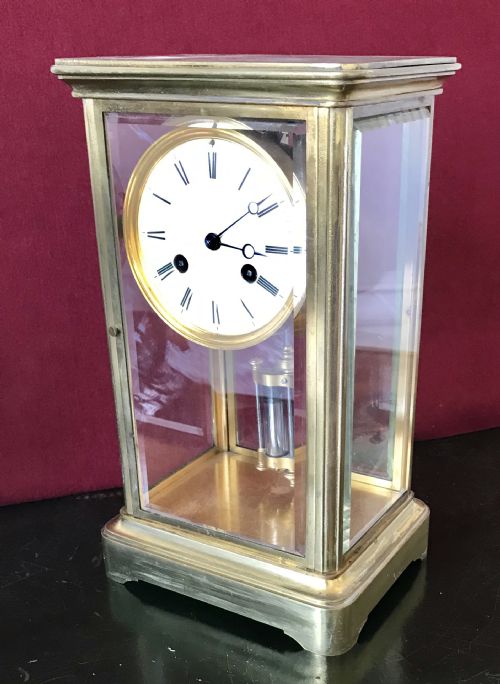
French Horological Clock
These pieces are a french horological clock, combining precision mechanics and decorative arts for the collector of fine timepieces.
French Horological Clock
Buyers will encounter traditional designs alongside specialised pieces such as electric skeleton clocks, patent alarm clocks, and striking carriage clocks with repeaters. These items reflect distinct periods from Victorian epochs through to the 1920s and mid twentieth century.
The assortment demonstrates diverse mechanical functions, including grand sonnerie strikes, perpetual calendars, and automaton movements built by notable makers. Each piece serves both a practical timekeeping function and a decorative role in an interior setting.
Materials and Construction
Cases are constructed primarily from brass, often gilt, combined with bevelled glass panels to display the intricate interior mechanics. Heavier architectural examples incorporate slate, mahogany, and leather finishes to anchor the design.
The movements rely on steel components, brass gear trains, and enamel dials featuring painted numerals. Specialised models integrate mercury or wheel pendulums, delicate escapements, and electrical elements.
French Horological Clock Retail Price Guide 2026
Typical asking prices for french horological clock among the pieces listed under this phrase on Sellingantiques today, from the lower quarter to the upper quarter. They describe what is for sale here now, not the wider market.
Materials utilised across the listings include brass, glass, enamel, mahogany, steel, gilt brass, slate, and leather.
Assessing Horological Quality
Quality in a french horological clock is determined by the complexity of the movement, such as grand sonnerie striking or perpetual calendar mechanisms, alongside the reputation of the maker. Signed movements and original fitted travel cases elevate the standing of a piece.
The crispness of the gilt brass casting, the clarity of the enamel dial, and the presence of engraved masks or side panels distinguish superior examples. Heavy, solid construction and unaltered mechanical components indicate higher workshop standards.
Henri Jacot·Maurice & Marcel Moulin Favre-Bulle·Antoine Redier·Brunelot·L Epee·Guilmet·Drocourt & Holingue·French Royal Exchange·Brocot
The French Horological Clock Glossary
- Carriage Clock
- A small, spring-driven clock designed for travel, typically featuring a brass frame with glass panels and a swing handle. They often include alarm or repeating complications.
- Grand Sonnerie
- A complex striking mechanism that chimes both the hours and the quarters automatically on every quarter hour. This mechanical feat requires sophisticated gear trains within the movement.
- Gorge Case
- A specific style of carriage clock case featuring stepped mouldings to the top and bottom of the frame. It represents a classic architectural form in nineteenth century French clockmaking.
- Four Glass Clock
- A mantel clock housed within a rectangular brass frame featuring glass panels on all four sides, allowing an unobstructed view of the pendulum and movement. These typically sit upon a stepped base.
- Platform Escapement
- The small horizontal assembly containing the balance wheel and hairspring, positioned visibly at the top of a carriage clock movement. It replaces the traditional pendulum in portable clocks.
French Horological Clock: Frequently Asked Questions
How do four glass clocks work?
Four glass clocks operate using a delicate pendulum suspended inside a transparent brass and glass enclosure. The design showcases the movement from all angles.
They generally sit on mantelpieces or desks, relying on precise gear trains and escapements to maintain accurate time without a traditional wooden case.
What does grand sonnerie mean?
Grand sonnerie refers to a sophisticated striking train that sounds the hours and quarters automatically on bells or gongs. It is a highly complex mechanical feature found in better clocks.
This system differs from standard chiming clocks because it strikes the elapsed quarters before every hour.
Are these clocks difficult to maintain?
Maintenance requires professional servicing by a specialist in antique horology to clean the brass gear trains and oil the pivots. Regular handling should be minimal to protect delicate escapements.
When wound carefully and kept in a stable environment, these mechanical pieces run reliably for decades.
How do I identify the maker?
Makers often signed their names on the enamel dial, the brass backplate of the movement, or within the escapement bridge. Documentation or original keys may also bear workshop stamps.
Examining the internal movement plaque usually reveals the signature of the horologist who produced the piece.