


French Horological
These french horological antique pieces combine precise mechanical movement with striking period design, offering mechanical fascination and decorative presence.
French Horological
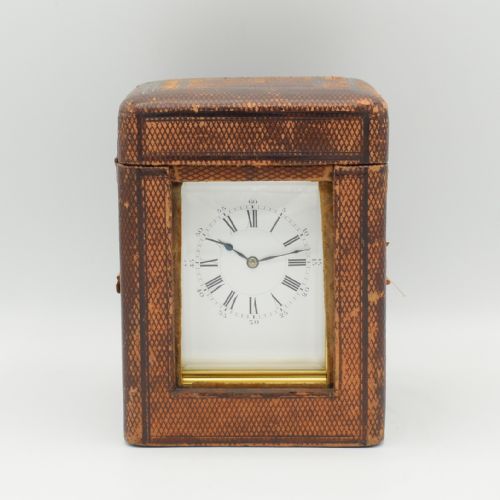
Carriage clocks dominate the offerings, often appearing alongside novelty desk compendiums, electric skeleton clocks, and heavy regulators. These pieces range from standard travel timepieces with original cases to grand sonnerie and repeating complications.
The periods represented span from Victorian and mid nineteenth century examples through late nineteenth century French styles into early twentieth century Art Deco and later twentieth century production. Forms vary from traditional slate and gilt brass cases to complex automaton beam engines and ships wheel pendulum clocks.
Materials and construction
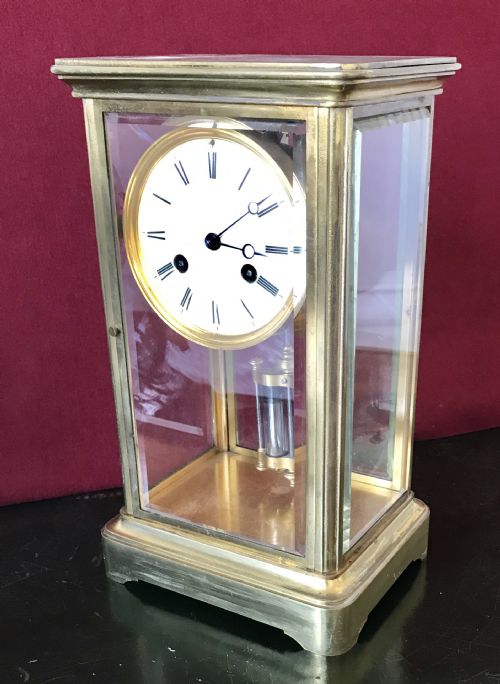
Brass, gilt brass, and steel form the mechanical heart and structural framing of these timepieces, frequently paired with visible glass panels that expose the gear trains. Enamel dials provide crisp readability with Roman or Arabic numerals.
Secondary materials introduce contrasting textures and weight, with slate utilised for architectural mantel clocks and mahogany or leather appearing in cases and associated workbenches. Specialised items incorporate components like wooden ship wheel frames and functional mercury or pendulum assemblies.
Timekeeping meets mining safety in the nineteenth century novelty desk compendium shaped like a Davy lamp.
Assessing quality in horological pieces
Quality rests upon the complexity of the movement and the reputation of the maker signing the plates or dial. Signed pieces by established makers carry distinct mechanical refinements and superior finishing on the internal gears.
The integrity of original elements, such as enamel dials, escape wheels, striking mechanisms, and fitted travel cases, dictates the standing of an individual piece. Robust weight and substantial housing materials like massive gilt brass or heavy slate indicate higher grade production.
Henri Jacot·Maurice & Marcel Moulin Favre-Bulle·Antoine Redier·Brunelot·L Epee·Guilmet·Drocourt & Holingue·Andre Guilmet·French Royal Exchange·Brocot
The French Horological Glossary
- Carriage clock
- A portable spring driven timepiece with a handle designed for travel, typically featuring glass panels to view the escapement.
- Grand sonnerie
- A striking mechanism that sounds both the hours and the quarters automatically on every quarter hour.
- Regulator
- A precision pendulum clock used as a standard for setting other timepieces.
- Escapement
- The mechanical linkage that controls the rotation of the gear train by giving impulses to the pendulum or balance wheel.
- Automaton
- A mechanical device featuring moving figures or machinery integrated into the clock movement.
French Horological: Frequently Asked Questions
What is a carriage clock?
A carriage clock is a portable spring driven timepiece originally built for travel by coach during the nineteenth century. These clocks typically feature a rectangular brass case with glass side panels and a folding handle on top.
Most examples run on a platform escapement rather than a traditional pendulum, allowing them to keep time while moving. They range from simple time-only models to complex repeating and alarm variants.
What is an automaton clock?
An automaton clock incorporates animated figures or working mechanical models that operate in tandem with the time movement. Examples include miniature steam engines and industrial machinery driven by the clockwork.
These pieces showcase both horological skill and mechanical art, designed to catch the eye with movement. They often feature complex gear trains dedicated solely to driving the mechanical figures.
How should I care for a vintage French clock?
Place the clock on a stable, level surface away from direct sunlight, drafts, and extreme temperature fluctuations. A solid foundation ensures the pendulum or balance wheel beats evenly.
Avoid attempting internal repairs or oiling the movement yourself, as horological mechanisms require professional servicing. Dust the exterior gently with a soft dry cloth while leaving the glass and brass unpolished unless necessary.