



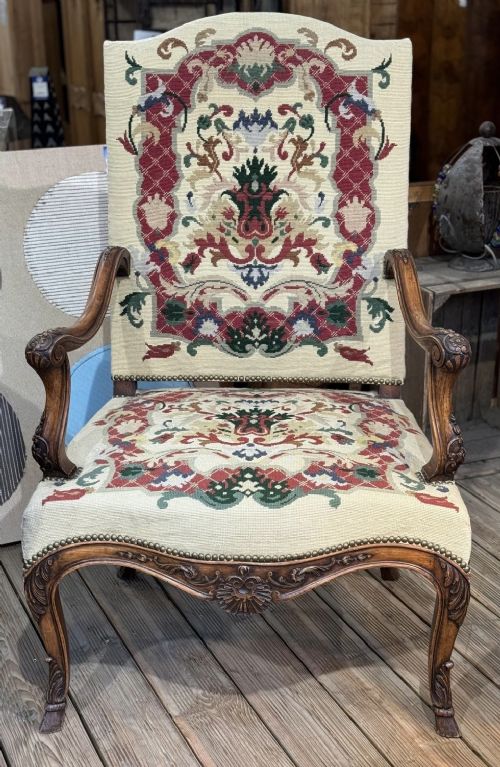
French High Back Fauteuil
These french high back fauteuil armchairs offer grand proportions and historic seating, bringing traditional elegance and comfort to any interior.
French High Back Fauteuil
When searching for a french high back fauteuil, buyers encounter grand armchairs spanning multiple centuries of design. These seating pieces originate primarily from the nineteenth century alongside earlier seventeenth and eighteenth-century examples.
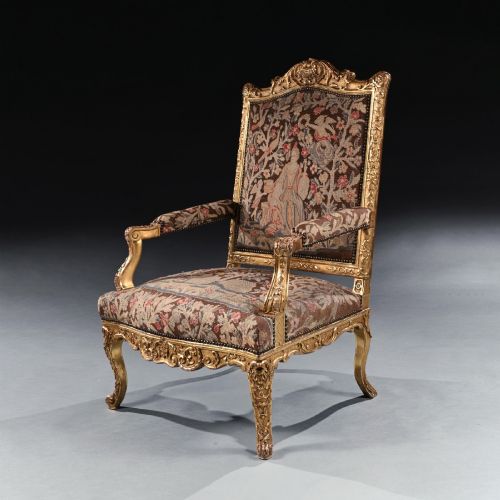
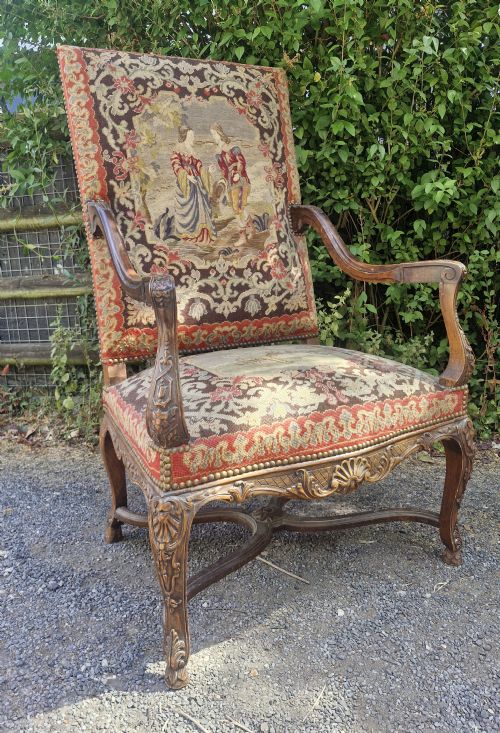
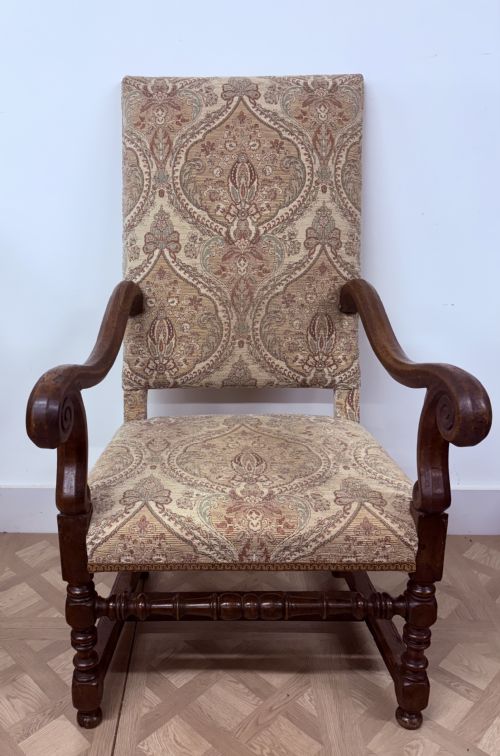
The inventory on this page includes styles such as Louis XIII revival, Regence, Baroque, and French provincial forms. Walnut and giltwood frame constructions dominate the selection, paired with traditional tapestry and upholstery fabric.
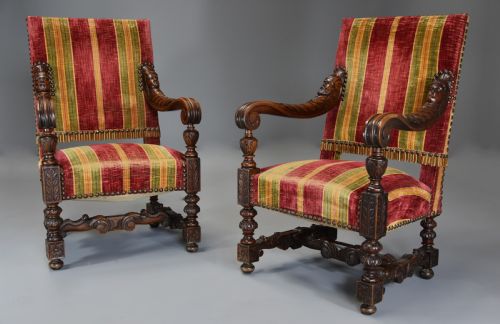
Armchairs range from large throne chairs to carved salon seating and wing armchairs. Buyers find single chairs as well as matched pairs suitable for formal living spaces.
How they were made
Frames rely principally on solid timber species including walnut, beech, and mahogany, shaped through traditional joinery and detailed hand carving. Giltwood examples receive layers of applied gold leaf over the carved wooden surfaces to achieve a luminous finish.
Upholstery techniques incorporate traditional textile coverings, notably needlework and patterned tapestry fabrics, secured to high back structures. Brass elements occasionally accent the construction or detailing of the chairs.
French High Back Fauteuil Retail Price Guide 2026
Typical asking prices for french high back fauteuil among the pieces listed under this phrase on Sellingantiques today, from the lower quarter to the upper quarter. They describe what is for sale here now, not the wider market.
Some nineteenth-century makers could not resist mixing Hepplewhite nomenclature into French salon chair descriptions.
What varies in quality
Quality differentiates through the crispness of the hand carving on the wooden frames and the depth of the giltwood application. Heavier timber selection and balanced proportions distinguish finer examples from standard production.
The preservation of original needlework and tapestry upholstery influences the character of each piece. Frames with solid structural integrity and deep relief carving occupy the upper tier of the range.
The French High Back Fauteuil Glossary
- Fauteuil
- An open-armed upholstered armchair originating in France, typically featuring exposed wooden framing around the back and armrests. This form evolved through various royal reigns to encompass high back designs.
- Giltwood
- Timber coated with a thin layer of gold leaf or gilt powder. This finish appears frequently on formal French seating from baroque and revival periods.
- Tapestry
- A form of heavy textile woven with pictorial or decorative designs, often utilised for upholstery on antique French armchairs. These fabrics provide durable and ornate covering for high backrest panels.
- Regence
- A transitional stylistic period in French design bridging the baroque and rococo eras. Characteristics include lighter proportions and curved lines.
French High Back Fauteuil: Frequently Asked Questions
What is a french high back fauteuil?
A french high back fauteuil is an upholstered armchair with open wooden arms and an elevated backrest. These chairs originate from various periods including the seventeenth, eighteenth, and nineteenth centuries.
They serve as statement seating pieces in reception rooms and parlours, combining functional comfort with decorative historic style.
Where should I place these armchairs?
These large armchairs suit formal living areas, studies, or drawing rooms where their height and decorative frames command attention. Pairs work well positioned beside a fireplace or flanking a central piece of furniture.
Their substantial presence requires adequate surrounding space to allow the carved walnut or giltwood frames to be fully appreciated.
What materials are used in construction?
Frames are constructed primarily from hardwoods such as walnut, beech, and mahogany, sometimes finished with giltwood surfaces. Upholstery consists of traditional textiles, heavy tapestry fabrics, and needlework.
Additional elements include brass detailing and hand-carved ornamentation integrated directly into the wooden structural members.