



French Hearth Guard
A French hearth guard provides a decorative barrier before an open fire, combining brass, bronze or wire mesh within classic revival frames.
French Hearth Guard
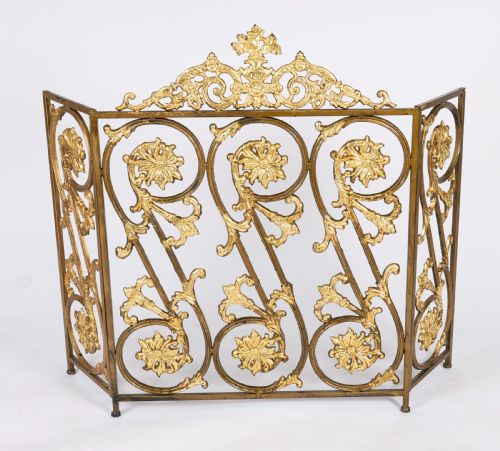
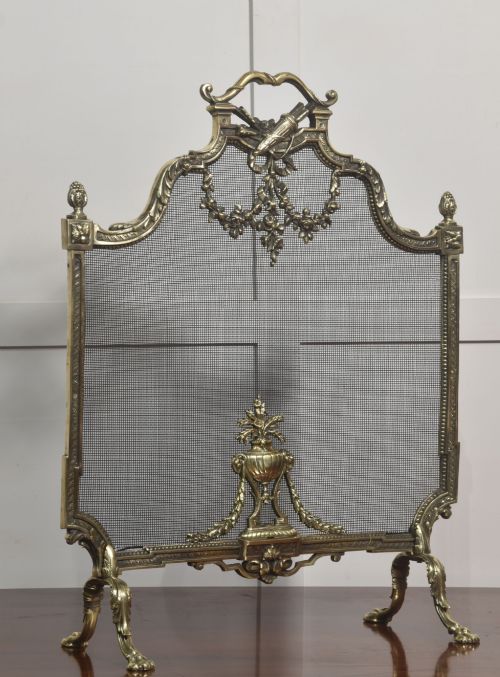
A French hearth guard encompasses various fireplace accessories including fire screens, fenders and spark guards designed to protect rooms from stray embers. These pieces span the nineteenth century and the early decades of the twentieth century, originating from periods influenced by Louis XV, Louis XVI and Empire revivals.
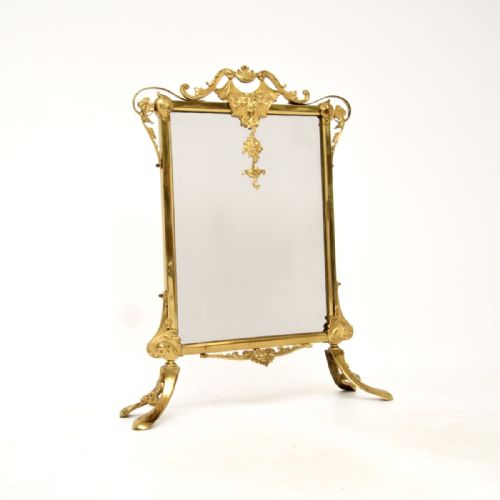
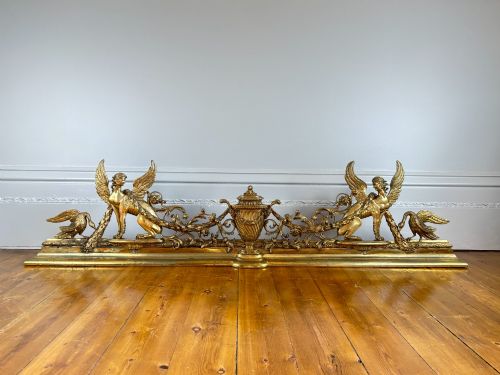
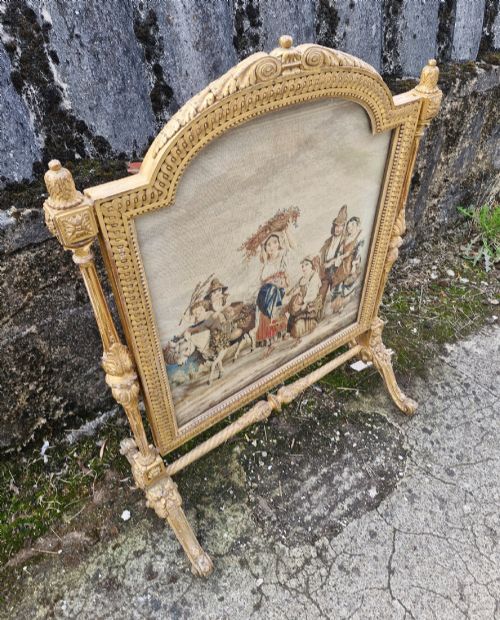
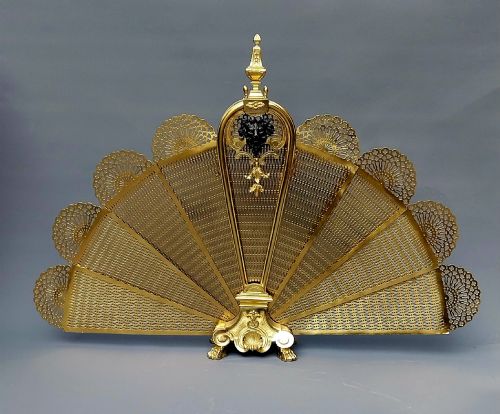
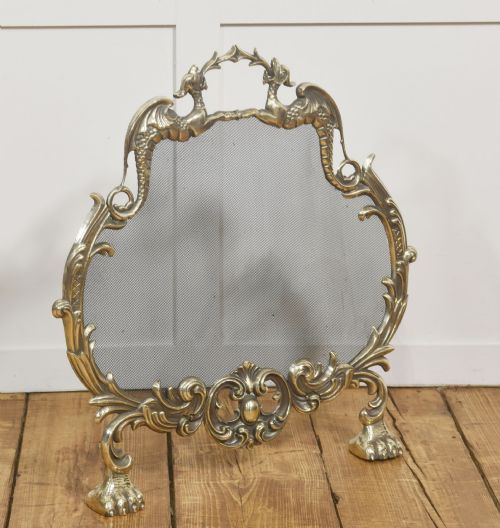
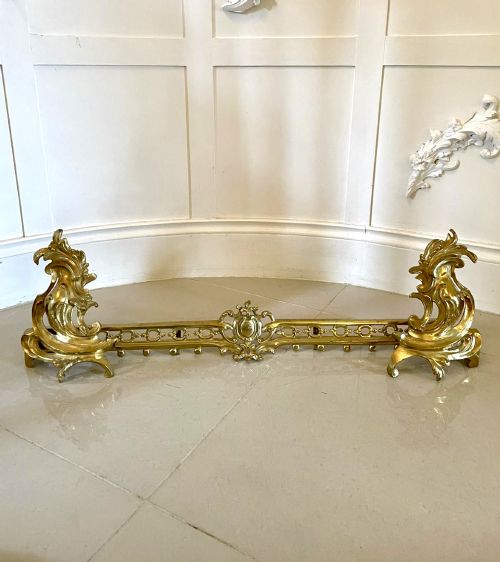
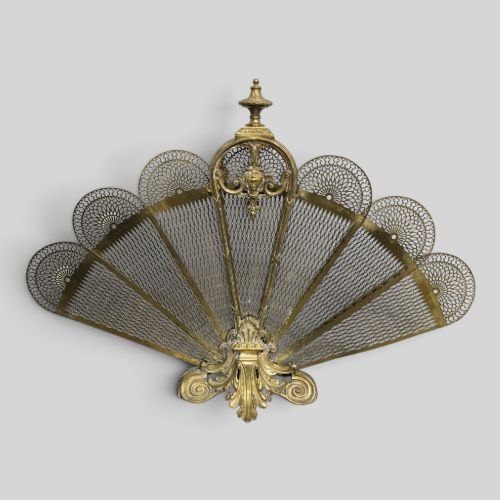
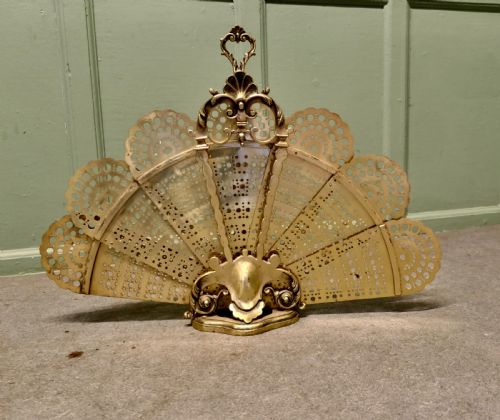
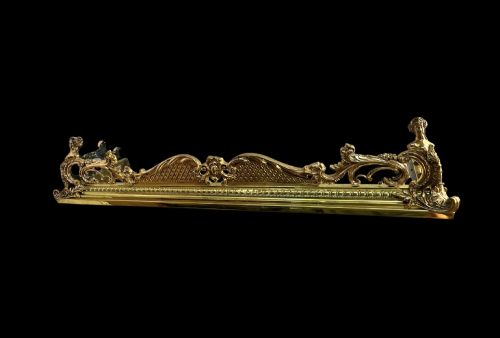
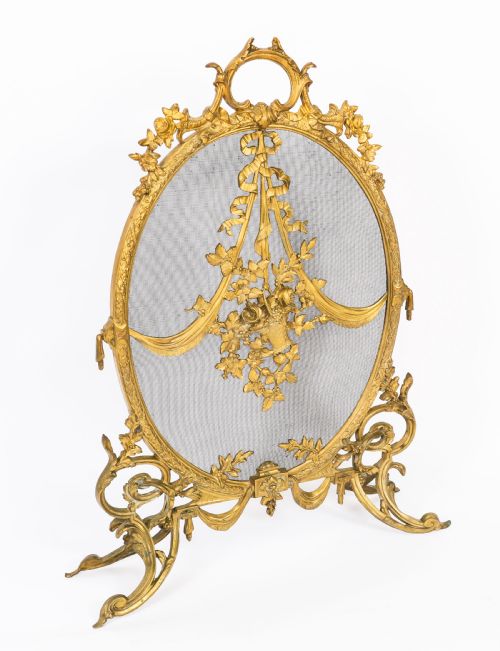
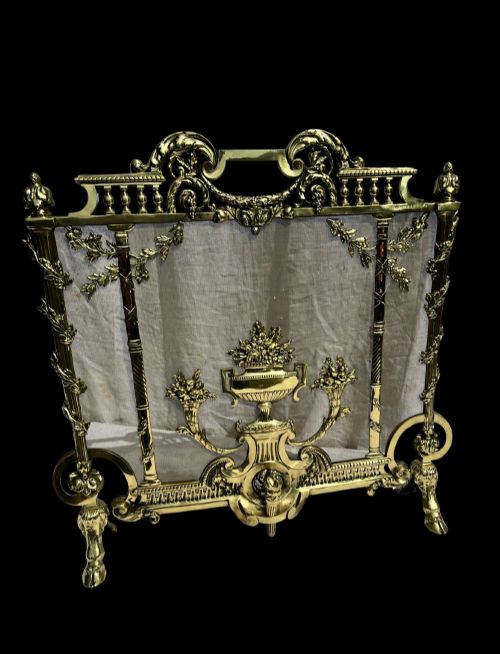
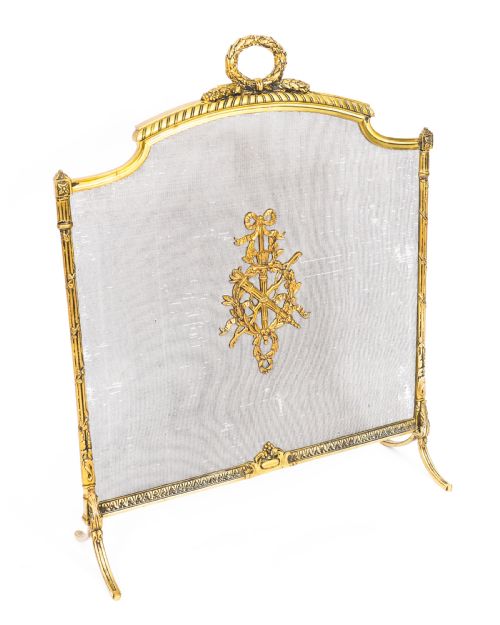
The most common forms on this page include folding peacock fire screens with expanding wire mesh vanes and rigid brass or gilt bronze screens decorated with rococo scrollwork. Fenders also appear frequently, ranging from extendable brass frames to heavy cast iron designs mounted with ormolu.
Materials and construction
Craftsmen built these guards using cast and sheet brass, bronze, gilt bronze, ormolu, copper and cast iron, often combining wire mesh for functional spark protection. Frames were cast in sections, chased by hand to sharpen floral, musical or classical trophy motifs, and subsequently gilded.
Folding spark screens utilise hinged segments of wire mesh that expand outward like a peacock tail, whilst rigid fire screens rely on substantial metal stands and feet to remain stable upon the hearth.
French Hearth Guard Retail Price Guide 2026
Typical asking prices for french hearth guard among the pieces listed under this phrase on Sellingantiques today, from the lower quarter to the upper quarter. They describe what is for sale here now, not the wider market.
Materials recorded on this page range from cast iron and copper to gilt bronze, ormolu and fine wire mesh.
Markers of quality
Quality reveals itself in the crispness of the chasing upon gilt bronze and brass mounts, where deeper, hand-finished detail distinguishes finer studio work from simpler commercial casting. Heavier gauges of metal and fully articulated hinges on folding screens separate durable examples from lighter, more fragile alternatives.
Bouhon Frères·E F Caldwell New York
The French Hearth Guard Glossary
- Ormolu
- Gilded bronze mounts applied to furniture and hearth furnishings. This technique involved applying an amalgam of gold and mercury to bronze before heating.
- Chenets
- Andirons or firedogs placed on the hearth to support logs. They frequently appear paired with matching fenders or screens.
- Rococo Revival
- A nineteenth-century design style drawing on asymmetrical eighteenth-century French motifs. It is characterised by C-scrolls, foliage and shellwork.
- Fire Fender
- A low metal guard placed around the perimeter of the hearth. Some examples feature adjustable lengths to fit different fireplace openings.
- Spark Screen
- A protective mesh barrier designed to catch flying embers from an open fire. These often fold away when not in use.
French Hearth Guard: Frequently Asked Questions
What is a French hearth guard?
A French hearth guard is a decorative and protective metal accessory placed in front of an open fireplace. These items include rigid fire screens, expanding peacock guards and extendable fenders.
They serve to shield the room from sparks whilst adding ornamental detail to the chimney breast through rococo or classical revival metalwork.
How do peacock fire screens work?
Peacock fire screens feature multiple metal vanes hinged together in a fan shape. Users can fold the screen flat for storage or expand the wire mesh panels outward to cover the fireplace opening.
This folding mechanism provides flexible coverage for different hearth sizes while maintaining airflow.
Are fenders adjustable?
Certain nineteenth-century fenders are built with sliding sections that allow the overall length to be adjusted. This mechanism lets the surround fit snugly between the jambs of various hearth dimensions.
Fixed-length fenders also appear, cast or forged as a single rigid piece.
How do I care for gilt bronze?
Gilt bronze and ormolu require gentle dusting with a soft, dry cloth to prevent the accumulation of dirt. Avoid chemical polishes, as abrasive cleaning agents can strip away the delicate gilt surface.
Keeping the metal away from direct moisture helps preserve the original finish.