



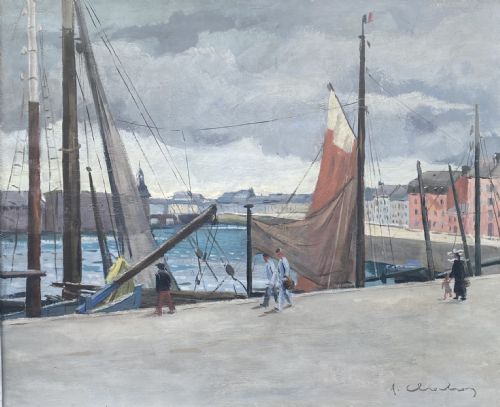


French Harbour Scene Artwork
These pieces capture french harbour scene artwork through the eyes of painters working from the nineteenth century to the mid-twentieth century.
French Harbour Scene Artwork
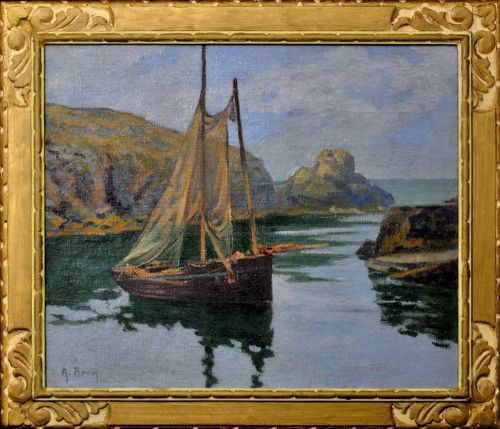
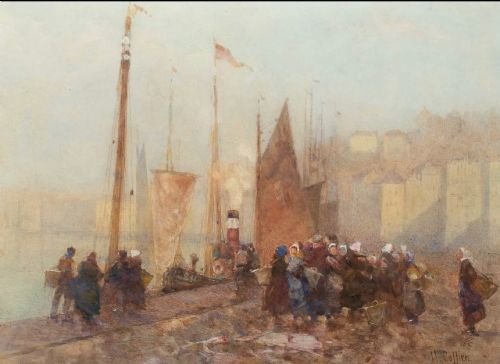
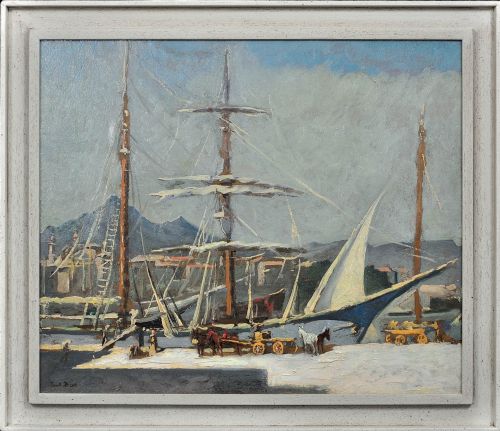
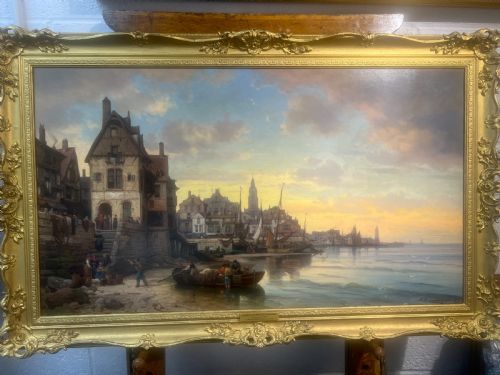
When you search for french harbour scene artwork, you encounter paintings depicting coastal towns, fishing ports, and maritime waterfronts along the French coast. These works range from nineteenth-century academic and impressionist views to mid-twentieth-century modernist interpretations and outsider art.
The selections on this page span several decades, featuring coastal locations such as Cannes, Boulogne, Honfleur, and Brittany. You will find oil paintings on canvas alongside delicate watercolours on paper, capturing the changing light on the water and the daily toil of fishermen and ships.
Materials and methods
Artists rendering french harbour scene artwork primarily utilised oil paint on canvas or watercolour applied to paper. These mediums allowed painters to capture the atmospheric quality of coastal air, the reflection of light on water, and the textures of stone quays and wooden hulls.
Framing is an integral part of the physical object, with many works retained in their original wood frames under glass. The application of paint varies from tight academic brushwork to loose post-impressionist dabs and dynamic modernist strokes.
French Harbour Scene Artwork Retail Price Guide 2026
Typical asking prices for french harbour scene artwork among the pieces listed under this phrase on Sellingantiques today, from the lower quarter to the upper quarter. They describe what is for sale here now, not the wider market.
Materials documented across the inventory include wood frames, glass, canvas, and paper supports.
Judging quality in coastal paintings
The strength of a french harbour scene artwork rests upon the artist's ability to handle light and atmosphere rather than mere scale or subject matter. Works that demonstrate a confident command of colour and tone within the maritime setting stand apart from routine topographical views.
Execution and composition define the upper tier of these works, where brushwork feels purposeful and the interplay between land, sea, and sky is harmonious. The distinction lies in how successfully the artist translates the specific atmosphere of the French coast onto the canvas or paper.
Paul Bret·Hector Caffier·Charles Euphraisie Kuasseg·Paul Delvaux·Raymond Picque·William Lee Hankey·Doyly-John·Owen Bowen·Henri Ottman·Yves Brayer·Augustus William Enness
The French Harbour Scene Artwork Glossary
- Post-Impressionism
- An artistic movement extending impressionism while rejecting its limitations, favouring bolder colours and distinct brushstrokes. Painters in this tradition emphasised symbolic content and formal structure.
- Watercolour
- A painting method in which the paints are made of pigments suspended in a water-based solution. The technique relies on the transparency of washes over paper.
- Canvas
- A closely woven heavy fabric used as a support surface for oil painting. It is typically stretched across a wooden frame before application.
- Seascape
- A work of art depicting the sea, coastal views, or marine subjects. These pieces focus on the interaction between water, sky, and shore.
French Harbour Scene Artwork: Frequently Asked Questions
What periods do these paintings cover?
The available works span from the late nineteenth century through to the mid-twentieth century, capturing shifting artistic movements across several decades.
You will find pieces representing academic styles, impressionism, and mid-century modernism within the selection.
How should I care for watercolour on paper?
Watercolour pieces require protection from direct sunlight to prevent the pigments and paper from fading over time.
Keep them behind glass in a stable environment away from excessive humidity to preserve the delicate medium.
Are these works signed by the artists?
Many of the paintings carry signatures or attributions to recorded artists working in France during the nineteenth and twentieth centuries.
Documentation on each listing notes the specific maker and historical context associated with the artwork.
What framing comes with the artwork?
Most pieces are housed in their period wood frames, which often complement the aesthetic of the painting's creation era.
Glass protection is standard for watercolours on paper to shield the delicate surface from environmental damage.