
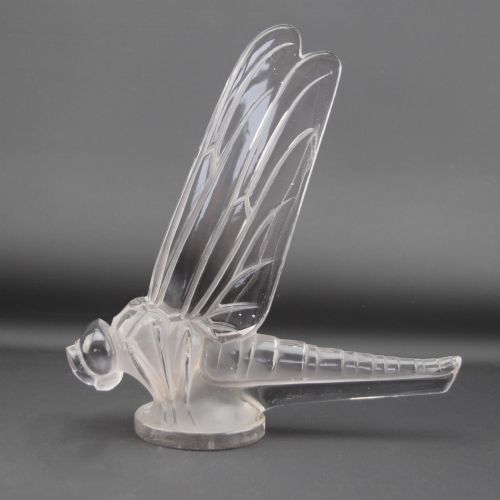
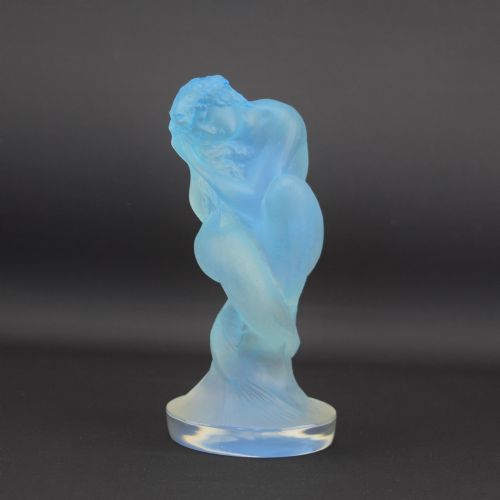


French Glass Car Mascot
These French glass car mascots are striking Art Deco ornaments that bring period motoring flair and sculptural weight to a modern desk or shelf.
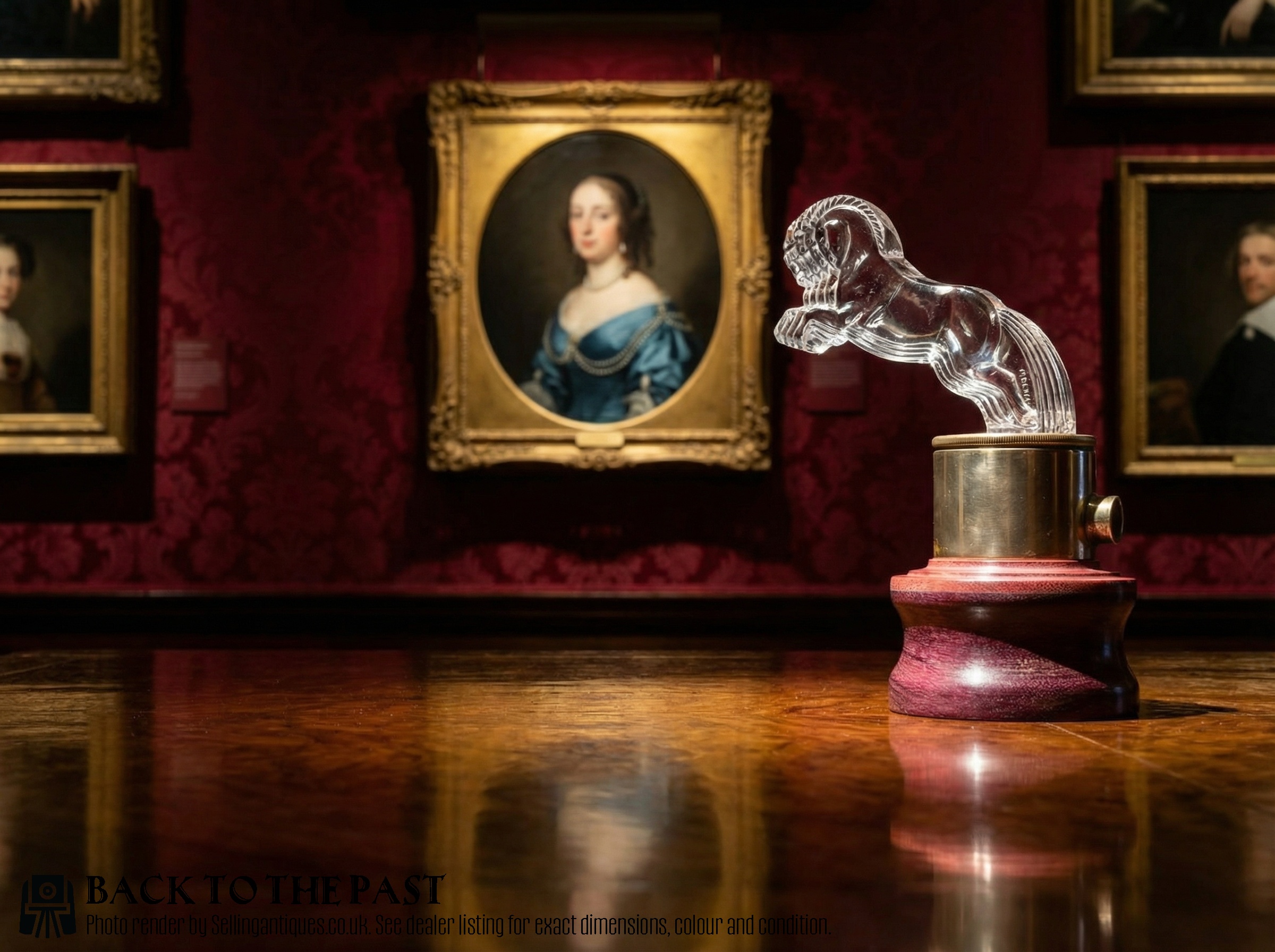
French Glass Car Mascot
A french glass car mascot is a sculptural object originally mounted on the radiator caps of luxury automobiles during the early twentieth century. Collectors today prize these pieces primarily as cabinet displays or heavy desk paperweights.
The examples on this page date from the 1920s and 1930s. They take animal and figure forms such as dragonflies, birds, fish, wild boars, and mythological sirens.
Most pieces seen here cross over in function, serving equally as car mascots and decorative paperweights. The designs emerge directly from the Art Deco movement of the interwar years.
How they were made
These items utilise moulded, pressed, and frosted glass. Makers shaped the material into intricate animal and human profiles, sometimes incorporating wood and metal mounts.
Listings feature items exclusively from the 1920 and 1930 periods, executed in moulded, frosted, opalescent, and clear glass.
What varies in quality
Quality rests on the crispness of the moulded detail and the optical depth of the glass. Pieces with rich opalescence capture light dynamically, shifting in tone as the viewing angle changes.
Subtleties in the finishing work separate standard pressings from superior examples. The definition in complex subjects like feathers or human hair dictates the overall visual success of the mascot.
Rene Lalique
The French Glass Car Mascot Glossary
- Car mascot
- A sculptural ornament mounted on the bonnet of a motor car. They functioned as personal statements for motorists in the 1920s and 1930s.
- Opalescent glass
- Glass that displays a milky, iridescent quality with milky-blue highlights in transmitted light and warm tones in reflected light. This effect adds remarkable depth to sculptural curves.
- Frosted glass
- Glass treated to achieve a matte, textured surface finish rather than a clear transparent look. It subdues glare and accentuates moulded contours.
- Moulded glass
- Glass shaped by being pressed or blown into a prepared metal or wooden mould. It allows for consistent production of complex figurative designs.
- Art Deco
- The dominant design style of the 1920s and 1930s characterised by sleek lines, stylised natural motifs, and modern industrial materials. It defines the aesthetic of interwar motoring ornaments.
French Glass Car Mascot: Frequently Asked Questions
What is a french glass car mascot?
A french glass car mascot is a decorative glass figurine originally designed to sit atop a radiator cap on 1920s and 1930s motor cars. They turned functional vehicles into mobile showcases for Art Deco sculpture.
Today, collectors remove them from automobiles to display them safely indoors as art objects and desk accessories.
How were they used on cars?
Drivers bolted or screwed the glass sculptures directly onto the radiator caps of luxury cars during the interwar period. They acted as personal emblems for the vehicle owner.
Because they were vulnerable to road debris and minor collisions, many survivors were eventually retired to display cabinets.
How do I display a car mascot?
You can display these mascots on any flat surface where light can pass through the glass. Placing them near a window allows opalescent and frosted finishes to catch the daylight.
Many collectors also use specialist wooden or metal display stands that mimic their original automotive mounts.