


French Gilt Plinth
A french gilt plinth brings classical presence into a room, supporting bronze figures and marble urns with gilded metal mounts.
French Gilt Plinth
When searching for a french gilt plinth, you encounter heavy architectural columns, pedestals, and statue bases designed to elevate decorative objects.
The pieces appearing on this page span the nineteenth century, including Edwardian examples and items attributed to the neoclassical manner.
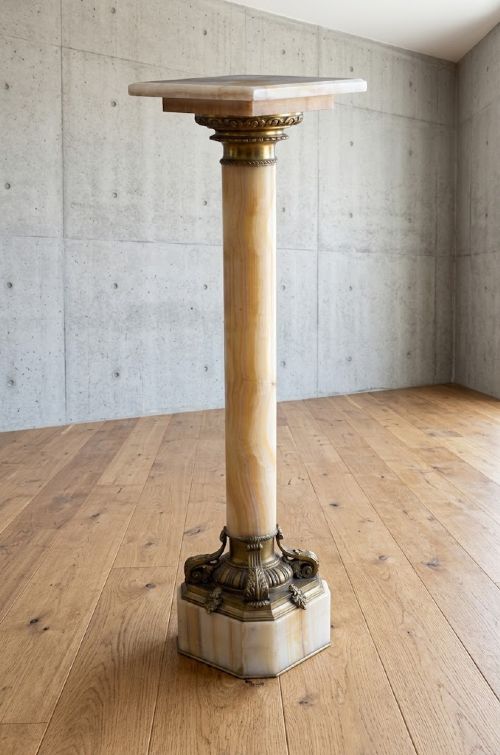
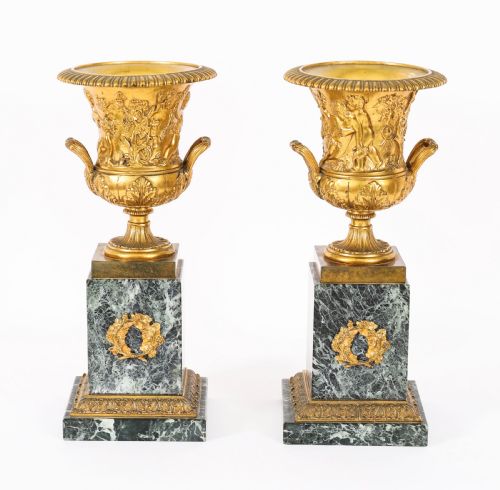
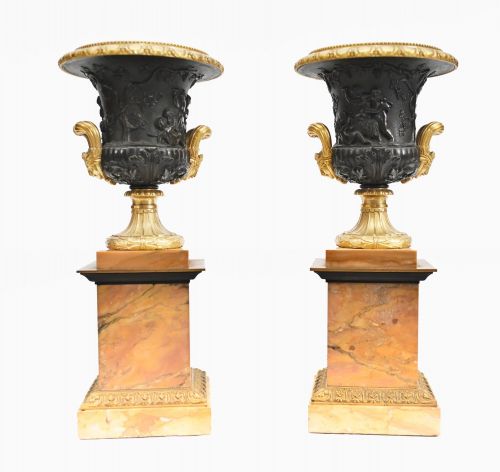
Forms range from tall onyx torchere columns and marble urn stands to small bronze vases and table clock mounts.
Materials and construction
Craftsmen utilised natural stone such as white and variegated marble alongside onyx for the structural columns and supporting bases.
Metal components rely on ormolu, gilt bronze, and brass, shaped into neoclassical collars, mounts, and decorative figures.
Secondary structural elements incorporate carved wood, gesso, and gold leaf, particularly on wall brackets and pedestals.
Listings feature nineteenth-century onyx columns, marble pedestals, and gilt bronze urns associated with the French Empire and neoclassical styles.
Assessing quality and finish
Superior examples display crisp chiselling on the ormolu mounts, where the metalwork shows sharp definition rather than soft, cast-over details.
The integration between stone columns and metal collars reveals the maker's hand, with tighter joints and carefully selected marble veining separating finer pieces from standard production.
Proportion and weight dictate the presence of the object, as denser marble and heavier bronze castings provide stability and a solid stance.
MARGUERITE
The French Gilt Plinth Glossary
- Ormolu
- Gilded bronze produced by applying a mercury and gold amalgam to cast bronze and firing it. This technique creates a durable, rich golden surface typical of nineteenth-century French decorative arts.
- Plinth
- A heavy rectangular or square block serving as the base for a statue, vase, or column. It provides a stable foundation and elevates the object above floor or table level.
- Torchere
- A tall stand or pedestal originally designed to hold a torch or candle, later adapted for lamps and decorative urns. These take slender columnar forms in onyx or marble.
- Neoclassical
- A style drawing inspiration from classical antiquity, prominent in nineteenth-century French design. It relies on symmetry, columns, and restraint.
- Campana
- A classical bell-shaped form used for ancient urns and vases. Many nineteenth-century bronze and marble reproductions adopt this distinct silhouette.
French Gilt Plinth: Frequently Asked Questions
What is a french gilt plinth used for?
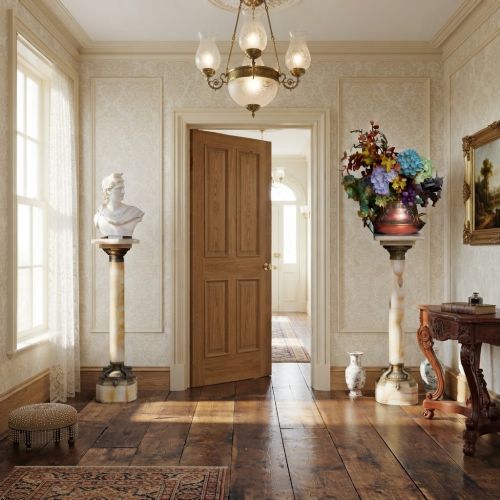
These pieces serve as elevated stages for display, supporting bronze sculptures, marble busts, and decorative urns within a room.
They lift items to eye level, allowing detailed metalwork and carved stone to be appreciated from a standing position.
How do I identify nineteenth-century pieces?
Look for the specific combination of heavy natural materials, such as onyx and white marble, paired with fire-gilded bronze mounts.
Construction methods, hand-chiselled metal details, and period styles like French Empire or Rococo Revival help confirm the date.
Where should I place a column in a room?
Tall columns and torchere stands work best in corners or against solid walls where they can support heavier urns or figures securely.
Shorter plinths suit tabletops or sideboards, functioning as bases for clocks or small decorative bronzes.
Are these columns made of solid marble?
Many architectural columns and pedestals combine solid stone bases with turned shafts of onyx or marble, reinforced internally.
Metal collars and mounts are cast separately in bronze and attached with mechanical fasteners.