
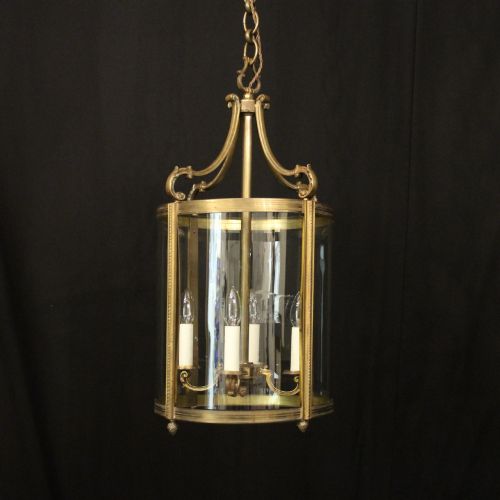
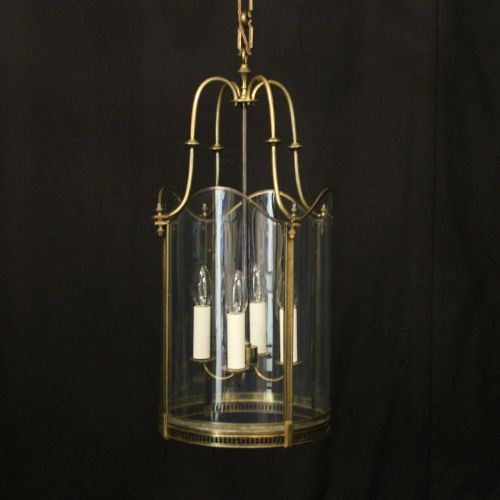
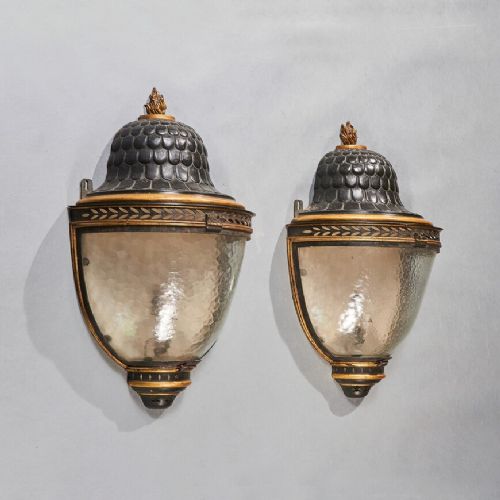
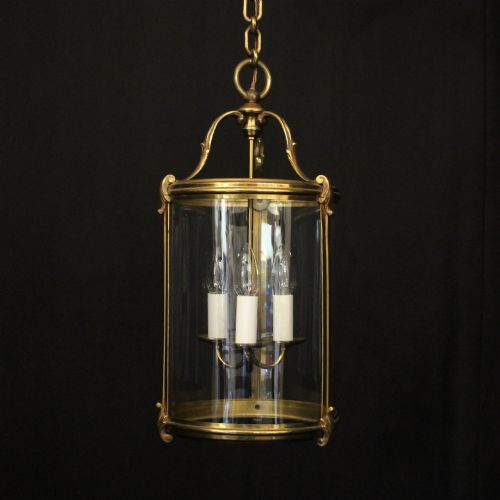
French Gilt Lantern
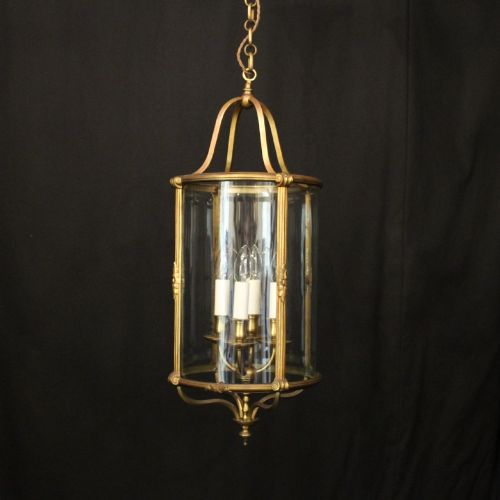
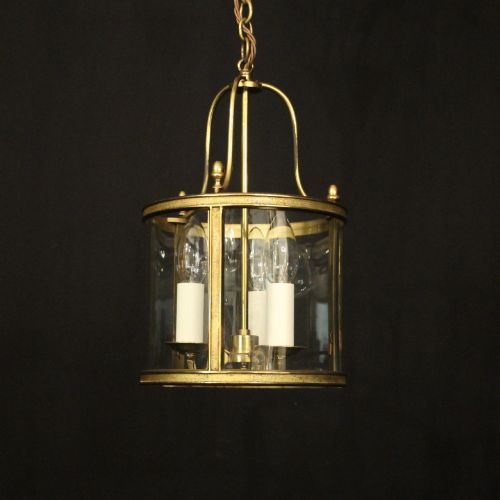
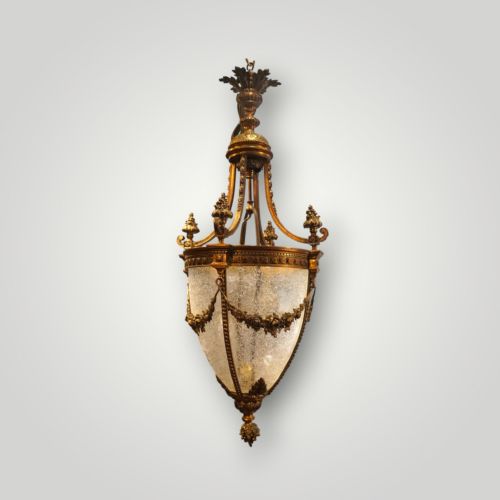
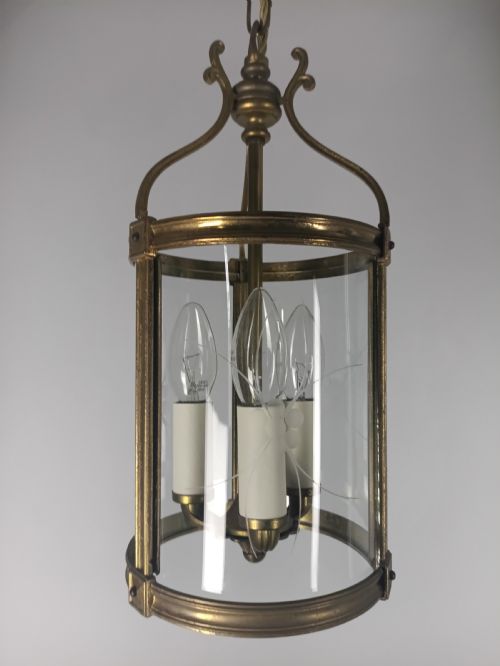
A french gilt lantern brings warmth and architectural presence to an entrance hall, combining gilded metalwork with clear glass panes.
French Gilt Lantern
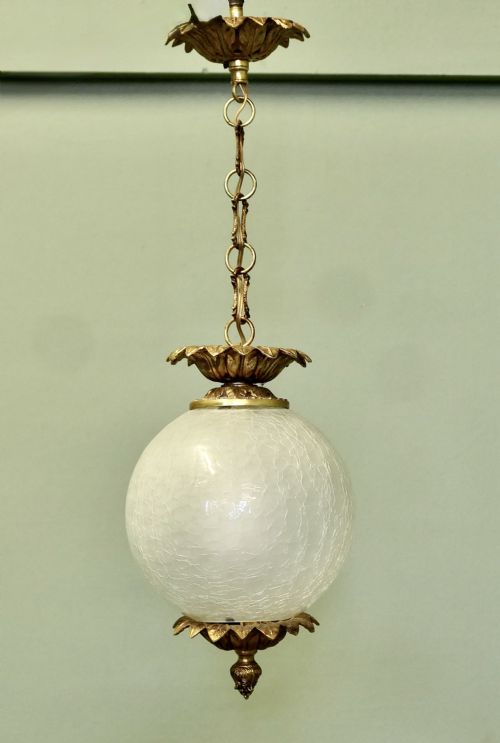
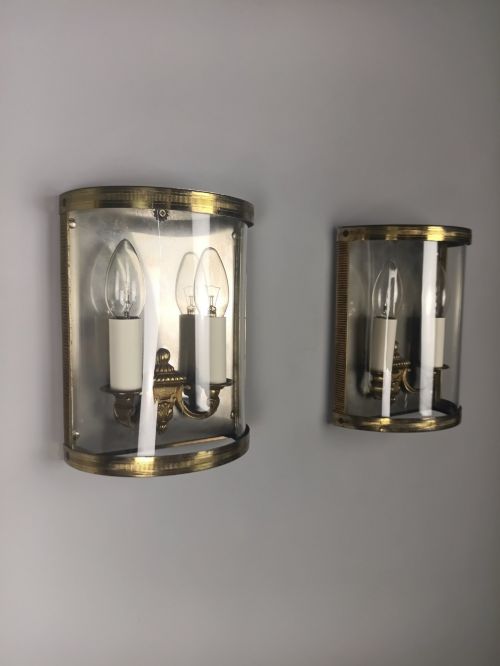
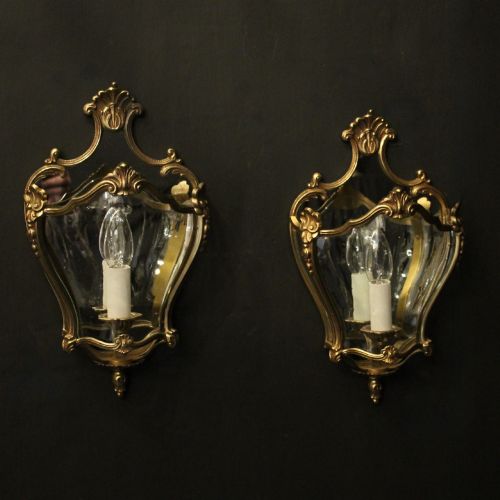
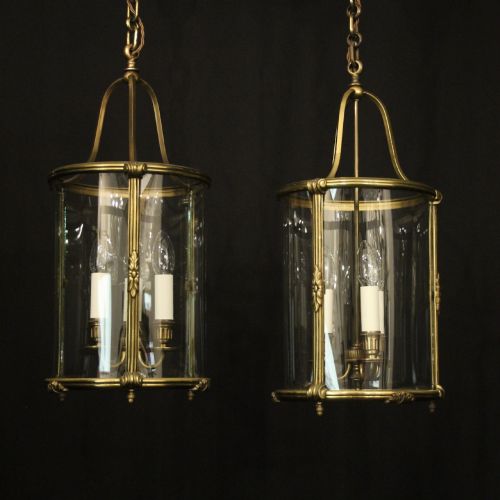
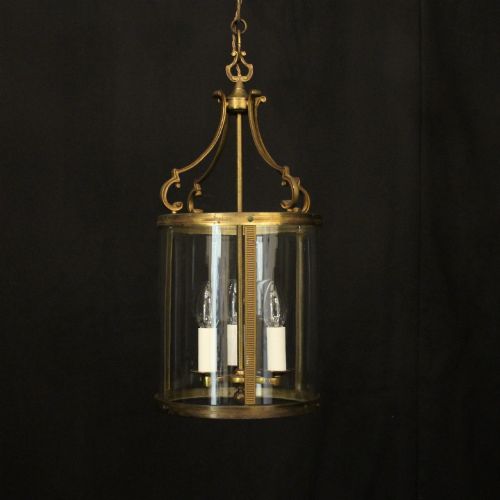
A french gilt lantern serves primarily as a ceiling-mounted or wall-fixed lighting fixture for entrance spaces, corridors, and high-ceilinged stairwells. The pieces listed across this selection appear predominantly as hall lanterns, pendant lights, and wall lanterns originating from the nineteenth and early twentieth centuries.
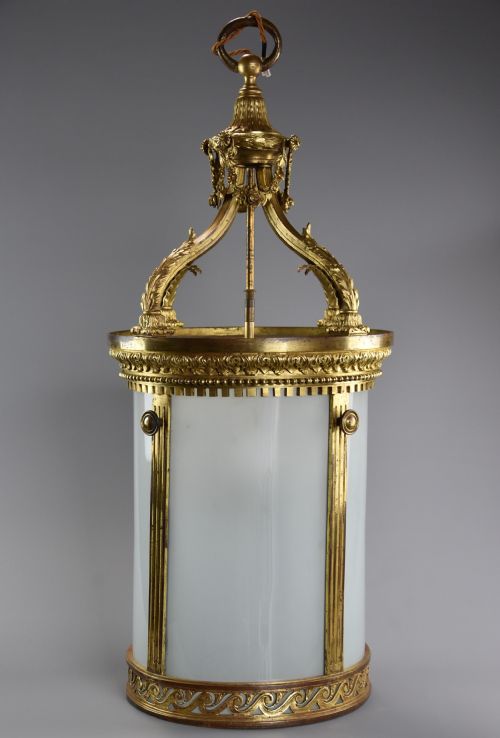
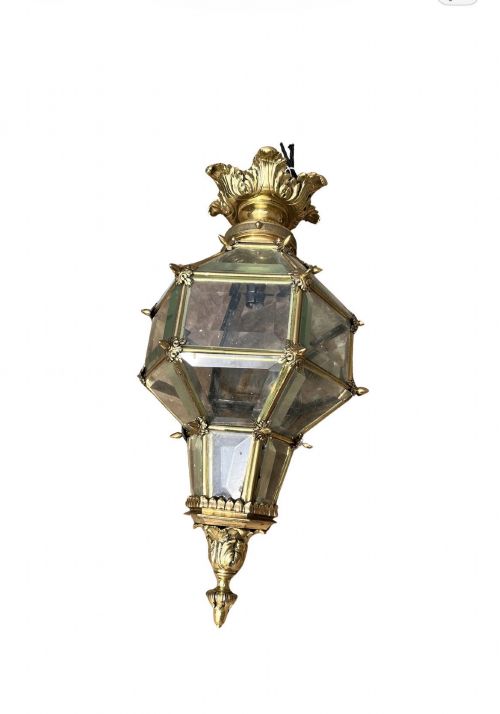
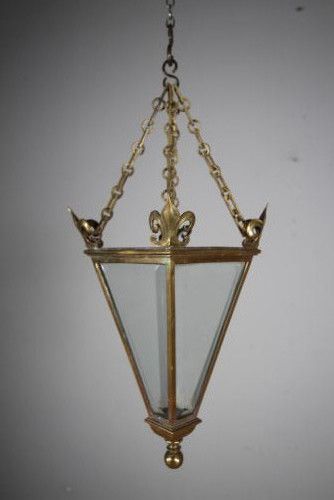
Design influences on this page draw heavily from French neoclassical, Louis XVI, and Rococo styles, alongside Versailles-inspired models. Buyers encounter convex, hexagonal, and octagonal forms housing single or multiple light sources, often framed by decorative bronze or brass structures.
The materials span gilt bronze, gilt brass, and standard brass finished with applied gilding or silver gilding. Glass elements range from plain panels to etched, bevelled, cut, and opaline varieties designed to diffuse light evenly across an interior space.
Distinctions in Quality and Craftsmanship
Quality in these fixtures rests upon the crispness of the metal casting and the depth of the chasing work on the bronze or brass frame. Finer examples display sharp relief in decorative motifs such as acanthus leaves, ribbon twists, and neoclassical urns, whereas simpler pieces rely on basic folded or spun metal components.
The choice of glass and the complexity of its treatment further differentiate the tier of a piece. Hand-bevelled edges, intricate acid-etched patterns, and heavy cut crystal indicate higher workshop standards compared to plain flat glass panes.
Listings feature 19th-century and 20th-century periods, utilising gilt bronze, gilt brass, and etched glass in hall and ceiling forms.
Perry & Co
The French Gilt Lantern Glossary
- Ormolu
- Gilded bronze, where a finely ground gold-mercury amalgam is applied to a bronze base and heated to drive off the mercury. This historic technique produces a durable, rich golden surface finish.
- Convex glass
- Curved glass panels that bulge outward from the lantern frame. This shape widens the angle of light diffusion and adds visual depth to the fixture.
- Bevelled glass
- Glass panes with angled edges ground and polished to a specific slope. The sloped edge catches and refracts light, creating a prismatic decorative effect.
- Tole peinte
- Painted sheet metal, often decorated to resemble other materials or finished in coloured lacquers. Pieces utilising this technique introduce contrasting painted surfaces alongside gilt elements.
- Louis XVI style
- A neoclassical design aesthetic characterised by geometric symmetry, straight lines, classical motifs, and restrained ornamentation. It provides the visual blueprint for many nineteenth-century hanging lanterns.
French Gilt Lantern: Frequently Asked Questions
Where should a French gilt lantern be hung?
These fixtures suit high-ceilinged entrance halls, landings, and large reception rooms where their vertical proportions command attention. They provide direct downward illumination while casting soft ambient light through their glass panels.
Ceiling height dictates the drop required, and many examples allow for chain length adjustment to suit specific architectural dimensions.
How do I date a French gilt lantern?
Dating relies on examining the casting techniques, the style of the metal joints, and the characteristics of the glass panels. Nineteenth-century models often feature heavier bronze castings and hand-finished chasing, while early twentieth-century versions introduce simpler brass construction and Art Deco geometric lines.
Archival clues like manufacturer stamps or specific wiring setups can also narrow down the period of production.
Can these antique lanterns be rewired for modern use?
Most antique lighting fixtures require modern electrical components to meet current safety standards and domestic regulations. Professional rewiring replaces aged internal cables while preserving the original lampholders and structural frame.
This process ensures the piece functions safely without altering the exterior historic appearance.
What maintenance do gilt bronze and brass require?
Routine care involves gentle dusting with a soft, dry cloth to prevent particulate build-up on the metal and glass surfaces. Liquid cleaners and abrasive polishes should be avoided entirely, as they strip away the historic gilt layer.
Glass panels can be cleaned with a mild glass cleaner applied to a cloth rather than sprayed directly onto the fixture.