

French Gilt Ceiling Light
When sourcing a french gilt ceiling light, you are choosing a radiant focal point that brings gilded warmth and historical charm to a room.
French Gilt Ceiling Light
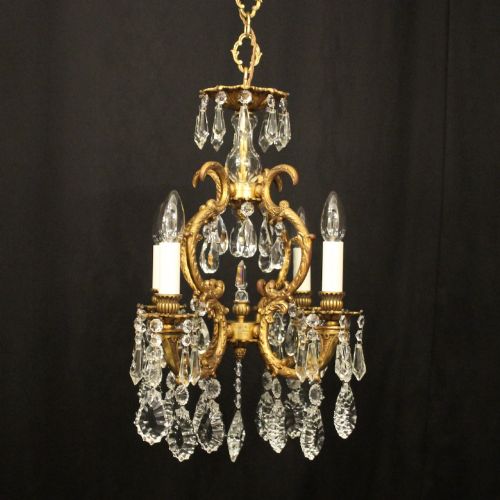
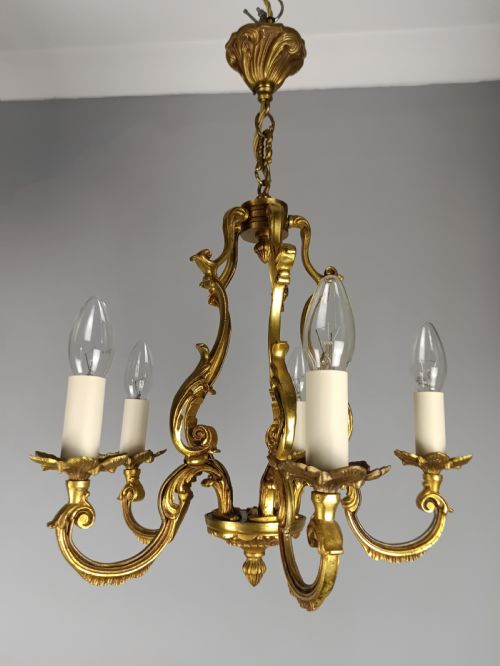
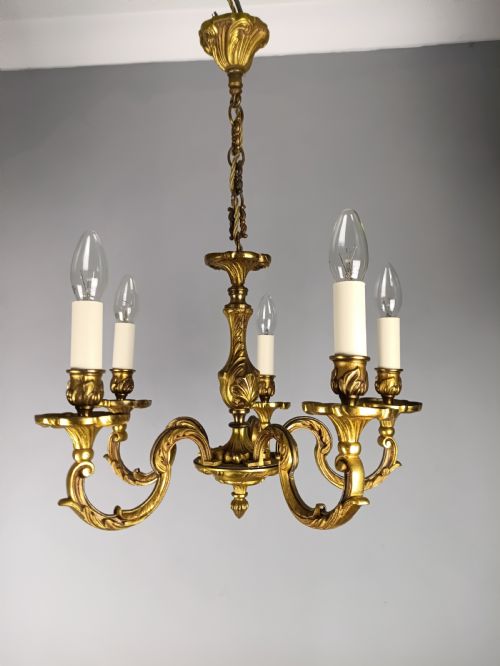
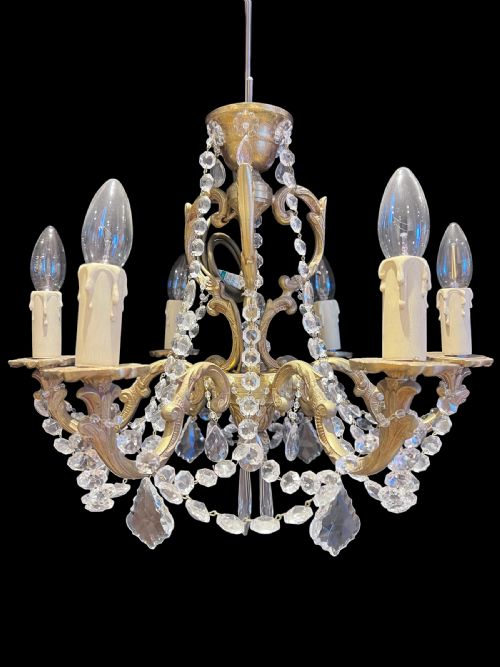
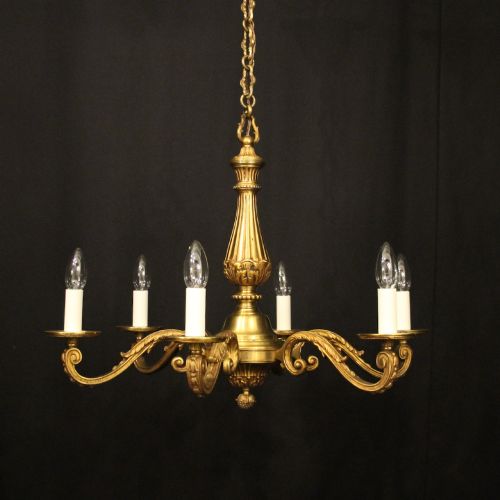
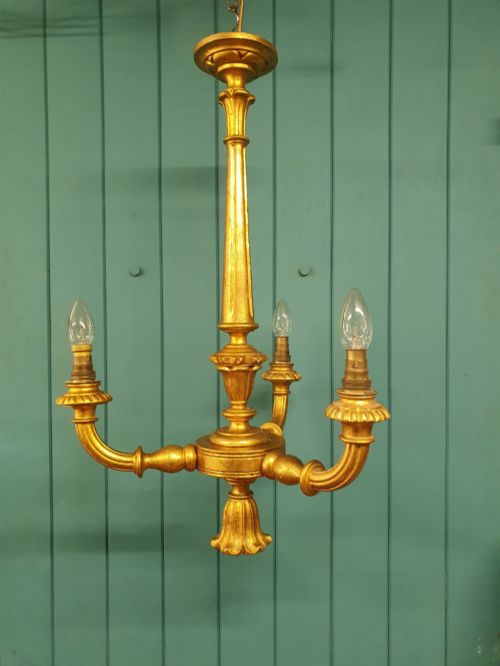
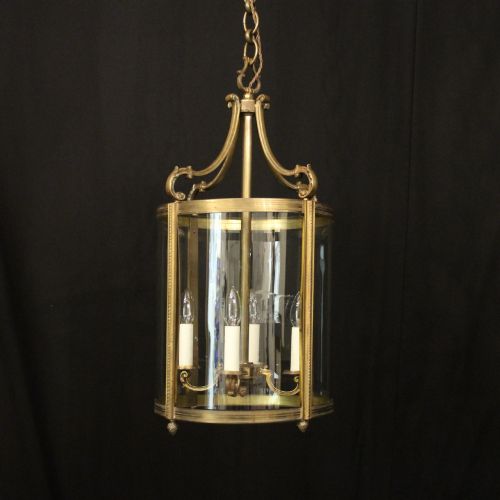
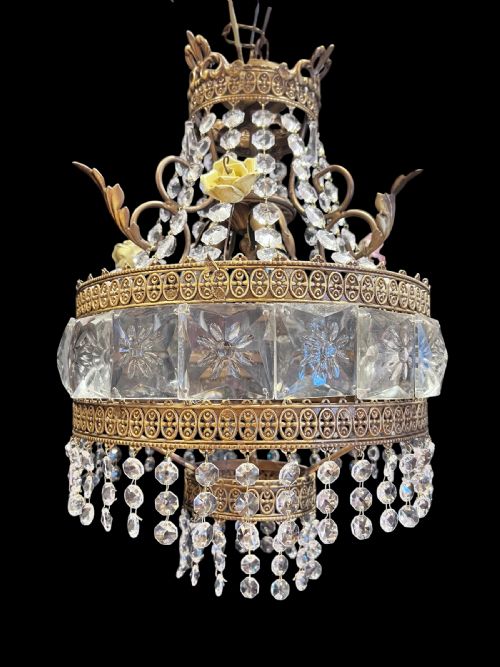
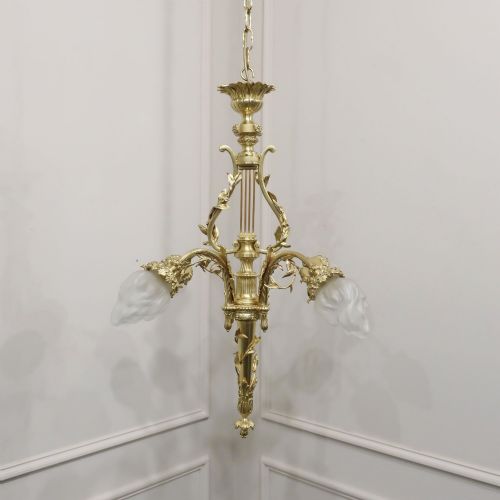
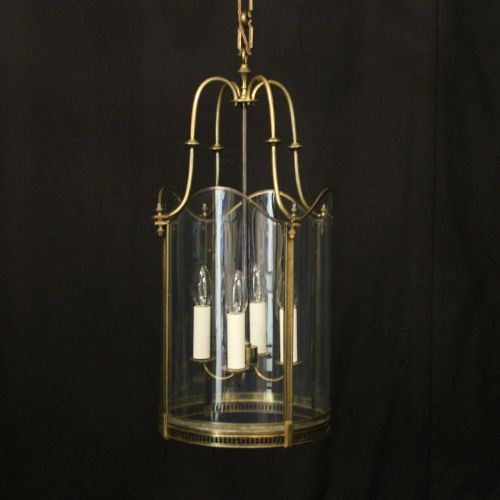
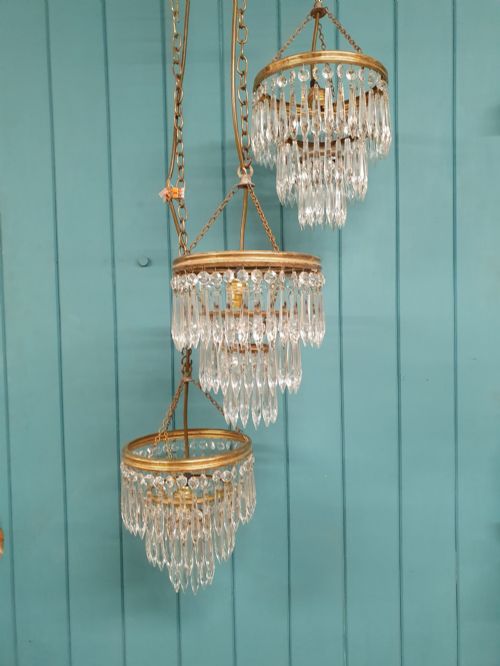
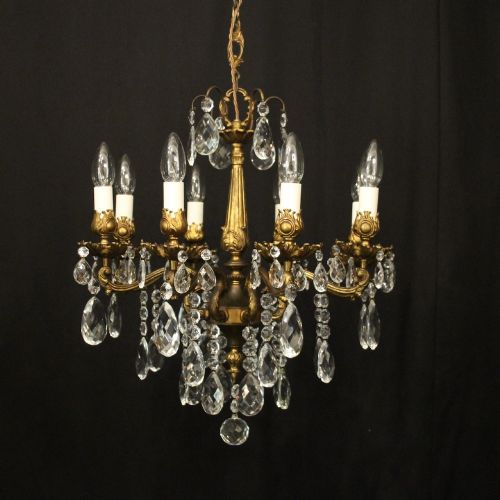
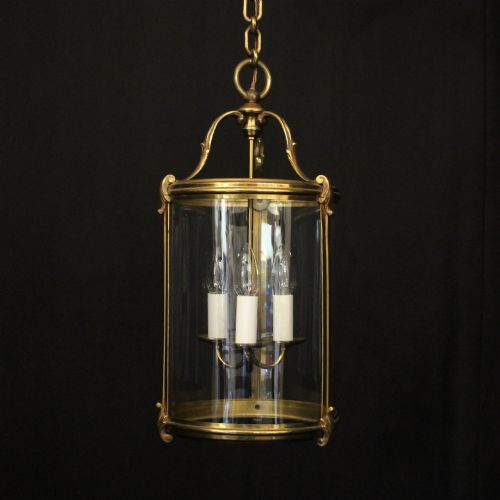
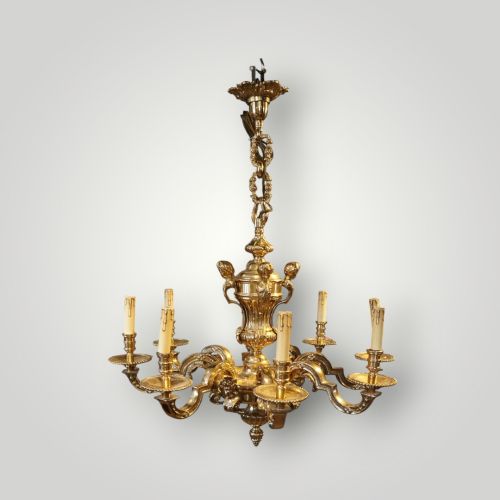
A french gilt ceiling light encompasses diverse overhead fixtures designed to illuminate interiors while adding decorative presence from the nineteenth and early twentieth centuries. Pieces range from multi-armed chandeliers and tent-and-waterfall crystal arrangements to enclosed hall lanterns and single-bulb pendants.
The selections on this page draw heavily from French Neoclassical, Empire, Rococo, and Louis XVI styles, alongside Edwardian interpretations and Italian Florentine variants. Buyers encounter elaborate gilt bronze birdcage frames, wheat sheaf designs, and convex glass lanterns suited for hallways, living spaces, and grand reception rooms.
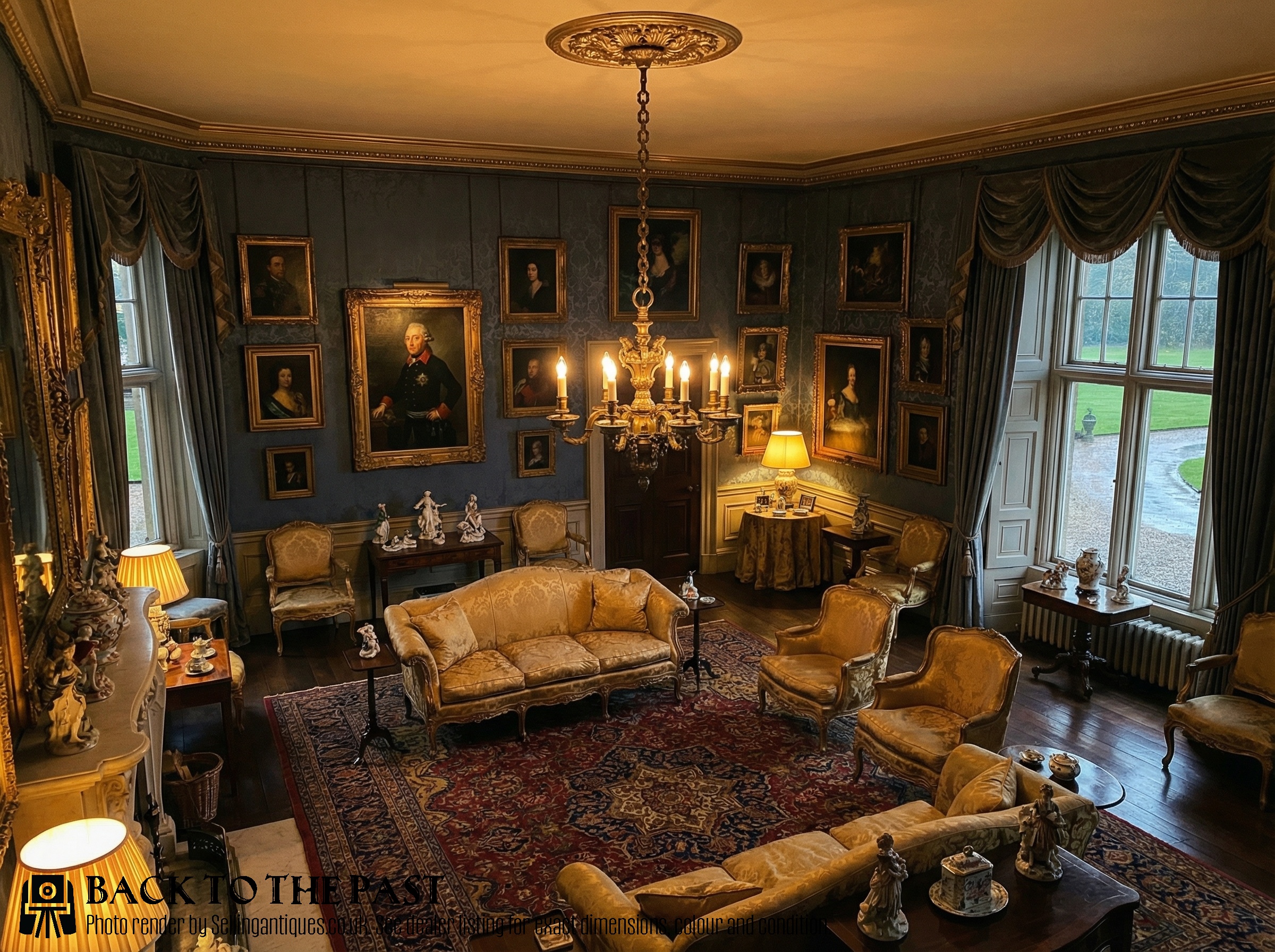
Materials and Construction
Maker workshops utilised cast gilt bronze, gilt brass, and gilt metal as foundational armatures, often applying layers of gold leaf or gilding over brass and spelter. These metallic structures provide the structural strength required to support branching arms and heavy hanging ornaments.
Cut glass, crystal prisms, and moulded glass bowls complement the metallic framework to refract light effectively across the room. Elements like porcelain flowers, etched glass panels, and carved giltwood further enrich the surfaces of select chandeliers and lanterns.
French Gilt Ceiling Light Retail Price Guide 2026
Typical asking prices for french gilt ceiling light among the pieces listed under this phrase on Sellingantiques today, from the lower quarter to the upper quarter. They describe what is for sale here now, not the wider market.
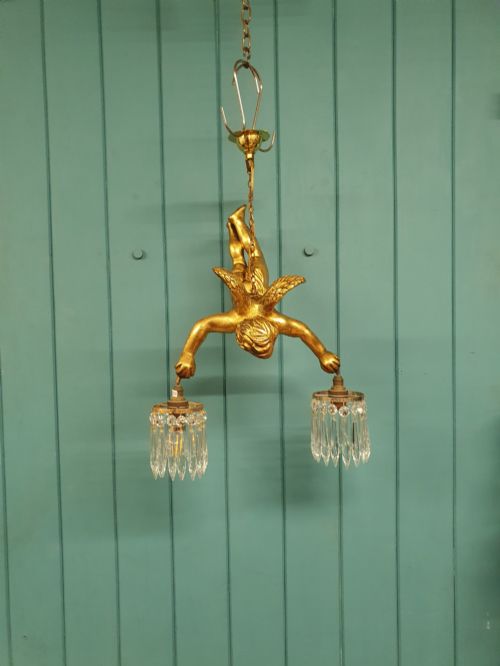
Several chandeliers proudly feature flying cherubs and winged cupids keeping watch from the ceiling.
Markers of Superior Quality
Quality in these fixtures is determined by the crispness of the cast bronze detailing, the depth of the gilding, and the integrity of the crystal elements. Finer examples display meticulously chased acanthus leaves, sculptural cherubs, and balanced proportions that maintain visual harmony from every angle.
The grade of the glass components, such as heavy cut crystal spikes, coffin prisms, and properly bevelled convex lantern panes, separates standard production from exceptional pieces. Original matching shades, intact crystal drops, and substantial gauge metalwork denote superior craftsmanship.
The French Gilt Ceiling Light Glossary
- Gilt bronze
- A metal object cast in bronze and treated with a layer of gold leaf or a gold amalgam, frequently termed ormolu in antique contexts. This finish offers a durable and warm metallic sheen.
- Tent and waterfall
- A chandelier configuration where strings of small crystals form an upper tent shape above a wider cascading tier of glass drops. It creates a dense, light-reflecting curtain.
- Hall lantern
- An enclosed hanging light fixture, often glazed with convex or flat glass panels within a metal frame. These were traditionally designed to illuminate entrance halls and corridors.
- Spike chandelier
- A fixture featuring vertical glass spikes or crystal spears arranged around the body or beneath the lights. They add distinct linear texture to the sparkle of the piece.
- Wheatsheaf
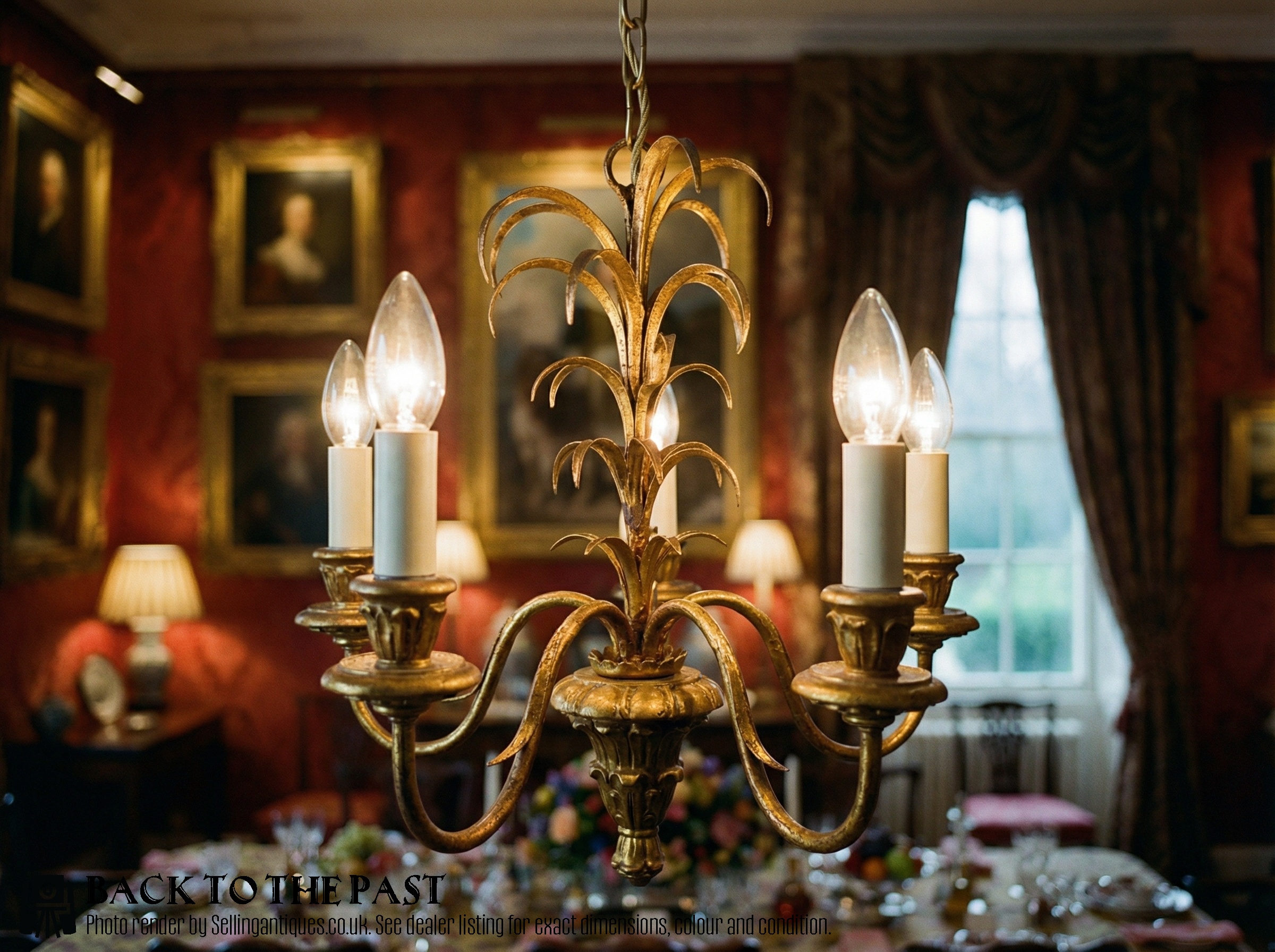
- A decorative motif modelled after bound stalks of wheat, commonly utilised in the central stem or arms of nineteenth-century fixtures. It represents agrarian abundance and classical symmetry.
French Gilt Ceiling Light: Frequently Asked Questions
How do I choose the right size fixture?
Consider the proportions of your room and the ceiling height before selecting a multi-arm chandelier or a hanging lantern. Larger spaces accommodate multi-tiered or wide branching models, whilst smaller hallways benefit from compact convex lanterns.
Ensure there is adequate clearance beneath the lowest point of the hanging fixture for safe passage. Ceiling height dictates whether a flush mount, a short drop pendant, or an extended chain chandelier works best.
Can antique wiring be used safely today?
Many period fixtures retain older electrical components or require rewiring to meet modern safety standards. Professional rewiring ensures the internal circuits handle current safety loads without altering the exterior historic appearance.
Consult a qualified electrician to inspect the sockets, internal channels, and grounding of any vintage lighting purchase prior to installation.
How do I distinguish between Empire and Louis XVI styles?
Empire style fixtures draw inspiration from ancient Roman and Greek motifs, often displaying military trophies, winged figures, heavy laurel wreaths, and monumental symmetry. They emerged during the early nineteenth century with a robust, authoritative presence.
Louis XVI style leans towards lighter neoclassical refinement, featuring straight tapered lines, ribbons, urns, and delicate floral garlands. Gilt bronze work in this category prioritises balanced geometric grace over heavy pomp.