




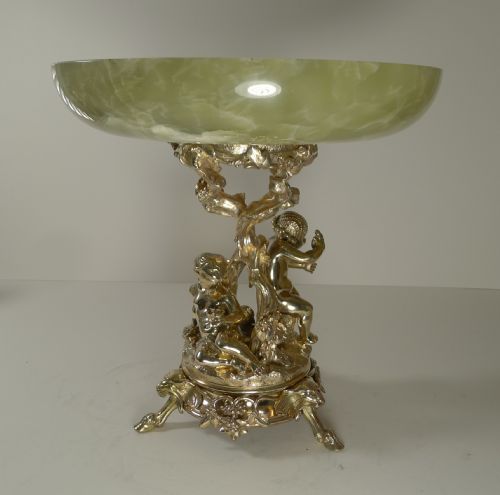

French Fruit Table
These French fruit table pieces are decorative centrepieces and serving dishes designed to hold fruit or anchor a dining surface with metallic presence.
French Fruit Table
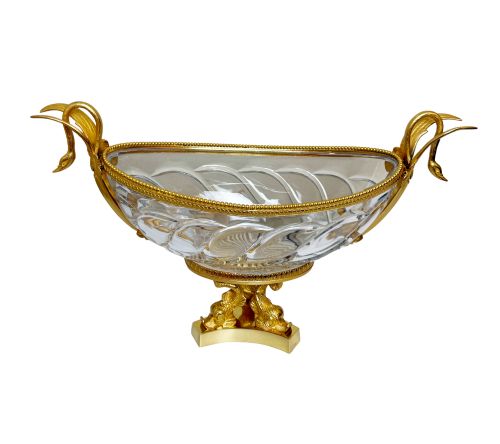
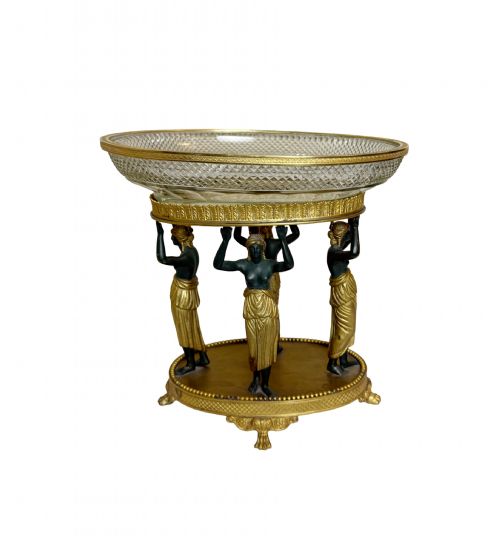
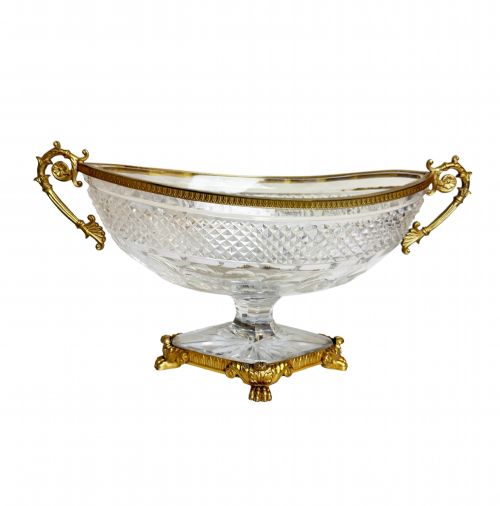
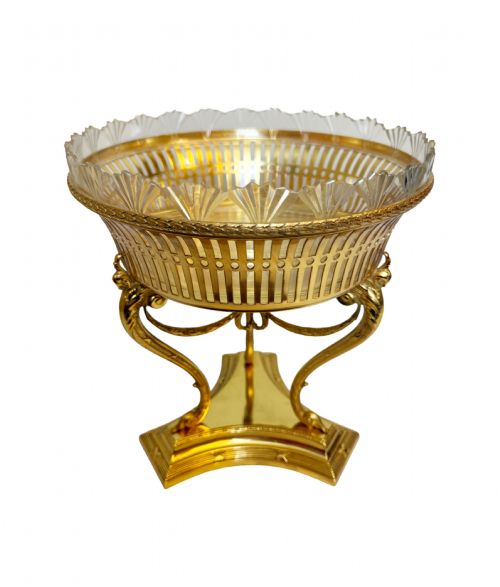
A French fruit table item typically takes the form of a centrepiece, bowl, tazza, or comport intended for display or service upon a dining table. The selection spans the nineteenth century through to the art deco period of the nineteen-thirties, incorporating styles such as empire, rococo revival, and neoclassical.
The objects most frequently met on this page include bronze, ormolu, and silver-plated vessels fitted with crystal inserts, glass bowls, or porcelain plaques. These pieces range from grand nineteenth-century gilt bronze works to modernist chrome comports and silver-plated bread baskets.
Originating predominantly from French workshops and makers, these table pieces combine functional service with elaborate sculptural metalwork. They reflect changing interior aesthetics from opulent nineteenth-century dining rooms to cleaner art deco lines.
Materials and construction methods
The construction of these pieces relies heavily upon cast metals, including bronze, ormolu, patinated bronze, and silvered or silver-plated brass and chrome. Artisans shaped these structural mounts through casting and chasing, often applying mercury gilt or silver plating to achieve finished metallic surfaces.
Glass and ceramic elements were integrated directly into the metal frames, utilising cut crystal, moulded glass inserts, Limoges enamel plaques, and porcelain bodies such as Sevres style or Samson porcelain. Detail work often included hand-painted enamel decorations, gold highlights, and applied sculptural motifs like cherubs and winged figures.
French Fruit Table Retail Price Guide 2026
Typical asking prices for french fruit table among the pieces listed under this phrase on Sellingantiques today, from the lower quarter to the upper quarter. They describe what is for sale here now, not the wider market.
The object forms recorded across the listings comprise centrepieces, decorative bowls, comports, serving dishes, coffee tables, and bread baskets.
Distinctions in quality
The distinction between tiers of quality rests upon the crispness of the metal casting and the depth of the chasing on the bronze or ormolu mounts. Finer examples display sharp, well-defined sculptural details in figures and foliate scrolls, whereas lesser items show softer contours and simpler finishing.
Quality also depends upon the integration between the metal frame and its glass or porcelain insert, with superior items featuring hand-cut crystal, signed porcelain plaques, or maker attributions. The choice of primary materials, from heavy gilt bronze to standard silver plate, dictates the structural substance of the piece.
Christofle Paris·Brille Paris·St Louis glassworks·Lerolle Fres·Samson Porcelain·Limoges Enamel
The French Fruit Table Glossary
- Ormolu
- Gilded bronze, produced by applying a mixture of gold and mercury to a bronze base and firing it. This technique was widely used in French decorative arts during the eighteenth and nineteenth centuries.
- Tazza
- A shallow bowl or cup mounted on a stem and foot, used for serving fruit or sweetmeats at a table. These pieces often feature decorative handles or cast metal borders.
- Comport
- A standing dish or bowl used for presenting fruit, nuts, or confectioneries on a dining table. They frequently appear in glass, porcelain, or silver-plated metal.
- Grand Tour
- A cultural journey undertaken by wealthy young Europeans through France and Italy, leading to the acquisition of classical antiquities and souvenirs. Items from this tradition often incorporate bronze and marble elements.
- Patinated bronze
- Bronze that has been chemically treated or allowed to oxidise to produce a specific surface colour and tone. This finish highlights the sculptural contours of figures and animals.
French Fruit Table: Frequently Asked Questions
What is a French fruit table centrepiece?
A French fruit table centrepiece is a decorative vessel, such as a bowl, tazza, or comport, designed to hold fruit or act as a focal point in the middle of a dining table.
These items combine metal mounts in bronze or ormolu with bowls made of cut crystal, glass, or porcelain, reflecting various nineteenth and twentieth-century design periods.
How were these bowls and comports used?
They were utilised in dining rooms for serving fruit, bread, or sweetmeats during formal meals, or simply left on display as decorative interior objects.
Their substantial construction in materials like silver plate, bronze, and crystal allowed them to function both as practical tableware and as artistic centrepieces.
How do I identify the period of a piece?
Period identification relies on observing the stylistic characteristics, such as the heavy classical motifs of nineteenth-century empire pieces or the geometric lines of nineteen-thirty art deco.
Material choices and manufacturing techniques, such as silver plating methods or the type of crystal cutting, also help narrow down the date of manufacture.
How do I care for antique bronze and crystal?
Antique bronze and ormolu mounts should be dusted gently with a soft, dry cloth without using abrasive metal cleaners that can strip the original surface finish.
Crystal and glass inserts can be washed separately in lukewarm water with mild soap, ensuring they are dried thoroughly before being placed back into their metal frames.