

French Floral Marquetry
French floral marquetry brings together intricate timber mosaics and curving rococo lines, offering functional elegance for any interior.
French Floral Marquetry
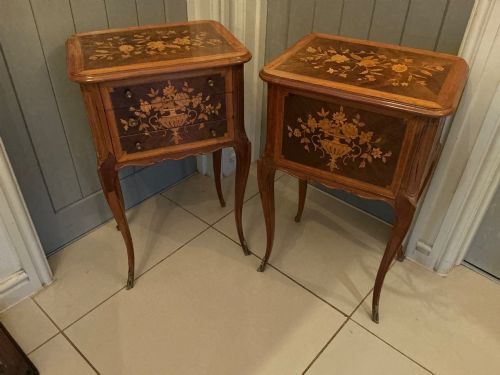
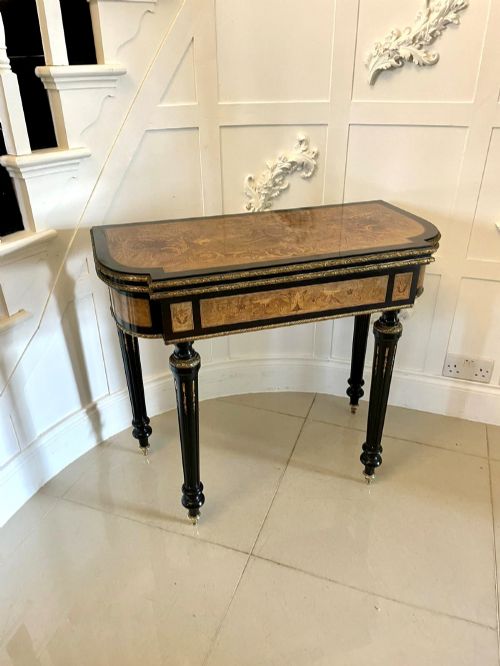
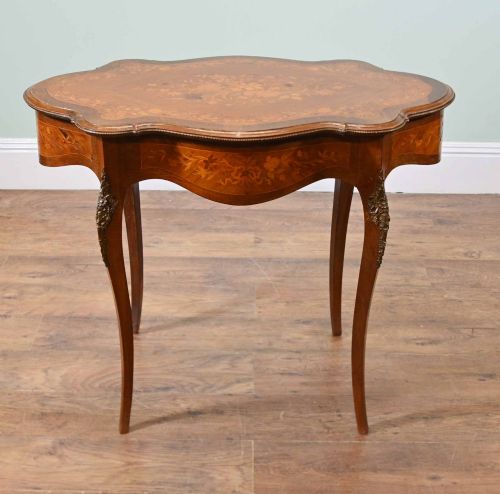
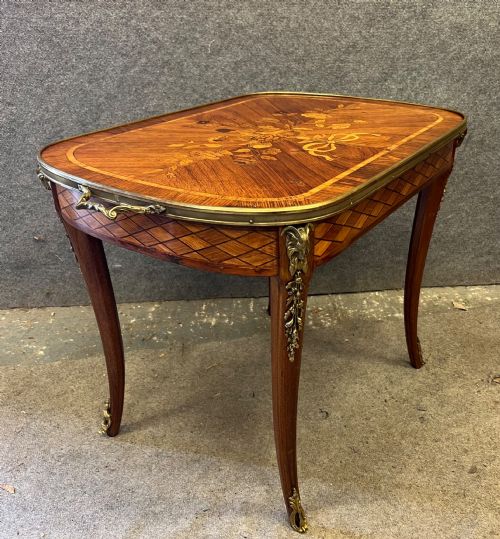
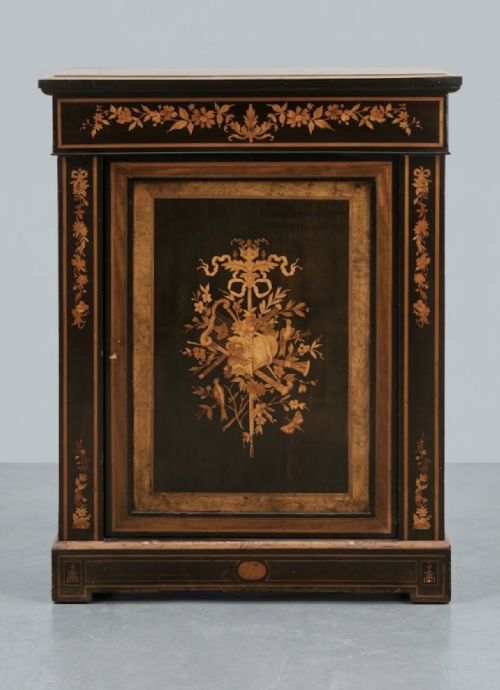
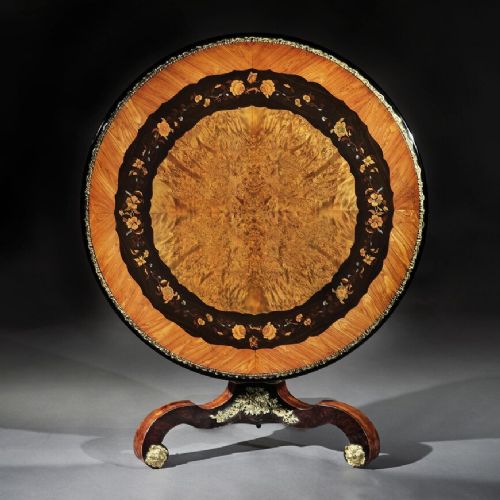
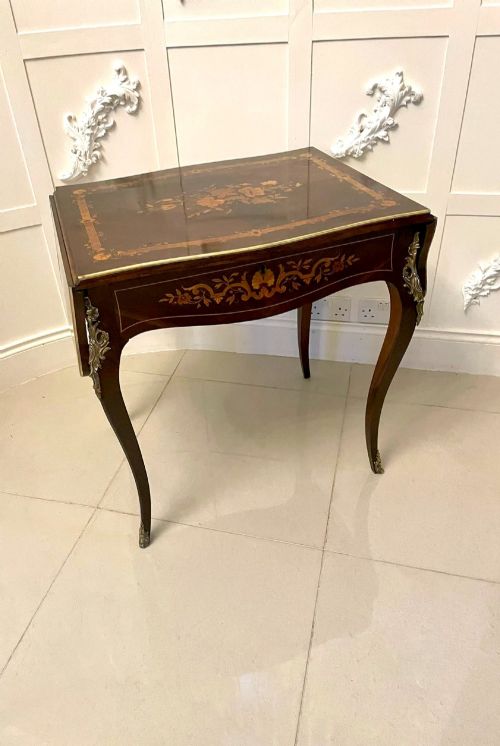
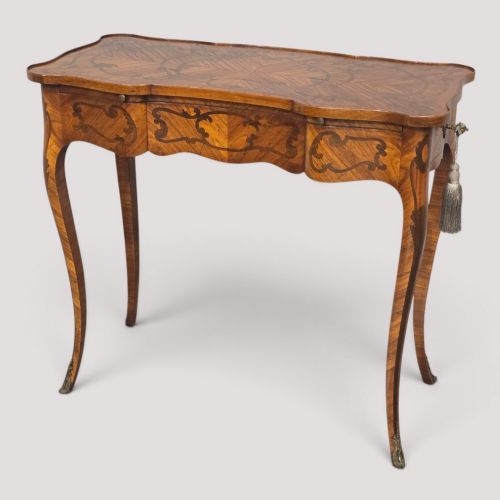
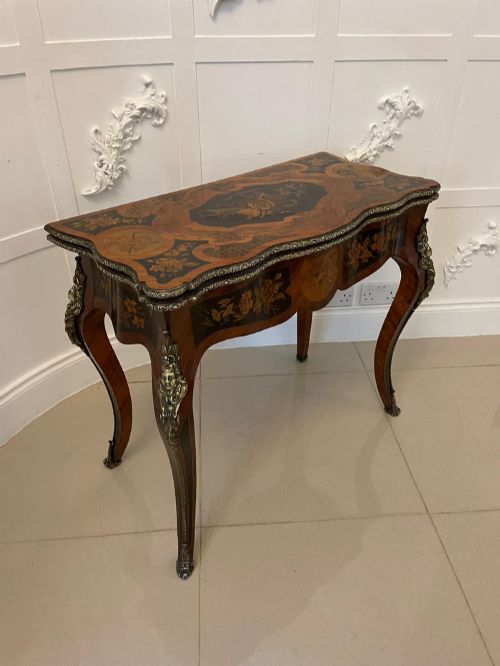
French floral marquetry comprises tables, cabinets, and writing desks produced across the nineteenth and early twentieth centuries. These pieces display elaborate wood-inlaid botanical motifs across surfaces designed for display or daily use in reception rooms and bedchambers.
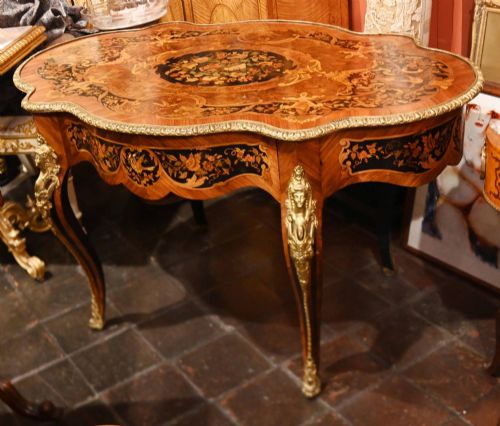
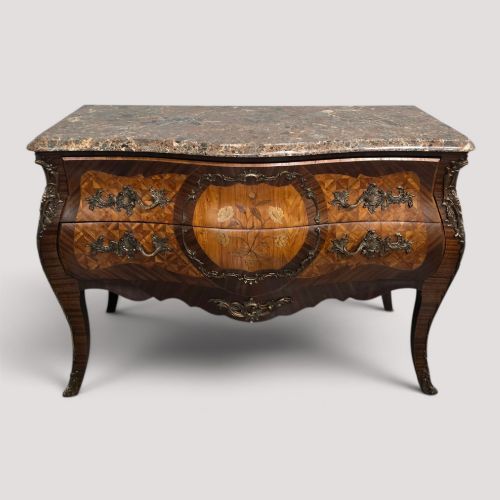
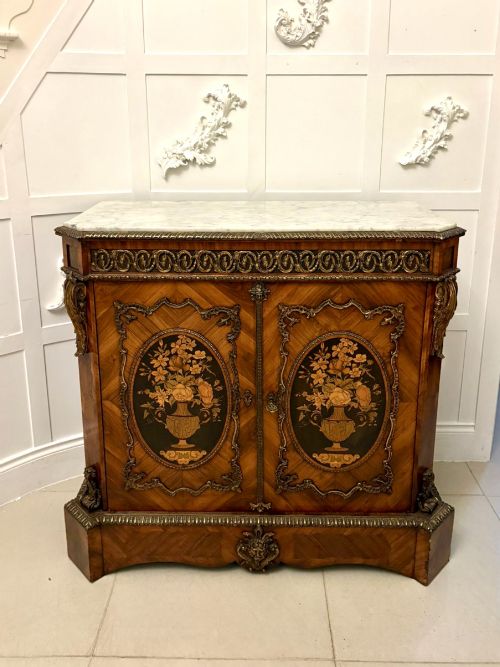
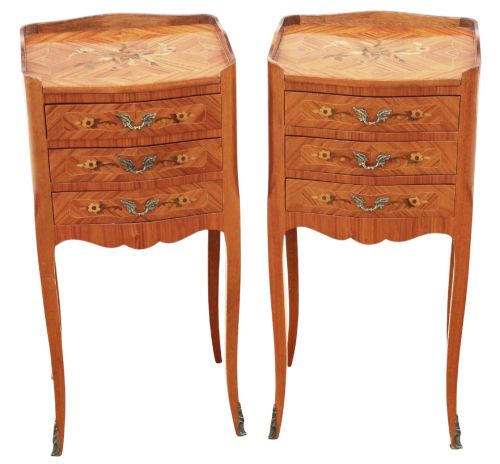
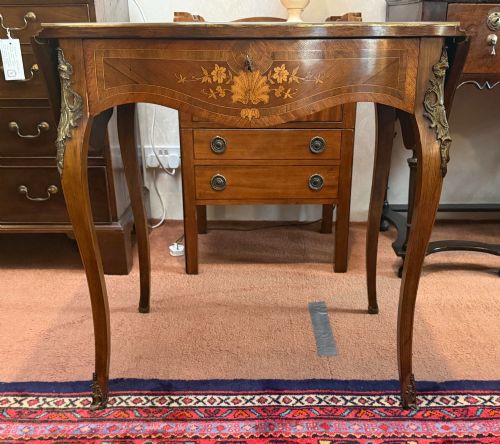
The prevailing examples on this page follow the Louis XV style and its nineteenth-century revivals, characterised by serpentine fronts, cabriole legs, and mounted gilt bronze details. Side tables, bedside cabinets, and centre tables dominate the selection, bringing continental refinement into domestic spaces.
The timeline stretches from mid-nineteenth-century Victorian interpretations through to Edwardian and later twentieth-century iterations. Walnut, kingwood, and rosewood serve as the primary foundational timbers for these decorative surfaces.
Materials and Technique
Craftsmen built these pieces using dense cabinet woods such as walnut, kingwood, rosewood, and satinwood, applying finely sliced veneers to carcases in precise geometric or flowing botanical arrangements. Contrasting timber tones delineate petals, leaves, and stems without relying on artificial pigments.
Ormolu mounts, cast in bronze and fire-gilt, frame corners, aprons, and legs to accentuate the organic curves of the woodwork. Marble slabs, frequently fitted to the tops of commodes and side cabinets, provide a durable and cool contrasting surface to the warm timber grains below.
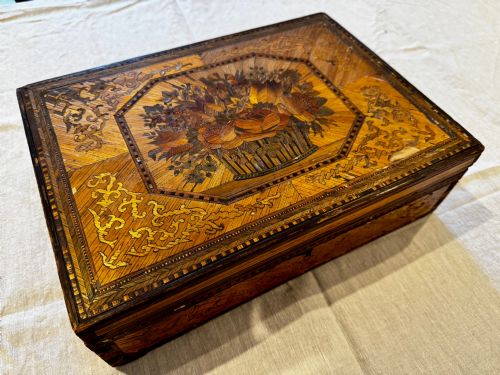
Prisoners of war once carved delicate straw-work boxes while interned, proving that patience and dried stalks travel further than kingwood.
Judging Quality
Quality rests upon the precision of the veneer cutting and the botanical realism achieved by the marquetry cutter. Superior examples demonstrate tight joints between contrasting woods where individual leaves and petals are shaded by scorching edges in hot sand.
The weight and crispness of the ormolu mounts indicate the standard of production, as do the secondary timbers used inside drawers and carcases. Heavy, finely chased bronze mounts and robust walnut or oak framing distinguish the finer workshop output from simpler commercial pieces.
Edward Holmes Baldock·Blake
The French Floral Marquetry Glossary
- Marquetry
- A decorative technique applying fine pieces of veneer to a structural carcase to form pictorial or floral designs. It differs from inlay by assembling the entire pattern on a paper backing before gluing it down.
- Ormolu
- Gilt bronze mounts applied to furniture edges and corners for decorative effect. The technique involves coating bronze in a gold and mercury amalgam before heating.
- Kingwood
- A dense, richly figured Brazilian timber utilised heavily in eighteenth and nineteenth-century cabinetmaking. Its dark violet-brown grain with lighter stripes makes it ideal for contrasting floral details.
- Bureau Plat
- A freestanding writing table fitted with drawers across the frieze. These desks typically display finished marquetry on all sides so they can sit in the middle of a room.
- Étagère
- An open set of multiple tiers supported on slender legs or columns. These light display pieces often feature floral marquetry tops and Ormolu galleries.
French Floral Marquetry: Frequently Asked Questions
How do I clean french floral marquetry?
Dust surfaces regularly with a soft, dry cloth to prevent particulate accumulation in the veneer joints. Apply traditional beeswax sparingly to nourish the timber and maintain a soft sheen.
Avoid liquid polishes containing silicones or harsh detergents, which can penetrate hairline gaps in the veneer and soften historic adhesives.
Can I place a centre table away from the wall?
These tables are constructed to be freestanding objects, displaying complete floral marquetry across all four elevations. Their finished backs and sides make them suitable for positioning in the middle of a room.
Ensure direct sunlight does not strike the polished surfaces for extended periods to prevent the rosewood and kingwood veneers from fading.
What is the difference between marquetry and inlay?
Marquetry involves assembling a complete picture or pattern from various veneer sheets before applying the entire mosaic to the furniture carcase. Inlay requires carving a recess directly into solid wood and fitting a contrasting piece of timber into that specific cavity.
Floral marquetry compositions utilise the veneer assembly method to achieve shaded botanical details across broad tabletops and cabinet doors.
How should I care for marble-topped cabinets?
Wipe marble surfaces with a damp cloth and mild neutral soap to remove daily dust and prevent staining. Avoid acidic liquids like citrus juice or vinegar, which etch polished stone instantly.
Place protective felt pads under lamps or decorative objects to guard the marble against scratching during daily use.