





French Floral Marquetry Drawers
French floral marquetry drawers bring intricate timber mosaic and curved Louis-era elegance into a room.
French Floral Marquetry Drawers
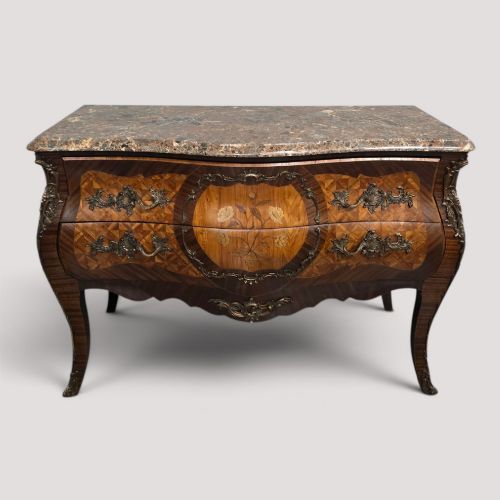
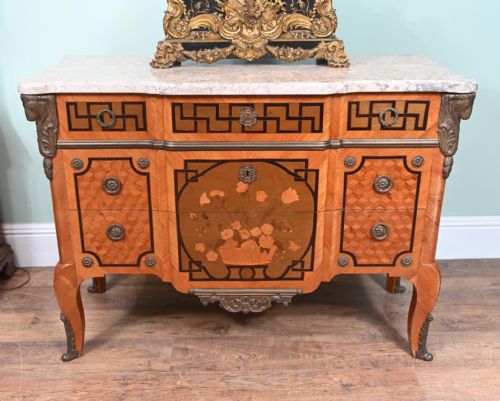
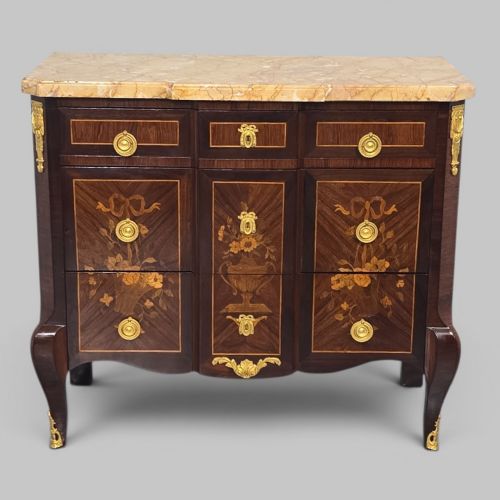
When you search for french floral marquetry drawers, you encounter a selection of commodes, bedside chests, and occasional tables spanning the eighteenth to the twentieth century. These pieces follow established continental forms, notably the Louis XV revival and rococo styles, which favour serpentine fronts and exuberant floral veneers.
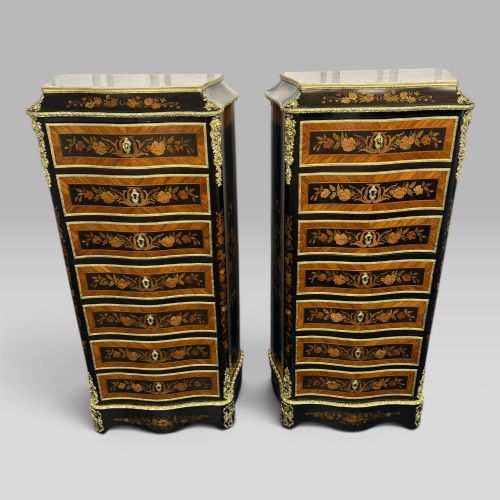
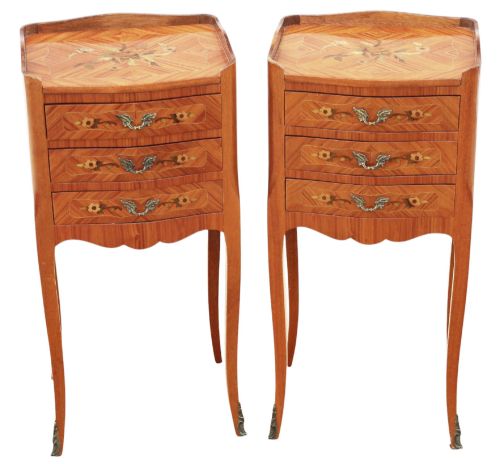
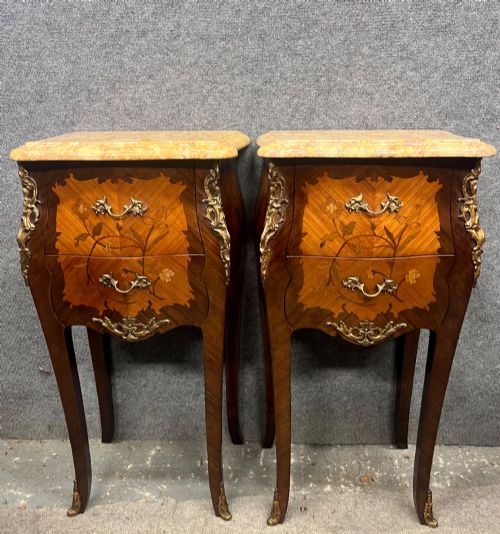
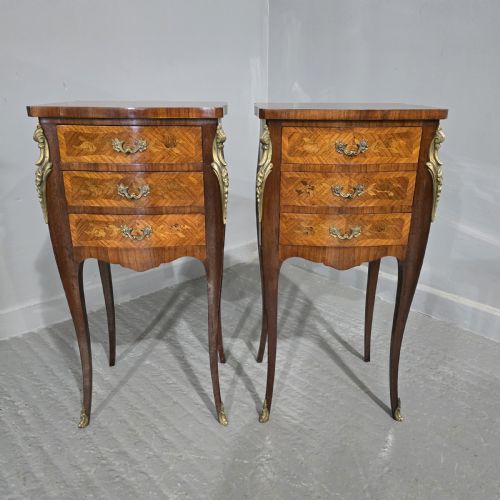
The version you are most likely to meet on this page is the nineteenth-century commode or the matching pair of twentieth-century bedside cabinets. These storage pieces combine practical drawer space with elaborate wood-inlaid floral motifs arranged across the top and sides.
How they were made
Cabinetmakers constructed these pieces using a solid carcase of walnut or mahogany, which they then surfaced with contrasting decorative veneers of kingwood, rosewood, and satinwood. The floral patterns were hand-cut from thin sheets of dyed and natural timbers before being assembled together and pressed into the wooden base.
The finished woodwork was frequently enhanced with cast ormolu and bronze mounts, applied along the corners, handles, and sabots to accent the curved lines. Many commodes were finished with shaped marble slabs fitted precisely to the top surface.
French Floral Marquetry Drawers Retail Price Guide 2026
Typical asking prices for french floral marquetry drawers among the pieces listed under this phrase on Sellingantiques today, from the lower quarter to the upper quarter. They describe what is for sale here now, not the wider market.
Object forms represented across the inventory include standard chests of drawers, bedside cabinets, and occasional centre tables.
What varies in quality
The distinction between tiers of quality rests upon the precision of the timber inlay and the crispness of the bronze or ormolu mounts. Finer examples display a seamless integration of diverse wood species, where grain direction and natural coloration create realistic floral shading without excessive reliance on ink staining.
Structural refinement also defines the better pieces, seen in the smooth operation of dovetailed drawers and the fluid shaping of the bombe or serpentine carcase. Heavy, well-cast metal mounts that fit flush to the wood indicate a higher standard of original workshop production.
The French Floral Marquetry Drawers Glossary
- Marquetry
- The art of applying pieces of veneer to a structure to form decorative patterns and pictorial designs. This technique utilises various tinted and textured woods to achieve floral and geometric imagery.
- Commode
- A low chest of drawers or cabinet developed in France during the seventeenth century. These pieces typically stand on cabriole legs and serve as both functional storage and decorative tables.
- Ormolu
- Gilded bronze used for decorative furniture mounts and hardware. The process involves applying a mercury-gold amalgam to cast bronze before heating.
- Bombe
- A swelling, convex furniture contour that curves outward in both height and width. This profile appears frequently on revival commodes and bedside cabinets.
- Semainier
- A tall, slender chest traditionally built with seven drawers, one for each day of the week. These pieces maximise vertical storage while maintaining a compact footprint.
French Floral Marquetry Drawers: Frequently Asked Questions
How do I clean the marble tops?
Wipe the marble surface gently with a soft cloth dampened in warm water and mild, pH-neutral soap. Avoid acidic cleaners, vinegar, or harsh detergents that can etch or dull the polished stone.
Dry the surface completely with a clean microfiber towel to prevent water spots and maintain the natural sheen of the marble.
Are these pieces suitable for modern bedrooms?
These chests and bedside tables adapt well to contemporary interiors by providing functional bedside or hallway storage alongside decorative character. Their mixed timber tones pair easily with various wood finishes and neutral wall colours.
Ensure you measure the floor space and clearance for drawer opening, as serpentine and bombe profiles project further than standard rectangular cabinets.
How do I care for the marquetry veneer?
Keep the wood surfaces away from direct sunlight and heat sources to prevent the natural veneers from drying out, fading, or lifting over time. Dust regularly with a dry, soft cloth rather than using silicone sprays.
Apply a microcrystalline wax occasionally to nourish the timber and protect the polished finish without building up a heavy residue.
What is the difference between Louis XV and Louis XVI styles?
Louis XV furniture is characterised by asymmetrical curves, serpentine fronts, and flowing rococo ornamentation with prominent cabriole legs. The overall aesthetic emphasises fluid, organic movement.
Louis XVI pieces introduce a return to classical symmetry, featuring straighter lines, geometric marquetry, fluted columns, and tapered legs.