

French Floral Inlay
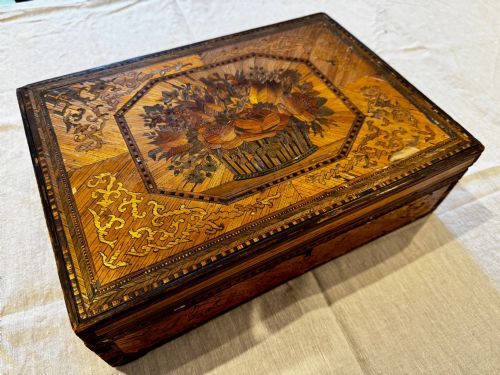
French floral inlay brings together intricate botanical marquetry and refined cabinetmaking, offering collectors elegant tables, desks and cabinets with distinct continental character.
French Floral Inlay
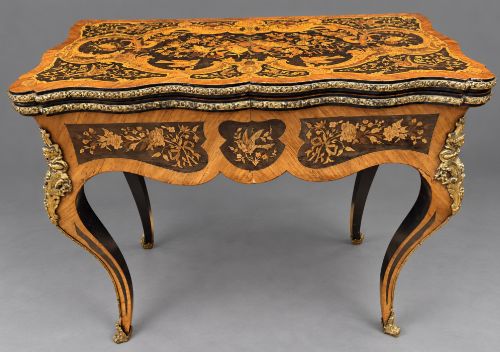
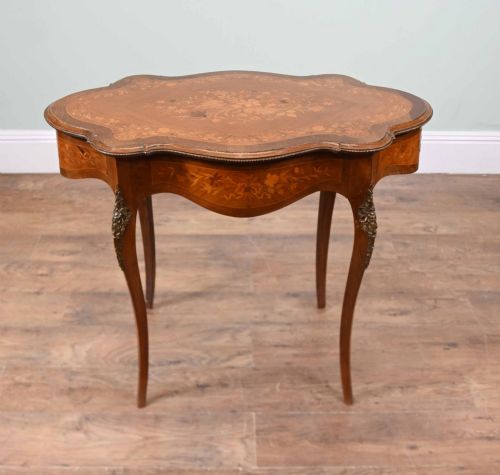
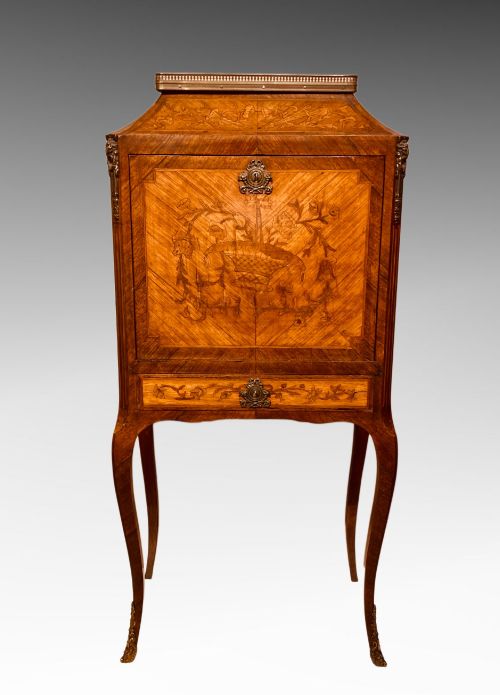
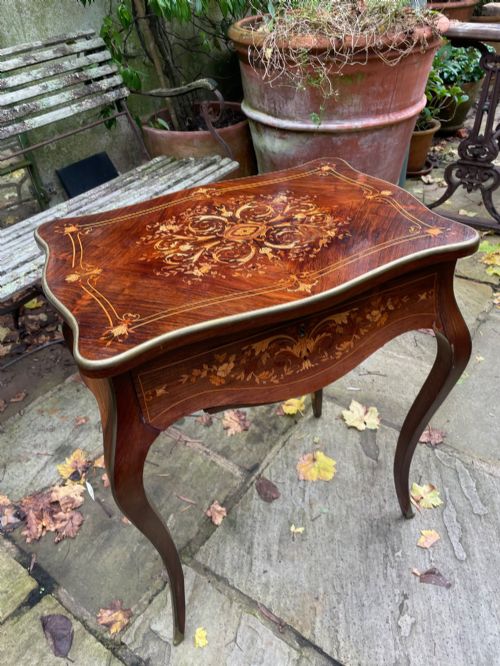
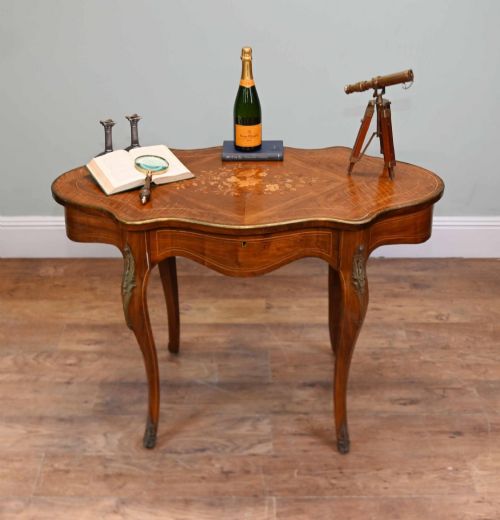
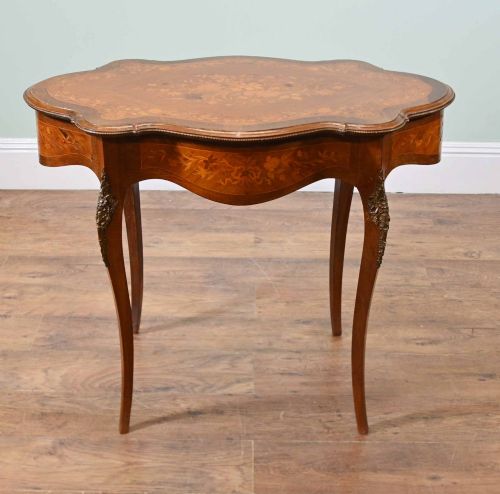
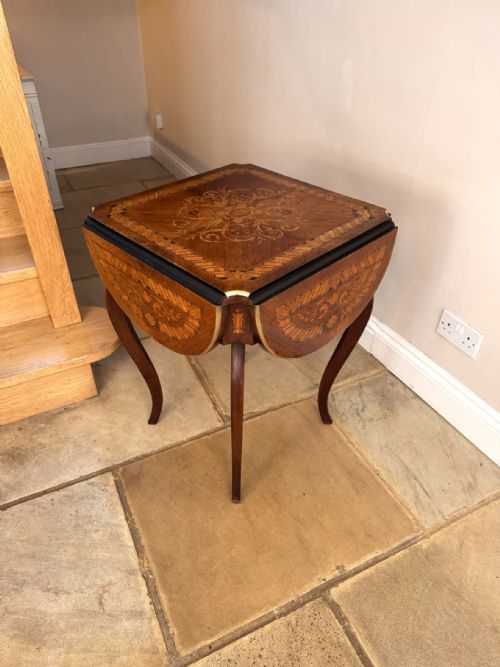
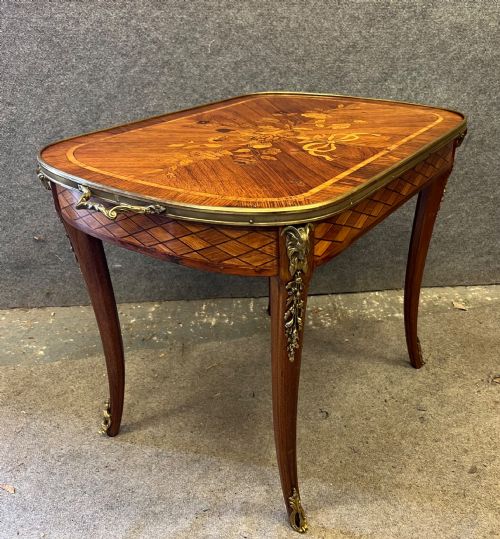
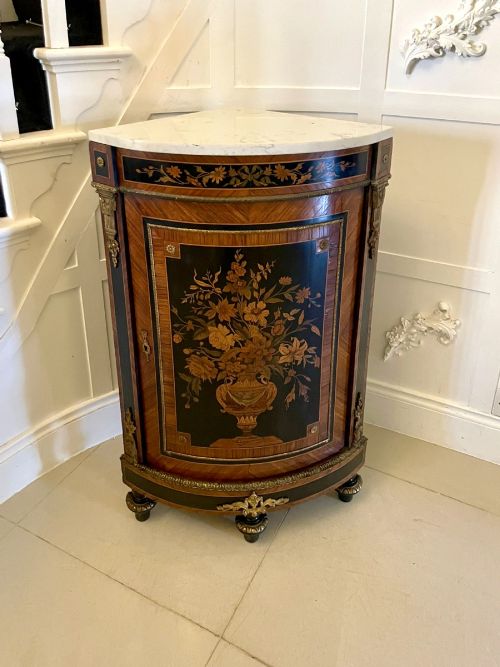
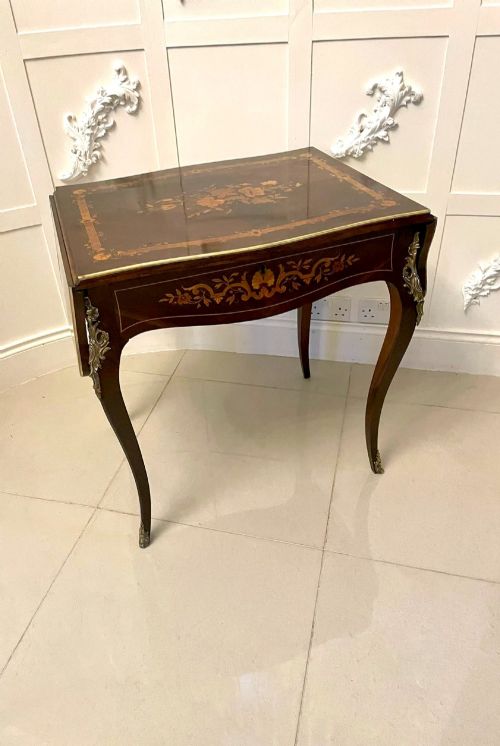
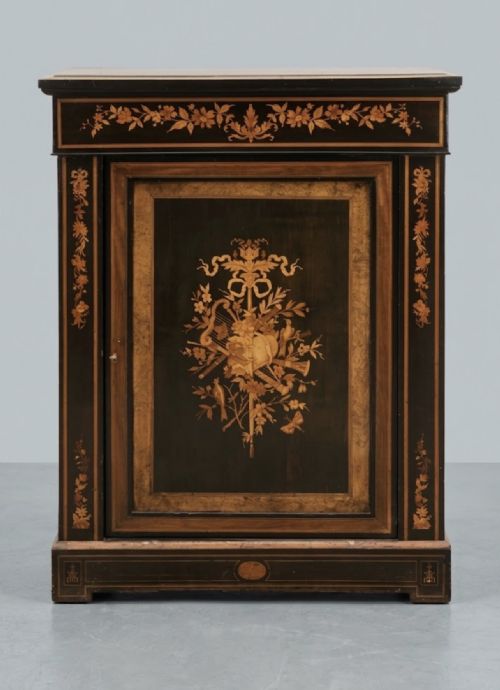
When you search for french floral inlay, you encounter an array of nineteenth and twentieth-century furnishings including centre tables, writing desks, commodes, and bedside cabinets. These forms follow established continental revival styles, most notably Louis XV and Napoleon III designs, produced across various decades of the 1800s and 1900s.
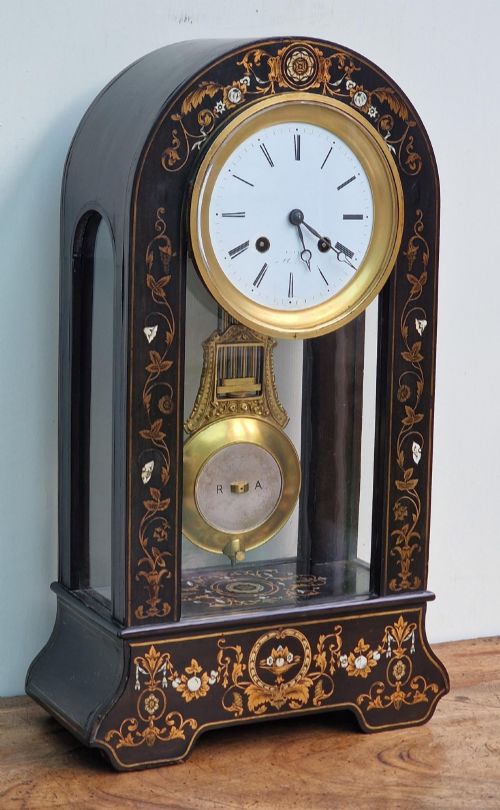
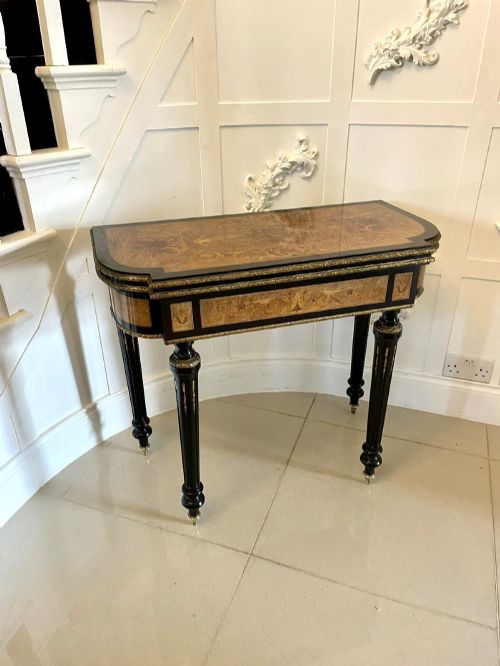
The pieces appearing on this page span several functional categories designed for domestic display and utility. You will find occasional tables, card tables, and larger side cabinets, alongside smaller items such as etageres and mantel clocks.
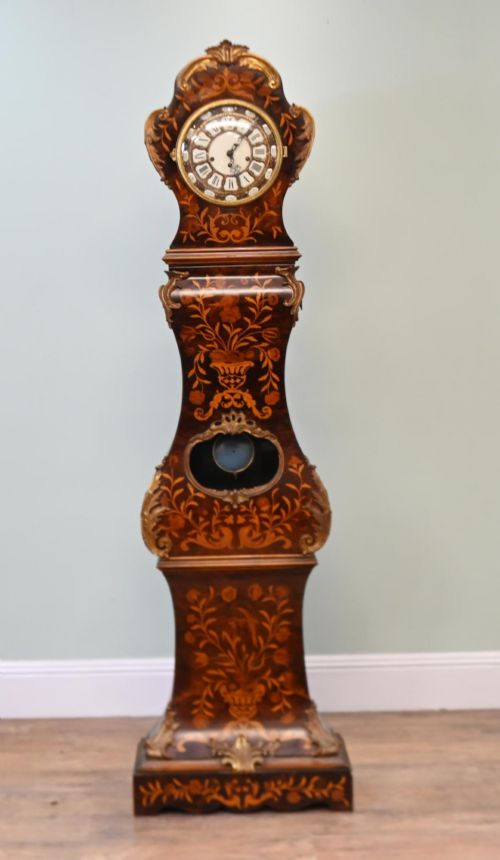
Originating largely from the nineteenth century into the early twentieth century, these items showcase diverse structural forms shaped by walnut, rosewood, kingwood, and ebonised wood. The floral ornamentation remains the unifying visual element across these diverse table and cabinet forms.
How they were made
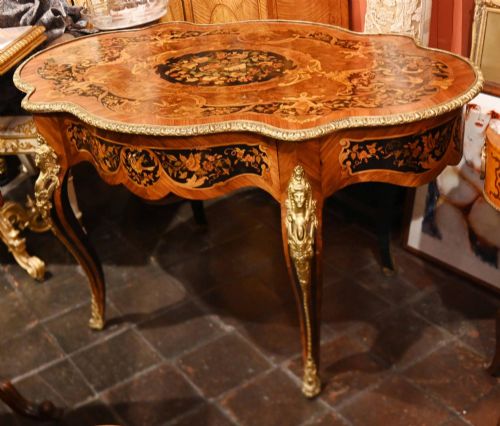
Cabinetmakers constructed the carcases using foundational timbers like walnut or mahogany, upon which they laid decorative veneers of kingwood, rosewood, and satinwood. Fine floral marquetry patterns were then assembled from contrasting wood types and hand-cut into the surface.
Metal mounts in ormolu and brass frequently accent the structural angles, framing the marquetry panels and protecting the edges of tables and commodes. Marble tops appear on several cabinet and commode pieces, fitted directly to the upper surfaces of the wooden carcase.
French Floral Inlay Retail Price Guide 2026
Typical asking prices for french floral inlay among the pieces listed under this phrase on Sellingantiques today, from the lower quarter to the upper quarter. They describe what is for sale here now, not the wider market.
Listings feature items spanning the nineteenth and twentieth centuries, utilising walnut, rosewood, kingwood, and marble across multiple furniture forms.
What varies in quality
The refinement of the marquetry cutting determines much of the visual standard, with superior examples displaying tight joints and subtle shading within the floral motifs. The selection of fancy timbers also dictates the grade, where richly figured kingwood and rosewood elevate the piece beyond standard walnut grounds.
Mounting hardware contributes significantly to the overall execution, separating standard production from exhibition pieces. Finely chased ormolu mounts that integrate smoothly with the veneer demonstrate superior workshop standards.
Edward Holmes Baldock·Edwards & Roberts
The French Floral Inlay Glossary
- Marquetry
- Decorative veneer work arranged in pictorial patterns using various coloured woods. It creates the floral designs seen across the tops of tables and cabinet doors.
- Ormolu
- Gilt bronze mounted onto furniture as decorative handles, feet, and edge trim. This material adds metallic contrast to the polished wood surfaces.
- Kingwood
- A dense, heavily figured exotic timber utilised for its rich grain patterns. Cabinetmakers prize it for framing central marquetry panels.
- Bonheur-du-Jour
- A small lady's writing desk featuring a tiered superstructure with shelves or drawers above the main writing surface. It typically displays intricate floral inlay across the writing flap.
French Floral Inlay: Frequently Asked Questions
What is french floral inlay?
French floral inlay refers to decorative marquetry techniques applied to nineteenth and twentieth-century furniture. Artisans cut different coloured wood veneers to form botanical motifs across tables and cabinets.
These pieces typically follow Louis XV and Napoleon III stylistic revivals. The resulting items combine utility with decorative veneered surfaces.
How do I care for these surfaces?
Maintain veneered surfaces by keeping them away from direct sunlight and steady heat sources. Applying traditional beeswax helps nourish the underlying woods.
Avoid excessive moisture when cleaning ormolu mounts and polished wooden panels. Gentle dusting preserves the delicate marquetry details over time.
Are these pieces functional today?
These items serve practical purposes in modern rooms just as they did originally. Centre tables, writing desks, and bedside cabinets adapt easily to contemporary domestic spaces.
Their sturdy timber construction allows for everyday use alongside their decorative presence. Proper placement ensures they remain useful household furnishings.
How can I date these items?
Dating relies on examining construction methods, secondary timbers, and prevailing style revivals. Nineteenth-century pieces often exhibit hand-cut marquetry and traditional joinery techniques.
Later twentieth-century examples show different workshop practices while maintaining classic silhouettes. Comparing material combinations helps establish the likely decade of production.