


French Floral Desk
When you search for a french floral desk, you are looking at intricate marquetry writing tables and bureaus rooted in nineteenth-century styles.
French Floral Desk
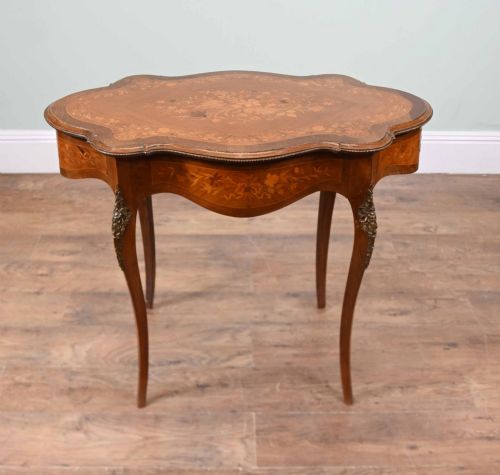
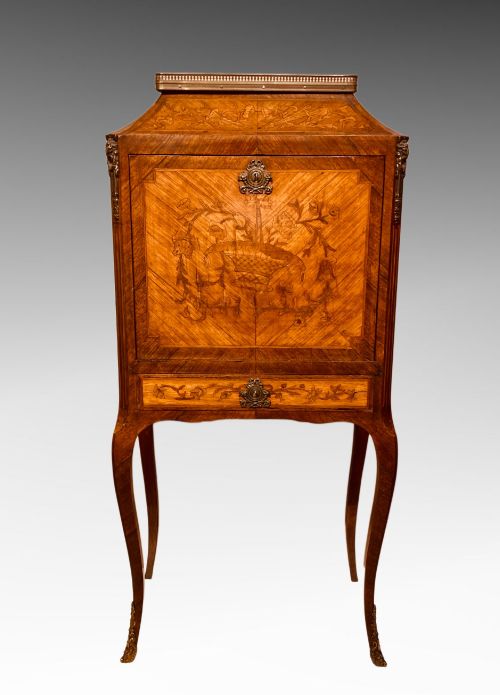
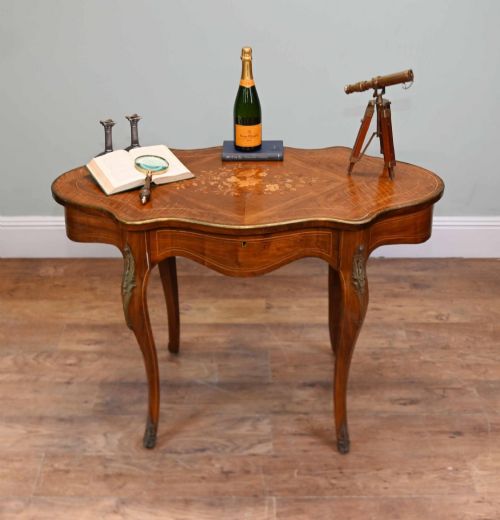
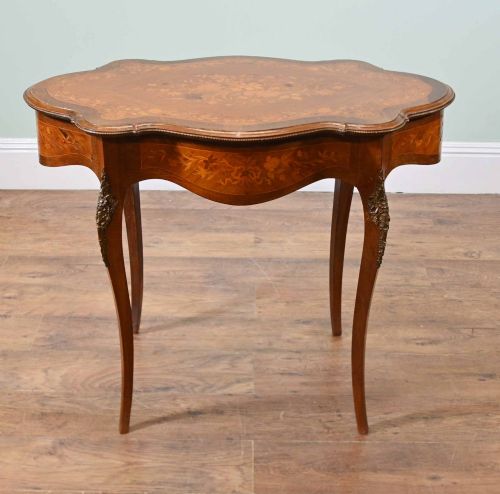
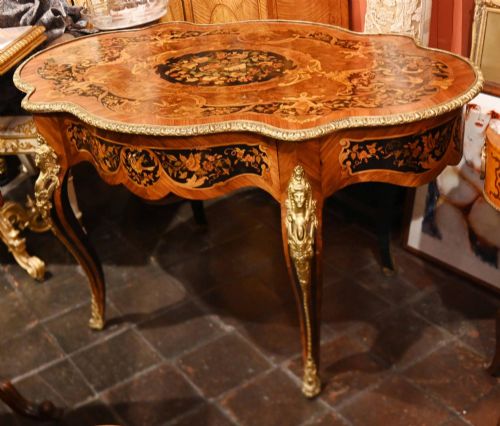
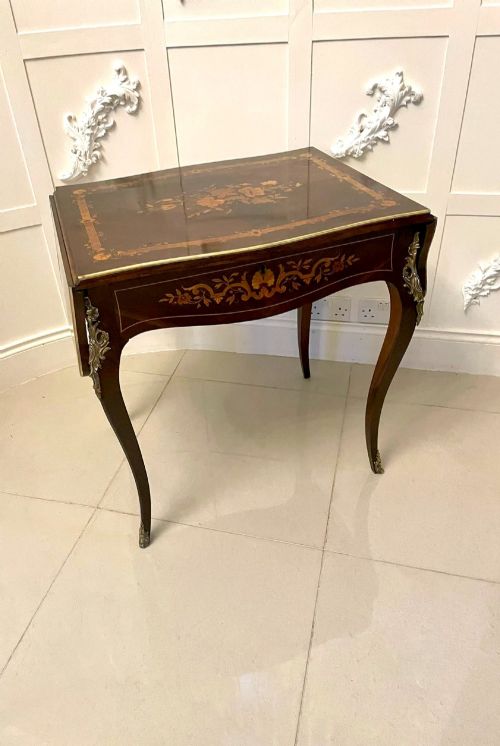
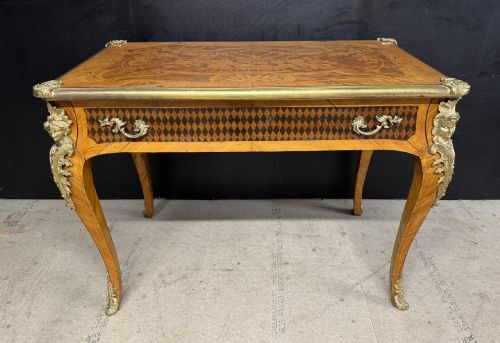
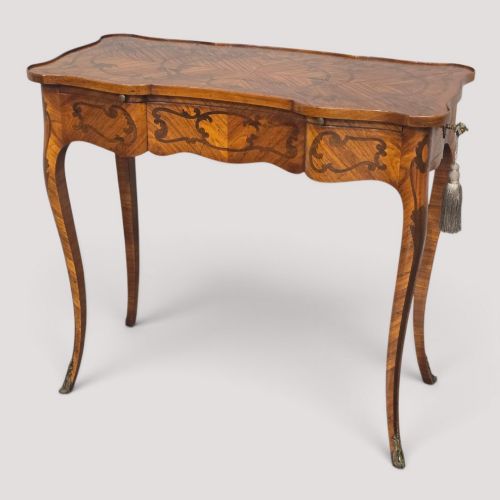
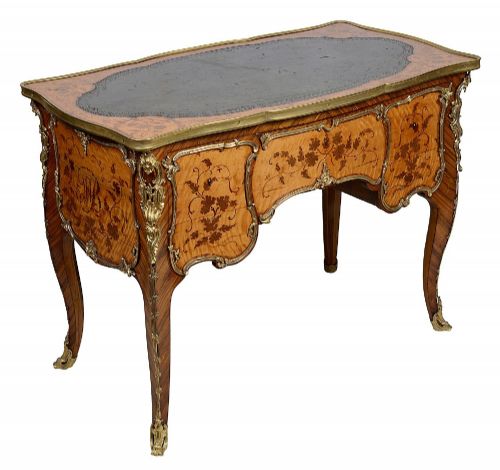
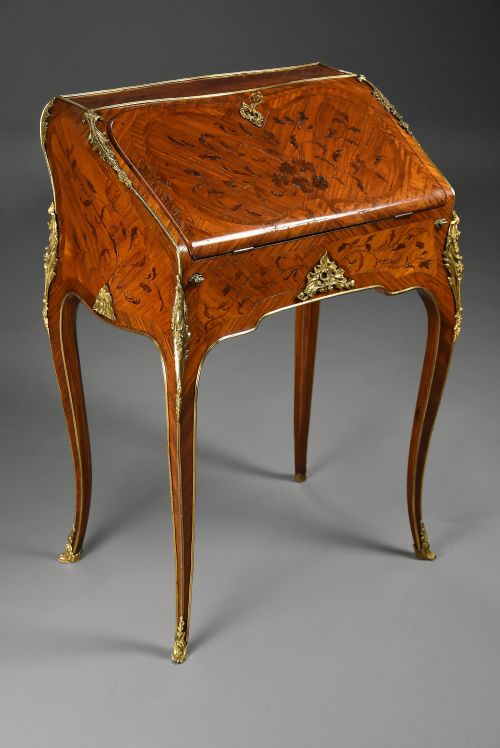
A french floral desk typically appears in forms such as the bureau plat, writing table, or bureau de dame, often drawing on Louis XV and Napoleon III aesthetics. These pieces provide compact writing surfaces decorated with detailed floral woodwork.
The selection ranges from mid-nineteenth-century items down to early twentieth-century revivals, constructed predominantly in rosewood, walnut, and kingwood. They function as both practical writing furniture and decorative centre tables for a room.
How they were made
Cabinet makers utilised veneers of rosewood, kingwood, and satinwood, meticulously hand-cutting floral marquetry motifs into the timber surfaces. Individual pieces of contrasting wood fit together to form delicate botanical designs across the top and sides.
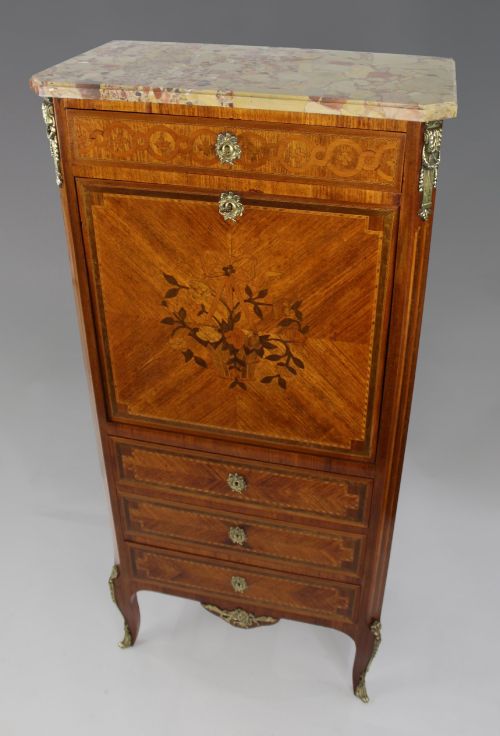
Gilt bronze and ormolu mounts edge the drawers, legs, and corners, cast and chased to protect and accent the wooden structure. Original marble tops appear on select secretary cabinets, secured above the writing compartment.
French Floral Desk Retail Price Guide 2026
Typical asking prices for french floral desk among the pieces listed under this phrase on Sellingantiques today, from the lower quarter to the upper quarter. They describe what is for sale here now, not the wider market.
Listings feature nineteenth-century desk forms in rosewood and kingwood, accented with brass, ormolu, and floral marquetry.
What varies in quality
The precision and depth of the marquetry dictate the upper tier of quality, where varied wood tones create realistic shading within the floral petals and leaves. Simpler execution relies on repetitive patterns with less tonal variation across the veneer.
The refinement of the cast ormolu mounts separates standard examples from superior pieces, with sharper chiselling and heavier gilding indicating higher workshop standards. Integrated brass framing and well-fitted internal drawers further distinguish finer writing desks.
Henry Marc·BVRB·Sue et Mare
The French Floral Desk Glossary
- Marquetry
- The art of applying decorative pieces of veneer to a structure to form floral or geometric designs. Different coloured woods provide natural shading without the use of paint.
- Ormolu
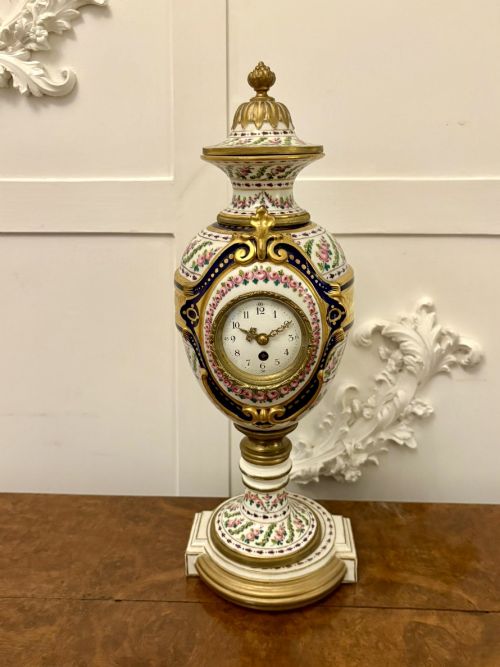
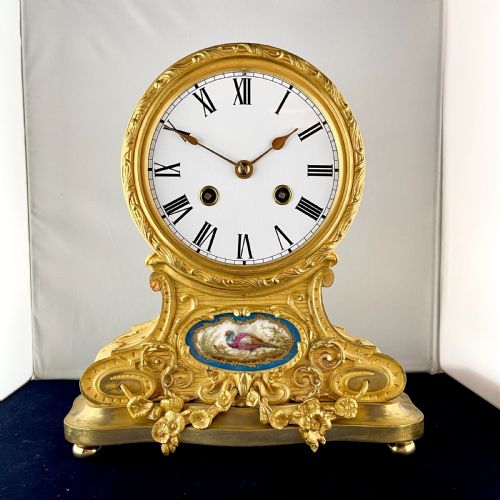
- Gilded bronze applied to furniture mounts and clock cases. It provides a bright metallic contrast to dark woods like rosewood and kingwood.
- Bureau Plat
- A freestanding writing table with drawers along the frieze. This form gained popularity during the Louis XV period.
- Kingwood
- A dense, richly grained timber frequently utilised for cabinet making and marquetry in nineteenth-century French furniture. Its dark purple-brown hues offer a striking background for floral inlays.
- Secrétaire à abattant
- A tall upright cabinet featuring a drop-front panel that conceals a writing surface and small pigeonholes. These often incorporate detailed marquetry on the main drop leaf.
French Floral Desk: Frequently Asked Questions
How do I identify a Louis XV style desk?
Louis XV style desks feature characteristic cabriole legs, serpentine outlines, and asymmetrical floral marquetry. The woodwork curves continuously from the tabletop down to the feet.
Ormolu mounts typically accent the corners and aprons to highlight the sweeping contours. These pieces often date from nineteenth-century revivals rather than the mid-eighteenth century.
What materials are used in these desks?
Cabinet makers utilised hardwood carcases overlaid with decorative veneers including rosewood, walnut, kingwood, and satinwood. These varied timbers create the contrasting colours needed for floral marquetry.
Cast bronze mounts finished with gilt or ormolu edge the structural lines. Some secretary cabinets also feature fitted marble slabs across the top surface.
How do I care for a marquetry desk?
Keep the wooden surface away from direct sunlight and steady heat sources to prevent the delicate veneer from drying and lifting. Regular dusting with a soft, dry cloth preserves the polished finish.
Apply a conservative amount of traditional wax polish occasionally to nourish the timber. Avoid using liquid cleaners or modern sprays on the antique wood and ormolu mounts.