

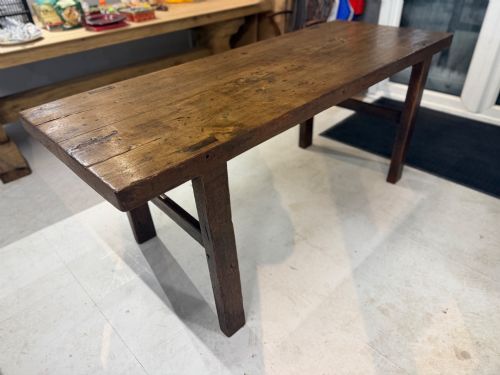
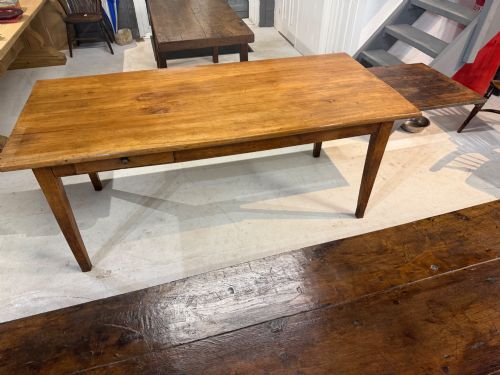
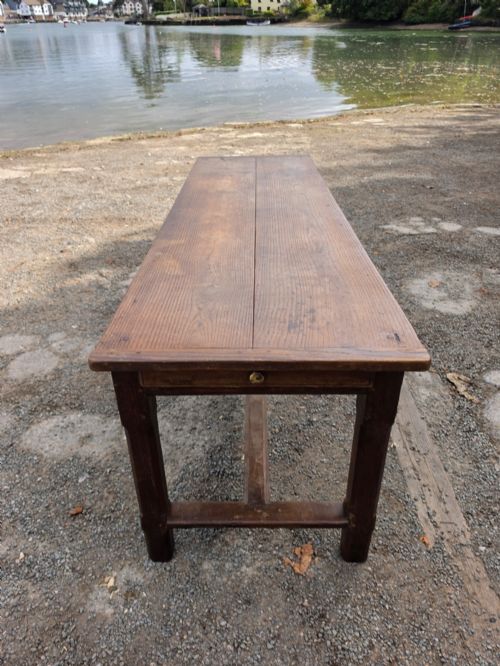
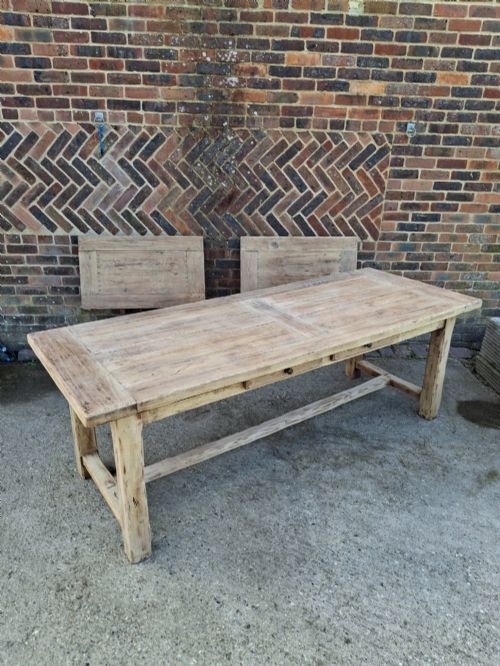
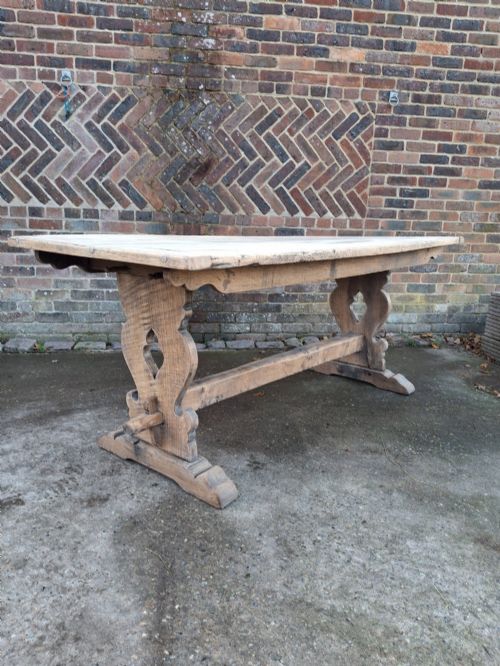
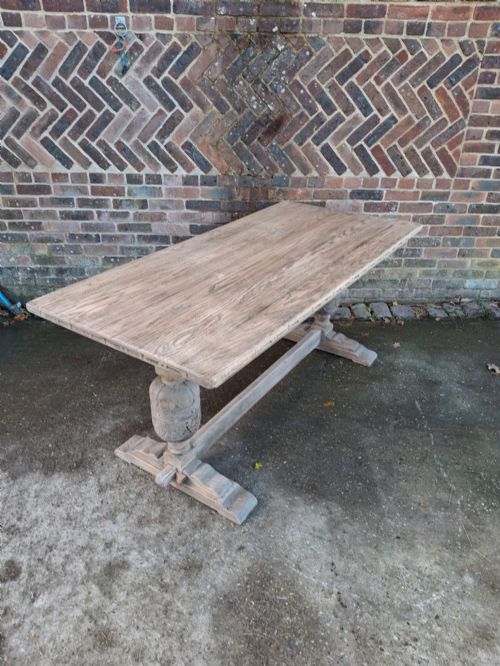
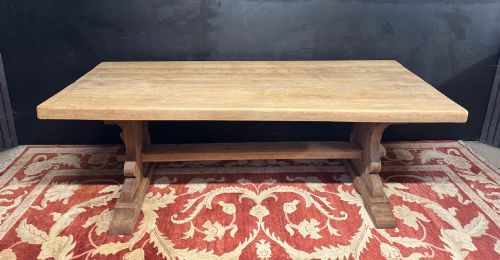
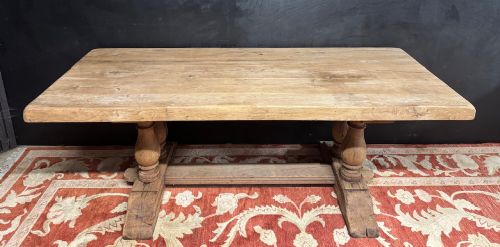
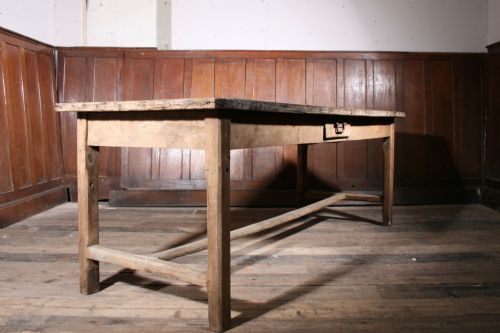
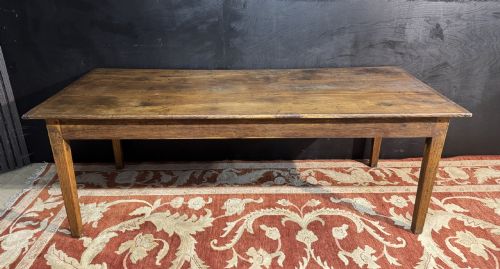
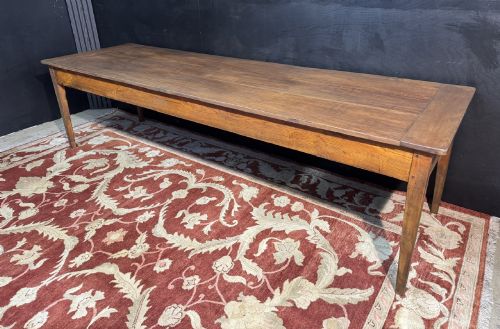
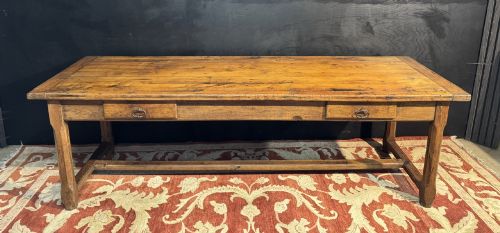

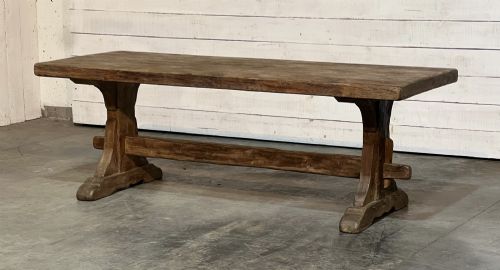
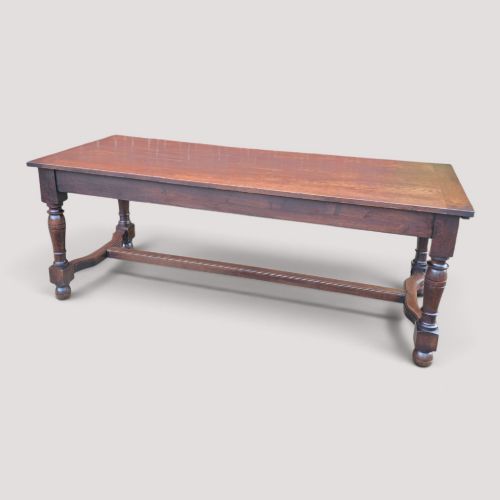
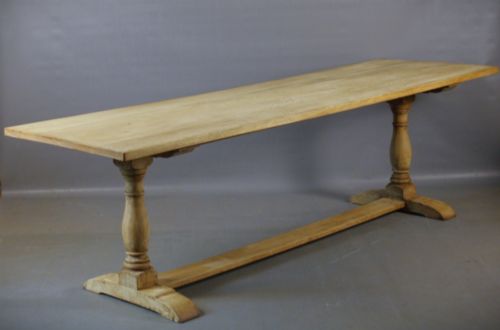
French Farmhouse Refectory Table
When you search for a french farmhouse refectory table, you encounter robust dining surfaces built for daily country life.
French Farmhouse Refectory Table
A french farmhouse refectory table serves as a long, communal dining board originating from rural properties and provincial kitchens. Most examples found here date from the eighteenth and nineteenth centuries, reflecting traditional domestic spaces.
These pieces encompass standard dining tables and serving tables designed for large gatherings. The form bridges practical utility in the kitchen with heavier architecture suited to formal rooms.
Construction relies heavily on regional French woods shaped by local cabinetmakers. The resulting objects display varied proportions, ranging from compact boards to substantial lengths exceeding four metres.
Materials and Construction
Carpenters utilised native hardwoods such as oak, fruitwood, cherrywood, elm, and chestnut for structural strength and enduring surfaces. Pine frequently appears in secondary elements or lighter top boards.
Boards were joined using traditional framing techniques, occasionally incorporating stretcher bases or integrated drawers for storage. The assembly prioritised mechanical stability over decorative embellishment.
French Farmhouse Refectory Table Retail Price Guide 2026
Typical asking prices for french farmhouse refectory table among the pieces listed under this phrase on Sellingantiques today, from the lower quarter to the upper quarter. They describe what is for sale here now, not the wider market.
The inventory records both standard dining tables and serving tables incorporating single or multiple drawers.
Distinctions in Quality
Quality rests in the selection of timber and the integrity of the joinery rather than surface ornamentation. Dense hardwoods like oak and cherry yield greater longevity and a heavier presence than softer timbers.
Proportion and the harmonious integration of legs and stretchers dictate the visual success of the piece. Tables retaining their original board tops and patinated surfaces demonstrate superior historical preservation.
The French Farmhouse Refectory Table Glossary
- Refectory table
- A long dining table historically used in communal dining halls and domestic kitchens. It provides substantial length and sturdy leg bracing.
- Scrub top
- A plain wooden table surface designed to be washed repeatedly with water and scrubbing brushes. This finish results from decades of functional maintenance in a working kitchen.
- Bleached oak
- Timber treated to lighten its natural tone, a finish commonly found on twentieth-century interpretations of older forms. It offers a muted visual texture compared to dark wax finishes.
- Stretcher
- A horizontal wooden brace connecting the legs of a table to improve structural rigidity. It often sits close to the floor on heavier rural pieces.
- Fruitwood
- An umbrella term for timber harvested from fruit-bearing trees such as cherry, apple, and pear. These woods provide fine grain patterns and warm colouration.
French Farmhouse Refectory Table: Frequently Asked Questions
How were these tables used originally?
These tables functioned as the central workspace and dining hub for rural households. Families prepared food, ate communal meals, and gathered around them daily.
Their substantial length accommodated large households and farm workers. Serving tables and extending variants provided flexibility for expanding gatherings.
What woods were commonly used?
Oak and cherrywood appear frequently across surviving examples, valued for their density and resilience. Elm, chestnut, and fruitwoods like apple and pear were also utilised depending on regional availability.
Pine frequently appears in domestic kitchen furniture or secondary structural components. Timber selection directly influenced the weight and durability of each piece.
How do I style one in a modern home?
A french farmhouse refectory table anchors a dining space with natural wood tones and historical weight. Pairing the piece with contrasting chairs or minimalist lighting balances its rustic proportions.
The worn surfaces and patinated timbers integrate easily into both contemporary and traditional interiors without requiring ornate surroundings.
How can I tell the age of a table?
Age is determined by examining tool marks, timber shrinkage, and assembly methods. Hand-sawn boards and pegged joinery generally indicate nineteenth-century or earlier manufacture.
Later twentieth-century versions often feature lighter bleached finishes or standardised fixings. Comparing the wood grain and wear patterns to known regional styles clarifies the period.